Factory Acceptance Testing, or FAT, checks whether a machine meets the agreed requirements before it ships. For a filling machine, that means checking the product, containers, fill results, controls, and sustained operation under recorded conditions. It gives the buyer evidence to review while adjustments can still be made in the supplier’s workshop.
Good FAT can reduce surprises during installation. Site Acceptance Testing, or SAT, then checks the equipment in the customer’s actual installation. Plan both stages before ordering, with clear test conditions and pass/fail criteria.
A Filling Machine Is Only Valuable When It Runs Reliably in Your Factory
Assembly produces the machine. Testing shows how it performs under the conditions you agreed. Both matter. A good weld, a suitable seal, and a correctly timed filling cycle each contribute to a machine that is ready for production.
| Project reference | Context |
|---|---|
| May 2025 — South American customer visit | Factory inspection in Guangzhou; discussion of a servo piston filling machine for cosmetic cream |
| August 2024 — Indonesian cosmetic OEM project | Early shipment after basic checks; planned two-day commissioning extended to nearly two weeks |
| Continuous-run fault and retest | Intermittent timing difference at the eighth filling head; parameter adjustment and a further six-hour run |
“It’s Just Assembly and Welding.” A Conversation That Changed the Discussion
A Factory Visit We Still Remember
In May 2025, a purchasing manager from a cosmetics factory in South America visited Strivers Machinery to inspect an order before shipment. Walking through the assembly workshop, he watched a stainless steel filling machine taking shape and said:
“It’s just assembly and welding.”
It was a useful starting point for a discussion. Cutting steel, welding a frame, fitting components, and installing controls are visible tasks. The next question is whether those parts work together with the customer’s product and packaging, at the required output.
The Real Product Includes Production Reliability
A customer needs stable filling, manageable cleaning, practical maintenance, and predictable output. Those requirements belong in the purchase specification. Our cosmetic equipment buying guide explains how to turn a production need into questions a supplier can answer and test.
Welding and assembly quality remain part of that assessment. Smooth, accessible product-contact surfaces help cleaning, while secure mounts and good alignment support repeatable motion. The equipment cleaning dead corners guide covers details that a short running demonstration can miss.
The Hidden Cost of Skipping Proper Testing
A Real Project from a Cosmetic Factory in Southeast Asia
In August 2024, a cosmetic OEM manufacturer in Indonesia requested early shipment to meet a product launch. The factory’s reported production capacity was 180,000 bottles per day. This was factory-level context, not a measured output claim for the individual filling machine.
Only basic power-on and no-load checks had been completed before shipment. Once the machine was installed and ran high-viscosity skincare cream, several problems appeared: differences between filling heads, nozzle dripping, servo synchronization errors, and conveyor positioning that affected downstream capping alignment.
The planned two-day commissioning period became nearly two weeks of troubleshooting. Test product was consumed during repeated runs, engineers worked on site, and the production launch was delayed. These are the results of this project; other installations have different site conditions and schedules.
The Cost Extended Beyond the Machine
The delay affected production planning, engineering time, materials, and customer orders. It also left operators waiting for equipment that was not ready. Our hidden equipment costs guide explains how to include these tasks and risks in the project budget.
Early shipment can still be a commercial decision, but the buyer needs to see what remains untested. Record the open items, possible production effect, responsibility for completion, and any agreed release conditions. A shipment date is easier to assess when the remaining work is visible.
Why We Spend Days Testing Before Shipment
Assembly Is Only the Beginning
After assembly, Strivers Machinery checks equipment against its agreed inspection and test scope. The exact plan varies with the machine and project. A servo piston filler needs product and dosing checks that differ from those for a conveyor, capper, or water treatment unit.
Recommended Equipment

500L Vacuum Syrup Cooking & Mixing Kettle with Agitator for High Viscosity Sugar, Honey, Liquid Candy & Pharma Syrup
View Details
Automatic Desktop Vial Liquid Filling Stoppering and Crimping Machine with Laminar Flow Hood for Pharmaceutical & Cosmetic Liquids
View Details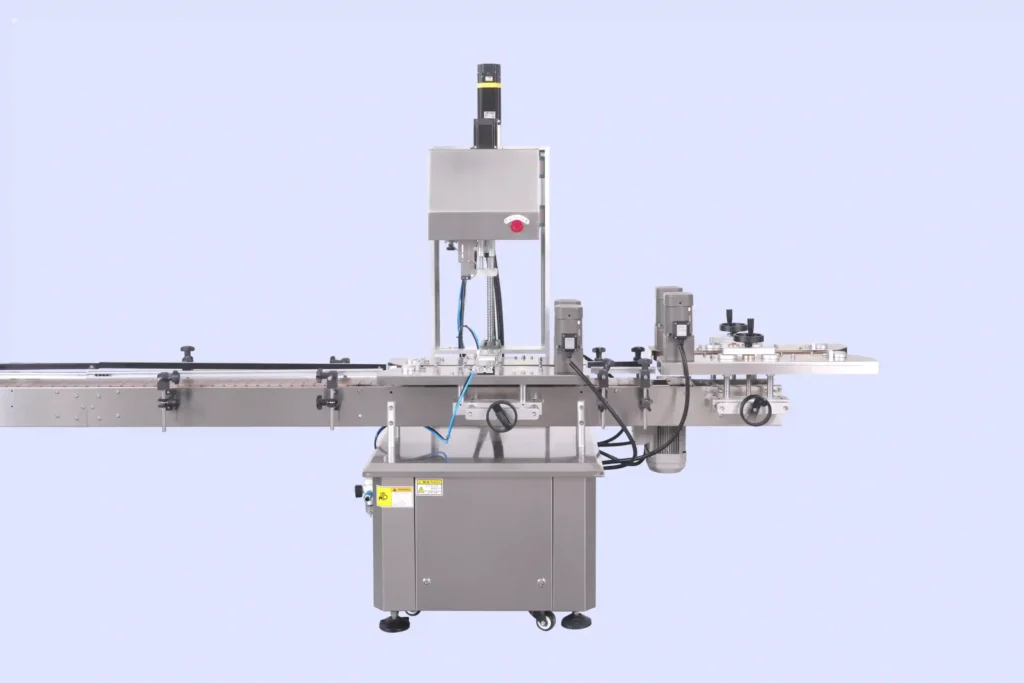

FAT should show what passed, what failed, and what remains open. IEC 62381 provides a framework for project-specific acceptance testing of process-industry automation systems. It is useful when planning controls tests; it is not a blanket certification of every mechanical, hygienic, or safety feature on a filling line.
What Our Engineers Test
Agree the checklist before the test. Identify the machine, configuration, product, packaging, utilities, target speed, and acceptance criteria. The following items provide a practical starting point for a filling-machine FAT.
| Check | Record | Acceptance basis |
|---|---|---|
| Mechanical condition | Alignment, mounts, accessible fasteners, guards, leaks, and relevant assembly checks | Approved drawings and equipment-specific inspection criteria |
| Electrical and protective functions | Applicable electrical checks and controlled tests of interlocks, emergency stops, reset, and restart | Approved design and procedures, tested by qualified personnel |
| Controls and motion | PLC/HMI versions, recipes, sensor response, servo settings, and sequence behavior | Agreed operating sequence and fault response |
| Filling performance | Results by head, product conditions, target quantity, speed, measurement method, and samples | Agreed accuracy and repeatability limits |
| Feeding and transfer | Product supply, container positioning, and upstream/downstream interactions included in the test | Defined line interfaces and test scope |
| Sustained operation | Time, speed, accepted output, rejects, stops, alarms, and adjustments | Agreed run conditions and interruption rules |
| Changeover and cleaning | Required steps, access, fitted parts, settings, and cleaning checks | Agreed product and packaging range and procedure |
For a single-head servo gear-pump filler, record the selected recipe, feeding conditions, and fill results. For a six-head gear-pump filling machine, identify results by head so a line average does not hide one head’s variation.
Protective-function tests need qualified personnel and controlled conditions. Include a check that resetting an emergency stop only prepares the machine for restart; it should not start motion by itself. Follow the approved design and test procedure.
Our filling accuracy testing guide covers measurement methods. Set the sample count and acceptance limits in the test plan. If weighing a volumetric fill, account for container tare and use product density at the relevant temperature when converting net mass to volume.
Keep speed and accuracy in the same record. A good result at reduced speed does not answer a requirement specified at the production rate. The time-based versus volume-based filling guide explains how dosing method and operating conditions affect the comparison.
Simulating the Customer’s Factory
Use actual bottles, caps, and product where practical. Record the product temperature and relevant handling conditions. If a substitute is needed, agree why it is suitable and what still needs checking with the actual formulation.
Matching viscosity alone may leave differences in foaming, stringing, particles, lubrication, or temperature response. Water is useful for some leak, flow, and function checks, while cream filling needs a representative performance test. Mark the difference clearly in the report.
Packaging details matter too. An airless bottle filling assessment has different questions from a spout-pouch filling assessment. Supply drawings and enough samples to support setup, testing, and agreed repeat checks.
If the project includes a pouch filling and capping machine, test the specified pouch and spout. If it includes a four-wheel capping machine, agree how closure performance will be checked with the actual bottle and cap combination.
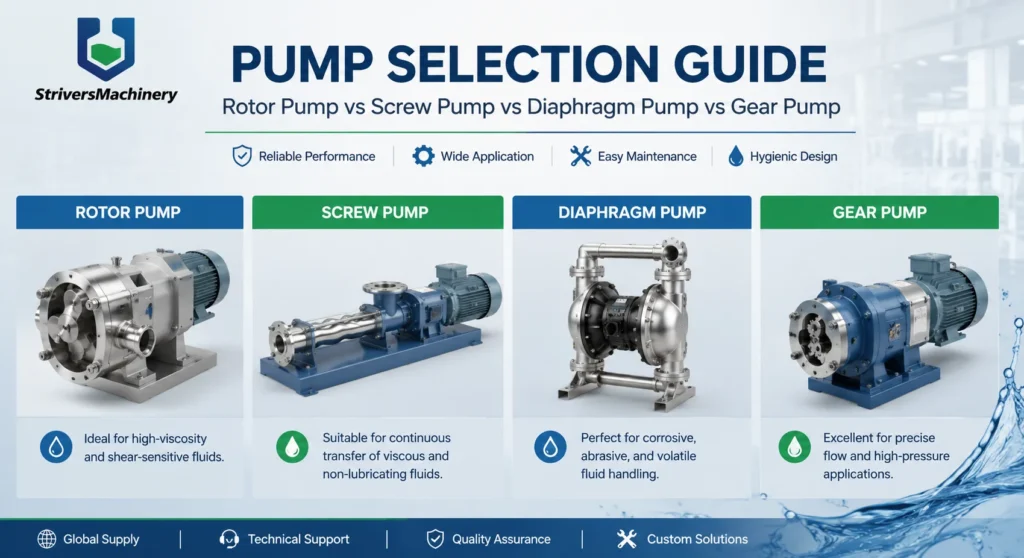
Product feeding also affects the test. A rotor-pump filler with an agitator hopper needs its feeding and mixing settings recorded. Our rotary lobe pump filling guide explains the product-handling questions to include.
Record the Continuous Run
Choose the run duration from the equipment duty, test objectives, available product, and agreed risks. Record elapsed time, actual running time, speed, accepted output, rejected output, alarms, stops, and adjustments. Define what happens to the test after an interruption or setting change.
A video helps buyers see the operation. Raw measurements and a signed report show the acceptance result. Keep both linked to the machine identification and tested configuration.
When a Small Adjustment Prevents a Bigger Problem
A Problem Found Before Shipment
During a continuous run, our engineer found an intermittent timing difference of roughly 0.18 seconds associated with the eighth filling head. A brief demonstration could have missed the issue. Sustained operation gave the team time to identify and investigate it.
The finding was specific to this machine’s sequence. A timing difference can affect coordination, depending on how the controls and mechanical movements interact. The measured delay alone does not show that an error will grow by the same amount on every cycle.
Solving It Before the Machine Leaves
Our engineers adjusted the servo synchronization parameters and PLC cycle timing. They then ran a further six-hour continuous test and rechecked filling accuracy against the agreed specification. The correction and verification were completed in less than a day.
Related Solutions



That six-hour run was the retest used for this project. Future machines need a duration suited to their own test plan. Keep the fault description, revised settings, software version, and retest results with the delivery record so the accepted setup can be identified later.
Factory Acceptance Testing Is Part of the Delivery Plan
Comparing Two Delivery Strategies
Basic checks and a planned FAT answer different questions. Use the comparison below to decide what evidence is needed before release. Testing duration and commissioning time remain project-specific.
| Item | Basic power-on and no-load checks | Agreed FAT with representative conditions |
|---|---|---|
| Main purpose | Confirm selected basic functions | Verify specified functions and performance within the test scope |
| Product behavior | Limited evidence without representative product | Record filling, handling, and relevant product effects |
| Intermittent faults | Short checks may not reveal them | A planned run gives more opportunity to find them |
| Commissioning preparation | May leave production questions unresolved | Provides tested settings and documented findings for the site team |
| Long-term reliability | Not established by these checks | Still depends on duty, installation, maintenance, and service history |
A completed FAT verifies the agreed scope under the recorded test conditions. Site checks still need to cover shipping condition, assembly, utilities, integration, and operation with the customer’s production materials. The installation mistakes guide explains why a machine can need attention even after a successful factory test.
Total Cost of Ownership
Compare testing cost with the work and risk it addresses. Include test materials, witnessing, corrective work, site commissioning, and support arrangements. The machinery TCO guide provides the wider cost framework, and the lowest-price procurement guide explains how to compare what quotations include.
Site readiness belongs in the schedule. Use the factory utilities checklist to confirm power, compressed air, water, cooling, drainage, and access where applicable. Record any difference between the test utilities and the destination installation.
For a supplied double-pass RO water treatment system, agree its own output and water-quality tests. Our water treatment guide helps define the relevant treatment and distribution questions. A filler’s FAT does not establish the performance of an untested utility system.
What Customers Should Ask Before Buying Any Filling Machine
| Ask the supplier | What to agree before FAT |
|---|---|
| What will you test? | Scope, machine identification, configuration, and applicable documents |
| What samples do you need? | Product, containers, caps, quantities, handling, and any substitute limitations |
| How will you measure the result? | Tools, calibration status, sample method, results by head, and acceptance limits |
| What does the sustained run include? | Speed, duration, output criteria, stop rules, and retest requirements |
| What happens after a failure? | Issue record, correction, affected-function retest, and closure evidence |
| What will we receive? | Report, raw records, agreed videos, configuration backups, manuals, and open-item list |
| What will happen at our factory? | Site readiness, installation scope, SAT, training, and support responsibilities |
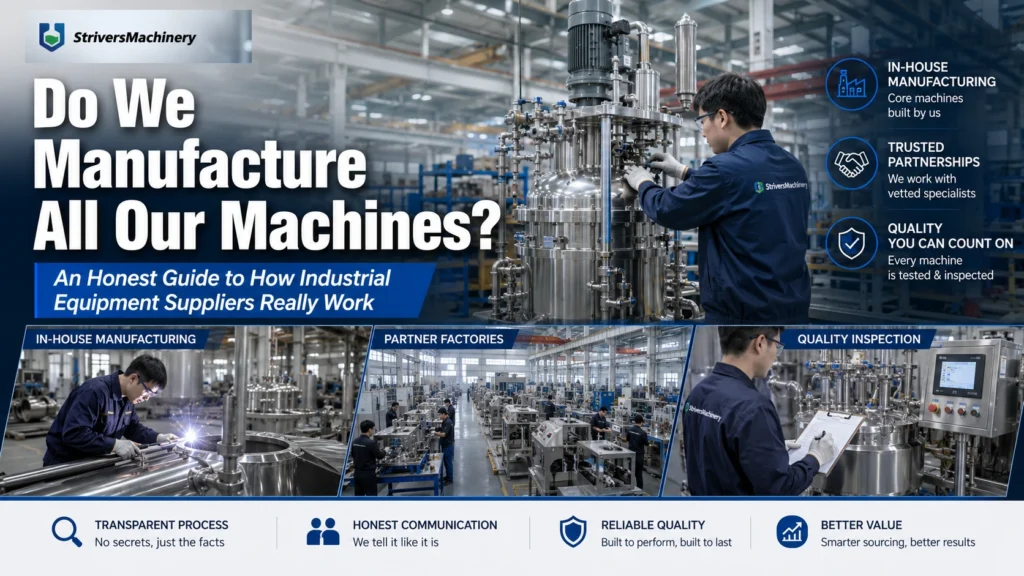
Ask who will manufacture, integrate, test, and support the equipment. The manufacturer versus trading company guide helps clarify responsibilities when more than one business is involved. Put the agreed answers in the purchase documents.
Remote Witnessing and Shipment Release
Decision Guide
Remote FAT can be useful when travel is difficult. Agree the agenda, camera views, measurement display, live interaction, and document delivery in advance. The buyer should be able to identify the machine, see the test conditions, ask questions, and review the underlying data.
When a problem appears, record it, correct it, and repeat the affected checks. Review whether the change affects other functions. Open items need an agreed owner and completion plan. Decide whether shipment can proceed from the item’s significance and the written release criteria.
Engineering Support Doesn’t End at Shipment
At handover, provide the agreed operating and maintenance instructions, drawings, spare-part information, test report, and configuration records. Backups may include PLC programs, HMI projects, recipes, and drive parameters, as applicable. Identify versions, access rights, and the supported restoration method.
A parameter file alone may not restore the complete machine after hardware replacement or software loss. Agree what the backup covers and who can use it. After delivery, check the installation and complete the agreed SAT before treating the line as ready for production.
For fault reports, start with the machine identification, alarm, operating conditions, recent changes, and a safe video where possible. Use the mixing-equipment maintenance guide for upstream mixer checks when the issue involves product preparation. Separate a feeding problem from a dosing or control problem before changing settings.
Strivers Machinery can also review symptoms from equipment supplied by others and suggest a diagnostic path where information permits. The available drawings, software access, component information, and safe service arrangements determine what support is practical.
For older lines, the equipment upgrade and retrofit guide helps assess whether a targeted repair or change is appropriate. Include a test plan for the modified functions and their interaction with the rest of the line.
Reliability Is What Customers Need
Good manufacturing, a clear specification, useful testing, and proper installation work together. FAT gives you a chance to find problems and verify corrections before shipment. Agree what will be tested, keep the evidence, and carry the accepted configuration through to site commissioning and maintenance.
Technical References
- IEC: IEC 62381:2024 — Acceptance Testing for Process-Industry Automation Systems
- Pilz: Emergency Stop Reset and Restart Requirements
- METTLER TOLEDO: Checkweighing Guidance — Building an Effective Program