
Hair Care, Personal Care & Body Wash




More About These Applications
Equipment for Shampoo, Conditioner and Everyday Personal Care
Equipment for Shampoo, Conditioner and Everyday Personal Care
Shampoo, conditioner and body wash often leave the factory in similar bottles, but the bulk products do not necessarily pass through the same process. A clear shampoo may need controlled ingredient addition and blending. A conditioner or hair mask may require separate phase preparation, emulsification and cooling before it can be filled. The equipment arrangement should accommodate those differences without making routine production unnecessarily complicated.
StriversMachinery supplies mixing, holding, transfer and packaging equipment for hair care and personal care production. Our core mixing equipment can be combined with complementary filling and packaging machines to suit the product range, working schedule and available space. The starting point is a list of products and packs, including the products that will share equipment.
This page focuses on shampoo, conditioner, hair masks, body wash and liquid hand soap. Leave-on facial creams and body lotions follow the skin care production route. Laundry and surface cleaners belong with detergent and household cleaning equipment, even when their containers look similar.
Separate Surfactant Blending from Conditioner Processing
Separate Surfactant Blending from Conditioner Processing
For shampoos and body washes, production planning begins with the ingredient sequence and the mixing action needed at each stage. Water, surfactants, thickeners, fragrance and other additions may require different handling. The vessel should allow operators to add ingredients conveniently and check the batch without repeatedly stopping work to move containers or reach inaccessible openings.
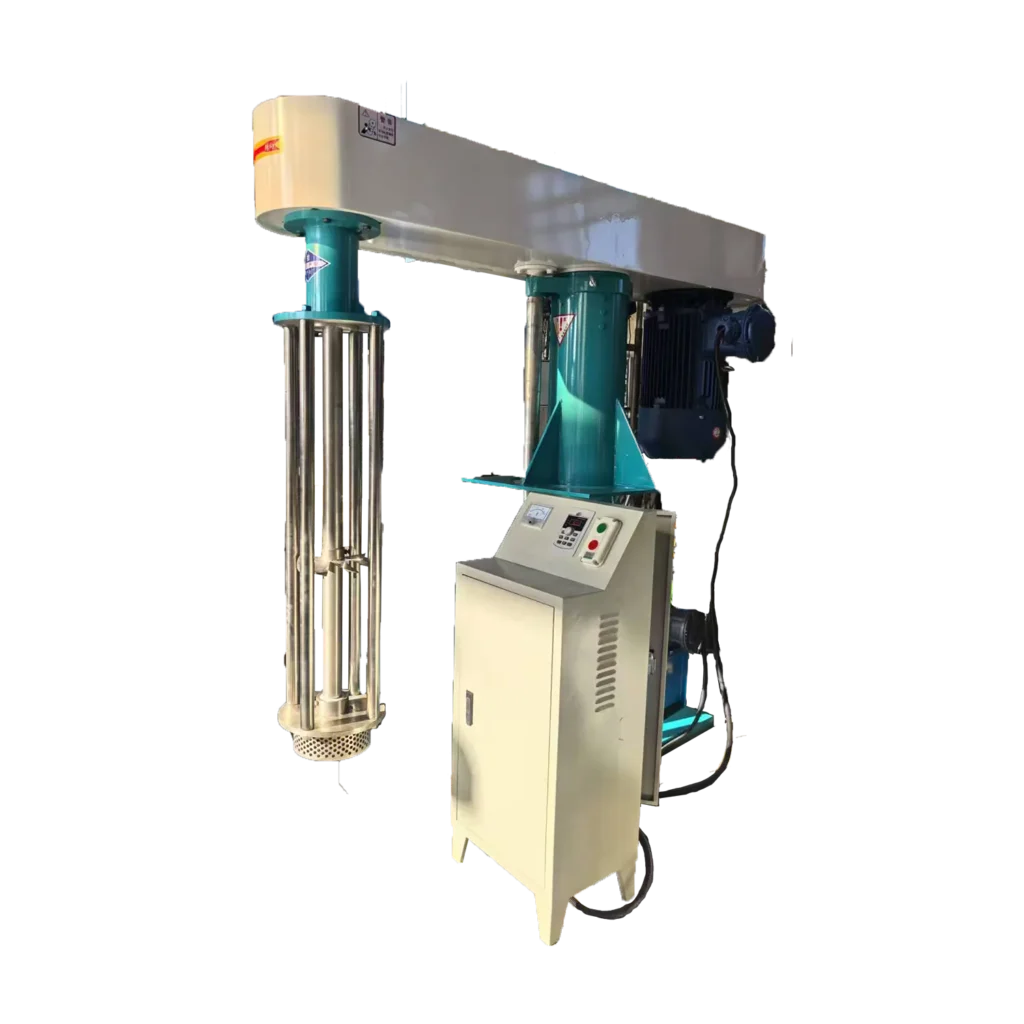
Conditioners and hair masks can introduce a different duty: preparing phases, combining them, developing the required texture and cooling the batch. Vacuum emulsifying mixers may suit that process, while homogenizing mixing tanks provide other arrangements for products needing mixing and homogenization. Neither category should be selected solely from the word “shampoo” or “conditioner” on a product list.
A factory producing both types should map their individual recipes before deciding which vessels to share. The time spent cooling a conditioner can occupy a mixer that is also needed for the next shampoo batch. Separate preparation or holding equipment may solve that scheduling problem more effectively than simply increasing the main vessel size.
Water Preparation and Ingredient Staging
Water Preparation and Ingredient Staging
Water is a major process input for many products in this group. Water treatment systems need to be considered alongside treated-water storage and distribution, so the mixing team has the required supply when batch preparation begins. Include cleaning demand when estimating the factory’s water needs rather than counting formulation water alone.
Ingredient staging also affects output. Operators need space to weigh additions, identify prepared materials and bring them to the vessel in the required order. A stainless steel mixing tank can provide a separate preparation function where a recipe needs premixing or dissolution before the main batch is ready to receive an ingredient.
Keep the water treatment specification tied to source-water information and the factory’s quality requirements. The cosmetic water treatment guide discusses available treatment approaches. Choosing a more elaborate treatment train does not remove the need to plan storage, use and cleaning of the downstream water circuit.
Mixing Access, Circulation and Batch Discharge
Mixing Access, Circulation and Batch Discharge
A production vessel must do more than mix successfully at the beginning of a batch. It needs to handle changes in product consistency, allow later additions and discharge the finished product at the intended temperature. A shampoo that moves freely during early blending can behave differently once the final thickening stage is complete.
The liquid soap and shampoo mixing machine with an operating platform illustrates a production arrangement that gives operators access to the mixing area. For larger batch duties, the single-layer homogenizing mixing tank offers another equipment format to assess. Product pages provide their individual specifications; the application decision depends on the recipe and working sequence.
Confirm which operations require high shear and which require ordinary agitation. Include access for cleaning around the shaft, outlet and additions area. Heating or cooling should be specified where the formulation needs it, rather than assumed because another mixer in the same product family includes a jacket.
Manage Foam through the Whole Product Route
Manage Foam through the Whole Product Route
Air introduced during ingredient addition or mixing can remain a problem when the product reaches the holding vessel and filler. Review how liquids enter the tank, how the batch is transferred and how the filling nozzle delivers product into the bottle. A good result at the mixer can be lost through an unsuitable downstream arrangement.
Foam behavior differs across products. The equipment discussion should use actual shampoo or body wash at a representative temperature, not water as a stand-in for every trial. Observe the product during transfer and after filling, including the time it needs to settle before closure.
Avoid making vacuum processing a default answer for every foaming product. The appropriate arrangement depends on the formulation and the stages where air enters. The broader manufacturing process troubleshooting guide is a useful reading path when bubbles, texture changes or inconsistent batches need a more detailed investigation. Those observations should feed back into the equipment specification and operating procedure.
Holding Tanks Keep Mixing and Packing in Step
Holding Tanks Keep Mixing and Packing in Step
A shampoo batch may be ready before the packaging team has finished the previous fragrance or bottle size. Conversely, a filler may be waiting while a conditioner cools. Storage and holding systems provide a place to manage that handover when the product can be held under defined conditions.
Specify whether a holding vessel needs simple covered storage, agitation or temperature control. The answer can differ between a thin rinse-off liquid and a thick hair mask. Plan how the team will identify the batch, confirm it is ready for packaging and prevent an unfinished batch from being connected to the wrong filler.
Holding capacity should follow the production schedule. Large buffers can create extra cleaning work when many fragrances or formulas run in small quantities. Mobile vessels may suit frequent changes, whereas a more permanent connection may fit repeated long runs. In either case, leave working room for cleaning, hose changes and access to the discharge point.
Transfer Finished Products at Their Actual Consistency
Transfer Finished Products at Their Actual Consistency
Shampoo, conditioner and hair masks can place different demands on the same transfer route. Assess the pump with the finished product, the required flow, the distance to the filler and the expected temperature. Fluid transfer systems should be selected as part of that route, including hoses, valves and connections.
A mobile rotary lobe pump is one option to evaluate for viscous products. It provides product transfer, while the filling machine controls the dosing operation. Do not use the transfer pump’s nominal flow as a prediction of the number of finished bottles per minute.
The pump selection guide compares approaches in more detail. For a factory running several formulations, discuss both the thickest product and the easiest-flowing one. Also consider the material left in the hose at the end of a batch, how operators will recover it where appropriate, and how the route will be cleaned before the next fragrance or product.
Bottle Filling for Shampoo and Body Wash
Bottle Filling for Shampoo and Body Wash
Bottle filling should be assessed using the actual product, opening and fill quantity. A narrow-neck shampoo bottle can need a different nozzle arrangement from a wide-mouth hair mask jar. The package also needs to remain stable while it is positioned, filled and released.
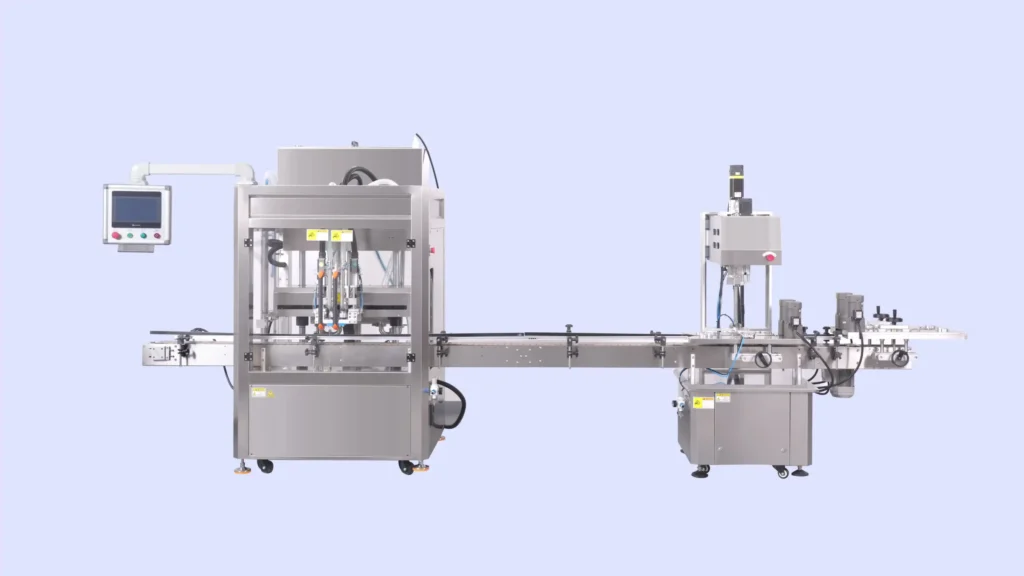
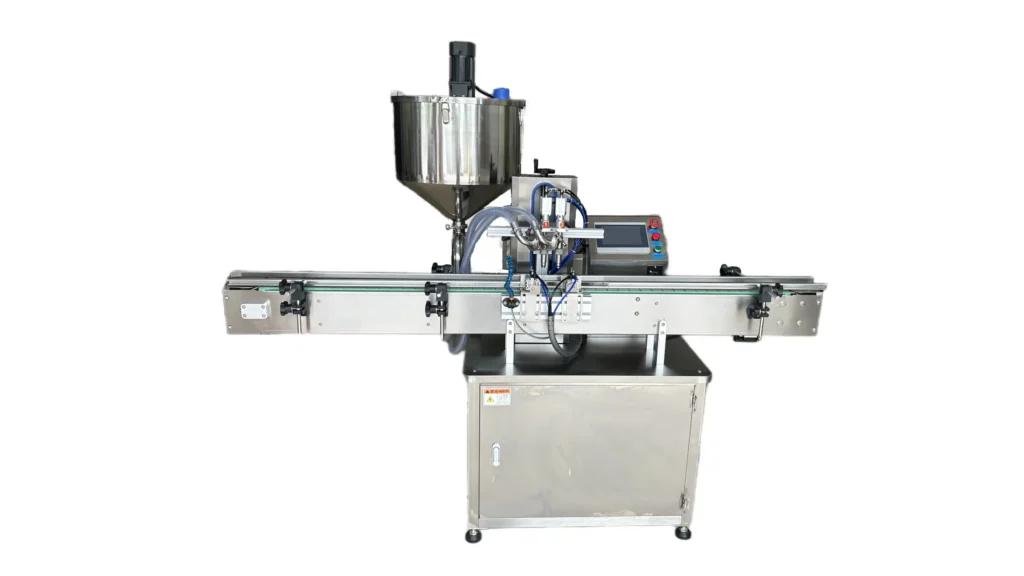
The automatic multi-head gear pump filler provides a conveyor-based arrangement with vertically moving nozzles. The servo tracking gear pump filling line uses a different motion: its nozzles travel with moving bottles during filling. Compare them using the actual bottles and product, including container supply, filling behavior and the way filled bottles reach the next station.
For shorter runs, the semi-automatic vertical gear pump filler allows manual placement and removal of containers. That can be practical when changes are frequent and the operator workload is manageable. Agree on output and fill checks for the intended product rather than assuming one published speed applies to every viscosity and pack size. The filling accuracy testing guide helps define a consistent comparison.
Refill Pouches and Thick Hair Treatments
Refill Pouches and Thick Hair Treatments
Refill packaging changes more than the amount of product in a pack. A spout pouch needs support at its fitment, a suitable filling path and a matched screw closure. Pouch filling machines should be assessed against the pouch supplier’s samples, including how empty pouches will be presented to the machine.
The semi-automatic spout pouch filling and capping machine uses manual pouch loading with automatic filling and capping operations. It is a different production arrangement from equipment that forms bags from film or heat-seals an open pouch body. The stand-up pouch filling guide explains the packaging route in more detail.
Hair masks and concentrated treatments may instead use jars or tubes. Keep their dosing and closing requirements separate from thin body wash. A filler that handles a lotion sample successfully still needs evaluation with the thick treatment, particularly for nozzle cutoff, trapped air and the way the product settles inside the package.
Caps, Pumps, Labels and Finished Packs
Caps, Pumps, Labels and Finished Packs
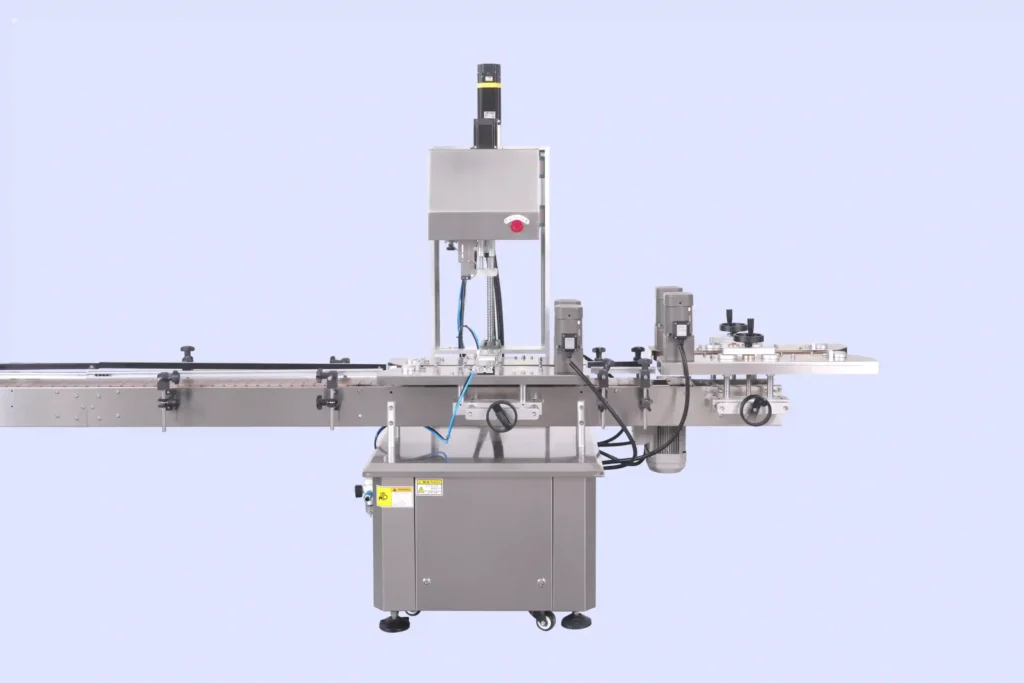
Shampoo flip-top closures, threaded caps and lotion-style pumps do not all arrive at the capper in the same condition. Determine whether closures are manually placed or automatically sorted and placed. Capping machines then need to match the threaded section, bottle support and required closing operation.
The servo four-wheel capping machine is an option for compatible screw closures, including suitable pump heads. An unusual outer shape or a required pump orientation can change the handling solution. Provide complete closure samples rather than only a nominal cap diameter.
Labeling machines must suit round bottles, flat panels or other supported surfaces. Check where the batch code will go before labels and artwork are finalized. Downstream packing should allow operators to identify mixed products, remove rejected bottles and replenish cartons without blocking the filler. The packaging sequence should be straightforward for the staff who will run it each day.
Cleaning and Fragrance Changeovers
Cleaning and Fragrance Changeovers
Frequent fragrance, color and formula changes can make cleaning the main constraint on daily output. List every shared product-contact part, from preparation vessels to filling nozzles, and decide which parts are cleaned in place and which are removed. Leave enough access to do that work without dismantling unrelated equipment.
A spray device does not, by itself, define a complete cleaning process. The distinction is explained in CIP spray balls and manual cleaning. The proposed system should match the factory’s cleaning procedure, drainage arrangements and available services.
Check utilities at the same time. Compressed air, cooling water and power requirements belong in the layout before installation. The cream factory utilities checklist provides useful supporting questions for emulsified hair treatments, while each machine’s actual utility requirements still need to be listed separately. Where no heating or cooling is required, a simpler arrangement can reduce connections and routine work.
Check the First Bottle after a Product Change
Check the First Bottle after a Product Change
Changing from body wash to conditioner can involve more than selecting a new fill quantity. Operators may need to change the product connection, adjust the nozzle position and confirm that the closure and label match the new pack. Prepare a changeover list for the intended product range and keep the required format parts identifiable.
Use the first packs to check the complete sequence: product appearance, filling behavior, container cleanliness and closure assembly. This gives the team a practical basis for restarting production after cleaning. It also helps identify whether a shared line needs different nozzles, supports or handling parts for a thick hair treatment and a more freely flowing wash product.
Plan Output around Product Changes and Staffing
Plan Output around Product Changes and Staffing
Daily output depends on the number of saleable packs produced across the shift, including preparation and changeovers. A long shampoo run, a short premium conditioner batch and several refill pouch sizes create different demands on operators and equipment. Put those jobs into a realistic schedule before selecting automation levels.
For a new project, provide the product range, batch quantities, filling temperatures, bottle and closure samples, expected changeover frequency and available factory services. Identify which operations staff can perform manually and which need automatic handling. This prevents an automatic filler from being specified without a workable supply of empty bottles or closures.
StriversMachinery can coordinate the processing and packaging stages through a complete production line proposal. The scope can begin with separate machines and expand over time, provided transfer connections, operating space and packaging interfaces are considered early. Keep acceptance discussions tied to the products and packs that will actually be run, including a representative difficult product rather than only the easiest one.