
High Shear Mixers
More About Our Machines
High Shear Mixers for Batch Homogenizing Applications
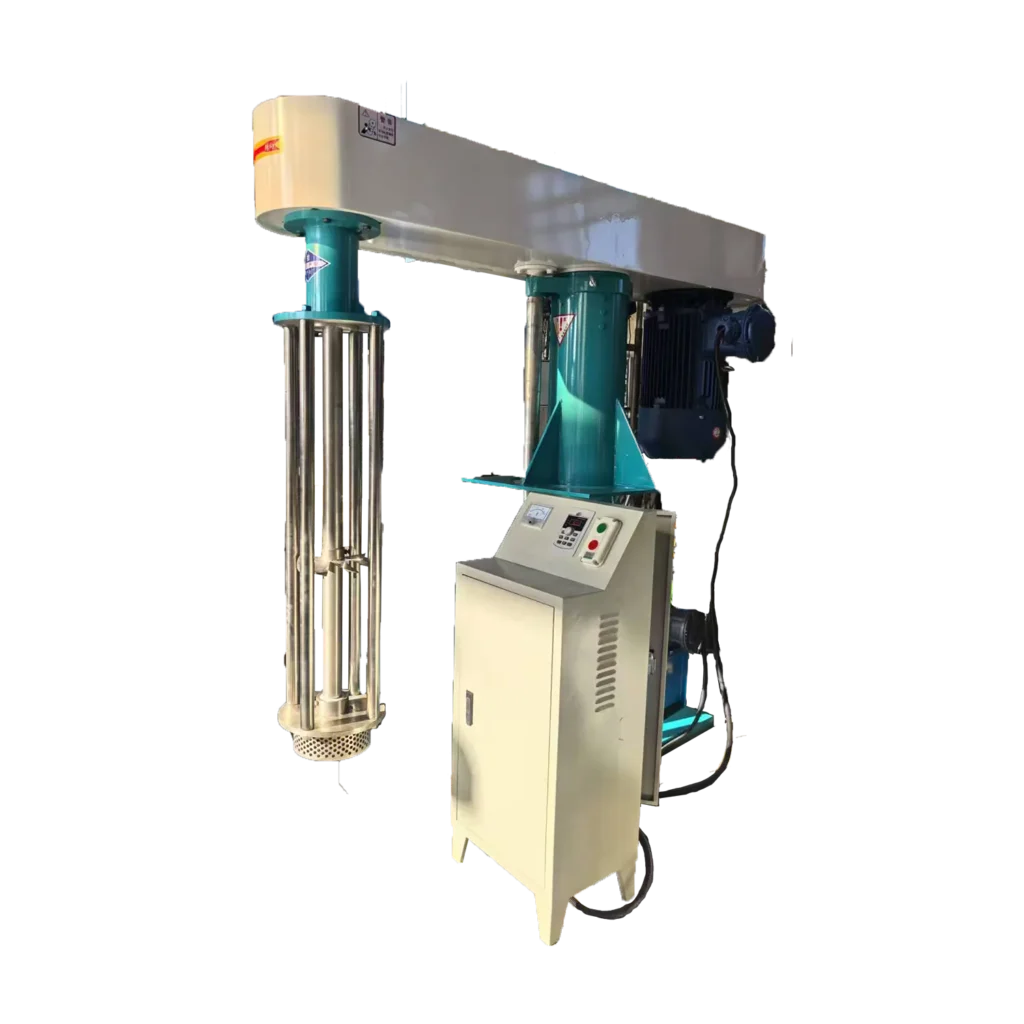
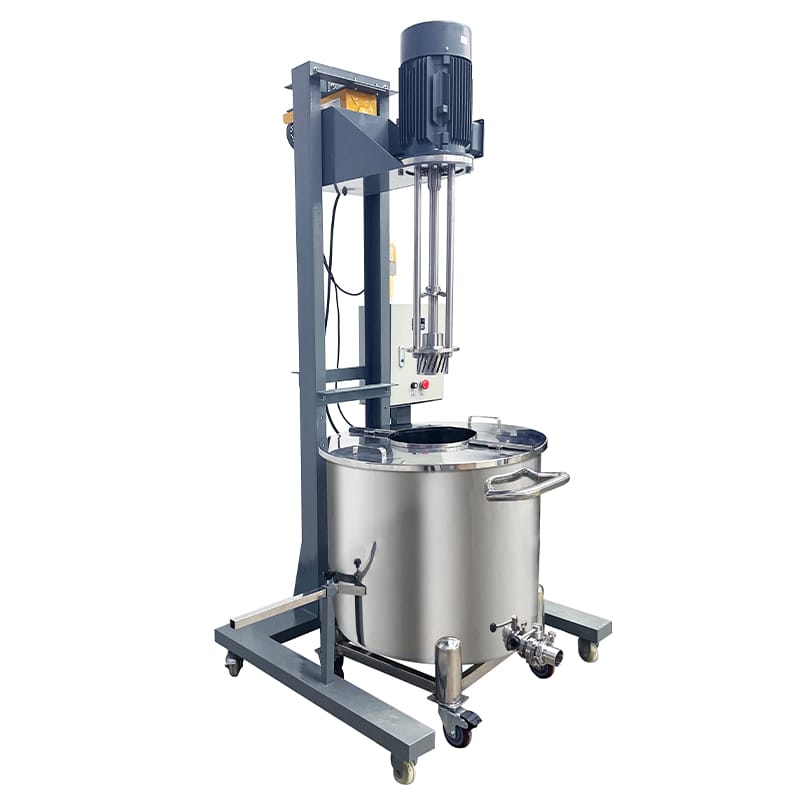
High shear mixers in this equipment family are lifting-type batch homogenizing machines. A rotor-stator processing head operates within a compatible vessel, while the lifting structure provides movement between the positions specified for processing, access, and vessel handling.
The selection question is whether this arrangement provides the high-shear action required by the material and fits the intended batch workflow. The processing head, vessel, batch quantity, and operating position must be evaluated together.
This subcategory does not include inline or pipeline homogenizers. For a broader comparison with tanks and dispersers, visit the parent Mixing Equipment category.
Individual machine pages establish the supplied lifting mechanism, processing-head configuration, controls, compatible vessels, and operating limits. Do not apply one model’s specifications to every machine in this family.
Define the Required High-Shear Task
Begin with the material change the machine must support. Depending on the formulation and configuration, the task may involve emulsification, dispersion, or incorporation of ingredients that conventional agitation does not adequately process.
Describe the incoming material and the required condition after processing. Relevant details include viscosity at the processing temperature, ingredient form, solids content, sensitivity to shear, and any restrictions on product heating or air incorporation.
Do not treat high shear as a universal improvement. A formulation that needs gentle blending or preservation of particulates may require a different mixing approach. For conventional vessel-based agitation, evaluate Stainless Steel Mixing Tanks instead.
If a product-quality problem is driving equipment selection, organize the investigation before assuming that additional shear will solve it. The manufacturing process troubleshooting guide provides a related assessment resource.
High Shear Mixers and High Speed Dispersers Serve Different Roles
A lifting structure does not identify the processing method. A batch homogenizer and a high speed disperser may both move vertically, but their working elements and application priorities differ.
| Selection point | Lifting-type batch high shear mixer | High speed disperser |
|---|---|---|
| Working arrangement | Rotor-stator homogenizing head operating within a compatible vessel | Dispersing element selected for the powder and formulation |
| Primary evaluation | Required homogenizing action and material movement through the working zone | Powder wetting, incorporation, and dispersion requirements |
| Vessel relationship | Head position and vessel geometry must support the intended batch | Dispersing-element position and vessel geometry must suit the task |
| Acceptance basis | The agreed formulation or processing result | The agreed incorporation or dispersion result |
Where powder wetting and dispersion are the central requirement, review High Speed Dispersers. Neither equipment type should be selected solely from motor power, rpm, or the presence of a lifting column.
Separate Batch Homogenizers from Integrated Tank Systems
A lifting-type batch homogenizer provides a processing unit used with an approved vessel arrangement. It should not be assumed to include every function of an integrated preparation tank.
If the process requires vessel-wide agitation, bottom-entry homogenization, and optional heating or cooling in one atmospheric preparation system, evaluate Homogenizing Mixing Tanks.
If reduced-pressure processing is a central requirement, review Vacuum Emulsifying Mixers. A lifting batch homogenizer should not be assumed to provide vacuum operation or a sealed processing chamber.
Choose between these arrangements by the complete process requirement. A separate homogenizing unit may fit one workflow, while another needs the coordinated agitation, vessel, thermal, and discharge functions of an integrated system.
Match the Processing Head to the Vessel
The vessel is part of the processing arrangement, not merely a container placed beneath the machine. Confirm its dimensions, construction, operating position, and compatibility with the proposed homogenizing head.
Working Position and Clearances
The approved head position must provide the required engagement with the product while maintaining the manufacturer’s clearances from the vessel and other components. Do not invent a general positioning ratio or assume that the same setting suits every vessel.
Product Movement Through the Working Zone
A local high-shear action does not, by itself, establish effective processing of the complete batch. Review whether the product can move through the working zone under the intended conditions and whether additional bulk agitation is required.
For an example of this equipment arrangement, review the supplied configuration on the lifting batch homogenizer product page. Its specifications must be assessed individually rather than treated as category-wide limits.
Usable Batch Range and Formulation Behavior
Define routine batch quantities and the smallest batch that must be processed effectively. Nominal vessel volume does not establish the usable range of the installed homogenizer.
At a smaller volume, confirm adequate product engagement and the required operating position. At a larger volume, confirm that the proposed arrangement can process the batch to the agreed condition rather than only the material immediately around the head.
Provide viscosity information with its processing temperature and measurement conditions where available. Products with similar reported viscosity can differ in flow behavior, shear response, and temperature sensitivity.
Keep charged quantity, sampled quantity, recovered product, and retained material distinct during evaluation. The product recovery guide provides related considerations for material handling.
Speed Selection and Product Acceptance
Available speed is an equipment specification, not a finished-product guarantee. The correct operating method depends on the formulation, processing-head design, vessel arrangement, and required result.
Define what a trial needs to demonstrate before changing settings. The acceptance basis may concern ingredient incorporation, product appearance, an agreed analytical result, or another relevant formulation criterion.
For emulsion-related requirements, consult the oil-in-water and water-in-oil emulsion guide for supporting formulation context. Equipment choice should follow the intended formulation rather than an assumption that maximum shear is always desirable.
Record the operating conditions alongside the result. Do not claim a universal particle size, droplet size, or stability outcome without appropriate product-specific evidence.
Temperature, Air Incorporation, and Ingredient Addition
Review how the formulation responds during processing. The batch may require temperature observation, controlled additions, or operating adjustments to avoid unwanted changes.
A separate homogenizer does not automatically include a heated or cooled vessel. Confirm which supplied equipment provides any necessary thermal function and which utilities it requires.
Air incorporation should be assessed using the actual material and operating arrangement. The air bubbles in cosmetic creams resource provides a related reading path; it should not be assumed that increasing speed removes air.
Charging order and the addition of sensitive ingredients also belong in the process review. Refer to the fragrance and active-ingredient addition guide where relevant, then establish the method for the actual formulation.
Lifting Travel and the Operating Workstation
The lifting mechanism must provide the travel and positions required by the approved vessel arrangement. Its actual type, controls, and operating conditions should be confirmed on the selected machine.
Plan overhead clearance, vessel access, ingredient handling, and the space needed for cleaning and maintenance. Closed machine dimensions alone do not describe the full workstation.
Where multiple vessels are proposed, confirm each vessel’s compatibility and approved positioning method. Do not assume that lifting capability establishes unrestricted use with different containers or permits movement between them during operation.
Coordinate the workstation with factory equipment planning and review the equipment installation guide before finalizing the layout.
Confirm electrical supply and any additional services against the delivered configuration. Protective functions and permitted lifting conditions must follow the supplied operating documentation.
Product-Contact Materials, Cleaning, and Maintenance Access
Review the shaft, rotor-stator assembly, seals, vessel, and any other product-contact components as a complete arrangement. The machine frame material does not establish the material of every wetted part.
The 304 versus 316L stainless steel guide provides supporting material-selection context. Confirm compatibility with both the product and the intended cleaning method.
Lifting may provide useful access, but it does not establish complete cleaning coverage. Identify areas requiring separate inspection or approved disassembly. The equipment cleaning-access guide supports that assessment.
Request the maintenance method for the supplied processing head, drive, lifting assembly, and seals. Replacement parts, service clearances, lubricants, and intervals must follow the actual equipment documentation.
Development Trials and Production Evaluation
A lifting batch homogenizer may be evaluated for development work or production use, depending on its verified configuration. The intended role should determine the trial quantity, required observations, and acceptance method.
For development planning, review the cosmetic laboratory mixing equipment guide. Establish the information the trial needs to provide before selecting equipment from nominal capacity alone.
When moving to another scale or arrangement, do not transfer rpm and operating time without evaluation. The formulation scale-up guide provides a related resource for planning that next stage.
A useful trial records the material, vessel, head position, batch quantity, settings, processing conditions, and result. This creates a clearer basis for comparison than a demonstration showing only visible movement.
Typical Product Applications
Application examples include compatible cosmetic creams and lotions, ointments, and personal-care formulations.
Define the Batch Homogenizer Configuration with StriversMachinery
StriversMachinery manufactures core mixing and emulsifying equipment in-house. Configuration review can address the processing task, compatible vessel, batch range, lifting arrangement, and operating access.
Provide representative material information, the required result, intended batch quantities, vessel details, available space, and utility conditions. Identify whether the unit will serve a dedicated workstation or an approved arrangement involving different vessels.
Contact our team to review these requirements and define the supplied processing head, controls, vessel scope, documentation, and proposed evaluation method.