
Stainless Steel Mixing Tanks

More About Our Machines
Stainless Steel Mixing Tanks for Blending and Batch Preparation
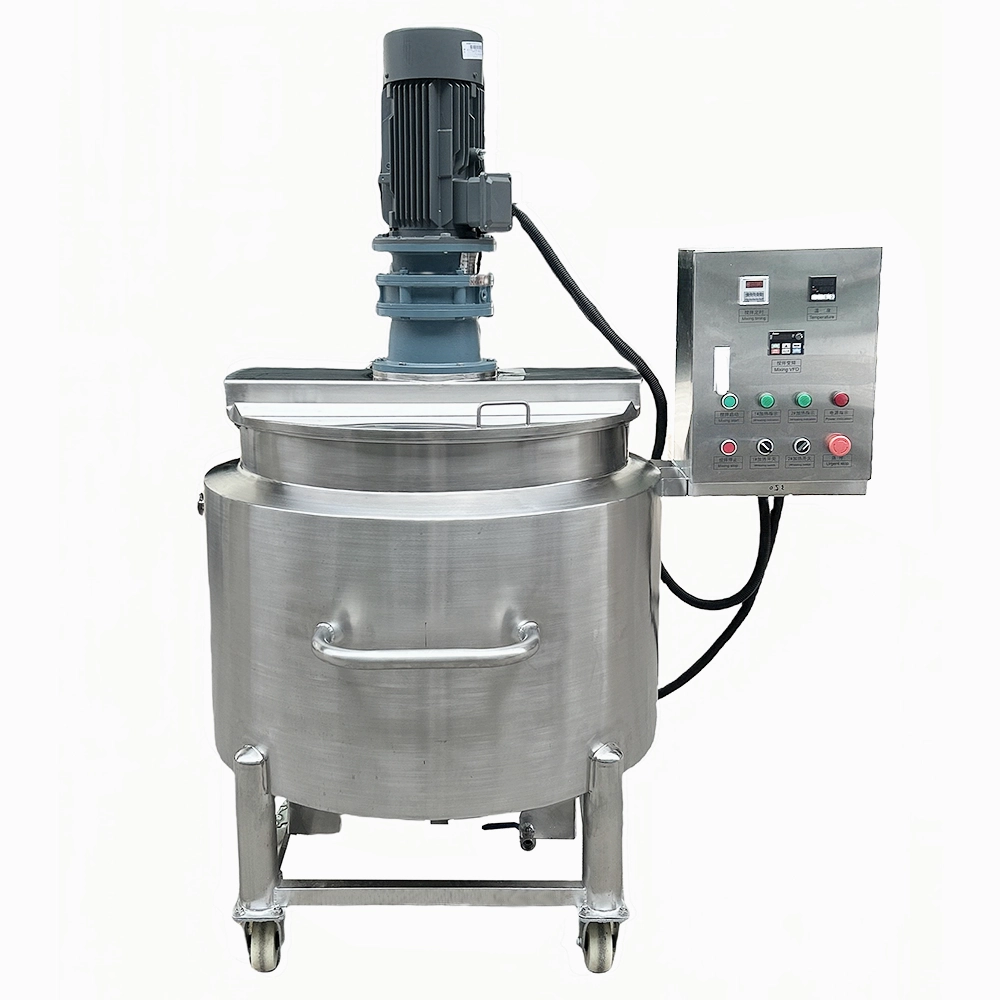
Stainless steel mixing tanks combine a process vessel with an agitation arrangement selected for the intended material and batch operation. Their role can include liquid blending, ingredient incorporation, suspension duties, or thermal preparation where supported by the supplied design.
The category is centered on the vessel and its required processing functions. Stainless steel construction alone does not establish a particular agitator, material grade, surface finish, heating method, or operating pressure.
Begin by describing what the product needs inside the tank, then define the vessel that can support that work. For a broader comparison with homogenizing tanks, dispersers, and separate batch homogenizers, visit the parent Mixing Equipment category.
Individual machine pages provide the verified capacities, components, utilities, and dimensions of specific configurations. Those details should not be generalized across the complete range.
Distinguish Mixing Tanks from Storage and Homogenizing Systems
Similar-looking stainless steel vessels can perform different jobs. Identify the required processing function before deciding that a container is suitable simply because its capacity or construction appears appropriate.
| Equipment family | Primary selection focus |
|---|---|
| Stainless Steel Mixing Tanks | Vessel construction and conventional agitation matched to the batch task |
| Storage & Holding Systems | Holding or buffering material under defined conditions, with agitation only where specified |
| Homogenizing Mixing Tanks | Atmospheric batch preparation combining bulk agitation with a bottom-entry homogenizer |
| Vacuum Emulsifying Mixers | Integrated processing where reduced-pressure operation is part of the requirement |
A conventional mixing tank should not be described as a homogenizing system unless that function is confirmed. Likewise, a covered vessel is not automatically suitable for vacuum or pressure operation.
Specify the Agitation Task Before the Agitator
Describe the change the mixer must produce. The requirement may be to blend compatible liquids, distribute an ingredient, maintain a suspension, or support heat transfer during preparation. Each task needs assessment against the material and operating conditions.
Useful information includes viscosity at processing temperature, solids content, sensitivity to shear, tendency to foam, and changes during ingredient addition or cooling. A single product name is rarely enough to select the agitation arrangement.
The agitator, vessel geometry, working volume, and operating speed must be considered together. A motor rating or visible surface movement does not establish that the complete batch reaches the required condition.
If a separate rotor-stator operation is required, evaluate lifting-type batch High Shear Mixers. If powder wetting and dispersion dominate the task, review High Speed Dispersers rather than assuming that conventional agitation will provide the same result.
Working Capacity and Vessel Geometry
Capacity planning should identify routine batches, smaller important runs, and the largest intended requirement. Total vessel volume, working capacity, and minimum effective batch are separate specifications.
The product must engage the installed agitator as intended. A vessel that physically contains a smaller quantity may not provide effective mixing at that quantity. At the upper end, allow the operating space required by the product and charging method.
Vessel proportions, bottom arrangement, outlet position, and internal components also influence the practical process. These details should be reviewed against mixing, access, and emptying requirements rather than selected from nominal volume alone.
Do not convert a volume requirement directly into product weight without density information. Likewise, vessel size alone cannot establish batches per shift because charging, preparation, discharge, and cleaning also take time.
Product-Contact Material and Surface Finish
Material selection applies to the complete product-contact arrangement, including the vessel, agitator, shaft, seals, gaskets, valves, and connected components. The external frame or cladding material does not establish the material of every wetted part.
The 304 versus 316L stainless steel guide provides supporting selection context. Confirm compatibility with the ingredients, cleaning chemicals, temperature, and intended operating environment.
Surface finish should be specified where relevant and supported by the agreed technical documentation. Terms such as “mirror polished” should not be used to imply an unverified roughness value or a particular regulatory status.
Construction details also deserve review. The hygienic equipment design guide provides a related reading path for welds, finish, and accessible product-contact areas without replacing the selected tank’s specification.
Single-Wall, Jacketed, and Insulated Construction
Tank construction should follow the thermal requirement. A single-wall vessel may be appropriate when no jacket duty is needed, while a jacketed arrangement can be evaluated for heating or cooling. Insulation is another separate design choice.
Heating and Cooling Duties
Define the required product conditions, available utilities, and the relevant processing stages. A jacket does not by itself establish an achievable heating or cooling time, and a controller setting does not describe temperature uniformity throughout every formulation.
Utility and Operating Scope
Confirm the supplied heating method, cooling connections, controls, and any additional equipment. Review associated utility systems against the actual duty rather than selecting them from vessel volume alone.
For an example of a configured vessel, review the open-top jacketed mixing tank product page. Its construction and heating arrangement are model-specific, not standard features of every tank in this category.
Openings, Covers, and Instrument Connections
Define how ingredients enter the vessel, how operators observe the batch, and how samples are taken. Openings and covers should support those tasks while remaining appropriate for the material and working environment.
An open, covered, or sealed arrangement needs its own assessment. The sealed versus open mixing tank guide provides supporting context. A cover must not be treated as proof of pressure or vacuum capability.
Identify required measurements separately. If pH monitoring is part of the process, the mixing tank pH sensor guide provides a relevant technical resource. The sensor, installation arrangement, and maintenance provisions must still be specified.
Charging ports do not automatically include weighing, metering, or automatic dosing. Record those functions explicitly if the production method requires them.
Fixed and Movable Installation Arrangements
Installation type should follow the production workflow. A fixed arrangement can be evaluated around planned connections and a defined operating position. A movable arrangement requires an approved method for positioning, securing, connecting, and handling the vessel.
Mobility should not be assumed to permit movement while mixing, heating, or carrying product. Permitted conditions must follow the delivered equipment’s instructions and rated arrangement.
Plan space for charging, controls, inspection, cleaning, component removal, and discharge. Include the installed product and applicable operating loads when assessing floors and support structures.
Coordinate the tank position with factory equipment planning and the equipment installation guide. Final responsibilities should address the actual tank, utilities, surrounding equipment, and access requirements.
Cleaning, Drainage, and Changeover Access
Review how material is removed from the vessel and how contacted components are cleaned. The agitator, shaft, seals, outlet, valves, and instrument connections can require different inspection or cleaning provisions.
A spray ball, where supplied, is one cleaning provision rather than a complete cleaning system. The CIP spray ball versus manual cleaning guide supports discussion of the supply, return, coverage, drainage, and procedural scope.
For changes between products, define the condition required before the next batch. The cleaning dead corners guide provides a related resource for assessing areas that need separate attention.
Neither stainless steel construction nor an apparently smooth interior establishes complete drainage, zero retained product, or validated cleaning. Those outcomes require an appropriate design and evaluation method.
Discharge and Connections to Other Equipment
The discharge arrangement should match the product and receiving operation. Review flow behavior, discharge temperature, receiving position, transfer distance, and the need to minimize retained material.
Connection type affects installation and disassembly. The clamp versus flange connection guide provides supporting context, but the final connection schedule must identify the actual size, material, rating, and scope.
Where gravity discharge is unsuitable or insufficient, evaluate fluid transfer systems using the pump selection guide as a related resource.
If the batch proceeds to filling equipment, agree the required product handover conditions and receiving capacity. This interface review should remain separate from the complete application-specific production process.
Operating Scope and Future Modifications
Confirm control functions, operating limits, and maintenance access for the supplied tank. A variable-speed drive or touch screen does not establish automatic ingredient addition, recipe execution, or electronic batch records.
Do not assume that a later increase in viscosity, batch size, or agitation duty can be accommodated without review. The vessel, drive, support structure, shaft, seals, and utilities may all be relevant to a proposed change.
The equipment upgrade and retrofit guide provides related planning context. A provision for future modification is not the same as a confirmed upgrade capability.
Keep the approved equipment scope and operating documentation current when changes are agreed.
Typical Product Applications
Application examples include compatible personal-care liquids, liquid detergents, liquid food formulations, and sauces and syrups.
Define the Mixing Tank Configuration with StriversMachinery
StriversMachinery manufactures core mixing and emulsifying equipment in-house. Complementary equipment is sourced from long-term partner manufacturers where required, with StriversMachinery responsible for complete production line integration and delivery.
Provide the product characteristics, batch range, mixing task, material requirements, thermal duty, cleaning approach, and discharge method. Include available utilities and the proposed installation arrangement.
Compare proposals against the same requirement and distinguish standard features from options. The total cost of ownership guide provides a supporting resource for considering installation, operation, cleaning, and maintenance alongside the initial equipment price.