Liquid Filling Machines

More About Our Machines
Liquid Filling Machines for Different Products and Containers
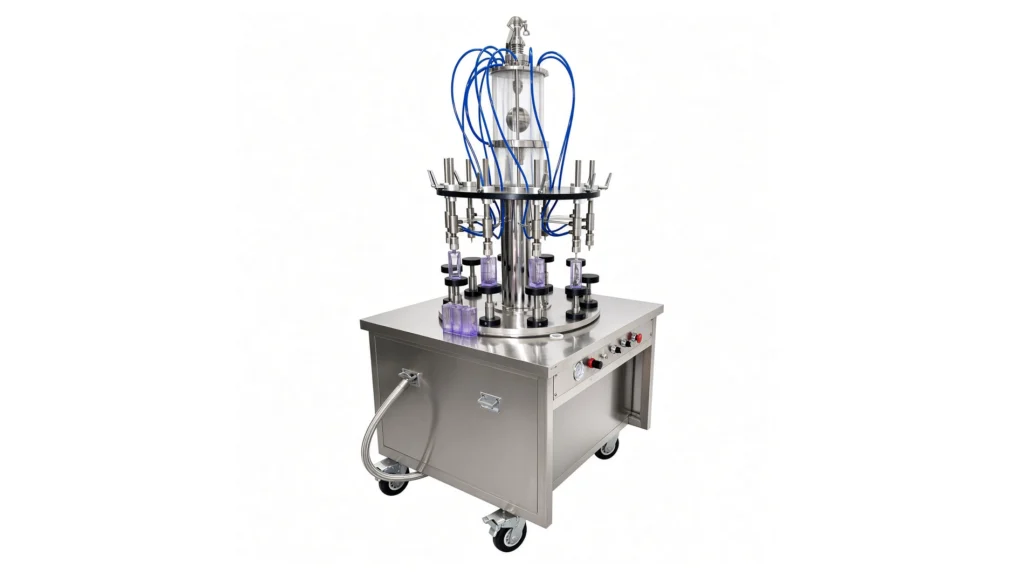
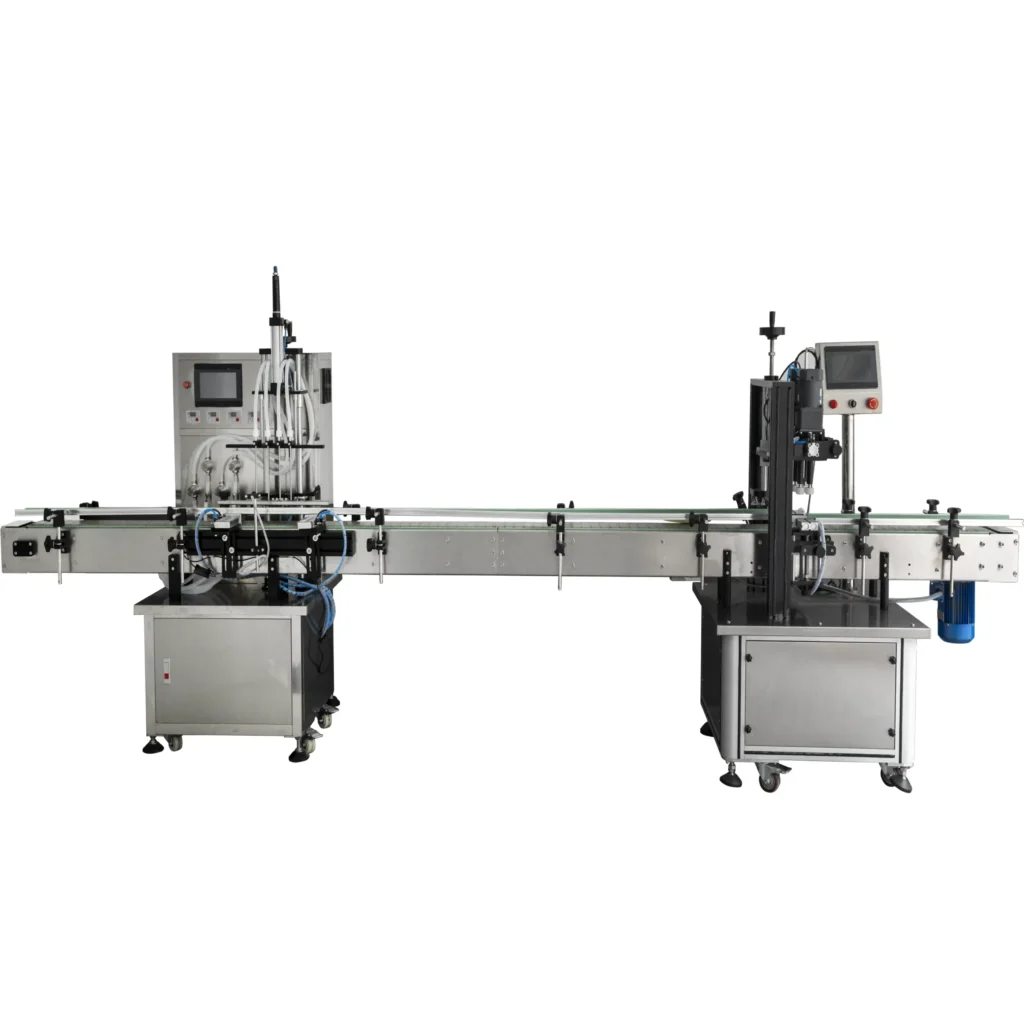
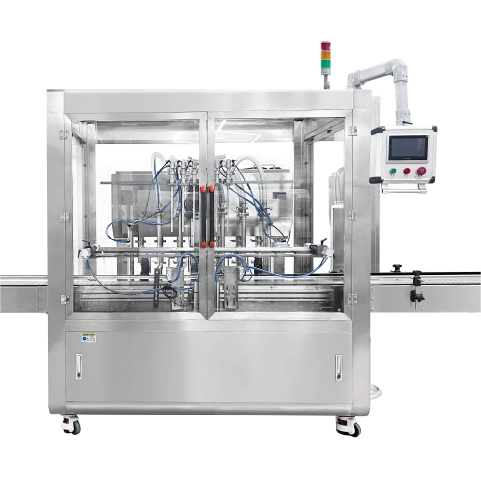
Liquid filling machines dispense a controlled quantity of liquid into a receiving container. The appropriate configuration combines a suitable metering method, product-contact pathway and container-handling arrangement for the intended production duty.
Within the broader Filling Machines range, this category includes semi-automatic and automatic equipment. A standalone filler may perform the dispensing operation, while other configurations coordinate filling with additional handling or closure functions.
Liquid is a broad product description rather than a complete equipment specification. Free-flowing, foaming and more viscous liquids can require different feeding and dispensing arrangements. Container geometry, product condition and the required quantity should therefore be evaluated together.
Use this category to compare selection dimensions. Individual equipment pages provide the confirmed metering method, operating functions, compatible formats and performance specifications for each configuration.
Liquid Filling Equipment Configurations
Liquid filling equipment can be classified by automation level, dispensing arrangement and packaging interface. These dimensions should be reviewed separately: an automatic handling system does not independently identify how the liquid quantity is measured.
| Configuration dimension | What to establish | Selection consideration |
|---|---|---|
| Semi-automatic operation | The powered filling functions and remaining manual tasks | Operator involvement, package variety and production scheduling |
| Automatic operation | The supplied container-transfer and dispensing sequence | Continuous operation, replenishment and downstream interfaces |
| Metering arrangement | The actual dispensing and quantity-control method | Product compatibility and the agreed filling requirement |
| Product supply | The receiving and replenishment arrangement | Consistent feeding within the equipment’s approved conditions |
| Container handling | How packages are loaded, supported and discharged | Container stability, positioning and format conversion |
| Integrated closure | Any supplied cap or other closure operation | The boundary between filling and package completion |
Confirm the actual combination on the selected product page. Features such as automatic container feeding, multiple filling outlets, closure application and electronic records must not be inferred from a general equipment description.
Liquid Characteristics That Influence Equipment Selection
The liquid should be assessed at its intended filling conditions. Flow behavior, temperature, foaming tendency, entrained air and suspended material can influence the suitable dispensing pathway.
A formulation that appears easy to pour may still create difficulties during repeated filling. Relevant observations include whether it forms foam, leaves a trailing deposit, settles during holding or changes condition over the packaging period.
Where viscosity information is available, identify the measurement conditions. A value recorded under one temperature or test method should not automatically be treated as representative of every production condition.
Product names alone are insufficient to establish compatibility. Different formulations sold as serum, shampoo or detergent can create different handling requirements. Describe the actual product rather than relying only on its commercial category.
Metering and Quantity-Control Methods
The metering arrangement determines how the equipment controls the dispensed quantity. Selection should identify the actual method and the conditions needed for consistent operation.
Pump-based dispensing and other filling arrangements can differ in their product-contact components, setup and service requirements. The suitability of a method depends on the formulation and production duty rather than its name alone.
Servo control, a touchscreen interface or automatic container transfer does not independently establish a particular metering principle. Confirm which settings are adjustable and what operating conditions the supplied control method assumes.
The guide to time-based and volume-based filling provides a supporting comparison. Model-specific performance and functions should remain tied to the individual equipment specification.
Foaming, Splashing and Nozzle Behavior
Foaming and splashing should be assessed with the actual liquid and container. Their effect depends on the product, the available filling space and the supplied dispensing arrangement.
Review nozzle access, product entry and the condition of the container opening after filling. A narrow neck and a wide opening present different positioning requirements, while lightweight containers may need particular support.
Any provision intended to manage foam, nozzle movement or the end of dispensing must be confirmed for the selected configuration. Do not assume that every liquid filler includes descending nozzles, automatic suck-back or a drip-control function.
The required result should be defined through representative evaluation. A nozzle feature does not independently guarantee foam-free or drip-free filling for every formulation.
Container Openings, Stability and Format Changes
Container compatibility involves more than nominal capacity. Relevant details include the opening, body geometry, rigidity, stability and the surfaces available for support or guidance.
Confirm how the container is positioned relative to the nozzle and how it moves into and out of the filling station. A package that stands reliably when empty may behave differently during filling or downstream transfer.
For multiple formats, identify the required parts and adjustments. Guides, supports, nozzle positions and transfer components may need separate conversion work.
Specialized formats should be reviewed through the relevant equipment category. For coordinated vial handling and closure operations, see vial filling, stoppering and capping equipment. A general liquid-filling capability does not establish compatibility with every vial or closure.
Semi-Automatic and Automatic Operating Requirements
Semi-automatic liquid fillers retain defined operator tasks, which may include container positioning, cycle initiation or removal of filled packages. Automatic configurations coordinate more of the handling sequence where included.
The appropriate level depends on staffing, package consistency, operating hours and the variety of production tasks. Compare the complete sequence rather than selecting solely from the automation label.
Identify product replenishment, container loading, closure supply and finished-package collection separately. Automatic dispensing does not establish that all surrounding operations are also automated.
Detection, alarms and rejection need their own scope definition. A container-presence function does not establish fill inspection, and automatic discharge does not independently establish separation of defective packages.
Production Output and Operating Schedule
Required output should describe the complete filling duty, including the liquid, target quantity, package and available operating time. Nominal machine speed does not establish sustained production for every combination.
Include product replenishment, container loading, operating checks and planned interruptions in the production review. Downstream package handling can also influence the useful output of the filling operation.
Where several liquids or containers share equipment, assess cleaning and conversion time alongside dispensing capacity. Short production runs may place greater importance on accessible changeover than on nominal speed alone.
Future requirements should identify the additional products, packages or operating hours expected. A new formulation or closure may require configuration changes rather than only a faster filling cycle.
Filling Accuracy and Representative Evaluation
Filling accuracy should be assessed under agreed product and operating conditions. The requirement needs a defined target quantity, measurement basis and method of evaluating variation.
Clarify whether quantity is specified by mass or volume and how the production team will verify the result. Product condition and feeding consistency should reflect the intended duty when assessing equipment suitability.
The filling accuracy testing guide provides further measurement context. Specific accuracy figures belong on individual machine pages and in the agreed technical documents.
Evaluation should also consider the filled package. Quantity consistency, visible foam and the condition of the opening are separate observations; an acceptable result for one does not establish the others.
Product Supply and Upstream Transfer
A liquid filler needs a product supply that stays within its approved operating conditions. Define the receiving connection, replenishment method and operating responsibility before finalizing the equipment interface.
Related mixing equipment may prepare the liquid, while storage and holding systems may buffer production before packaging.
Review how the supply behaves as the source vessel level changes and when replenishment occurs. The filling machine should not be assumed to compensate automatically for every variation introduced upstream.
Where separate transfer equipment is needed, the pump selection guide for process manufacturing provides related context. The actual transfer conditions must match the selected filler.
Cleaning and Multi-Product Changeover
Cleaning selection depends on the product residue, contact materials and requirements for the next production task. Review the complete dispensing pathway rather than only the visible hopper or nozzle.
Confirm which components are removable and which require an approved cleaning route through the assembled equipment. Pumps, tubing, seals and valves can have different service requirements.
The guide to cleaning dead corners in process equipment provides related access considerations. The machine documentation remains the reference for permitted cleaning methods.
Stainless steel construction does not independently establish automatic cleaning, sterilization or suitability for every cleaning agent. Required cleaning capabilities should be confirmed for the actual configuration.
Liquid Filling Compared with Cream, Paste and Pouch Equipment
Equipment categories can overlap where product-handling requirements are similar. A commercial description such as liquid or gel does not create a fixed boundary between suitable dispensing arrangements.
Where a formulation requires more structured-product handling, review cream filling machines or paste filling machines. The actual formulation should determine which configuration deserves assessment.
Packaging format can also change the relevant category. Flexible packages require a support and closure arrangement appropriate to their construction; see pouch filling machines for that equipment group.
These links provide alternative selection paths, not evidence that all equipment within them handles the same products or containers.
Closure and Downstream Packaging Interfaces
A standalone liquid filler may need separate equipment to complete the package. Confirm whether the selected scope includes closure application or ends after dispensing and container discharge.
Related capping machines and labeling machines should be evaluated against the actual container and operating sequence.
Transfer conditions need to account for container stability, spacing and presentation. A set of individually automatic machines does not independently establish a coordinated packaging line.
For connected processing and packaging projects, review complete production line solutions. Identify the equipment boundaries and operating responsibilities at each interface.
Installation, Compatibility and Maintenance Access
Installation planning should provide access for product replenishment, package loading, cleaning and maintenance. The physical machine footprint alone does not describe the complete working area.
Electrical, compressed-air and any other service requirements must follow the selected configuration. Include auxiliary feeding and handling equipment in the installation review where supplied.
Product-contact compatibility should cover the full wetted pathway. The frame material or a single stainless steel component does not establish the suitability of tubing, seals, pumps and valves.
For flammable or otherwise sensitive liquids, the intended environment and equipment configuration require specific assessment. Compatibility and hazardous-area suitability must be confirmed for the actual duty.
Typical Applications
Toner, perfume, essential oil, serum, shampoo, liquid soap, detergent, juice, syrup and selected pharmaceutical liquids, subject to confirmed product and equipment compatibility.
Key Factors to Evaluate Across Liquid Filling Machines
- The actual liquid characteristics at the intended filling conditions.
- The required quantity and agreed measurement basis.
- The supplied metering and dispensing arrangement.
- The container opening, stability and handling requirements.
- The product-supply method and replenishment conditions.
- The automatic functions and remaining operator tasks.
- The sustained output and production schedule.
- The cleaning method and format-conversion requirements.
- The closure and downstream transfer interfaces.
- The utilities, contact-material compatibility and service access.
StriversMachinery evaluates equipment configurations according to individual project requirements. Define the liquid, container and production duty together before selecting the appropriate filling arrangement.