
Pharmaceutical & Ointment Products







More About These Applications
Equipment for Ointments, Gels and Pharmaceutical Product Handling
Equipment for Ointments, Gels and Pharmaceutical Product Handling
An ointment in a tube, a liquid in a vial and a product filled into a cartridge represent different manufacturing and packaging tasks. The required equipment depends on the formulation, container system and manufacturing conditions defined for the product. They should not be grouped into one standard pharmaceutical line simply because they serve the same industry.
StriversMachinery supplies mixing, holding, transfer and packaging equipment that can be assessed against a defined project specification. For ointments and gels, the discussion often starts with preparation, consistency and discharge. For vial and cartridge projects, it also needs to address the complete filling and closing sequence and its place within the manufacturer's production environment.
This page provides an equipment planning route. Product classification, manufacturing controls and qualification requirements belong to the manufacturer's project and quality framework. Cosmetic products without that pharmaceutical context can follow the skin care production route, while toothpaste and mouthwash have a separate oral care application pathway.
Define the Product and Manufacturing Scope First
Define the Product and Manufacturing Scope First
Begin with the dosage form, physical characteristics and package. Identify whether the process involves melting, emulsification, powder incorporation, simple blending or another established operation. Specify the intended batch size and the conditions at which product will be transferred and filled.
Keep nonsterile ointment work separate from any project that requires sterile or aseptic manufacturing. The latter involves more than selecting a filling machine and an enclosure. The facility, product path, components, procedures and required qualification activities must be defined through the manufacturer's project requirements.
Mixing equipment can then be evaluated against the identified processing duties. Review the required mixing, vacuum, filtration and handling functions individually. The manufacturer's engineering and quality teams can then assess the proposed configuration against the facility and process requirements, including any environmental controls or qualification work that must be coordinated outside the machine supply.
Ointment and Gel Preparation
Ointment and Gel Preparation
Ointment preparation may require handling materials at a controlled temperature, combining ingredients and developing a consistent bulk product. Gels can follow another route involving dispersion, hydration or blending. The formulation and established procedure determine the required mixing action and order of additions.
Vacuum emulsifying mixers are relevant where the product needs emulsification or air management. The hydraulic-lift vacuum mixer with PLC control provides one configuration to assess. For other mixing duties, a mobile electric-lift rotor-stator homogenizer with a vessel offers a different arrangement. Its basic configuration should not be assumed to include heating, cooling or vacuum functions.
Review how ingredients are introduced, where samples are taken and how the finished product leaves the vessel. A successful mixing stage is only useful if the product can be transferred without creating a difficult cleaning or handling task. The equipment proposal should show those operations and the space needed to perform them.
Heating and Cooling Where the Formulation Requires Them
Heating and Cooling Where the Formulation Requires Them
Some ointments need a thermal process, while others can be prepared without heating. Identify the required temperature conditions at each stage instead of specifying a heated vessel as a general pharmaceutical feature. Later additions and the product's final consistency may influence how cooling is coordinated with mixing.
Mixing tanks with an appropriate jacket or other confirmed thermal arrangement can support specific preparation duties. Utility systems then need to match the connected equipment. Heating supplied to a jacket is a different function from direct-contact steam, and those duties should remain separate in the project specification.
The heating, mixing and filling guide provides background on coordinating temperature-sensitive operations. The proposal should state which parts control temperature and which simply hold or transport product. If a transfer hose or hopper needs a thermal function, that must be included explicitly rather than assumed from the heated main vessel.
Water, Product-Contact Parts and Cleaning Access
Water, Product-Contact Parts and Cleaning Access
Where water is part of the formulation or process, water treatment systems should be selected against the required water specification and source conditions. Storage, distribution and use are part of the same discussion. A treatment machine's name alone does not establish the quality of water at every downstream point.
Review product-contact construction across vessels, pumps, tubing, seals and filling parts. The 304 versus 316L stainless steel guide provides background for metal selection, but other wetted components also require assessment. For a peristaltic filling arrangement, include the tubing material and the other wetted components in the compatibility review alongside any stainless steel filling parts.
The cleaning access guide helps frame questions about valves, outlets and connections. The manufacturer should define cleaning procedures and acceptance requirements, and the selected equipment must provide the access and functions needed to carry them out. Documentation expectations should be specified for the actual project rather than inferred from a material label.
Holding and Transferring Ointments
Holding and Transferring Ointments
After preparation, the product may move directly to filling or enter a defined holding stage. Storage and holding systems should match the permitted conditions, including any agitation or temperature control required by the process. The batch's status and identity must remain clear throughout the handover to packaging.
Fluid transfer systems need assessment using the finished product at its transfer temperature. A mobile rotary lobe pump is one equipment arrangement to evaluate for compatible viscous products. It is not a universal transfer solution for every pharmaceutical formulation or a substitute for the filler's dosing mechanism.
The pump selection guide provides a broader comparison. Consider the source vessel, transfer distance, retained product and the way the route is emptied and cleaned. Small batches can make residual material significant, while sensitive products may impose additional handling requirements. Those requirements should be part of the agreed process brief before selecting a pump.
Tube Packaging for Ointments and Gels
Tube Packaging for Ointments and Gels
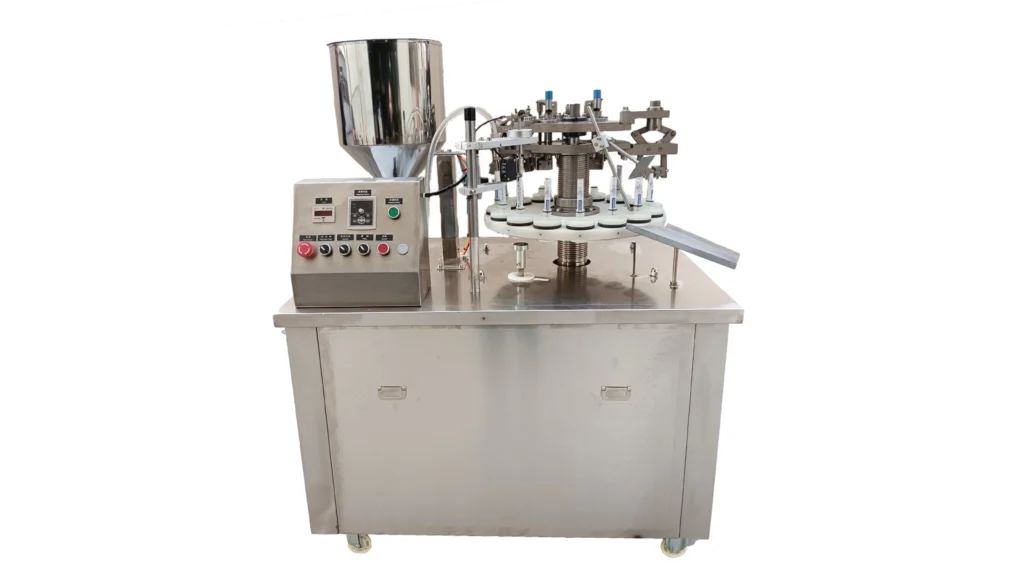
Tube filling and sealing equipment must be matched to the tube construction and product. Plastic, laminate and aluminum tubes do not share the same closing method. The tube material and sealing guide explains those differences at the packaging level.
The automatic hot-air tube filling and sealing machine provides a route for compatible plastic and laminate tubes. The semi-automatic aluminum tube filling and folding machine uses a mechanical tail-closing route for aluminum tubes. Select the closing route with the tube supplier's samples, then assess filling and the completed tail using the intended product and package.
Assess dosing with the intended ointment or gel, including nozzle cutoff and contamination near the area to be closed. The manufacturer's package checks should cover the completed tube, not only the quantity dispensed. Include tube loading, coding, finished-tube handling and format changes when estimating the output that the production team can sustain.
Jar and Bottle Filling for Suitable Products
Jar and Bottle Filling for Suitable Products
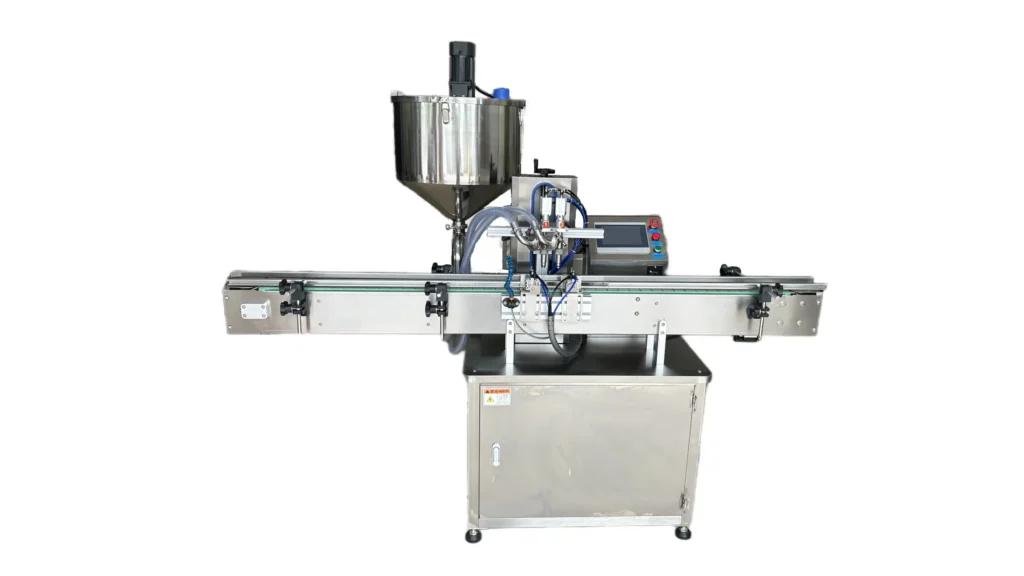
Some ointments and gels use jars or other containers rather than tubes. Cream and viscous-product filling equipment offers relevant dosing arrangements to evaluate against the formulation and package. Container access, stability and the behavior of the product at the nozzle all influence the choice.
A semi-automatic vertical gear pump filler is one arrangement for compatible products where operators place and remove containers. A more automated format can be considered for longer repeated runs. Material compatibility and cleaning requirements should be assessed for the selected machine rather than generalized across all fillers using the same pump principle.
The filling accuracy testing guide provides a reference for quantity checks. Include representative operating conditions and the complete container-handling cycle in the trial. The product manufacturer should define any additional quality or acceptance checks, with the supplier confirming which equipment functions and records are included in the proposed configuration.
Vial Liquid Filling and Closing
Vial Liquid Filling and Closing
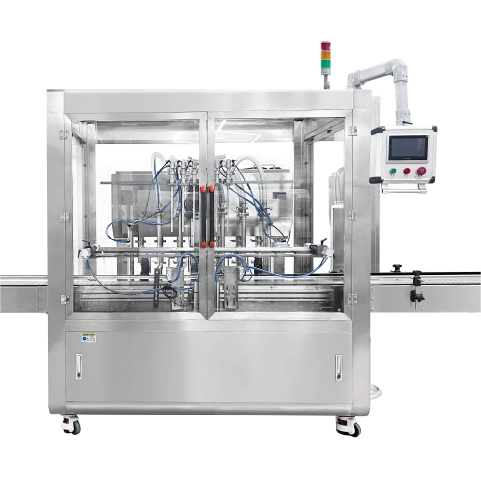
Vial packaging involves a sequence of container presentation, liquid dosing, stopper handling where required, cap placement and closing. Vial filling, stoppering and capping equipment should be assessed against the actual vial, stopper and cap set rather than selected from the fill quantity alone.
The desktop vial filler with a local air-filtering hood provides a compact arrangement with local air filtration and operating-area protection. That description does not establish a classified production environment or a sterile process. The two-head vial liquid filling and capping machine offers another equipment arrangement for compatible liquid products and components.
The complete project must define how containers and closures arrive at the machine and what handling is required before and after filling. The supplier should confirm the actual machine sequence, component feeding and closing method. Pharmaceutical manufacturing requirements, environmental controls and qualification expectations should be coordinated through the manufacturer's project specification.
Cartridge and Powder Packaging Are Separate Routes
Cartridge and Powder Packaging Are Separate Routes
Cartridges require a matched container and stopper handling sequence. The servo cartridge filling and vacuum stoppering machine provides a specific equipment route to assess for that package. Vacuum stoppering is an equipment function; its suitability for a product depends on the complete process and component assessment.
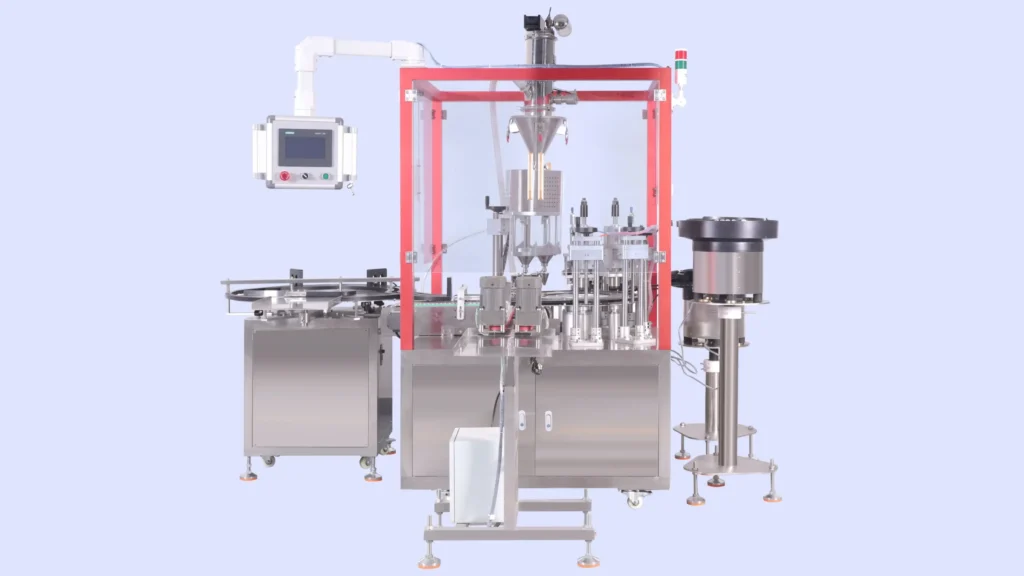
Powder-filled vials follow a different dosing approach. The two-head vial powder filling and capping machine uses powder dosing and a separate supply arrangement, rather than a liquid filling pump. Its dosing quantity should be discussed by mass, together with the powder's actual handling characteristics.
Do not assume the same feeding and filling performance across powders with different flow behavior or across liquids with different viscosity. Provide representative materials and component samples, and define the required checks before trials. Where additional environmental or containment functions are needed, identify them in the scope instead of treating a machine cover as evidence that those functions are included.
Closing, Coding and Secondary Packaging
Closing, Coding and Secondary Packaging
For threaded jars and bottles, capping equipment should match the closure and container support requirements. Vial crimping and tube tail closing are different operations and should remain within their appropriate packaging routes. Specify the required closing method and the component set for each product before coordinating the downstream inspection and packing stations.
Coding machines and labeling equipment need to fit the defined pack identification process. Determine the required print position, label surface and any inspection interfaces before arranging the downstream machines. Do not assume tracking, inspection or record functions unless they are confirmed in the selected configuration.
Cartoning equipment can be assessed against the finished container, carton and any included leaflet or accessory. The manufacturer should define the required checks and handling procedure. Leave space for rejected packs, component replenishment and line clearance, so the proposed layout supports the agreed workflow rather than merely fitting the machines into the available floor area.
Keep Supply Boundaries Visible in the Equipment Specification
Keep Supply Boundaries Visible in the Equipment Specification
An equipment proposal should identify the parts supplied with each machine and the interfaces that remain the project's responsibility. This can include transfer tubing, product vessels, component preparation, environmental services and connections to downstream equipment. A short general description is not enough when several suppliers contribute to the same manufacturing route.
For vial or cartridge work, show how containers and closures reach their feeding systems and how completed units leave the machine. For ointments, show how released bulk product is connected to the filler and what happens during a pause. These are different workflows and should have separate equipment assessments.
The manufacturer should also identify which product families will share equipment and what changeover controls apply. That allows the supplier to discuss accessible construction and the confirmed cleaning functions in a meaningful way. Keeping the scope explicit helps engineering and quality teams review the same proposal without assuming that an enclosure, control system or material description includes functions that have never been specified.
Trials, Documentation and Project Handover
Trials, Documentation and Project Handover
A useful equipment specification states the product, operating conditions, package and functions that the supplier is expected to demonstrate. It also identifies documentation and qualification support required for the project. Routine machine testing and formal acceptance activities should not be treated as interchangeable unless the scope explicitly defines them.
The pre-shipment machine testing article provides background for planning demonstrations. Agree on representative materials, components and checks before testing, including cleaning access and changeover work where those affect the intended operation. For development work, laboratory and pilot-scale systems can support trials of the appropriate process.
StriversMachinery can coordinate a complete production line proposal around the confirmed requirements. The resulting scope should identify supplied functions, manual steps, external equipment and installation interfaces. This allows the manufacturer's engineering and quality teams to assess the proposal against their process and facility requirements without relying on broad pharmaceutical-grade or compliance claims.
Include the expected product changes and component replenishment work in the agreed operating schedule.