
Capping Machines
StriversMachinery supplies capping machines for compatible screw caps, press-on closures, perfume pump crimps, and related closure-assembly operations. The range includes manually supplied benchtop equipment and automatic configurations with container handling and cap feeding. Selection depends on the bottle, closure geometry, required closing action, production output, and operator involvement. Explore the equipment below to assess suitable arrangements for cosmetic, personal care, food, and chemical packaging.

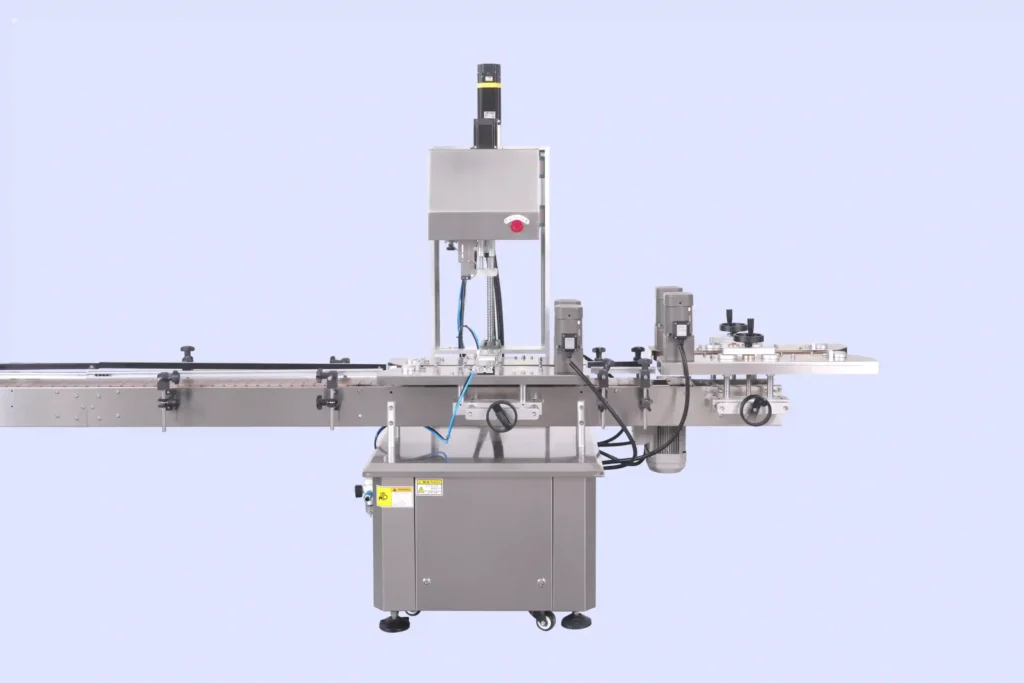

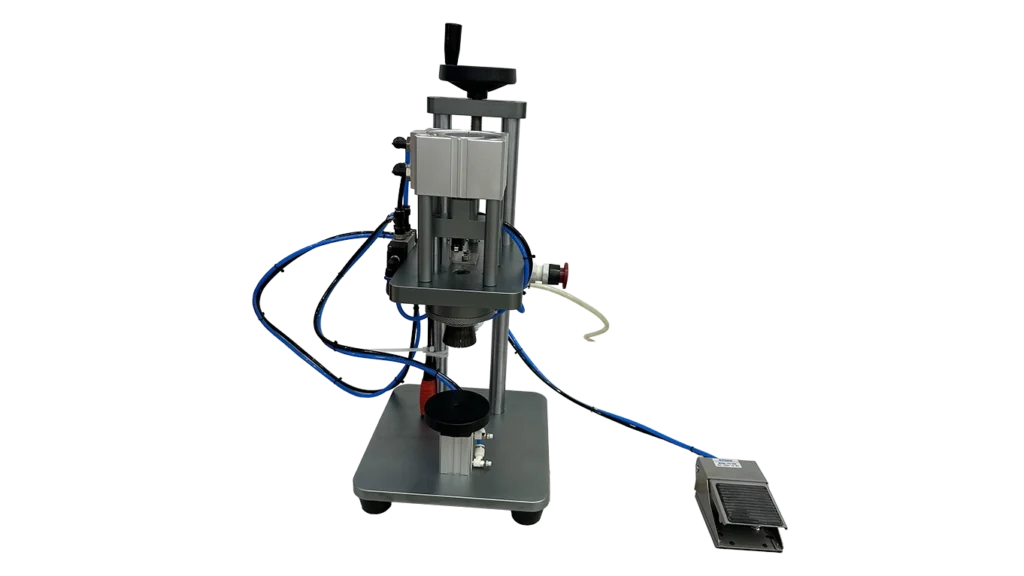

More About Our Machines
Capping Machines for Screw, Press-Fit, and Crimp Closures
Capping equipment applies or secures a compatible closure to a container. The correct method depends on how the closure engages with the bottle, jar, tin, or other package. Threaded tightening, press fitting, and perfume pump crimping address different interfaces and need different tooling or handling arrangements.
Within the packaging equipment range, this category focuses on closure application and container support. The essential selection factors are closure geometry, bottle restraint, application method, and the tasks performed by operators or automatic feeding equipment.
A useful specification describes the closure in its fitted condition and the surfaces available for handling. A sample cap and container together are more informative than the nominal cap diameter alone, particularly for pumps and trigger sprayers.
Closure Methods and Related Assembly Tasks
| Method | Packaging Interface | Selection Priority |
|---|---|---|
| Screw capping | A threaded closure engages with a compatible container neck. | Accessible tightening area, cap seating, bottle restraint, and required closure result. |
| Press or snap capping | A compatible closure seats through mechanical pressure. | Closure profile, pressing support, container strength, and seated position. |
| Perfume pump crimping | A compatible metal pump closure is formed around the bottle finish. | Pump skirt, neck geometry, matched crimping tooling, and bottle support. |
| Decorative collar pressing | A decorative collar is fitted around an already secured perfume pump. | Collar dimensions, matching pressing tool, and final assembly position. |
Decorative collar fitting is included here as a related assembly task. It finishes the pump presentation, while the pump’s own securing operation addresses the functional closure. Keeping those responsibilities separate helps select the appropriate equipment for each part of the pack.
Wheel-Type Screw Capping and Bottle Restraint
Wheel-type capping acts on the accessible outer portion of a compatible screw closure. The container needs suitable restraint so the tightening action seats the cap rather than simply turning the bottle. Closure contact surfaces and container support therefore need to be assessed together.
The semi-automatic wheel-type screw capper provides a product path for operator-assisted work. The automatic wheel-type screw capper provides another path for a different handling arrangement.
Review each operating arrangement around product loading, closure presentation, tightening, and removal. Container wall strength, finish, and shape affect how the pack can be held. Decorative surfaces may also require attention to contact conditions and the agreed cosmetic acceptance standard.
Pump Heads, Trigger Sprayers, and Unusual Closures
Pump and trigger packages add features that can affect clearance and automatic presentation. The threaded tightening section may be compatible with a screw-capping arrangement even when the upper part of the closure has an irregular profile.
Assess the regularity and accessibility of the tightening section, together with dip tubes, projecting actuators, and the required final assembly. A special-shaped tightening section can require a different tooling or handling approach from a conventional round screw cap.
Orientation is a separate requirement. If a trigger or pump must face a particular direction relative to the label or bottle, include that relationship in the specification. Tightening the threaded closure and controlling its final angular presentation are different acceptance tasks and should be discussed independently.
Press Capping and Perfume Closure Equipment
For compatible press-fit packages, a press-capping arrangement applies the seating action required by the closure. Support, alignment, and the completed position are the key category-level considerations.
Perfume packaging uses another interface. A perfume pump crimping machine secures a compatible pump using matched tooling. Review the neck finish and pump dimensions as a set so the forming operation suits the actual package.
Where a decorative ring is part of the design, a perfume collar pressing machine addresses that later assembly task. The collar fit and appearance should be assessed separately from the pump’s functional attachment to the bottle.
Manual Closure Placement and Automatic Cap Supply
Cap handling is a major difference between capping arrangements. Operators may place a cap before machine tightening, or compatible closures may be delivered through an automatic feeding and placement arrangement. These approaches create different demands on staffing and packaging consistency.
Automatic feeding needs assessment of the entire closure, including shape, projecting parts, and how it can be oriented. Mixed closure designs can require different presentation arrangements even if their threaded sections have similar dimensions.
Specify bottle loading, cap placement, tightening, and discharge separately. This makes the operating level clear and allows a project to combine manual and automatic work where appropriate. Replenishment and removal of completed packs also belong in the capacity assessment.
Closure Quality and Changeover Requirements
Acceptance should describe the completed closure: correct seating, suitable tightening or forming, and acceptable package appearance. An adjustable setting is an operating feature, while a measured result requires the appropriate checking method. Define any recording or inspection requirement separately.
Format changes can involve height adjustment, container guides, bottle restraint, contact parts, or matched closure tooling. Assess which changes are adjustments and which need different parts. The container and closure combination determines the scope of each conversion.
For temperature-dependent packs, the hot filling, cooling, and capping guide provides related context. Use the actual product condition at capping when assessing the finished closure and package handling.
Capping and Inner Foil Sealing
A threaded cap and an inner foil liner perform different packaging tasks. For a conventional capped induction process, the cap holds the suitable liner against the container rim before the foil is bonded to that rim in a separate sealing stage.
Review sealing machines when the package requires this inner seal. The capping arrangement needs a compatible closure fit, while the sealing arrangement needs the specified liner and container interface.
Keeping the two operations distinct makes acceptance clearer: the cap must be properly fitted, and the inner seal must meet its own requirement. A project can coordinate both tasks while retaining clear equipment responsibilities and separate checks on the finished package.
Closure Contact Parts and Routine Access
The parts that contact the cap and restrain the container are central to the capping result. Review their accessibility, condition, and suitability for the package finish. Repeated contact can change as working parts wear, so routine observation should include the completed closure as well as the equipment movement.
For crimping and collar assembly, keep matched tooling associated with the relevant package format. Clear identification helps operators return to the intended setup when the production schedule changes. Closure samples and accepted finished packs provide useful references alongside the equipment instructions.
Allow enough working space to load products, replenish closures, adjust height, and service the application area. These activities influence the practical station layout and remain relevant whether the main application cycle is operator-assisted or automatic.
Typical Applications
Skincare bottles and jars, shampoo bottles, lotion pumps, trigger sprayers, perfume bottles, food containers, household product packs, and compatible press-fit packages.
Selection Criteria and Downstream Handling
Compare closure method, accessible handling surfaces, bottle support, cap supply, product condition, and the planned format range. State required output using completed acceptable containers and include operator loading, cap replenishment, and routine checks.
Provide representative filled containers and closures for assessment. Include decorative finishes, unusual geometry, and any orientation requirement. These details help establish the appropriate contact parts and the division between operator tasks and machine functions.
After capping, containers may move to labeling equipment or other packaging tasks. Define the discharge condition so the receiving operation can handle the package consistently. Longer-term comparisons can include contact-part wear, changeover effort, and service access; the total cost of ownership guide discusses those wider cost considerations.