
Homogenizing Mixing Tanks

More About Our Machines
Homogenizing Mixing Tanks for Atmospheric Batch Preparation
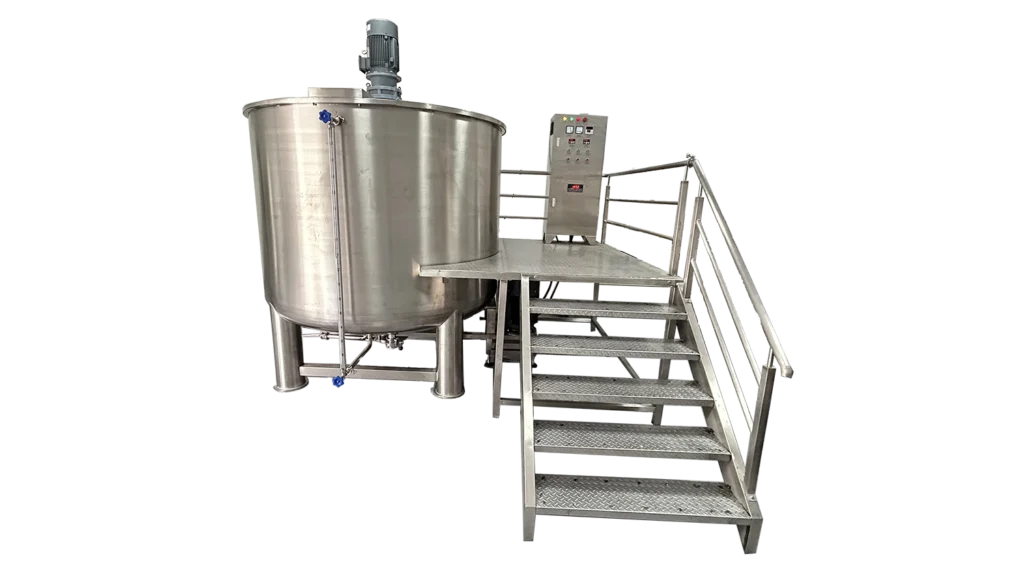
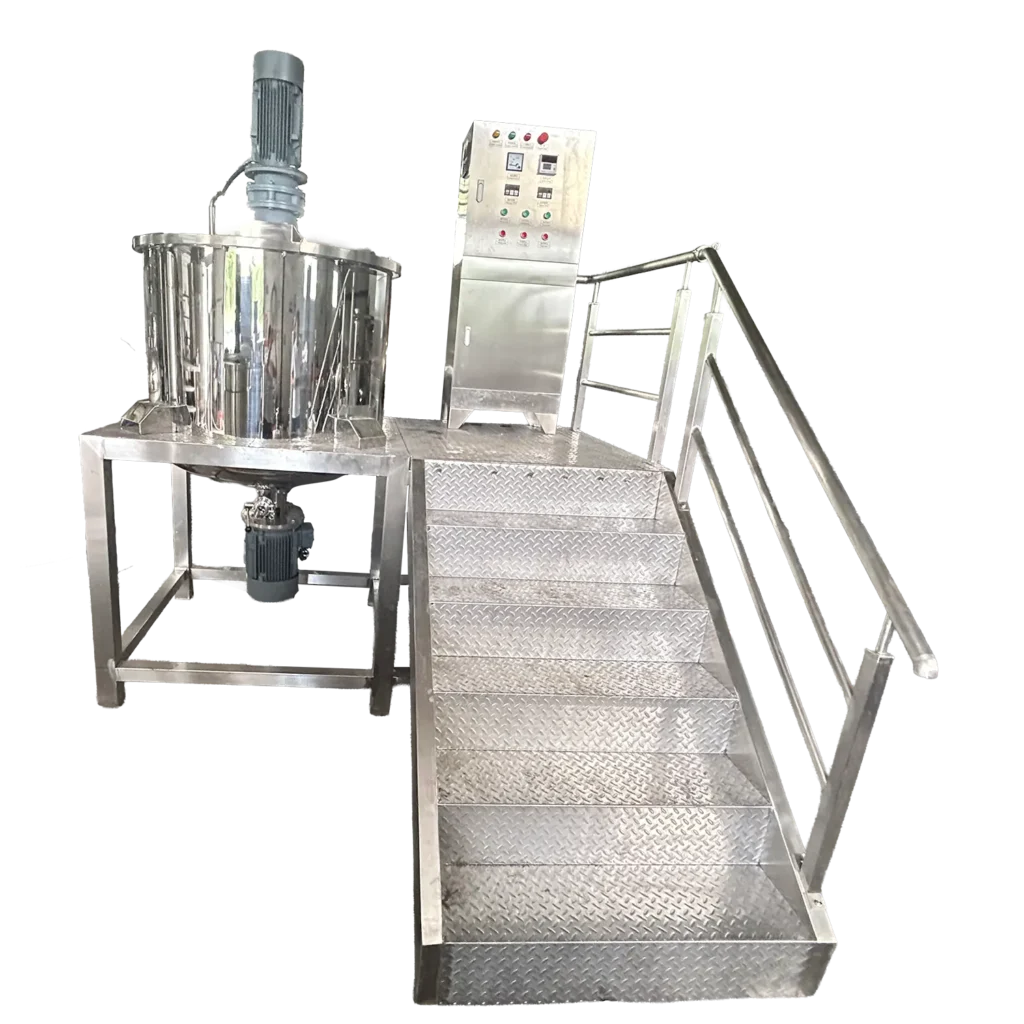
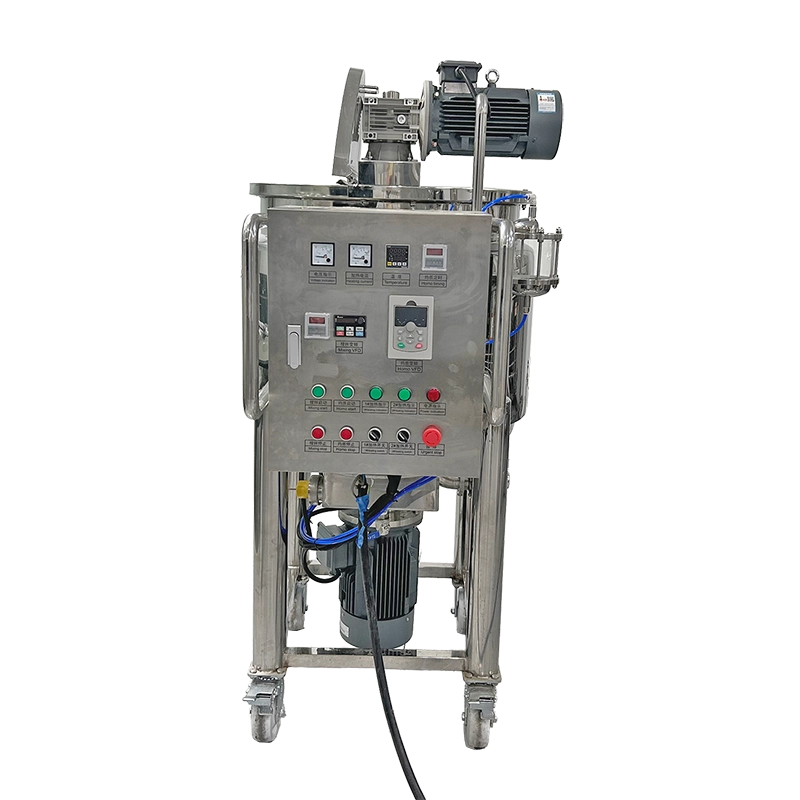
Homogenizing mixing tanks combine an atmospheric vessel, a bulk agitator, and a bottom-entry homogenizer. Heating and cooling can be incorporated according to the formulation and selected configuration.
The equipment is evaluated as one preparation system. The vessel holds the batch, the agitator provides bulk movement, and the bottom homogenizer supplies localized high-shear processing where the formulation requires it.
The central selection question is whether these functions work together for the intended product and batch range. Homogenizer power alone does not establish how the complete batch will circulate, incorporate ingredients, cool, or discharge.
For a broader comparison with conventional tanks, dispersers, and lifting batch homogenizers, visit the parent Mixing Equipment category.
When an Integrated Tank and Bottom Homogenizer Is Appropriate
This equipment family is a starting point when the formulation needs both vessel-wide agitation and a high-shear stage within an atmospheric preparation tank. The process may also require ingredient charging, thermal treatment, and an agreed discharge arrangement.
Define which stages need ordinary agitation and which require homogenization. A product may need different operating conditions during initial charging, ingredient incorporation, finishing, and cooling. The correct sequence belongs to the formulation procedure rather than a universal equipment recipe.
Also identify the condition required before the batch leaves the tank. Visible movement or an apparently uniform surface does not establish that the complete batch meets its acceptance criteria.
If a quality problem is driving equipment selection, use the manufacturing process troubleshooting guide as a supporting assessment resource before assuming that additional homogenization is the solution.
Compare the Integrated Arrangement with Other Mixing Families
Several equipment families can appear relevant to the same product. Their differences should be assessed by the required processing arrangement rather than the industry name alone.
| Equipment family | Selection focus |
|---|---|
| Homogenizing Mixing Tanks | Atmospheric preparation with bulk agitation and a bottom-entry homogenizer in one tank |
| Stainless Steel Mixing Tanks | Vessel and conventional agitation requirements without assuming a high-shear function |
| High Shear Mixers | Lifting-type batch homogenizing units used with compatible vessels |
| Vacuum Emulsifying Mixers | Integrated systems where reduced-pressure processing is part of the requirement |
| High Speed Dispersers | Dispersion-led tasks involving powder wetting and incorporation |
The atmospheric tanks in this subcategory should not be described as vacuum equipment. Likewise, their integrated bottom homogenizer should not be confused with a separate lifting batch unit or a dedicated dispersing arrangement.
Bulk Agitation and Bottom Homogenization Must Work Together
The agitator and homogenizer perform different tasks. Bulk agitation moves material through the vessel, while the homogenizer processes material entering its working region. Effective batch preparation depends on the relationship between those actions.
Agitator Configuration
Select the agitation arrangement against the product’s flow behavior, batch range, and thermal requirements. Wall scraping, where supplied, is a separate configuration detail and should not be assumed to accompany every tank.
Bottom-Entry Homogenizer
Confirm the processing-head arrangement, operating conditions, and product engagement. A high-speed working zone does not by itself demonstrate adequate movement of the entire batch through that zone.
For an example of an integrated arrangement, review the bottom-homogenizer mixing tank product page. Its particular components and limits belong to that model rather than the whole category.
Working Volume and Product Behavior Across the Batch
Define routine batch quantities, smaller commercially important runs, and the largest intended requirement. Total vessel volume, working volume, and minimum effective batch are different specifications.
At the lower end, the product must engage the agitator and bottom homogenizer as intended. At the upper end, the arrangement must provide suitable movement and operating space for the process. Neither limit should be estimated from a generic filling ratio.
Provide viscosity information together with processing temperature and measurement conditions where available. Also identify changes during ingredient addition or cooling, rather than describing only the starting liquid.
Assess any tendency to foam, suspend particles, thicken, or resist flow. These characteristics can affect agitation, charging, homogenization, and discharge, even when products have similar reported viscosity.
Heating and Cooling Options for Formulation Preparation
Heating and cooling are options to be selected around the process. A homogenizing mixing tank should not automatically be described as jacketed, electrically heated, steam heated, insulated, or temperature controlled without checking its configuration.
Identify the required product temperature conditions and the relevant stages. Review the heating source, cooling supply, temperature measurement, and agitation needed while the product changes temperature.
A controller setting does not establish the temperature condition throughout every formulation. The acceptance method and operating conditions should be defined for the selected equipment and product.
Review associated utility systems when specifying the thermal arrangement. Confirm connections and duties separately rather than choosing auxiliary equipment from vessel capacity alone.
Keep jacket pressure and product-chamber pressure distinct. An atmospheric tank does not become a pressure vessel because it has a pressurized heating jacket.
Mechanical Seal and Support-Service Requirements
The bottom homogenizer’s mechanical-seal arrangement must suit the product and operating conditions. Confirm the supplied seal, permitted operating method, and any cooling or support services it requires.
Do not assume every seal uses the same cooling arrangement. Where a service is required, include its availability, connection, operation, and inspection in the installation scope.
The published mechanical-seal cooling-water case study provides a related reference. It does not establish that every tank in this family has the same seal or service requirements.
Use the selected machine’s instructions for checks and operating limits. Generic assumptions about cooling, lubrication, or dry-running tolerance should not replace the supplied documentation.
Ingredient Charging, Measurement, and Batch Records
Define how liquids and solids enter the vessel and how operators confirm their quantities. The presence of a charging opening does not establish automatic weighing, dosing, or powder feeding.
Where water quality affects the formulation, review suitable water treatment systems as a separate equipment requirement.
Identify which process conditions need measurement and which readings must be recorded. If pH measurement forms part of the requirement, the mixing tank pH sensor guide provides a supporting technical resource; sensor inclusion must still be confirmed.
Temperature-sensitive additions should follow the approved formulation method. The fragrance and active-ingredient addition guide provides related context without defining one procedure for every batch.
Specify control functions separately. A touch screen or variable-speed drive does not establish stored recipes, automatic stage transitions, or electronic batch records.
Product-Contact Construction and Cleaning Access
Review the complete product-contact arrangement, including the vessel, agitator, homogenizer, seals, gaskets, and discharge components. Frame material alone does not identify the materials contacting the formulation.
The 304 versus 316L stainless steel guide provides supporting material-selection context. Confirm compatibility with the ingredients, cleaning chemicals, and operating conditions.
Cleaning Provisions
A spray ball, where supplied, is one cleaning provision rather than proof of a complete automatic cleaning system. Review the CIP spray ball versus manual cleaning guide when defining the supply, return, drainage, and procedural scope.
Inspection and Service Access
Check how the homogenizer area, agitator, valves, and seals are inspected or serviced. The hygienic equipment design guide provides a related reading path. The final method must remain specific to the delivered tank.
Discharge, Holding, and Filling Interfaces
Plan how the prepared batch leaves the tank and what receives it. Product flow behavior, discharge temperature, transfer distance, and the receiving operation can affect the required arrangement.
Confirm the actual outlet and any transfer equipment. The pump selection guide supports the review of suitable fluid transfer systems, without establishing one pump type as suitable for every formulation.
Where preparation and packaging operate on different schedules, assess the role of storage and holding systems. Holding conditions and capacity must be defined rather than treated as an automatic extension of the mixer.
For products proceeding to liquid filling machines, agree the handover conditions and receiving requirements. This category identifies equipment interfaces rather than repeating the complete application-specific production process.
Installation and Access Around the Tank
The installed envelope should include charging, operation, discharge, cleaning, and component removal. A floor-standing, platform-equipped, or movable configuration needs its own layout assessment.
Pay particular attention to access around and beneath the bottom homogenizer. Confirm the service method and any space needed to remove components before adjacent equipment or pipework is installed.
Assess the supporting floor and structures against the installed loads. Confirm electrical supply, thermal connections, drainage, and seal-support services from the actual technical documentation.
The equipment installation guide provides related planning considerations. Responsibilities for connections, supports, testing, and commissioning should be recorded in the project scope.
Typical Product Applications
Application examples include compatible shampoos, conditioners, and body washes, and liquid detergents and household cleaning formulations.
Define the Tank Configuration with StriversMachinery
StriversMachinery manufactures core mixing and emulsifying equipment in-house. Complementary equipment is sourced from long-term partner manufacturers where required, with StriversMachinery responsible for complete production line integration and delivery. The manufacturing and integrated-supply explanation provides further context.
For a configuration review, provide the formulation characteristics, batch range, required agitation and homogenization stages, thermal needs, cleaning approach, and discharge arrangement. Include available utilities and the proposed installation space.
Agree what any product trial must demonstrate and which components are included in the quotation. Consider access, utilities, maintenance, and handling alongside the initial price; the total cost of ownership guide provides a supporting procurement resource.