
500L Semi-Open Liquid Soap & Shampoo Making Machine with Bottom Water-Cooled Homogenizer & Operation Platform

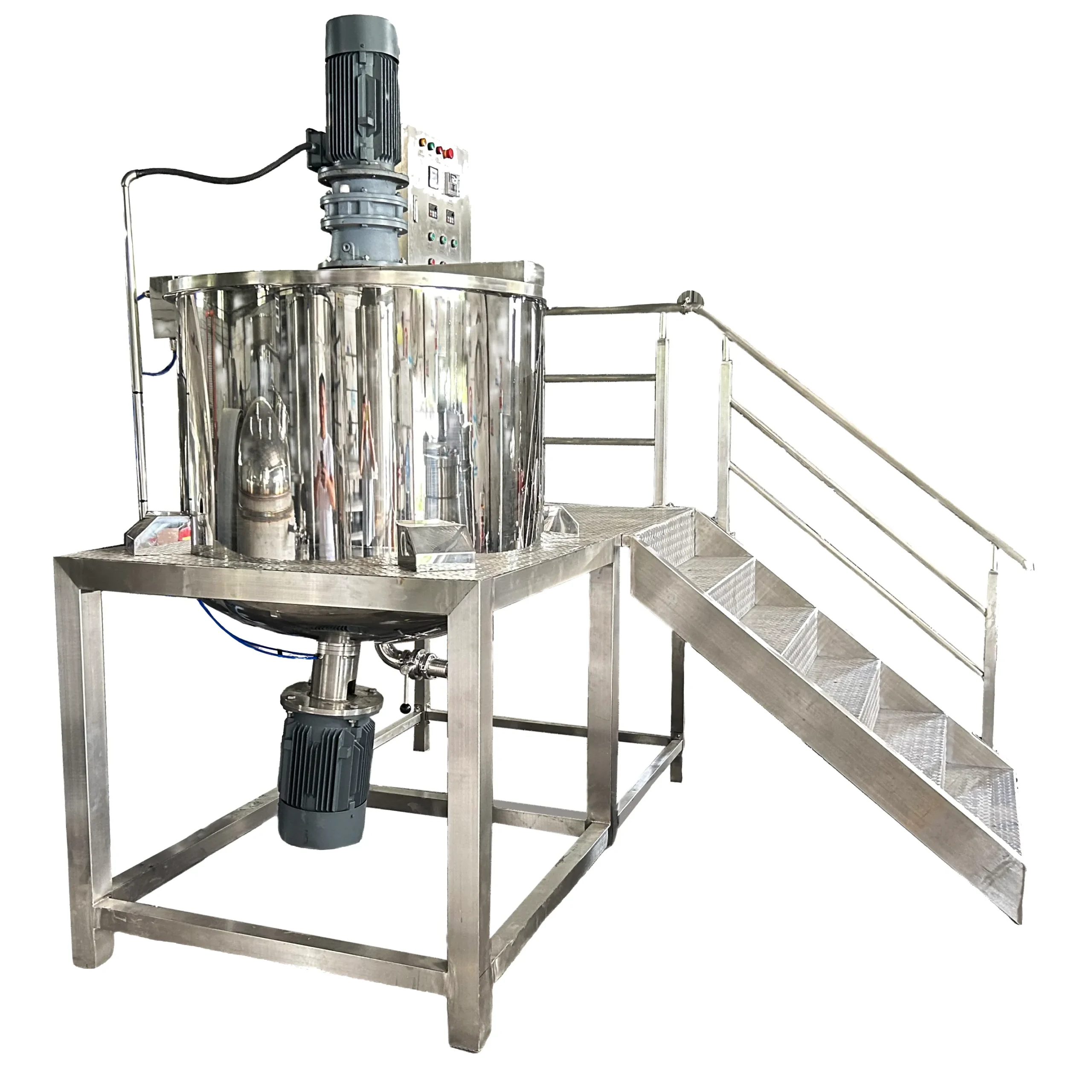
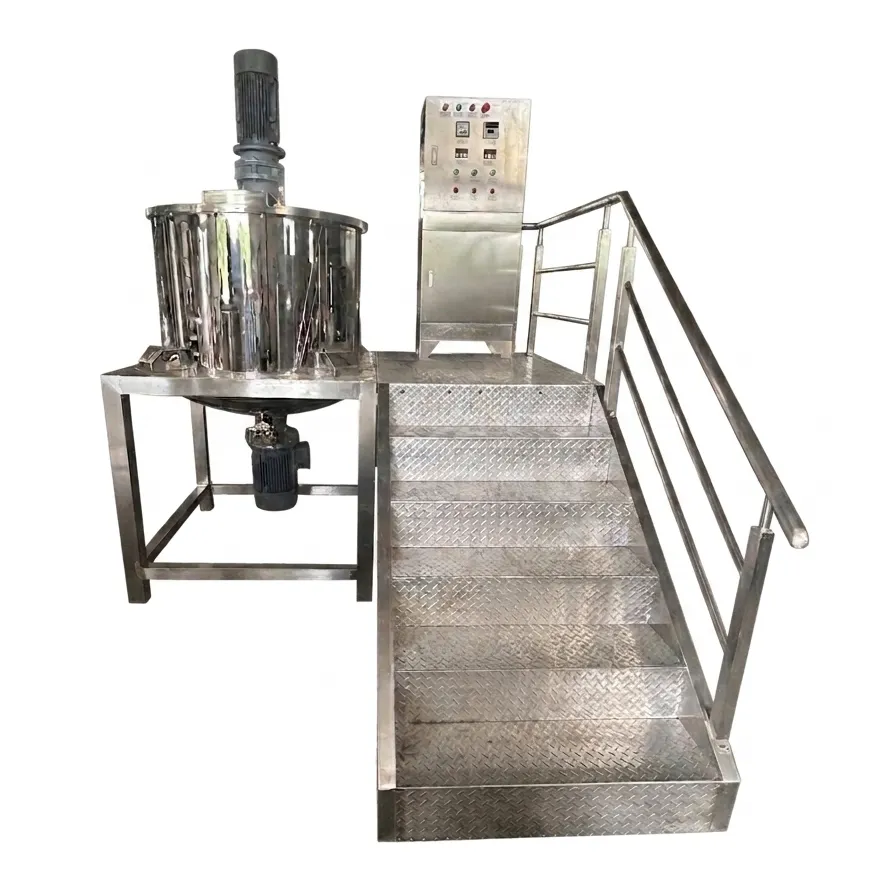
The 500L Semi-Open Liquid Soap & Shampoo Making Machine is a non-heated batch system for compatible formulations requiring bulk agitation and bottom-entry homogenization. It combines a scraper-equipped frame agitator, a water-cooled homogenizer mechanical seal and an operation platform. Within the homogenizing mixing tanks range, this single-layer model suits operator-led production without integrated jacket heating, product cooling or vacuum processing.
| Tank Structure | Single Layer (Storage / Mixing) | Homogenizer Power (kW) | 7.5 |
| Contact Material | SUS316L Stainless Steel | Rotor Stator Type | Single-Stage Rotor Stator |
| Outer Material | SUS304 Stainless Steel | Types of Upper Heads | Flat Head / Open Top Design |
| Surface Finish | Inside & Outside Mirror Polished Finish | Heating Method | Non-Heating |
| Surface Roughness | Ra ≤ 0.4 μm (Sanitary Grade) | Discharge Type | Bottom Valve Discharge (Optional External rotor pump/diaphragm pump/screw pump) |
| Insulation Layer | Without Insulation Layer | Discharge Valves | Butterfly Valve |
| Heating Jacket | Without Heating Jacket | Connection Type | Tri-Clamp |
| Full Capacity (L) | 600 | Motor Brand | SEW / ABB / Siemens |
| Working Capacity (L) | 500 | mix_electrical_components | Schneider / Siemens / Omron (Optional/Customizable) |
| Main Mixing Type | Frame Mixer with Wall Scraper | Voltage | Configurable to local grid (110V–480V, 50/60Hz, Single or 3-Phase) |
| Agitation Direction | Single Direction | Total Power (kW) | 12 |
| Mixing Speed (rpm) | 1-63 | Drive Type | Electric |
| Mixing Power (kW) | 4 | Installation Type | Platform-mounted |
| Frequency Converter | Variable Speed with VFD (Delta, Siemens, ABB, Schneider, Optional) | Automation Level | Semi-Automatic |
| Scraper System | High-Temperature PTFE Scraper | Control System | Push Button Control |
| Homogenizer Position | Bottom-Entry Homogenizer | Machine Weight (kg) | 700 |
| Homogenizer Speed (rpm) | 0–3000 rpm (Variable Frequency Control) | ||
Product Gallery




Product Video
Product Overview
This machine provides a preparation stage for compatible liquid soap, shampoo and related formulations that can be processed without an integrated heating jacket. Its frame agitator moves the bulk batch, while wall-scraping blades act along the vessel wall. A separate bottom-entry rotor-stator homogenizer supplies localized high shear.
For liquid detergent and household cleaning production, the system can be evaluated for ingredient incorporation, dispersion and final blending. Selected shampoo, body wash and personal care formulations may use different settings or processing sequences, particularly where surfactants and viscosity-building ingredients are involved.
Compatible lotion, cosmetic preparation and sauce applications require their own assessment. Products needing heated dissolution, separate hot phases, vacuum deaeration or controlled cooling need additional equipment or a different processing arrangement.
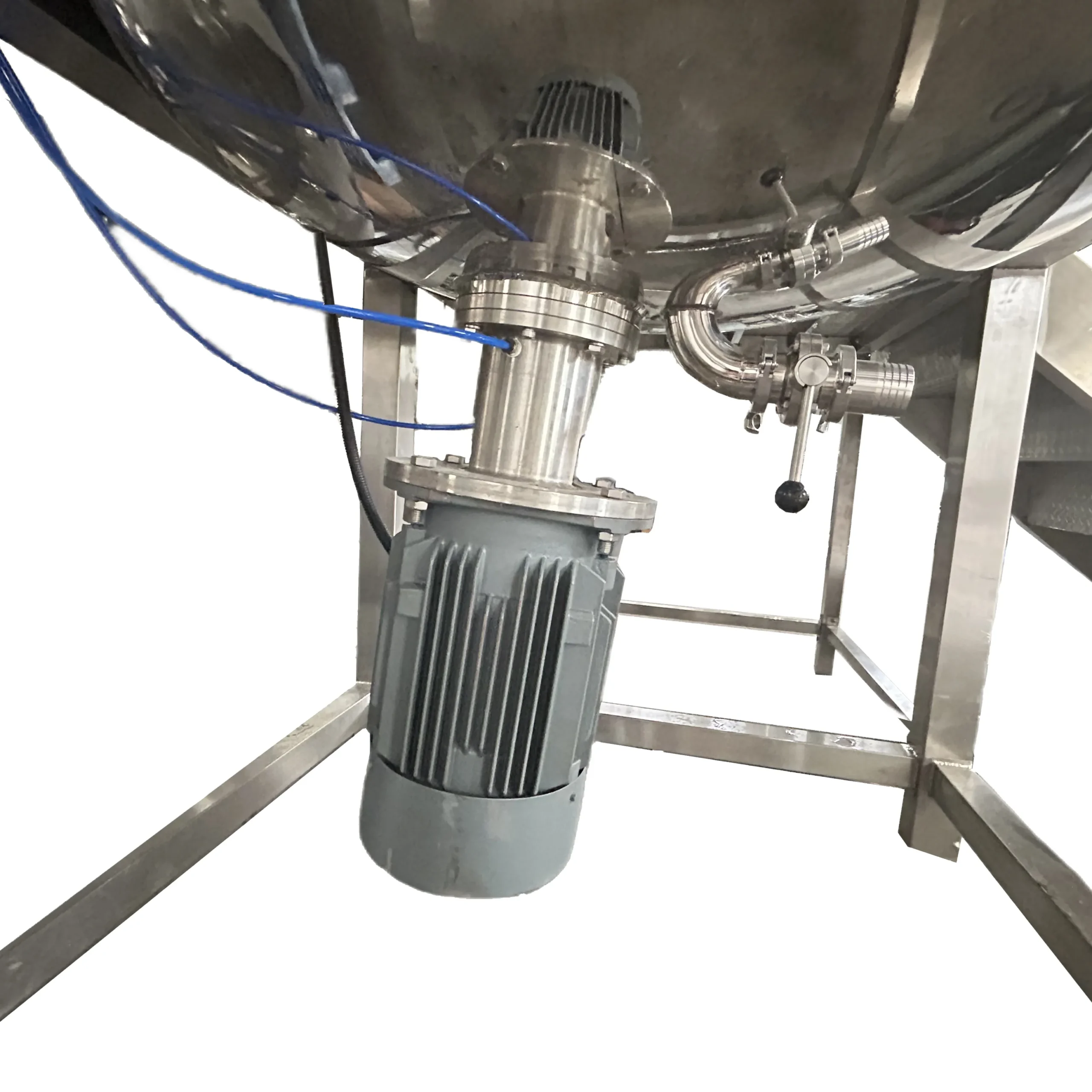
The mechanical seal on the bottom homogenizer uses water cooling. This service supports the seal assembly and does not provide controlled cooling of the batch. The vessel itself is single-layer, without a heating jacket or insulation.
The platform supports the specified operating layout, while push-button controls and variable-frequency adjustment keep processing decisions under operator control. Bottom-valve discharge can connect to an optional external transfer pump selected around the actual product.
Machine Configuration
The assembly combines a single-layer vessel, a scraper-equipped frame agitator and a bottom-entry single-stage rotor-stator homogenizer. Bulk agitation distributes material through the tank, while the homogenizer processes material entering its working zone.
The homogenizer mechanical seal has a water-cooling arrangement. Its supply, return and operating requirements must follow the selected seal assembly. This circuit is separate from the product pathway and is not a jacket-cooling system.
The semi-open top and operation platform form the specified charging and access arrangement. The final drawing should identify the cover layout, operating positions and installed protection.
Variable-frequency drives provide the supplied speed adjustment, with push-button operation for the agreed functions. A butterfly valve and tri-clamp connections provide the product outlet. Optional rotor, diaphragm or screw pump transfer requires application selection. Heating, insulated construction, vacuum processing and automatic CIP are not included in the supplied specification.
Key Features
The assembly combines a single-layer vessel, a scraper-equipped frame agitator and a bottom-entry single-stage rotor-stator homogenizer. Bulk agitation distributes material through the tank, while the homogenizer processes material entering its working zone.
The homogenizer mechanical seal has a water-cooling arrangement. Its supply, return and operating requirements must follow the selected seal assembly. This circuit is separate from the product pathway and is not a jacket-cooling system.
The semi-open top and operation platform form the specified charging and access arrangement. The final drawing should identify the cover layout, operating positions and installed protection.
Variable-frequency drives provide the supplied speed adjustment, with push-button operation for the agreed functions. A butterfly valve and tri-clamp connections provide the product outlet. Optional rotor, diaphragm or screw pump transfer requires application selection. Heating, insulated construction, vacuum processing and automatic CIP are not included in the supplied specification.
Applications
- Cosmetic Cream & Lotion, and Skin Care
- Detergents, Liquid Washing & Household Cleaning
- Sauce, Condiment & Food Paste
Recommended Machines
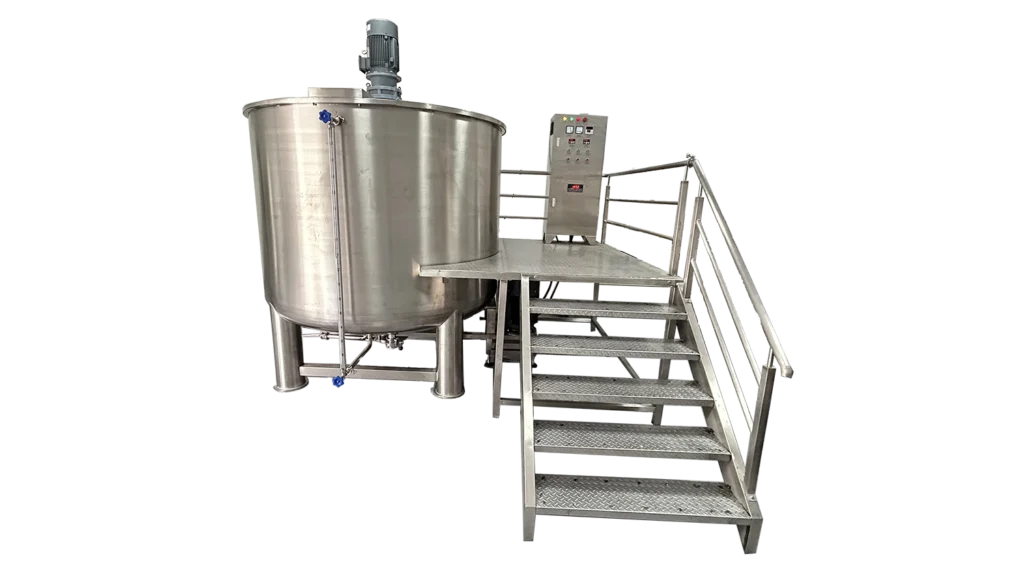
5000L Single Layer Homogenizer Mixing Tank for Liquid Soap, Detergent, Shampoo & Cosmetic Batch Production
View Details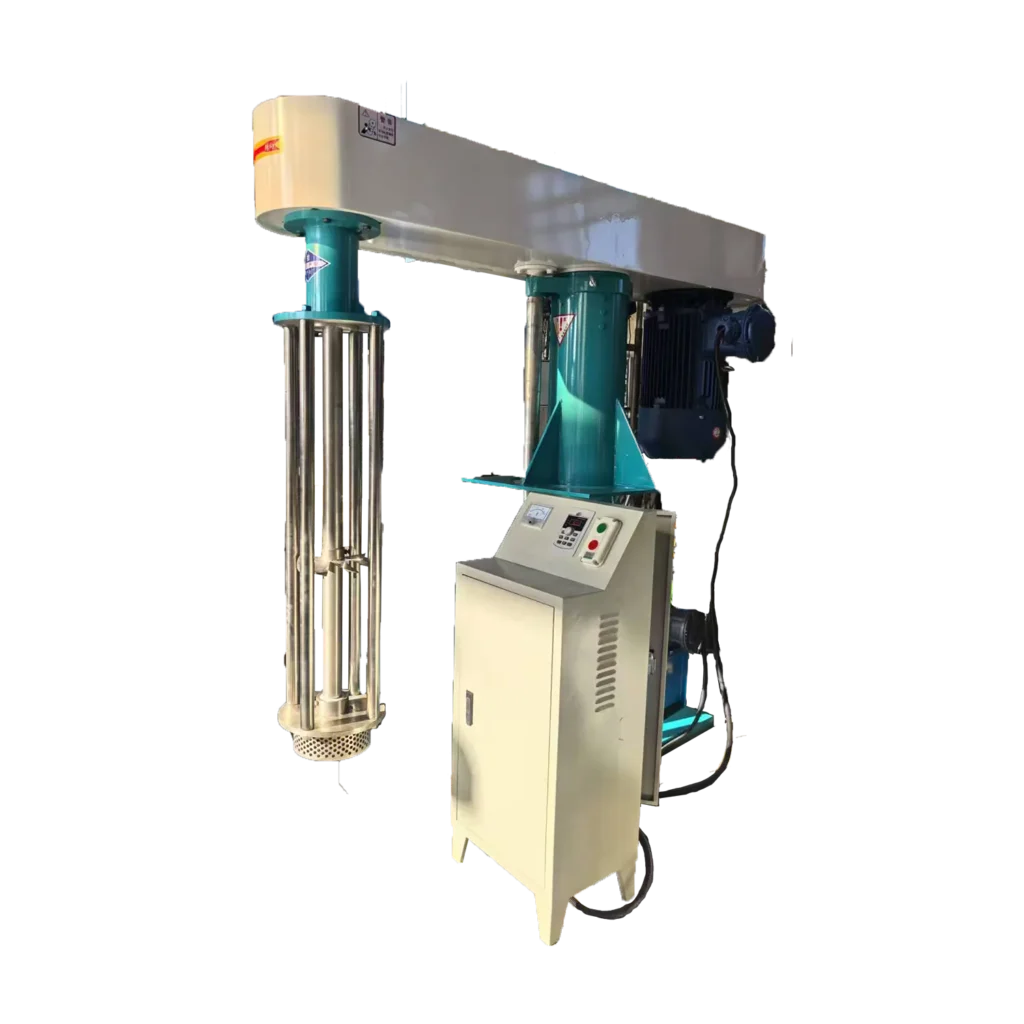
Hydraulic Lifting High Shear Homogenizer Machine for Cream, Lotion & Liquid Soap in Cosmetic & Chemical Industry
View Details
Working Principle
Production begins with charging the initial liquid according to the approved formulation sequence. The batch must satisfy the equipment’s operating-level requirements before either mixing system starts. The homogenizer seal-cooling service is established according to the manufacturer’s instructions.
The frame agitator creates bulk movement through the vessel. Its wall-scraping blades help move material adjacent to the tank wall back into the surrounding batch. Their effectiveness depends on the installed geometry, product behavior and blade condition.
Where high shear is required, the bottom rotor turns within its stator. Material passing through the working zone experiences shear that supports compatible dispersion and agglomerate breakdown. Bulk agitation helps bring material from the rest of the vessel toward this processing region.
Operators adjust the sequence and speeds according to ingredient behavior. A formulation may require high shear during one incorporation stage and gentler mixing after another addition. Maximum speed should not be treated as the default for every ingredient or product.
Water circulates through the mechanical-seal cooling arrangement under its specified operating conditions. It does not provide a controlled batch-cooling function. The operator should monitor product temperature separately because mixing can change the thermal condition even without a heater.
Once the batch meets its agreed quality checks, product leaves through the butterfly valve. An optional external pump can transfer it to holding or filling equipment. The process ends with product recovery and the approved cleaning procedure.
Optional Upgrades & Configurations
| Warranty | 24 Months | Payment Terms | 40% T/T Deposit, 60% Balance Before Shipment (Alibaba Trade Assurance Available) |
| Lead Time | 15–20 Working Days | Packaging | Standard Export Fumigation-Free Wooden Case |
After-Sales & Technical Support
🔧 Common Problems
Possible observable symptoms include uneven ingredient distribution, visible streaks, persistent agglomerates, material accumulating near the wall, limited movement in part of the vessel, excessive foam or retained air. Operators may also observe unexpected product-temperature rise, inconsistent results between samples, abnormal homogenizer noise, agitator vibration, unstable speed response, motor or VFD trips, seal-water leakage, changes in the visible cooling-water return, damaged scraper edges, slow discharge or product remaining after emptying. Cleaning-related observations may include residue around blade attachments, the bottom working head or the outlet valve. These are potential observations rather than confirmed defects and should be recorded with the batch stage, liquid level, settings and seal-cooling condition.
🛠 Troubleshooting
Problem: The batch remains visibly uneven. Possible Cause: The charging sequence, operating level or bulk circulation is unsuitable for the formulation. Recommended Solution: Review the approved process record. Check agitation and ingredient order before increasing homogenizer speed or duration.Problem: Foam increases during processing. Possible Cause: Air enters during charging or mixing; the high-shear stage is unsuitable for the current ingredients. Recommended Solution: Review the liquid level and processing sequence. Adjust only within the agreed operating window rather than treating the homogenizer as a deaerator.Problem: The seal-cooling return changes or becomes unavailable. Possible Cause: The water service or return route is interrupted or restricted. Recommended Solution: Stop the affected drive according to the operating instructions. Inspect the service against the seal documentation before restarting.Problem: The homogenizer produces abnormal noise or vibration. Possible Cause: Inadequate product coverage, deposits, foreign material or a mechanical fault. Recommended Solution: Stop and isolate the affected assembly. Obtain qualified inspection before restarting or replacing parts.Problem: Product collects near the vessel wall. Possible Cause: Scraper condition, attachment or operating settings do not suit the product. Recommended Solution: Review the approved process settings. Isolate the machine before inspecting the scraper assembly.Problem: Discharge becomes slow. Possible Cause: Product viscosity, valve restriction or the selected pump is unsuitable. Recommended Solution: Review the outlet route and transfer duty. Do not pressurize the atmospheric vessel to force emptying.
🧼 Cleaning Method
1. Recover the remaining product through the approved discharge arrangement. 2. Stop the agitator and homogenizer according to the operating procedure. 3. Isolate electrical power under the site's lockout procedure before manual access. 4. Maintain or isolate seal-cooling water as required by the seal manufacturer's shutdown instructions. 5. Confirm complete standstill before accessing the semi-open vessel. 6. Remove designated detachable product-contact fittings according to the cleaning instructions. 7. Pre-rinse accessible product-contact surfaces with a medium suitable for the residue. 8. Apply the approved cleaning agent at the conditions specified by the cleaning procedure. 9. Clean the accessible vessel interior without entering the tank. 10. Clean the frame agitator and scraper attachments through the approved access method. 11. Clean the homogenizer working chamber according to its service instructions. 12. Clean the detached butterfly-valve and connection components separately where required. 13. Rinse until the specified cleaning-agent acceptance criteria are met. 14. Sanitize the product-contact surfaces when the validated procedure requires it. 15. Inspect accessible surfaces for retained residue before reassembly. 16. Release the tank after the required cleaning checks are complete.
📋 Maintenance
1. Isolate the equipment under the approved lockout procedure before preventive maintenance. 2. Inspect the frame agitator for visible damage or product accumulation. 3. Examine the scraping blades for wear, deformation or damaged edges. 4. Inspect blade attachments according to the manufacturer's service instructions. 5. Examine the rotor-stator assembly during approved service access. 6. Check the homogenizer mechanical seal for leakage or deterioration. 7. Inspect seal-cooling supply and return connections for leakage or obstruction. 8. Maintain the cooling service according to the installed seal documentation. 9. Inspect product-contact gaskets for damage or chemical deterioration. 10. Examine the butterfly-valve seat according to its component instructions. 11. Lubricate serviceable drive components using the specified lubricant and method. 12. Inspect platform supports and access components for visible deterioration. 13. Arrange qualified inspection of electrical terminals and protective devices. 14. Verify installed stop functions through the approved functional-check procedure. 15. Record findings against the machine serial number and operating history. 16. Schedule corrective service before returning deteriorated components to production.
⚙️ Installation
1. Review the final tank and platform drawings before preparing the installation area. 2. Verify the delivery route against the approved transport dimensions. 3. Obtain approval of the floor and supports for the complete operating loads. 4. Inspect the delivered assembly for visible transport damage. 5. Position the equipment using the manufacturer's designated handling arrangement. 6. Level the supports according to the installation instructions. 7. Secure the assembly according to the approved support design. 8. Assemble the platform access structure according to the supplied drawings. 9. Connect the mechanical-seal cooling supply according to its utility specification. 10. Connect the seal-cooling return according to the approved arrangement. 11. Install any separately supplied discharge pump according to its instructions. 12. Connect product pipework with suitable independent support. 13. Arrange electrical connection by qualified personnel using the final wiring documentation. 14. Verify protective earthing before electrical commissioning. 15. Confirm the installed cover and operating protections against the approved arrangement. 16. Establish the seal-cooling service before homogenizer commissioning. 17. Perform the approved liquid test of agitation, homogenization and discharge. 18. Document the representative-product trial against the agreed acceptance criteria before routine production.
🔩 Spare Parts
Why Choose This Machine
- Complementary mixing duties: The frame agitator handles bulk movement while the bottom homogenizer supplies localized shear, allowing the process to use each function at the appropriate stage.
- Wall-scraping action: The blades help renew material near the vessel wall, supporting circulation without claiming complete removal of every deposit or retained product.
- Defined seal support: Water cooling is provided for the homogenizer mechanical seal, with its operating requirements treated separately from the product process.
- Appropriate non-heated platform: The single-layer vessel avoids unnecessary thermal-processing functions where the approved formulation does not require them.
- Operator-led flexibility: Push-button controls and adjustable speeds suit documented manual charging and processing instructions without assuming automatic recipe sequencing.
- Downstream integration: The bottom outlet and optional pump arrangement can be selected around the product’s actual discharge condition and the receiving equipment.
Frequently Asked Questions
Installation Requirements
The listed machine weight is 700 kg. Assess floor and support requirements using the complete operating loads, including the actual product mass and connected equipment. Calculate product mass from formulation density rather than assuming every liter weighs one kilogram.
Confirm the electrical supply against the final agitator, homogenizer, VFD and control-panel schedule. The listed total power is 12 kW. Qualified personnel should determine cable sizing, protection and protective earthing. Any external transfer pump requires separate utility assessment.
Provide the water service required by the homogenizer mechanical-seal cooling arrangement. Obtain its specified water quality, flow, pressure, temperature and return requirements from the selected assembly documentation. This service is not a product-cooling circuit.
No steam supply, heating jacket, chilled-water product circuit or vacuum service is specified. Compressed air is only required where an explicitly selected auxiliary device uses it.
Provide suitable cleaning-water access and drainage. Confirm the semi-open top arrangement, platform access and installed operating protection before commissioning.
Related Articles


Technical Buyer's Handbook & Deep Insight
Ready to Get a Quote?
Contact our team directly for pricing, customization options, and delivery timelines.
💬 WhatsApp Us NowGet Your Download Link
Please fill in your details and we'll send the download link to your email.