

Choose an open mixing tank when you need easy access and can control product exposure during the process. Choose a closed tank when you need to limit exposure, contain material, or run a defined vacuum or gas-blanketed process. Then specify those functions separately: a sealed lid alone does not make a vessel suitable for vacuum, pressure, or a particular hygiene standard.
For many factories, the sensible answer is a combination. Use accessible equipment where frequent additions and inspection help, and a closed process where the product or operation needs protection. The decision should follow the recipe and the work people actually do—not the assumption that the more enclosed machine is always the better one.
Why Tank Design Matters
The lid affects how ingredients enter, how air and vapors leave, how operators take samples, and how the equipment is cleaned. Those details can change both product quality and daily workload.
Start by asking what must be controlled. If the problem is air bubbles, review mixing speed, vortexing, powder addition and transfer before buying a vacuum system. If the problem is solvent loss, look at temperature, exposure time and vapor handling. If the problem is contamination, review the whole route from raw material to filling.
A tank can be well sealed while an open transfer hose or unprotected holding stage exposes the finished batch. Map those handoffs before deciding where enclosure will add the most value.
Separate the Tank Cover from the Mixing Job
Open and closed vessels can both use effective agitators, jackets and high-shear equipment. The cover does not determine whether a thick batch circulates well or whether an emulsion reaches its required quality.
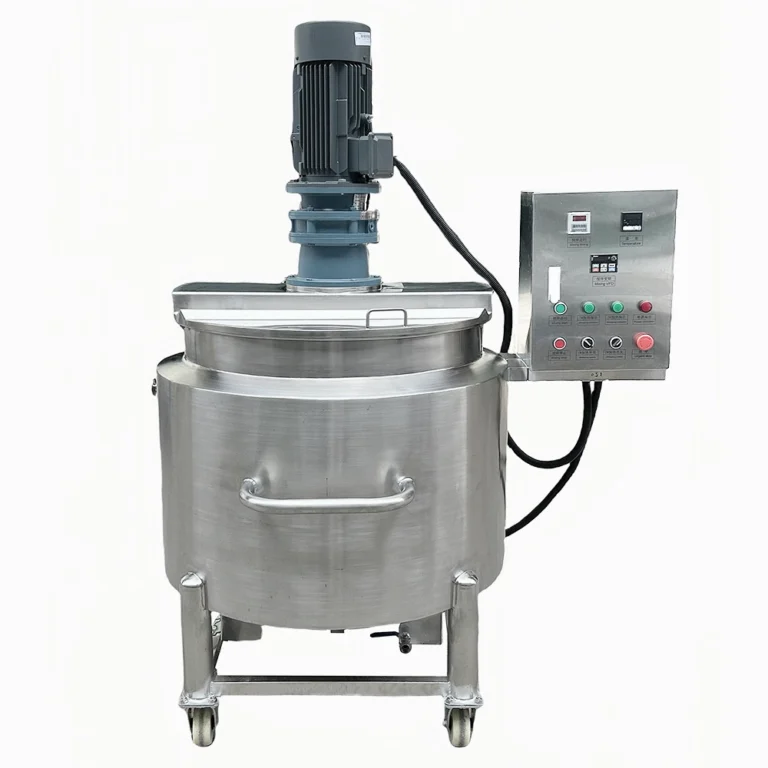
For example, a mobile heated homogenizing tank combines processing functions that should be assessed on their own merits. Ask what the agitator and homogenizer do at the intended batch size, then decide how the vessel needs to be covered or enclosed.
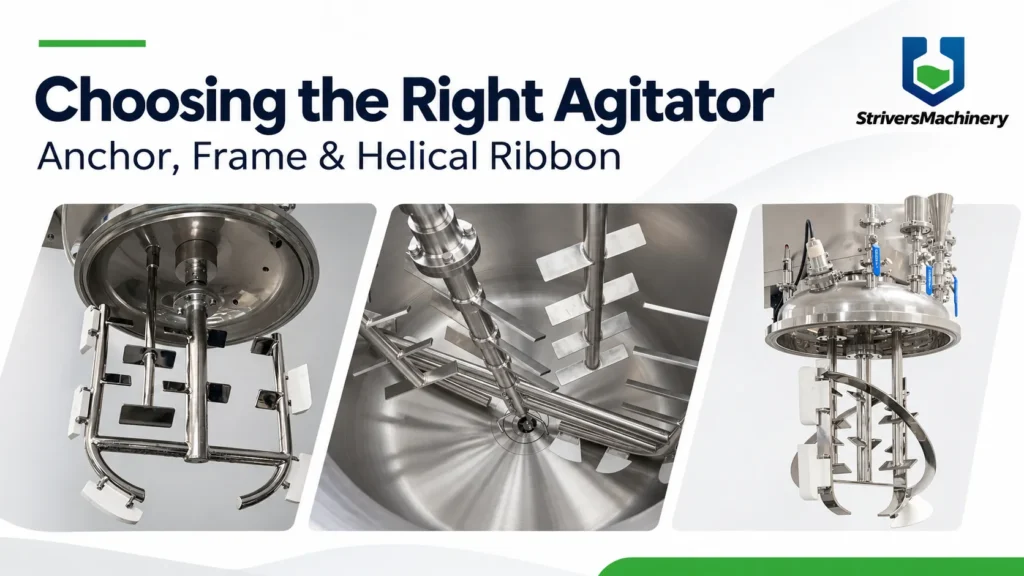
Keep the circulation arrangement in that discussion. A closed tank with weak bulk movement can still leave poorly mixed regions; a good cover cannot repair the flow pattern.
Understanding the Tank Designs
Open or Partly Covered Mixing Tanks
An open tank gives direct access to the working area. A loose cover, split lid or splash cover can reduce exposure while retaining access, but it should not be treated as a gas-tight pressure boundary.
This arrangement works well for short, supervised batches that need frequent additions, observation or adjustment. It can also make inspection and manual cleaning easier. It is a practical first option when the product tolerates the planned exposure and the workplace controls are suitable.
A 300L open-top jacketed mixing tank shows why “open” should not be confused with “unheated” or “basic stirring.” Heating, scraping and the vessel opening are separate design choices.
Access still needs to be safe. Plan guarded openings, ingredient addition and sampling so people do not reach into moving equipment. Cleaning access is useful after isolation; it is not permission to wipe a wall or scrape a blade while the agitator runs.
Closed Atmospheric Mixing Tanks
A closed atmospheric tank uses a lid and defined connections to reduce uncontrolled exposure. It may still need a vent or filtered breathing arrangement as liquid enters and leaves. “Closed” does not necessarily mean that no gas can pass in either direction.
This is often the right starting point when the aim is cleaner handling or reduced vapor release without a process need for vacuum. Specify the feed points, vent route, sampling method and discharge arrangement instead of simply requesting an airtight lid.
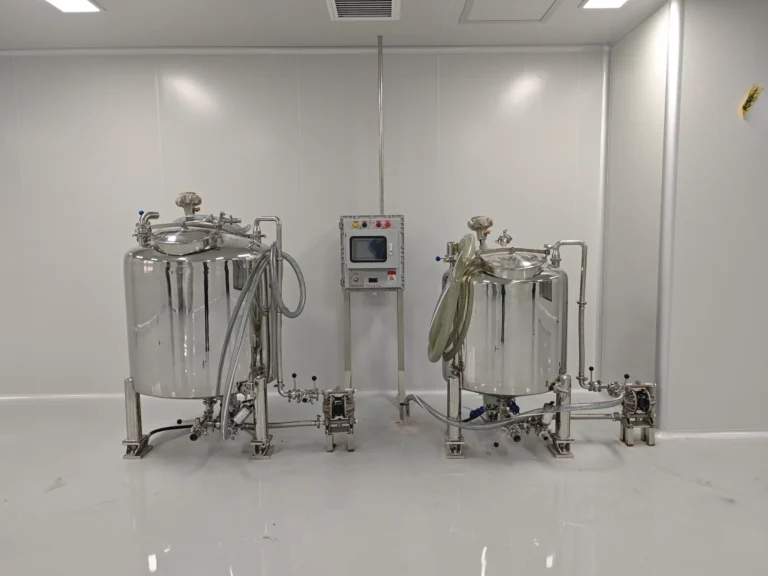
The 200L sealed pneumatic perfume mixing tank is a relevant equipment example for closed blending and holding. Treat chilling, filtration, vacuum and the complete hazardous-area arrangement as separate scope items; they do not follow automatically from the tank being sealed or air driven.
Vacuum-Rated and Pressure-Rated Vessels
If the process needs vacuum, order a vessel designed for the specified external pressure and temperature. If it needs positive pressure, specify that duty separately. A tank rated for one condition is not automatically suitable for the other.
The design review includes the vessel, lid, clamps or bolts, sight glasses, shaft seals, nozzles and protective devices. Filling, emptying, heating, cooling and cleaning can also create pressure changes that the design must address.
A gasket upgrade alone is not a vacuum conversion. The tank may seal successfully and still lack the strength to withstand the pressure difference. Confirm the permitted operating conditions and supporting documentation before connecting a vacuum pump or pressure source.
Sealed vs. Open Mixing Tank: A Useful Comparison
| Question | Open or partly covered tank | Closed tank |
|---|---|---|
| How are ingredients added? | Direct access can make frequent manual additions easier | Plan ports, valves, transfer lines or a controlled opening step |
| How is exposure controlled? | Use suitable room conditions, covers, work methods and exposure time | Control lid openings, seals, vents, feeds, sampling and discharge |
| Can it run under vacuum or pressure? | Not as an open vessel | Only within the separately specified and verified design rating |
| How is it cleaned? | Often convenient for direct inspection and manual cleaning | May use manual cleaning, assisted washing or a designed CIP process |
| Can it be automated? | Yes, for suitable dosing, mixing, temperature and pump-transfer duties | Yes; controlled atmosphere or vacuum adds further design requirements |
| Does it meet the required hygiene standard? | Assess the complete process, environment and cleaning controls | Assess the same factors, including hidden surfaces and connections |
Compare quotations at the same functional scope. An open vessel with a jacket, scraper and bottom homogenizer may have more processing equipment than a simple closed holding tank. Their lid styles alone tell you little about the price difference.
Which Products Benefit from Closed Processing?
Recommended Equipment


Creams, Lotions and Serums
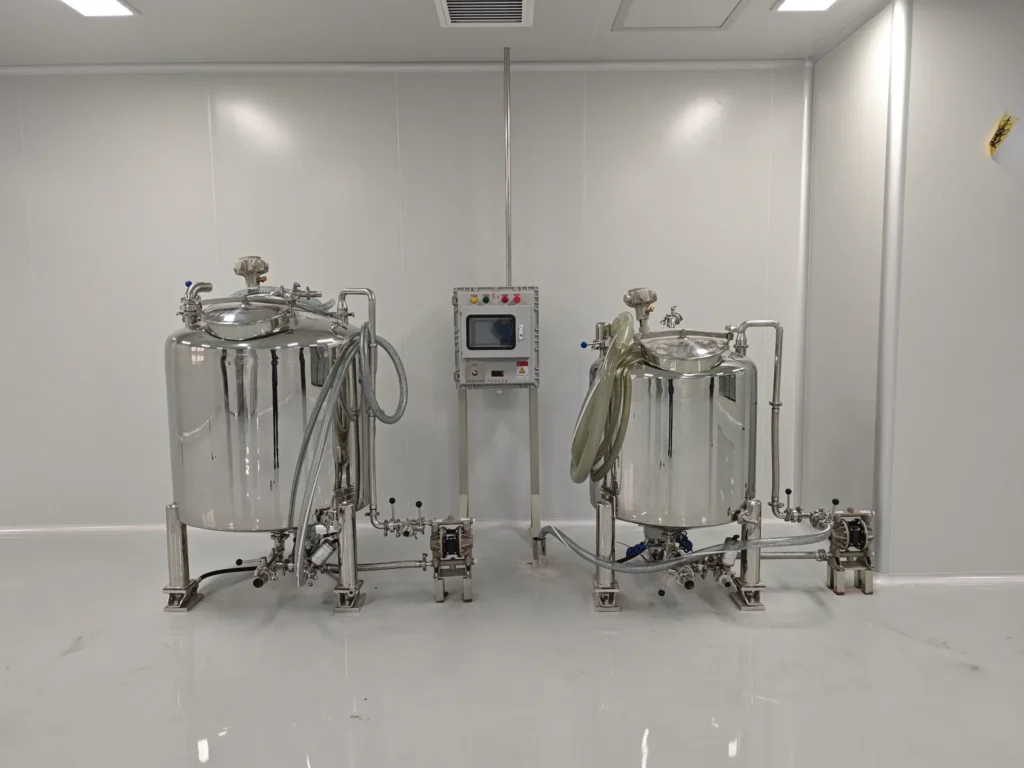
For a production cream that needs controlled air removal and protected transfer, a vacuum-rated closed system is a strong candidate. For a simple lotion made in short batches, an accessible vessel may be enough if the process consistently meets the product specification.
Judge the actual formulation. A serum is not automatically oxygen-sensitive because it is expensive, and a cream does not automatically need vacuum because it is thick. Identify the ingredients and defects that drive the requirement.
If bubbles are the concern, work through the causes of air in cream and define an acceptable finished result. A 100L vacuum emulsifying mixer can combine bulk agitation, scraping and a separate homogenizer, but each function still needs a clear process purpose.
Shampoo and Liquid Soap
Open or partly covered tanks are reasonable options for many water-based shampoo and liquid-soap batches. Keep the agitation and addition sequence under control, limit unnecessary exposure and protect the batch between operations.
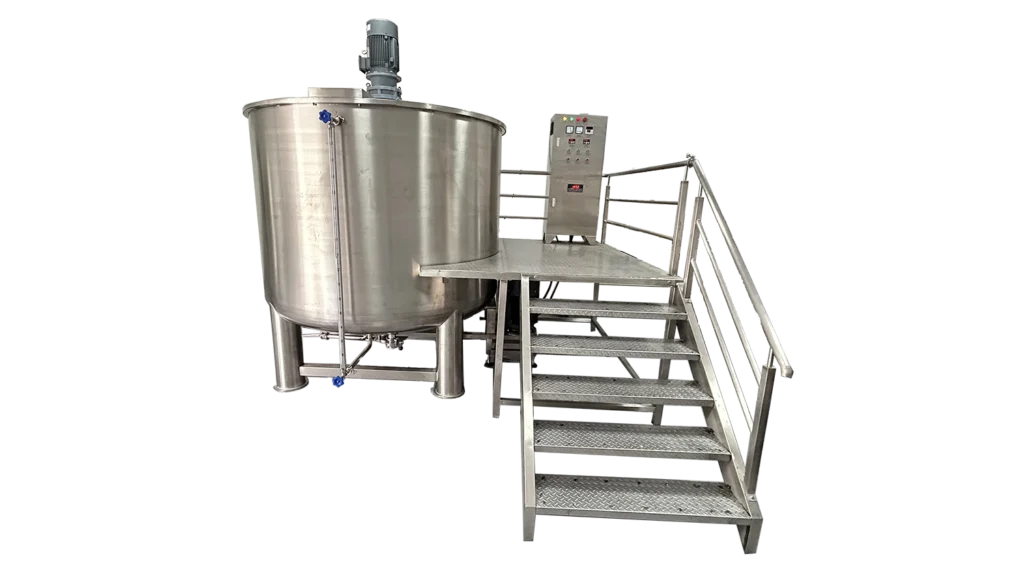
Choose a more enclosed arrangement when the recipe, hold time, transfer method or exposure controls justify it. Do not add vacuum simply to make the proposal look more advanced. A large single-layer homogenizer mixing tank also reminds buyers to separate enclosure, heating and mixing requirements instead of ordering every available feature.
Essential Oils, Fragrance and Alcohol-Based Products
For volatile products, favor a controlled closed-handling route over avoidable open exposure. Then define how displaced gas and vapors are managed during addition, blending, sampling and discharge.
Do not assume vacuum preserves fragrance. Lower pressure can increase the removal of volatile components. If vacuum is proposed, establish why it is needed and how temperature, pressure, duration, condensation and ingredient timing will be controlled.
A perfume chilling and filtration system serves a different process duty from a closed blending tank. Choose those functions because the formulation needs them, rather than treating every perfume vessel as a complete processing system.
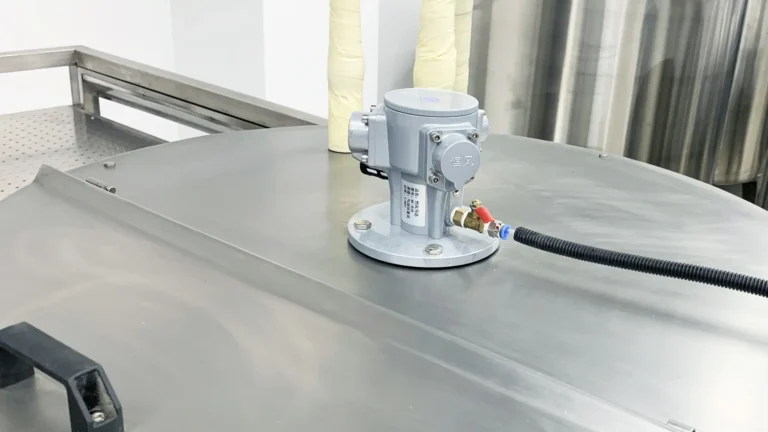
Flammable products need a coordinated safety design. Review the material hazards, ignition sources, static control, ventilation, vapor route and suitable equipment together. An air motor or sealed lid alone does not establish the safety of the full installation.
Food Sauces
Open kettles can suit cooking and ingredient adjustment; closed systems can suit controlled transfer, vacuum processing or reduced exposure. Choose the arrangement around the recipe, heat treatment, inclusions, hygiene plan and downstream handling.
Neither lid style establishes shelf life. A jacketed sauce mixing tank should be reviewed for heat distribution, scraping, discharge and cleaning alongside its access arrangement. The food-safety process still needs its own defined controls.
Paint, Coatings and Powder Slurries
Separate water-based and solvent-based work. Also identify hazardous or combustible powders before deciding that an open top is the easiest feeding method.
For a low-risk slurry, open access can make supervised additions and observation practical. Where dust or vapor must be contained, use a suitable enclosed feed and extraction arrangement. Closing the lid after dusty manual loading does not control the exposure that occurred during loading.
Which Factory Should Choose Which?
Startups and Laboratories
Keep the first specification simple, but meet the process requirements from the start. An open tank is a sensible budget choice when it can make the product safely and consistently. It is a poor saving if the process already needs controlled containment or vacuum.
In development work, easy access often helps. However, trials should reproduce the production conditions that matter. Use laboratory mixing equipment with the required process functions when air removal, temperature history or closed additions affect the result.
OEM Cosmetic and GMP-Controlled Production
For an OEM factory, flexibility and cleaning between products matter as much as the cover. Review ingredient additions, sampling, residue removal, inspection and records across the full product range.
For GMP work, start with the applicable product and process requirements. Closed processing can reduce particular contamination risks, but a closed tank is not a GMP certificate. Open processing needs suitable controls; closed processing also needs cleanable surfaces, maintained connections and a verified cleaning method.
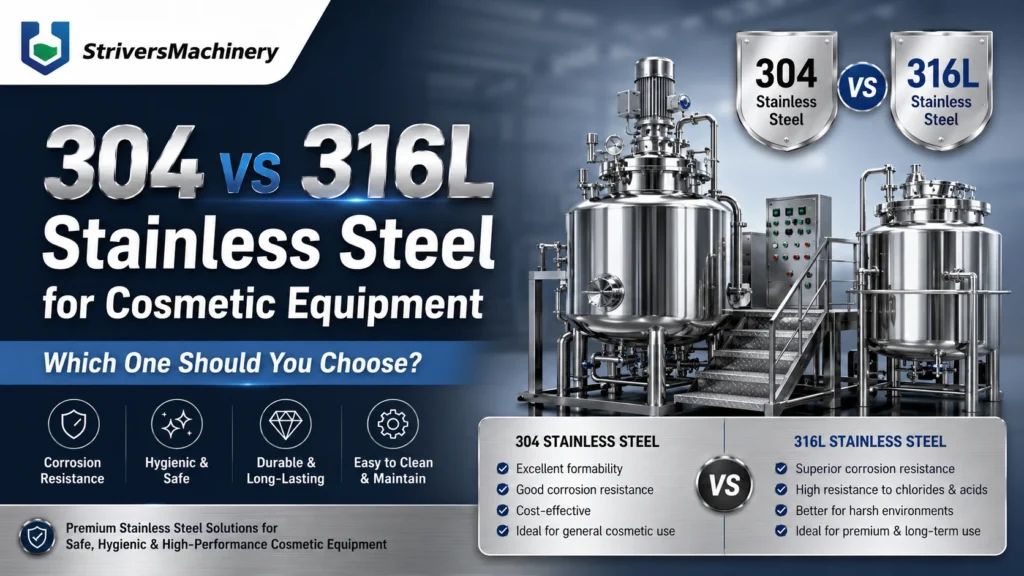
Use the 304 versus 316L material comparison to review formulation and cleaning exposure. Material grade, surface condition and equipment access belong in the specification regardless of lid style.
Continuous and Automated Production
Open tanks can have automatic weighing, dosing, temperature control, mixing and pump transfer. Closed tanks add value when the process needs containment, a controlled atmosphere or a specified vacuum duty.
List the manual tasks that remain: opening bags, changing hoses, taking samples, cleaning and checking the vessel. “PLC controlled” does not mean those tasks disappear, and “closed” does not mean the line can run unattended.
Frequent Formula Changes
Related Solutions

Favor the design that gives reliable cleaning and a manageable changeover. An open top can help inspection, while a suitable closed system can reduce manual washing. Compare the actual cleaning sequence rather than assuming either one is always faster.
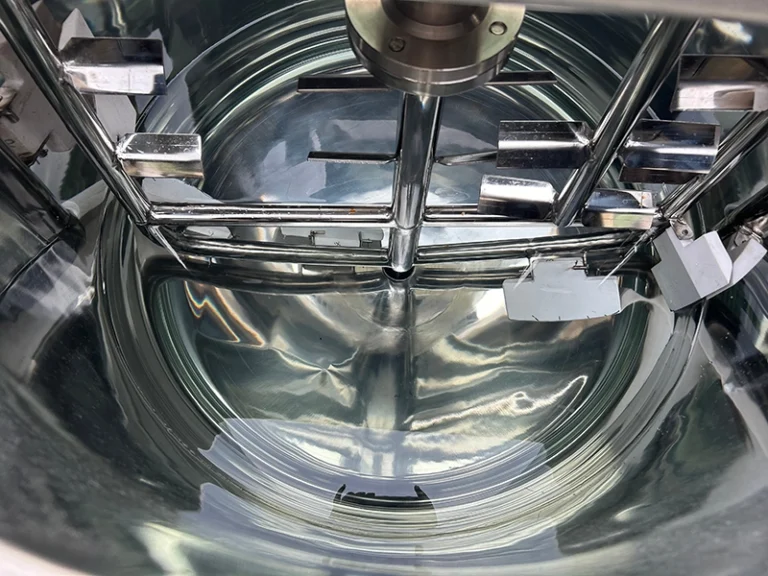
Cleaning and Maintenance: Compare the Actual Work
For a small, accessible tank with frequent recipe changes, manual cleaning may be the most practical method. For repeat production with a suitable equipment layout, CIP may reduce hands-on work and improve repeatability. Choose the method around the residue, access and required result.
The CIP versus manual-cleaning comparison explains why a spray ball is only one part of the cleaning system. Coverage, flow, return drainage, chemistry and the chosen cleaning cycle need to work together.
Inspect blade holders, lid seals, sample points, outlets and short branches. The review of product-retention areas is useful when comparing drawings: a hidden joint can create more cleaning work than a large, visible vessel surface.
Open tanks can still contain mechanical seals, bearings, heaters and bottom-entry equipment. Closed atmospheric tanks do not necessarily contain a vacuum system. Build the maintenance list from the supplied components, not from the open-versus-closed label.
Where vacuum is supplied, distinguish a lid-sealing problem from the wider causes of poor vacuum performance. That helps the maintenance team check the right parts instead of repeatedly replacing a gasket.
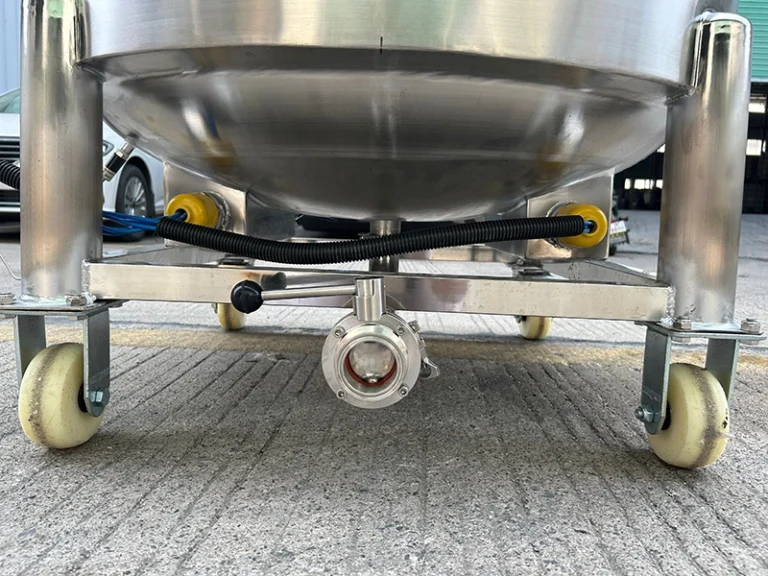
Total Cost of Ownership Without Guesswork
Compare the extra cost of the closed system with the losses or work it is expected to avoid. Use your own batch records where available. Count accepted product, cleaning time, service use, maintenance and changeover—not just the purchase price.
Illustrative cost check: suppose a closed arrangement costs AUD 12,000 more and is expected to save 0.5 operator-hours on each of 200 batches per year. At an assumed loaded labor cost of AUD 40 per hour, the gross labor saving is AUD 4,000 per year.
If its additional annual maintenance and service costs are AUD 1,000, the net annual saving is AUD 3,000. Simple payback is four years. This example excludes financing, tax, product loss and downtime; it is not a quoted price or a promised result.
That calculation gives the buyer something useful to test. Ask the supplier to demonstrate the cleaning work or handling step behind the assumed half-hour saving. If it does not materialize, the business case changes.
Use a broader total cost of ownership review when the project includes several machines. Keep product recovery separate from unsupported contamination or evaporation savings: measure the material left after discharge and the material lost during transfer.
A Hybrid Solution: Put Protection Where It Matters
A mixed arrangement often makes sense. An accessible premix vessel can prepare a suitable phase, which is then transferred into a closed main vessel for the steps that need controlled exposure or vacuum.
Example process layout: suitable premixing vessel → controlled transfer → main mixing vessel → protected holding, if needed → filling.
This is a planning example, not a recipe. If the powder, solvent or ingredient is hazardous or sensitive during premixing, that first stage also needs protection. Later enclosure cannot undo earlier exposure or contamination.
Define each transfer connection, hose, vent, waiting period and cleaning responsibility. If oxygen control is the goal, the nitrogen-blanketing review should include the feed and holding stages as well as the mixer. Plan gas control and safe discharge, including the risk of oxygen displacement in the workplace.
Decision Guide
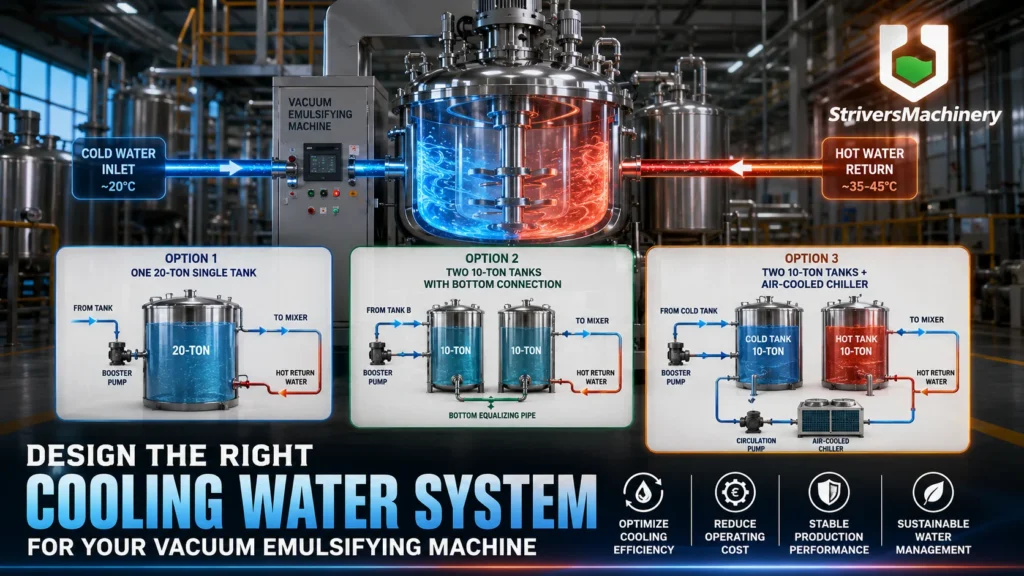
Heating and cooling also cross those boundaries. Decide which vessel needs which duty using the heating-system comparison, then confirm the available cooling-water service. A closed lid does not shorten a cooling cycle if the heat-removal capacity is the bottleneck.
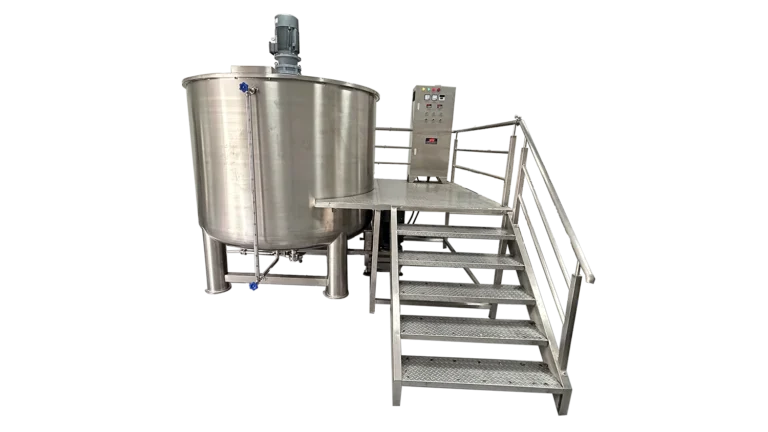
Common Buying Mistakes
| Mistake | Better decision |
|---|---|
| Buying a sealed lid and assuming vacuum capability | Request the vessel design conditions and rating for the complete assembly |
| Choosing by industry name alone | List the product risks and the operations that create exposure |
| Adding vacuum to protect every volatile ingredient | Define the vacuum purpose and assess loss of volatile components |
| Assuming automation requires a closed tank | Specify automatic functions and any remaining manual work |
| Comparing purchase prices with different equipment scopes | Match mixing, heating, transfer, cleaning and documentation requirements first |
| Planning to convert an open tank later without review | Assess the vessel, supports, connections and protective systems before accepting a retrofit plan |
Oversizing is another avoidable mistake. Record the smallest batch as well as the largest, and check whether the product engages the intended mixing elements at both levels. Future expansion is useful planning; it should not make today’s batches unworkable.
Decision Checklist Before Ordering
Ask the supplier to answer these points in the quotation or agreed technical schedule:
- What product and process conditions were used to select the tank?
- What are the minimum and maximum working batches?
- Is the vessel open, covered, closed atmospheric, vacuum-rated or pressure-rated?
- How are ingredients added, samples taken, displaced gas vented and product discharged?
- Which parts provide mixing, scraping, homogenization, heating and cooling?
- Which exposure, vapor, dust or ignition risks need additional controls?
- How are the vessel and connected parts cleaned, drained and inspected?
- What manual work remains during a normal batch and changeover?
- Which services, installation work and documentation are included?
- What trial and acceptance checks will show that the system does the required job?
The vacuum mixer specification guide provides a deeper equipment review when vacuum emulsification is actually needed. Use the installation readiness checks to turn the selected scope into a workable site plan.
Our Recommendation
Choose an open or partly covered tank for accessible, supervised processing when the product tolerates the planned exposure and the controls are adequate. Choose closed handling when reducing exposure or containing material solves a real process problem. Specify vacuum, positive pressure and gas blanketing only when the duty calls for them.
For StriversMachinery projects, we review the vessel opening, addition points, agitator, separate high-shear equipment, thermal duties, transfer and cleaning together. Core mixing equipment is manufactured in-house; complementary line equipment is coordinated with long-term partner factories.
Send the product, batch range, temperature stages, addition method, known quality issues and planned cleaning method to [email protected]. We can then discuss an open, closed or mixed arrangement and put the included functions and buyer-supplied work into a clear scope.
Technical References
- HSE: Design Codes — Plant — vessel pressure, vacuum and mechanical design considerations
- HSE: Formula for Health and Safety — mixing and blending hazards, containment and control measures
- BÜCHI: Rotary Evaporation — reduced pressure and the removal of volatile liquids
- FDA: Cosmetic GMP Guidelines and Inspection Checklist — equipment condition, sanitation and protection from contamination
- FDA: CGMP Questions and Answers — Equipment — pharmaceutical equipment suitability and cleaning; apply within its stated scope


