
Perfume & Fragrance Products
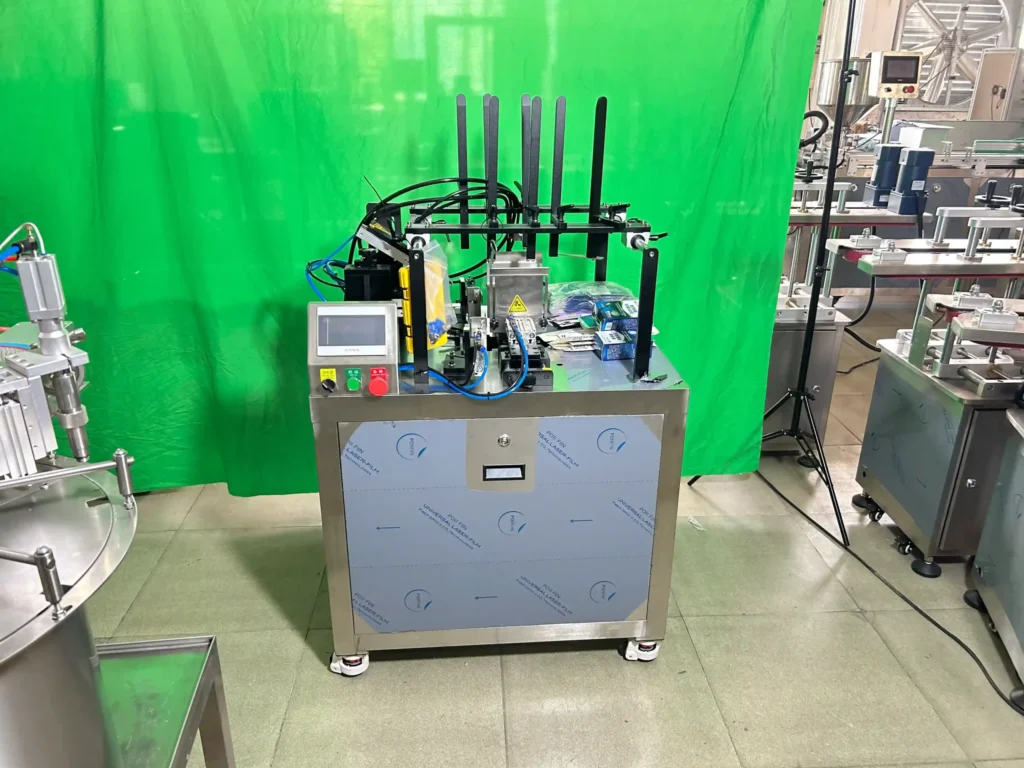



More About These Applications
Equipment from Fragrance Blending to Finished Bottles
Equipment from Fragrance Blending to Finished Bottles
Perfume production combines bulk preparation with precise packaging work. The liquid must move through blending, holding and any required filtration without losing batch identity, while the bottle line must handle the chosen glass, pump and decorative components. A beautiful pack can still be difficult to manufacture if those components are not considered together.
StriversMachinery supplies perfume production equipment covering blending, suitable holding and filtration arrangements, filling, pump closing, collar pressing and downstream packaging. The scope can be a set of separate stations for short runs or a more connected arrangement for repeated production.
For perfume, cologne and fragrance projects, perfume production equipment can be arranged as separate preparation and packaging stations or coordinated into a more connected workflow. Essential-oil and fragrance-related products should be assessed by their actual formulation and package; their names do not establish that every machine used for alcohol-based perfume is suitable for them.
Begin with the Formula and Complete Packaging Set
Begin with the Formula and Complete Packaging Set
The product brief should identify the liquid composition relevant to equipment selection, its viscosity, compatibility requirements and intended process. Include any holding, chilling or filtration stages specified by the manufacturer. Those requirements should be established before selecting tank and transfer arrangements.
Provide the complete packaging set: bottle, pump or screw closure, decorative collar, overcap and label. Bottles with the same nominal volume can differ substantially in neck finish, height, base stability and decoration. A pump that fits one neck finish may need a different closing tool on another.
Keep the distinction between product preparation and component assembly clear. A filling machine doses liquid; it does not automatically perform pump crimping, decorative collar pressing or final overcap placement. The equipment proposal should show which operations are automatic, which are manual and which are outside the supplied scope, so staffing and workstation space can be planned realistically.
Blending and Ingredient Addition
Blending and Ingredient Addition
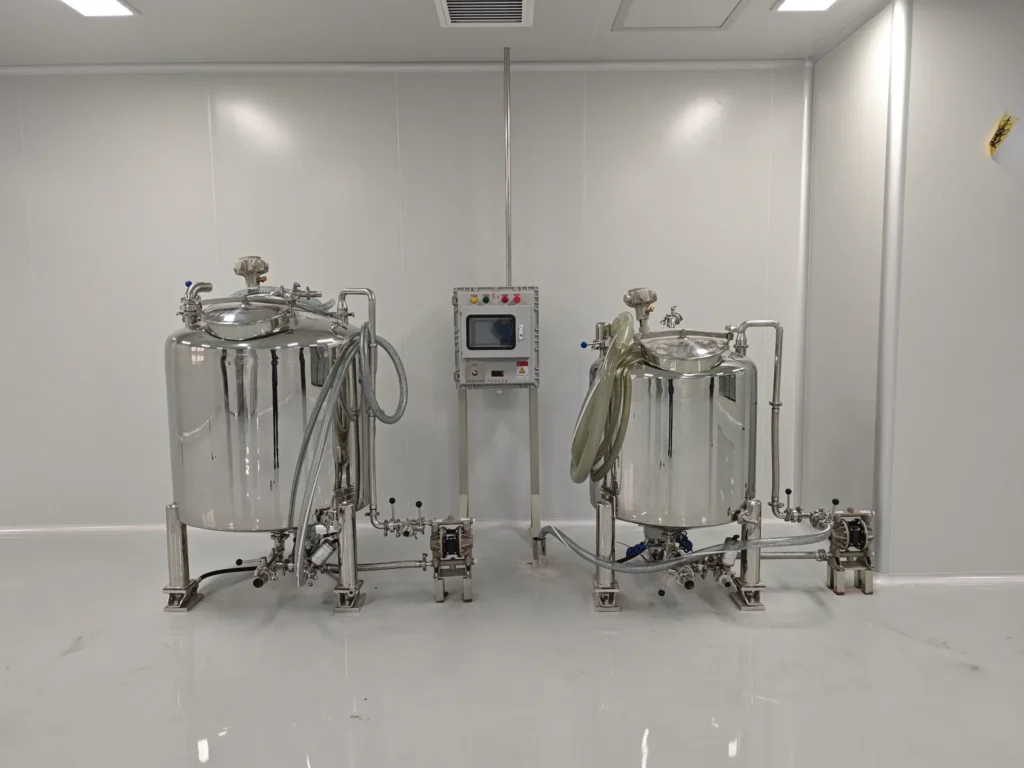
Fragrance preparation may involve blending measured liquid ingredients in a suitable vessel. Stainless steel mixing tanks provide one route where the selected construction and seals are compatible with the formulation. Specify access for additions, sampling, emptying and cleaning as part of the vessel discussion.
A sealed pneumatic perfume mixing tank illustrates an available blending arrangement. Its suitability for a specific installation must be assessed against the actual product and site requirements. Pneumatic agitation should not be treated as proof that every component or the complete installation has a particular hazardous-area certification.
For alcohol-containing formulations, the project team should define the site's applicable equipment and installation requirements before ordering. The supplier can then identify the offered configuration and documentation. The process description should also show how ingredient containers are handled and how finished bulk liquid leaves the vessel, rather than ending the equipment plan at the mixing motor.
Holding and Batch Separation
Holding and Batch Separation
Some fragrance processes include a defined period of holding before later treatment or packaging. The duration and conditions belong to the manufacturer's product procedure. Storage and holding systems should support those requirements without turning an unspecified waiting period into a universal production rule.
Plan batch identification carefully when several fragrances are being prepared or packed at the same time. Vessels, transfer connections and packaging supply should make it clear which product is being handled. Dedicated transfer parts may be useful for some production patterns, while other operations may use shared equipment with an established cleaning procedure.
The tank size should follow the batch schedule and filling demand. Large holding capacity is not automatically an advantage for a business producing many small fragrances. Consider access for sampling and cleaning, and leave room to move containers without crossing the working area used by the filling team. The practical arrangement should suit both long runs and frequent product changes.
Chilling and Filtration Where the Process Requires Them
Chilling and Filtration Where the Process Requires Them
Chilling and filtration may be included in a perfume process when required by the formulation and product quality procedure. They should not be added automatically to every fragrance or essential-oil product. Define the intended treatment, operating conditions and acceptance checks before selecting the equipment.
The perfume preparation machine with chilling and filtration represents a combined equipment route to assess for that task. Confirm how liquid enters, how it moves through the treatment stage and how it is collected afterward. Filter selection and replacement procedures should follow the actual product and process requirements.
Allow space for service access and cleaning around the filtration arrangement. A compact footprint is less useful if routine element changes require moving unrelated equipment or disconnecting an awkward transfer route. Include the product left in the system at the end of a batch in planning, particularly for short runs of high-value fragrances where residual liquid can be commercially significant.
Transfer between Preparation and Packaging
Transfer between Preparation and Packaging
Fluid transfer systems should be selected using formulation compatibility, required flow and the actual connection route. The pump, hoses, seals and valves all form part of the product path. A stainless steel vessel alone does not establish compatibility for everything connected to it.
Keep transfer connections accessible and the route manageable for the cleaning procedure. The pump selection guide provides a broader overview of transfer principles. For fragrance production, the equipment discussion should also account for switching between scents and preventing an incorrect batch from reaching the filling station.
The article on recovering product from liquid processing equipment is relevant to end-of-batch work. Agree on what happens to residual liquid and which recovery methods are permitted by the factory's quality procedure. Avoid designing a long connection simply because it fits around existing machines; a more direct arrangement can make the process easier to empty, clean and understand.
Vacuum Level Filling for Suitable Glass Bottles
Vacuum Level Filling for Suitable Glass Bottles
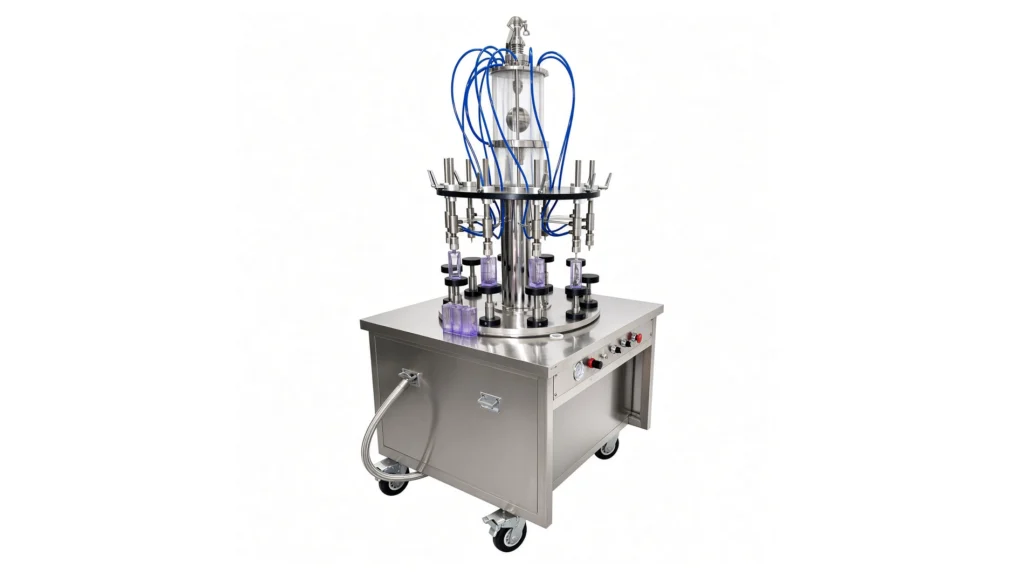
Some perfume packs use a filling arrangement that controls the liquid level in the bottle. The semi-automatic rotary vacuum perfume filler follows this approach for suitable glass bottles whose necks can work with the filling heads. The operating endpoint is the liquid level, so the actual bottle shape matters when reviewing the quantity contained at that level.
Bottle geometry matters because the volume corresponding to a particular level depends on the container. Provide actual production bottles, including any variation that the packaging supplier expects. The filling head and bottle mouth must work together, and the machine should be assessed with the intended fragrance liquid.
Manual bottle handling remains part of this semi-automatic arrangement. Consider how operators load, remove and pass filled bottles to the next station. A simple sequence can be effective for smaller brands or varied packaging ranges, provided output expectations include the complete handling cycle and the following pump assembly tasks rather than the filling action alone.
Pump Filling for Screw-Cap and Other Compatible Packs
Pump Filling for Screw-Cap and Other Compatible Packs
For products and containers suited to pump dosing, liquid filling machines provide alternative arrangements. The four-head magnetic pump liquid filler is an example for compatible low-viscosity liquids. The four-head filling and capping line combines filling with a separate connected capping machine.
A rotary two-head filling and screw-capping machine offers another equipment format for compatible small bottles. Its screw-capping function should not be confused with crimping a perfume pump onto a glass neck. Match the machine to the closure system before comparing footprint or output.
Use product trials to assess fill consistency, cutoff and package handling. The filling accuracy testing guide provides a useful measurement framework. Output should be discussed using the intended liquid, fill quantity and bottle supply arrangement, including whether empty bottles and caps are manually presented or automatically fed by additional equipment.
Pump Crimping and Decorative Collar Pressing
Pump Crimping and Decorative Collar Pressing
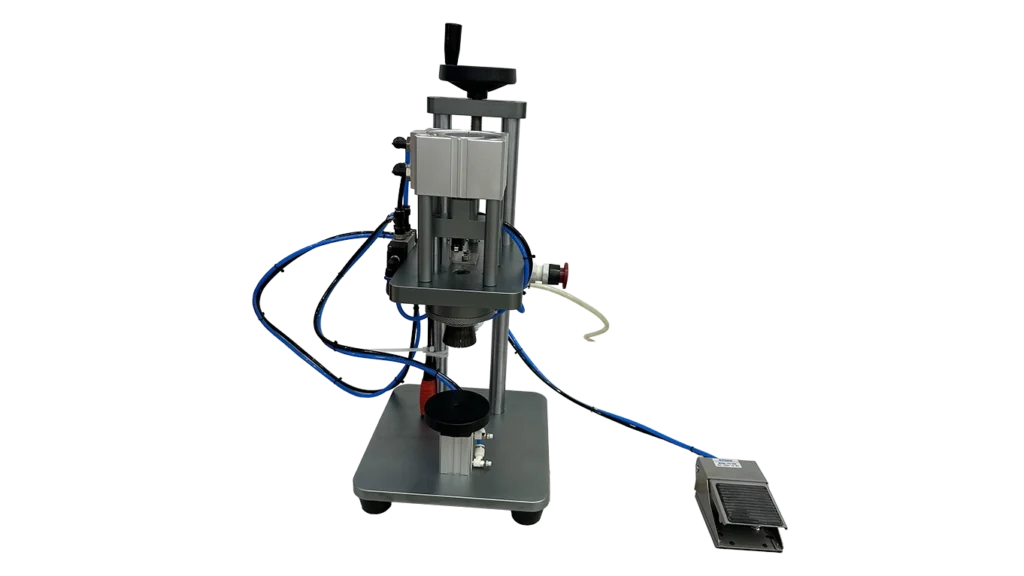
Pump crimping and collar pressing are separate operations. Crimping secures a compatible metal pump ferrule around the bottle neck. A decorative collar is then pressed into position where the package design requires it. Select the pressing tool for the collar dimensions and the assembled bottle, with the pump already secured by its intended closing method.
The semi-automatic perfume pump crimping machine provides a pedal-operated station with tooling matched to the pump specification. The perfume bottle collar pressing machine provides a separate pressing operation with a matched head or mold. Both require suitable positioning of the actual bottle and component.
Assess the assembled pack during trials, including stability, visible finish and the manufacturer's required closure checks. Bottles with unusual shoulders or decoration may need particular support. Leave enough space between stations for operators to handle glass without awkward movements, and specify whether decorative overcap placement is manual or included in another part of the proposed supply.
Screw Closures, Labels and Retail Presentation
Screw Closures, Labels and Retail Presentation
Some fragrance and essential-oil packs use screw caps or screw-mounted pumps instead of crimped pumps. Capping machines should be selected for that thread and component geometry. A regular threaded section can be compatible with one tightening approach even when the upper closure is decorative, but sorting and orientation still need separate assessment.
Labeling equipment must suit the bottle surface and desired label position. The tabletop round bottle label applicator is an example for compatible round containers; it should not be assumed to provide registration between separate front and back labels. Square, shaped or decorated bottles may need another arrangement.
Retail cartons and grouped packs add further handling. Cartoning machines can be considered where pack construction and production volume justify them. Include the insert, bottle and any accessory in the packaging review. Protecting the appearance of the finished bottle is part of the handling task, especially when decoration can mark during repeated contact.
Cleaning between Fragrances
Cleaning between Fragrances
Fragrance changeovers require a clear plan for vessels, hoses, pumps and filling parts. The manufacturer should establish the cleaning method and acceptance checks for the products involved. Equipment access should make those procedures practical rather than relying on operators to reach hidden areas or improvise connections.
The cleaning access guide provides background for reviewing the product path. Decide which parts can be removed, where they will be cleaned and how they will be identified before reuse. For frequent small runs, changeover work can influence the best equipment arrangement more strongly than maximum filling speed.
Also consider packaging changeovers. A new bottle can require different supports, filling-head settings or crimping tooling, even when the fragrance liquid is unchanged. Keep the required format parts organized and include adjustment time in the production schedule. A workstation that is easy to reset can be more useful than a highly integrated arrangement that is difficult to adapt to varied premium packs.
Compare a Short Fragrance Run with a Repeated Bottle Run
Compare a Short Fragrance Run with a Repeated Bottle Run
A brand packing many fragrances in small quantities may benefit from separate workstations that are easy to empty and reset. A repeated run using one bottle and pump combination can make automatic handling more attractive. Compare the complete shift, including cleaning and component changes, before deciding how closely to connect the stations.
Glass handling also deserves a practical review. The operator needs a convenient place for empty bottles, a clear route for filled bottles and room to remove an unsuitable pack. Supports should be evaluated with decorated production glass, not only an undecorated sample with similar dimensions.
For a new packaging design, keep a record of the approved component set and the tooling used during the trial. Small changes to a pump, collar or bottle neck can affect assembly. The production team will find that record more useful than a broad statement that the line handles perfume bottles of many shapes.
Coordinate the Workstations and Project Scope
Coordinate the Workstations and Project Scope
A perfume line can operate as separate preparation and packaging stations or as a more connected system. Packaging line support equipment can help with bottle supply, conveying and collection where those functions fit the pack range. Automation should follow a stable component and process arrangement rather than precede it.
For a complete production line proposal, provide the formulation information needed for compatibility review, the preparation sequence, batch schedule, complete packaging samples and daily output target. Identify the site's requirements for alcohol handling and the documentation expected for the selected equipment configuration.
StriversMachinery can coordinate the machines and interfaces around that information. The proposal should distinguish blending, treatment, dosing, pump attachment and decorative assembly, with manual tasks clearly visible. Agree on trials using the actual bottles and components, including a realistic changeover, so the production team can assess both the appearance of the finished pack and the work needed to produce it repeatedly.