Mixing Equipment
Featured




More About Our Machines
Mixing Equipment for Different Production Tasks
Mixing equipment performs different tasks depending on its working elements, vessel arrangement, and operating conditions. Bulk blending, powder incorporation, dispersion, and high-shear homogenization should not be treated as interchangeable simply because each involves a rotating mixer.
This range is organized into four equipment families: homogenizing mixing tanks, stainless steel mixing tanks, high speed dispersers, and lifting-type batch high shear mixers. Each provides a different starting point for evaluating the process.
Selection begins with what must happen to the material. Establish whether the requirement is an integrated preparation vessel, conventional agitation, powder dispersion, or a separate batch homogenizing operation. Then review the equipment arrangement that can perform that task under the intended conditions.
This parent category provides a selection framework. The four subcategories address their own configurations and operating considerations, while individual machine pages provide verified specifications for particular models.
Four Mixing Equipment Families at a Glance
The categories below are organized around their principal processing roles. Some applications may require more than one function, but that does not make every equipment family an equivalent alternative.
| Equipment family | Primary role | Key selection question |
|---|---|---|
| Homogenizing Mixing Tanks | Atmospheric batch preparation using a tank agitator and bottom-entry homogenizer, with heating and cooling options | Does the process need bulk agitation and high shear integrated into one preparation vessel? |
| Stainless Steel Mixing Tanks | Vessel-based blending and processing with an appropriate agitation arrangement | Can the task be completed with conventional agitation and the required vessel functions? |
| High Speed Dispersers | Powder wetting, incorporation, and dispersion using a suitable dispersing arrangement | Is powder incorporation or dispersion the main processing requirement? |
| High Shear Mixers | High-shear processing using a lifting-type batch homogenizer | Does the process need a batch homogenizing unit used with a compatible vessel? |
Within this range, High Shear Mixers refers to lifting-type batch homogenizing machines. It does not refer to inline or pipeline homogenizers. Homogenizing Mixing Tanks refers to atmospheric tanks combining agitation with a bottom-entry homogenizer.
Define the Mixing Task Before Selecting the Machine
A useful equipment brief describes the required material change. The task might be to blend compatible liquids, maintain an ingredient distribution, incorporate powder, disperse agglomerates, or apply high shear during formulation preparation.
Those requirements should be distinguished from a finished-product claim. A machine can provide a specified mixing action, but the formulation, ingredient condition, charging method, and operating procedure also influence the result.
Describe the condition of the incoming material and the condition required before discharge. Include any unacceptable effects, such as excessive air incorporation, unwanted heating, damage to particulates, or changes to product structure.
This establishes a practical basis for discussion. It is more useful than requesting the highest speed or largest motor without identifying what the mixer must achieve.
If a product-quality issue is driving the purchase, the manufacturing process troubleshooting guide provides a separate resource for organizing the investigation before attributing the issue to equipment alone.
Homogenizing Mixing Tanks: Integrated Atmospheric Batch Preparation
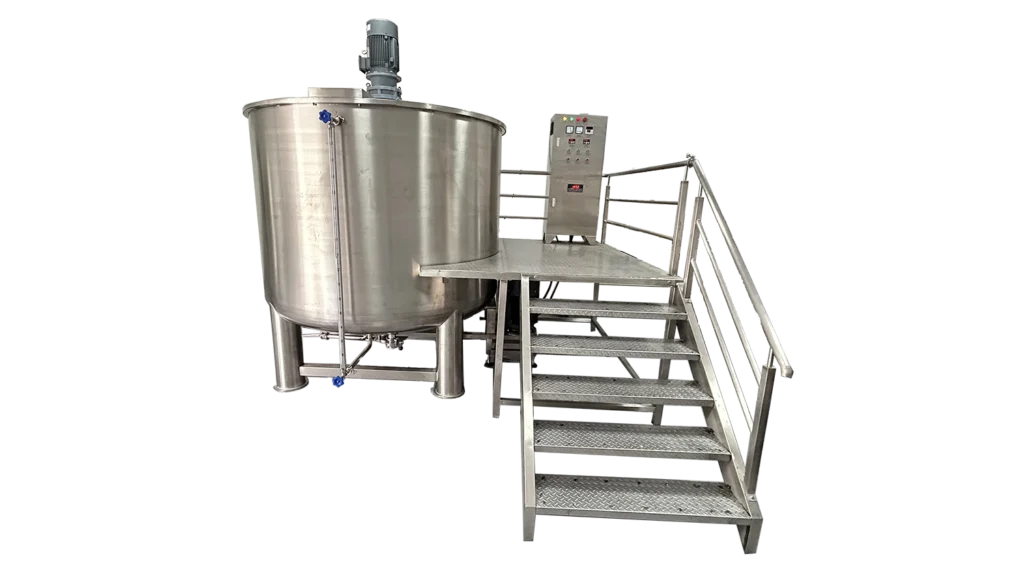
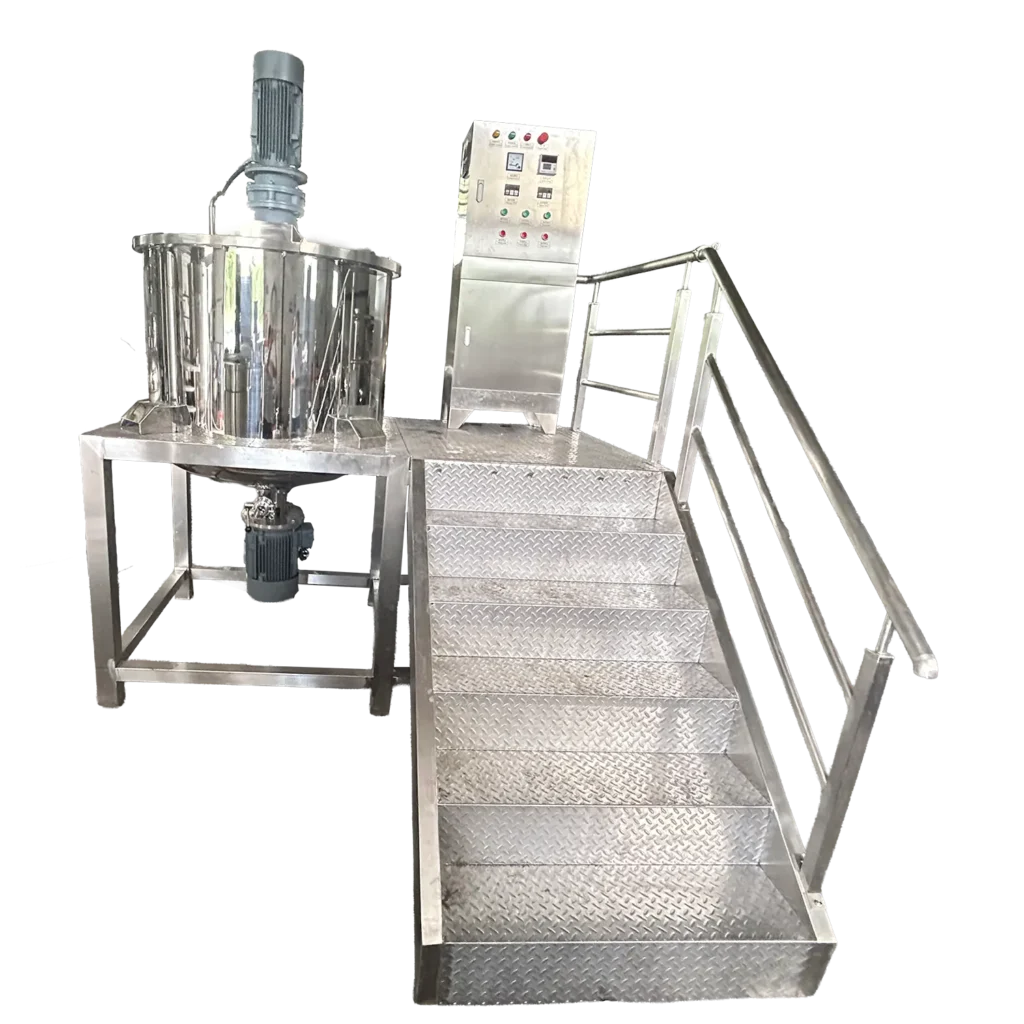
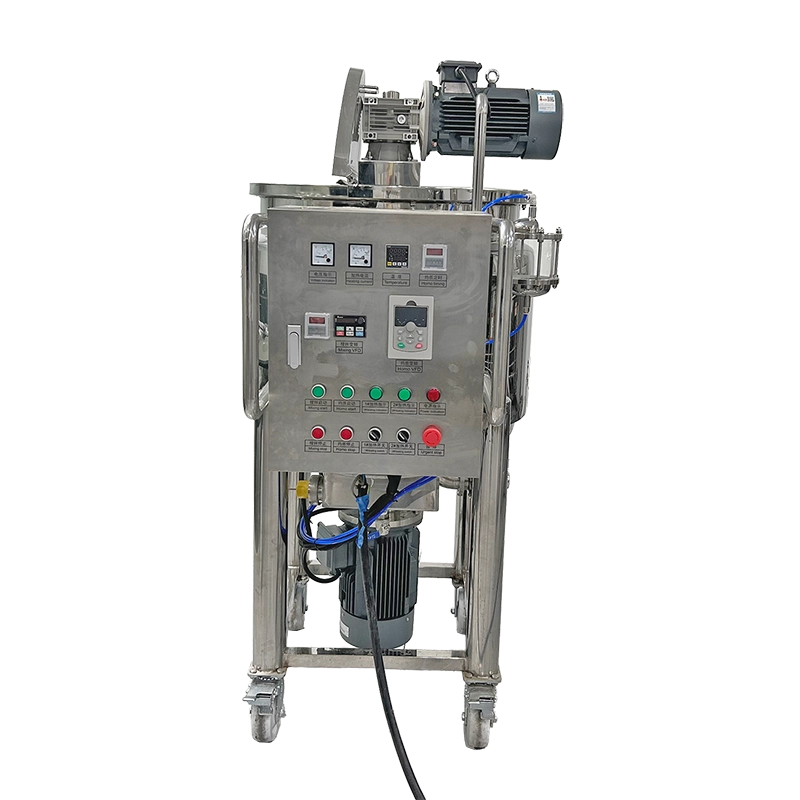
A homogenizing mixing tank combines an atmospheric process vessel, a bulk agitator, and a bottom-entry homogenizer. Heating and cooling can be incorporated according to the selected configuration and process requirements.
This family is relevant when the batch needs both vessel-wide movement and a high-shear stage within the same preparation system. The agitator and homogenizer perform different roles, so their suitability should be assessed together rather than from homogenizer power alone.
The tank also provides the physical arrangement for charging, thermal processing where specified, and discharge. This makes the selection question broader than choosing a homogenizing head: the whole vessel must suit the batch.
The subcategory develops the relationship between tank configuration, agitation, bottom homogenization, and thermal options. At this parent level, the main decision is whether an integrated atmospheric preparation vessel is the appropriate equipment family.
Stainless Steel Mixing Tanks: Vessel and Agitation Requirements
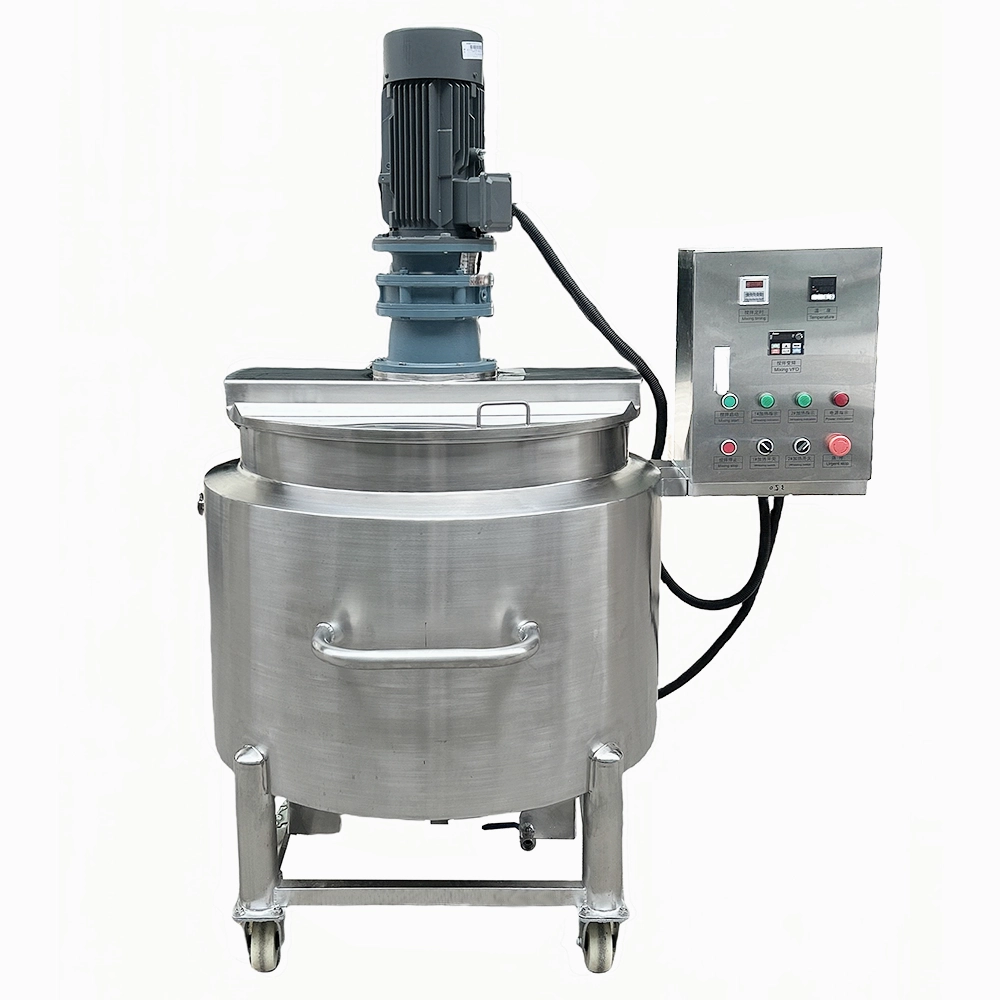
Stainless steel mixing tanks are a starting point when the process needs a defined vessel and an appropriate conventional agitation arrangement. The tank may require heating, cooling, particular charging provisions, or connections to other equipment, depending on the application.
Do not assume that every stainless steel mixing tank includes a high-shear homogenizer. That function must be specified separately. Likewise, stainless steel construction does not establish a particular material grade, surface finish, pressure rating, or cleaning capability.
The distinction from a homogenizing mixing tank is the role of the installed processing functions. If conventional agitation can complete the task, additional high shear may not be necessary. If the formulation requires a separate homogenizing action, review whether it belongs within the tank or in another processing arrangement.
A tank used only for holding product should also be distinguished from a process mixing vessel. Select the functions that are needed rather than treating all stainless steel containers as equivalent equipment.
High Speed Dispersers: Powder Incorporation and Dispersion
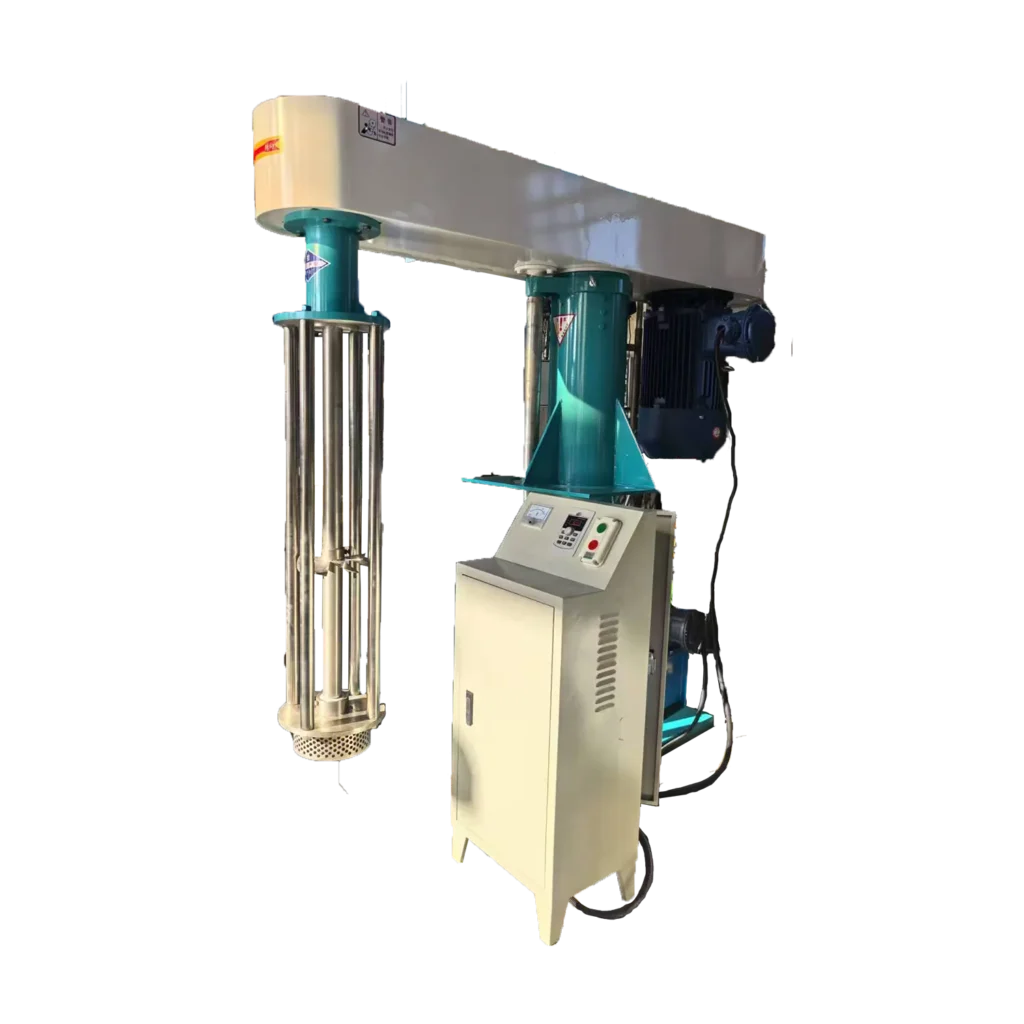
High speed dispersers are a starting point when wetting, incorporating, and dispersing powders or other solids is the main task. The dispersing element, vessel relationship, material behavior, and charging method all affect suitability.
Identify the powder characteristics and the required condition after processing. A powder that is difficult to wet presents a different selection problem from a formulation that simply needs uniform liquid blending.
Do not describe every disperser as an emulsifier or assume that a visible circulation pattern proves the required dispersion has been achieved. Define an appropriate product criterion and evaluate the proposed configuration against it.
The High Speed Dispersers subcategory addresses the dispersing arrangement and its application boundaries. This parent category uses it as the selection path for dispersion-led work rather than a general substitute for every mixing process.
High Shear Mixers: Lifting-Type Batch Homogenizing Units
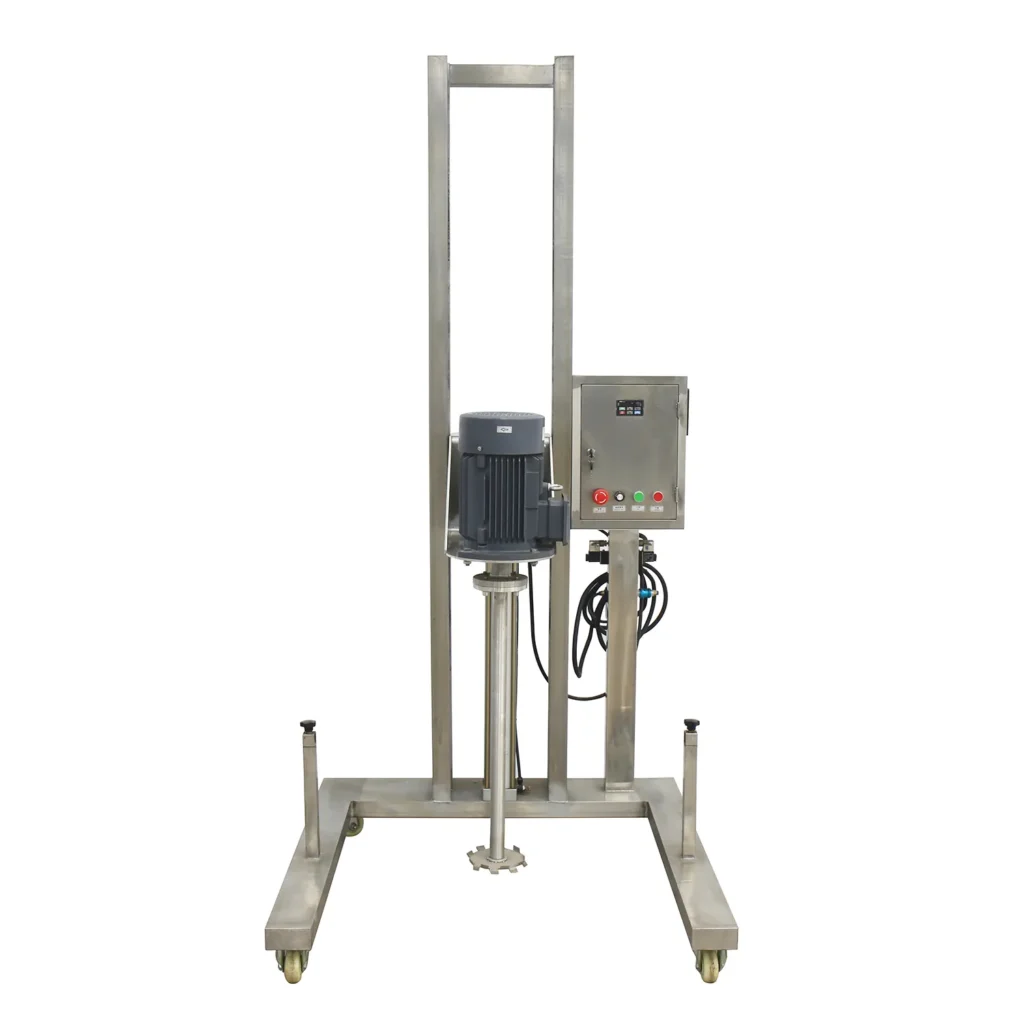
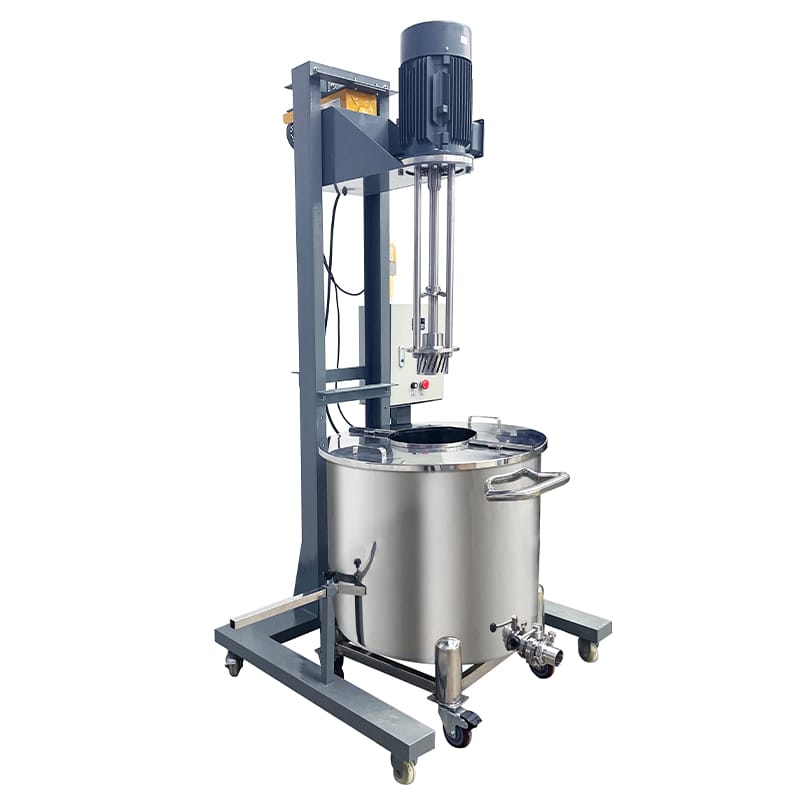
The High Shear Mixers family in this range consists of lifting-type batch homogenizing machines. The processing head operates within a compatible vessel, and the lifting arrangement provides the movement needed for its specified operating and access positions.
Evaluate this family when the requirement centers on a batch high-shear operation rather than a permanently integrated tank-and-bottom-homogenizer system. Confirm the vessel arrangement, processing-head engagement, batch range, and installation requirements.
A lifting homogenizer is not interchangeable with a high speed disperser merely because both may have a lifting structure. The working element and processing task determine the relevant equipment family.
It should also not be confused with a hydraulic lifting vacuum emulsifying vessel. In that architecture, lifting concerns access through the vessel head; here, the category concerns a lifting-type batch homogenizing unit.
Material Behavior and Batch Range
Provide material information under the intended processing conditions. Relevant characteristics include viscosity, temperature, solids content, particle or fiber presence, tendency to foam, and sensitivity to shear.
Viscosity and Temperature
A viscosity value should include its measurement conditions where available. Materials with similar reported viscosity may behave differently during mixing, especially when the formulation changes during heating, cooling, or ingredient addition.
Working Volume and Minimum Batch
Total vessel volume, working volume, and minimum effective batch are different specifications. The material must engage the installed mixing elements as intended. Do not assume that a larger vessel will process every smaller batch effectively.
For lifting-type equipment, the compatible vessel and processing-head position also need review. Capacity should not be selected independently of the geometry and operating arrangement.
Model-specific capacities and limits belong on individual machine pages. This category should establish the required operating range without applying one unverified range to all four equipment families.
Heating, Cooling, and Vessel Configuration
Thermal processing may influence the choice between an integrated vessel system and a separate mixing unit. Identify whether ingredients need heating, the product must be cooled under agitation, or temperature needs to be maintained during a particular stage.
A jacketed tank can be evaluated where those functions are required, but the presence of a jacket does not establish heating or cooling performance. The thermal duty, available utilities, and selected construction must be agreed.
For a separate lifting mixer or disperser, confirm which vessel provides the required thermal functions. Do not assume that the processing unit includes heating or cooling simply because it can operate in a vessel.
Review associated utility systems when defining the installation. Electrical heating, external heating services, cooling supplies, and any seal-support requirements should be identified for the actual configuration.
Keep vessel pressure requirements separate from thermal-jacket specifications. A jacket pressure rating is not a pressure rating for the product chamber.
Open, Sealed, and Vacuum Processing Boundaries
The four mixing equipment families do not establish a common vessel-enclosure arrangement. Confirm whether the intended process needs open access, a covered vessel, a defined sealed configuration, or vacuum processing.
Charging access, ingredient characteristics, cleaning, and the operating environment can influence that decision. A cover should not be treated as proof of pressure or vacuum capability.
The sealed versus open mixing tank guide provides supporting selection context. Where vacuum processing is a central requirement, evaluate the separate Vacuum Emulsifying Mixers category.
Special hazards must be raised before configuration selection. Neither an open mixer nor an enclosed tank should be assumed suitable for flammable materials or a classified hazardous location without a specific assessment.
Product-Contact Materials and Cleaning Requirements
Material compatibility applies to the complete product-contact arrangement. Review the vessel, shaft, mixing element, seals, gaskets, valves, and any connected product path rather than selecting from the frame material alone.
The 304 versus 316L stainless steel guide provides a related resource for material selection. The appropriate grade and finish still need confirmation for the ingredients, cleaning chemicals, and operating conditions.
Cleaning access differs between an integrated tank, a disperser, and a lifting batch homogenizer. Define which components remain installed, which are removed, and how retained material is inspected or cleared. The equipment cleaning-access guide supports that review.
Where spray cleaning is proposed, confirm its complete scope. A spray ball is not proof of a finished automatic cleaning system. Use the CIP spray ball versus manual cleaning guide as a supporting reading path, then agree the procedure for the delivered equipment.
Installation, Lifting Space, and Operating Access
Installation planning must reflect the selected architecture. An integrated tank needs its defined operating and maintenance envelope; lifting equipment also needs the full travel and additional clearance specified by the manufacturer.
Review how vessels are positioned, how ingredients reach the charging point, and how operators access controls and inspection areas. Confirm whether vessels are fixed, movable, or separately supplied, and how the approved operating position is maintained.
Supporting floors and structures should be assessed for the installed equipment, material, and applicable operating loads. Closed dimensions and empty machine weight are not a complete installation brief.
Coordinate these decisions with the wider factory equipment planning process. The equipment installation guide provides related considerations before commissioning responsibilities are finalized.
For connections requiring disassembly or permanent routing, consult the clamp versus flange connection guide and agree the actual connection schedule.
Controls and Operator Responsibilities
Control requirements should follow the operating method. Identify which functions need adjustment, which conditions need indication, and which actions remain with the operator.
Variable speed, timed operation, temperature control, lifting controls, and protective functions must be confirmed for the selected machine. A button panel or touch screen does not, by itself, establish the automation scope.
Where recipe storage, data recording, automatic additions, or communication with other equipment is required, specify those functions separately. Confirm the supplied hardware and software capabilities rather than assuming they follow from a general automation label.
Training and operating instructions should match the delivered configuration. Clear responsibilities are particularly important when one processing unit is used with different approved vessels or when operators perform multiple preparation stages.
Discharge, Transfer, and Receiving Equipment
The batch must be recoverable through a practical handling method after mixing. Review how product leaves the vessel, which equipment receives it, and whether its flow behavior changes before transfer.
An integrated tank may have a defined outlet, while a lifting mixer or disperser may rely on the handling arrangement of its separate vessel. Do not assume that the mixing unit includes a pump, tilting system, or complete discharge station.
Evaluate the Fluid Transfer Systems category where additional transfer equipment is needed. The pump selection guide provides supporting considerations for viscosity, particulates, and product sensitivity.
If the product proceeds to filling equipment, agree the handover conditions, receiving capacity, and scheduling. This category identifies the interface without repeating an application-specific manufacturing process.
Development Work and Later Production
Development and production may need different equipment arrangements. A flexible trial setup can help investigate formulation behavior, while a production installation may need a more defined preparation, utility, and handling arrangement.
For development planning, the cosmetic laboratory mixing equipment guide provides a separate selection resource. Define trial quantities and the information required before choosing equipment from nominal volume alone.
Moving to a larger system requires evaluation rather than copying rpm and processing time. Use the formulation scale-up guide to support planning of the next stage.
Where existing equipment is being modified, confirm the proposed changes against the original design and operating conditions. The equipment upgrade and retrofit guide provides related context without establishing compatibility for a particular machine.
Typical Product Applications
Application examples include shampoos and body washes, liquid detergents, compatible cosmetic creams and lotions, paints and coatings, and sauces and food pastes.
Prepare a Common Equipment Requirement
Compare candidate configurations against the same written requirement. Include the material characteristics, intended batch range, mixing task, thermal requirements, vessel arrangement, utilities, cleaning approach, and discharge method.
Separate standard components from options and separately supplied equipment. Resolve alternative motor, drive, seal, and electrical brands into the actual configuration being offered.
Where trials are needed, agree the material, operating conditions, and result to be assessed. A demonstration should answer the selection question rather than rely only on visible movement or a short run at maximum speed.
Installation, cleaning, service access, and operating resources should also be considered when comparing offers. The total cost of ownership guide provides a supporting procurement resource.
Mixing Equipment Configuration with StriversMachinery
StriversMachinery manufactures core mixing and emulsifying equipment in-house. Complementary equipment is sourced from long-term partner manufacturers where required, with StriversMachinery responsible for complete production line integration and delivery.
Configuration starts with the actual processing requirement. A tank with conventional agitation, an atmospheric homogenizing tank, a disperser, and a lifting batch homogenizer should each be assessed against the task they need to perform.
Where the project extends beyond mixing, review the scope of complete production line solutions separately so that equipment interfaces and responsibilities are defined.
Contact our team with representative product information, intended batch quantities, required mixing functions, available utilities, and the proposed installation arrangement. This provides a practical basis for selecting the relevant equipment family and reviewing a specific configuration.