
Packaging Equipment
StriversMachinery supplies packaging equipment for closing, sealing, labeling, coding, wrapping, cartoning, and secondary packaging. The range supports cosmetic, personal care, food, and chemical packaging operations, from manually supplied workstations to compatible automatic line arrangements. Equipment selection follows the container, closure, packaging material, required output, and production workflow. Explore the categories below to identify suitable individual machines and coordinated packaging stages.




More About Our Machines
Packaging Equipment for Product Closure and Finished-Pack Preparation
Packaging equipment completes the presentation and handling of a product after its container has been filled. The required work may include applying a closure, forming an inner seal, placing a label, adding batch information, wrapping the pack, or preparing an outer carton. Each operation addresses a different part of the finished package.
StriversMachinery supplies packaging equipment and coordinates project-specific arrangements around the actual container, closure, label, and outer-pack design. The range brings together operator-assisted machines and automatic equipment, allowing manufacturers to select the functions their production requires. The appropriate starting point is a defined package and production duty rather than a list of every possible machine.
This category provides the navigation between the main packaging functions. Its seven subcategories separate closure application, sealing, labeling, coding, shrink wrapping, cartoning, and secondary packaging. Use them to identify the equipment class, then review individual product pages for the installed configuration and operating specifications.
Seven Packaging Equipment Categories
| Equipment Category | Primary Task | Main Selection Factors |
|---|---|---|
| Capping Machines | Apply, tighten, press, or crimp a compatible closure. | Closure construction, bottle support, application method, and cap supply. |
| Sealing Machines | Create the specified seal between compatible packaging components. | Seal location, container and liner materials, closure fit, and required seal result. |
| Labeling Machines | Apply prepared labels to suitable packaging surfaces. | Container geometry, label construction, placement, and product positioning. |
| Coding Machines | Add batch, date, or other variable identification. | Marking surface, message content, readability, and package movement. |
| Shrink Wrapping Machines | Form an outer shrink-film wrap around an individual or grouped pack. | Film compatibility, heat sensitivity, package shape, and wrap appearance. |
| Cartoning Machines | Prepare paperboard boxes and support defined carton-packing tasks. | Blank construction, folding requirements, product fit, and loading responsibility. |
| Secondary Packaging Equipment | Support grouped and outer-pack preparation. | Pack count, loading arrangement, protection, outer packaging, and handling. |
These categories describe the work being performed. A product line may need only a few of them, and some packaging formats combine several tasks within dedicated equipment. The final arrangement should follow the package design and operating priorities.
Capping Equipment and Closure Geometry
Capping machines are selected around the closure interface. A threaded screw cap, a press-fit closure, and a perfume pump secured by crimping require different application methods. The outer appearance of the closure is less informative than the part that engages with the container.
For screw closures, review the gripping area, cap seating, bottle restraint, and required tightening result. Trigger sprayers and pump heads introduce projecting features that affect clearance and cap presentation. Their suitability depends on the actual closure geometry, including the accessible threaded section. For temperature-dependent packaging duties, the hot filling, cooling, and capping guide provides separate application context.
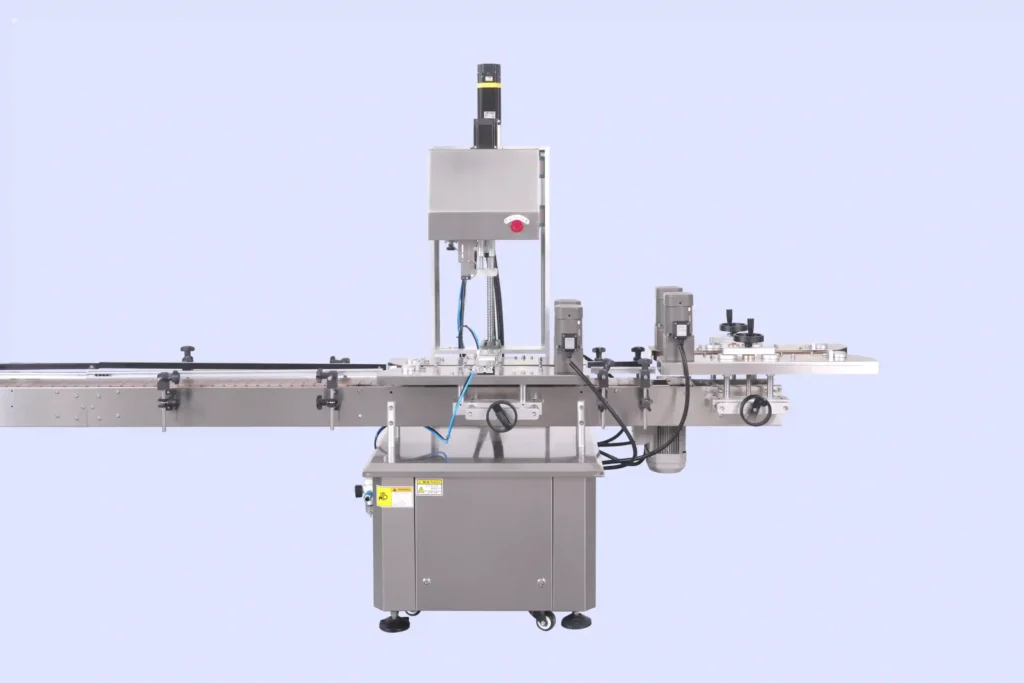
Automation also needs to reflect cap handling. Operators may place closures before a machine tightens them, or a separately specified feeding arrangement may present compatible closures automatically. An automatic wheel-type screw capper illustrates one equipment path. The individual product page identifies its actual functions and configuration.
Inner Sealing After Cap Application
Sealing machines address a bond or closure requirement that must be defined separately from tightening a screw cap. One important example is induction foil sealing: after a compatible lined cap has been applied, the sealing stage bonds the suitable foil liner to the container mouth.
The container, cap, and liner form a matched packaging system. Assess the intended seal area, liner construction, and finished opening behavior together. The production arrangement also needs consistent presentation of the package at the sealing station.
This distinction matters when planning adjacent equipment. Capping establishes the mechanical closure condition, while foil sealing creates the inner bond. Treating both as one unspecified operation can leave an incomplete equipment scope. Other sealing duties should likewise be identified by the actual packaging interface rather than by the general word “seal.”
Label Application for Round and Flat Surfaces
Labeling machines place prepared labels on compatible containers or outer packs. Round-container application and flat-surface application use different supporting and positioning arrangements. A cylindrical labeling band, a flat box face, and a flexible pouch panel present different handling requirements.
For round products, examine the usable labeling area and the features that interrupt it, including shoulders, taper, ribs, or raised details. For flat surfaces, examine the available support and the repeatability of product placement. The label roll, backing, adhesive, and sensing requirements need to match the selected applicator.
The semi-automatic flat-surface label applicator provides a product reference for operator-assisted work. The tabletop round-container label applicator offers the related path for compatible cylindrical surfaces. Clear labels, alignment to existing features, and multiple-label layouts deserve their own compatibility assessment because they change the application task.
Coding for Batch and Date Information
Coding machines add information that changes between production runs or individual packs. Common requirements include batch numbers and date information. The marking surface may be a container, a label, a carton, or another designated area of the package.
Select the coding arrangement using the complete message, available print window, surface finish, and package movement. A code needs to remain readable after subsequent handling and any outer wrapping. Text, symbols, and machine-readable information can create different output requirements.
Coding and labeling can work together, but their responsibilities remain distinct. Prepared labels carry fixed artwork, while the coding function adds the specified variable content. Any shared mounting, triggering, or data interface should be included in the equipment arrangement so the message reaches the correct location at the correct stage.
Shrink Wrapping for Individual and Group Packs
Shrink wrapping machines address an outer-film requirement. A suitable film is prepared around the package and exposed to controlled heat to create the intended wrap. Film preparation, sealing, shrinking, and product handling are separate functions that may be combined in different arrangements.
Individual cartons and grouped products need different presentation. A grouped pack must maintain the required unit arrangement, while a decorative carton may place greater emphasis on the visible seam and overall finish. Both need compatible film and an acceptable response to heat exposure.
The product, container, label, closure, and printed surfaces should be evaluated as a complete pack. A wrap selected for visual presentation is not automatically suitable for transport grouping. Describe the required packaging result, including whether the wrap covers one unit or retains several units together.
Carton Preparation and Product Loading
Cartoning machines address paperboard packaging tasks such as preparing and folding compatible blanks. Product loading, insert handling, and final closure are additional responsibilities that need to be assigned within the packing operation.
A carton is defined by its structure as well as its finished dimensions. Flap construction, crease positions, board behavior, and surface finish influence the forming task. Internal trays or leaflets can add work beyond preparing the outer box.
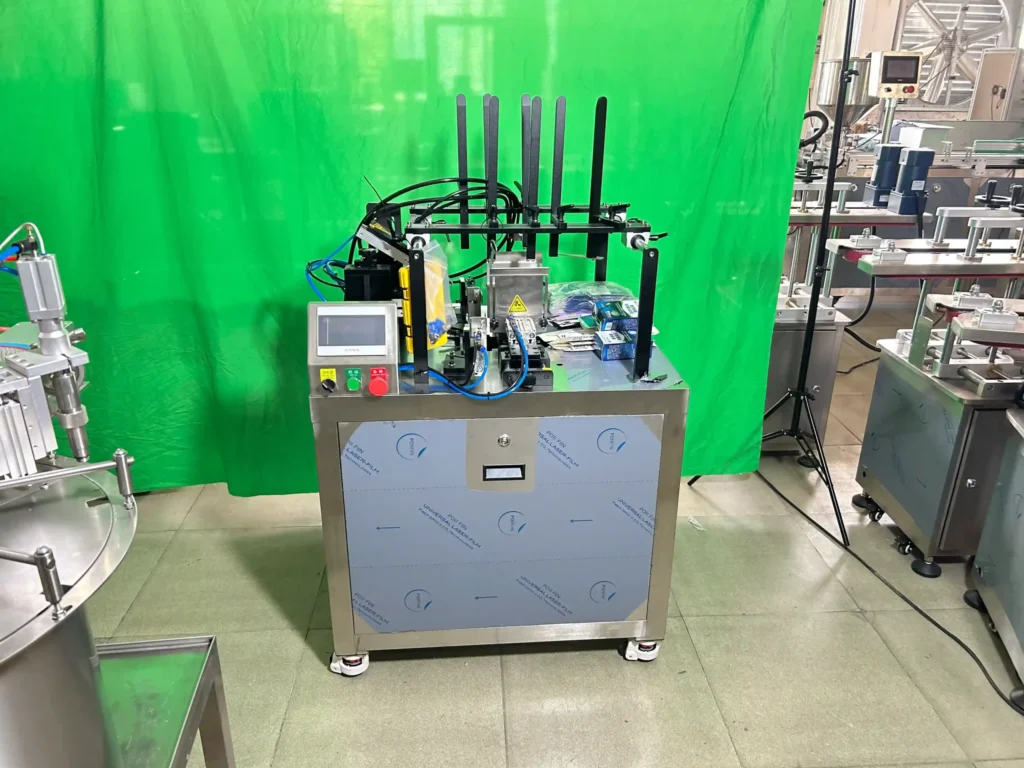
The semi-automatic box folding machine provides a product reference for a defined paperboard-preparation operation. Assess its task against the actual blank and keep the remaining loading and closing work visible in the station plan. This is especially useful when several manual tasks share one packing area.
Grouping and Outer-Pack Handling
Secondary packaging equipment supports the movement from individual finished units to grouped or outer packs. The required work may include arranging a defined quantity, preparing an outer case, loading products and protection, closing the pack, and transferring it onward.
Define the unit count and loading pattern before assessing the handling arrangement. Bottles, cartons, jars, and flexible packs differ in stability and space requirements. Partitions, trays, and layer pads add their own material-handling responsibilities.
An outer pack should be described by its contents, construction, finished weight, and next handling stage. This keeps the specification focused on the required work. It also separates retail presentation from distribution packaging while allowing the same project to include both where appropriate.
Container and Packaging Compatibility
Packaging equipment interacts with several surfaces and components that influence the result. Closures need accessible gripping or forming areas; labels need suitable application surfaces; cartons need compatible fold structures; and film needs a package that can tolerate the intended wrapping conditions.
Use representative packaging components rather than dimensions alone. Samples reveal features such as flexible walls, uneven panels, projecting closures, and coated surfaces that drawings may not fully describe. Filled products also provide a more realistic basis for assessing movement and support than empty containers.
For projects with multiple formats, identify the common features and the differences. A family of similarly sized products may still require different fixtures, guides, closure tooling, or packaging materials. Compatibility should follow the actual operation rather than a broad label such as “cosmetic bottle.”
Operator-Assisted and Automatic Arrangements
The useful automation question is which tasks the equipment performs and which remain with operators. Loading containers, presenting caps, starting a cycle, replenishing labels, inserting products, and removing finished packs are separate activities.
Operator-assisted equipment can support production with changing formats or packing duties that benefit from manual placement. Automatic arrangements coordinate more of the movement where the product and packaging support consistent feeding. The choice should reflect run length, staffing, handling difficulty, and the required production continuity.
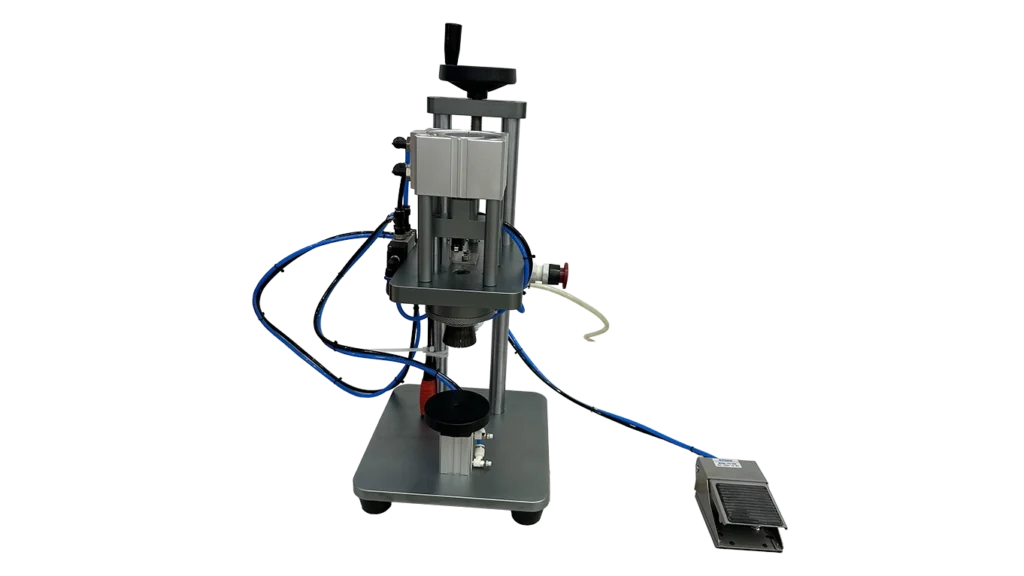
For comparison, an operator-assisted wheel-type screw capper represents a different operating arrangement from an integrated capping station. These paths address different handling priorities. Review the actual loading, initiation, and removal responsibilities on the equipment page when assessing either approach.
Capacity and Production Balance
Capacity planning begins with a clearly defined output unit. Bottles per minute, labeled products per hour, grouped packs per minute, and completed cases per hour refer to different work. Translate the requirement into the unit produced by each station.
Sustained output also includes replenishment, routine checks, product handling, and changes between formats. A nominal cycle rate describes only part of an operator-assisted station, while the flow into and out of an automatic unit can limit its useful production rate.
Compare neighboring operations using the intended product and packaging format. Short accumulation areas or changes in staffing may affect the balance, but their suitability depends on the available space and product behavior. Capacity should describe completed acceptable packs under the planned conditions rather than a disconnected machine speed.
Interfaces with Filling and Product Supply
Packaging equipment receives containers or packs in a defined condition. Upstream filling machines determine how filled products reach the closure and presentation stages. Transfer planning should account for the container support, opening condition, spacing, and orientation required by the receiving equipment.
Some formats combine filling and closing within dedicated equipment. Review tube filling and sealing equipment for tube handling and tail closure, and pouch filling equipment for the relevant flexible-pack arrangement. Their integrated functions affect which separate packaging stages remain necessary.
These links describe interfaces, not a compulsory production sequence. The package design determines which operations are required and where a separate machine offers a useful role.
Format Changes and Material Replenishment
Equipment selection should reflect the products scheduled to share the station. Changing only the message on a coder differs from changing a label roll, a cap geometry, or a paperboard blank structure. Each change has different adjustment and handling requirements.
Review the parts and materials associated with each format. Relevant items may include product fixtures, guides, closure tooling, label rolls, or forming components. Accessible adjustment points and organized storage for format parts help operators return to the intended setup.
Replenishment matters during long runs as well as during changes. Place caps, labels, film, cartons, and other consumables where they can be supplied without interrupting surrounding work. Evaluate usable production time using the complete station activity, including these routine tasks.
Installation, Utilities, and Working Space
A packaging station needs more space than the machine footprint. Allow room for operators, incoming products, packaging materials, completed packs, and maintenance access. The preferred layout should support the actual direction of movement through the work area.
Confirm the services required by the selected equipment. Electrical supply, compressed air, and other services vary with the installed functions. Purely electric equipment and equipment with pneumatic movement create different utility requirements even when they perform related packaging work.
The factory utilities checklist provides broader facility-planning context. Apply the equipment-specific requirements to each station, including any separate feeders, conveyors, or auxiliary units included in the project. Access for roll changes, tooling changes, and routine inspection should remain available after installation.
Packaging Acceptance and Service Planning
Define the finished result for each operation. Capping may require an agreed closure condition; sealing needs its specified bond; labeling needs an accepted position and appearance; and cartoning needs the intended shape and product fit. These checks concern different aspects of the pack.
Use representative packaging samples as the reference during equipment assessment. Where inspection or rejection is required, identify the defect being checked and the response needed. The inspection task should be included explicitly in the project specification.
Service planning should focus on the installed mechanisms and consumables. Rollers, belts, guides, application parts, and format tooling have different service roles. The total cost of ownership guide provides a separate discussion of longer-term operating considerations.
Container Travel and Pack Orientation
Packaging equipment needs a consistent way to receive and release the product. A round bottle may need restraint during cap application and a different support arrangement during labeling. A flat carton may need a particular face presented for coding, while a grouped pack may need to retain its arrangement during transfer.
Review orientation as a separate selection dimension. Some tasks are satisfied by placing the product within a defined working area; others depend on a particular feature facing the equipment. A handle, pump, seam, or printed panel can change the required presentation even when the package dimensions remain unchanged.
Transfer planning also includes the product’s condition. Filled containers can be heavier or less stable than empty samples, and assembled packs can occupy more space than their individual components. Assessment using representative completed products helps establish the supports and guides appropriate to the intended duty.
Packaging Material Supply and Repeated Production
The supply of packaging components affects repeatability across production runs. Caps, labels, liners, film, and paperboard blanks each have characteristics that influence how the associated equipment operates. Keeping those characteristics identified makes changes in packaging supply easier to assess.
For repeat jobs, retain the accepted package references and the corresponding component specifications. A replacement material should be reviewed for the attributes relevant to its task, such as closure fit, liner compatibility, label construction, or carton fold pattern.
This approach connects everyday material control with equipment selection. It allows the production team to distinguish a format change from variation within an established pack and helps keep future equipment discussions focused on the actual packaging requirement.
Typical Applications
Skincare bottles and jars, perfume bottles, personal care containers, household product packs, food containers, cosmetic cartons, product sets, and grouped finished goods, subject to equipment and packaging compatibility.
Key Factors to Evaluate Across Packaging Equipment
Match the equipment class to the physical task first: closure application, inner sealing, label application, variable coding, film wrapping, carton preparation, or outer-pack handling. Then assess the product geometry, packaging components, required output, and division of operator and machine work.
Review the planned format range and the conditions in which products reach each station. Define the expected finished result, the necessary checks, and the transfer arrangement to neighboring operations. This creates a practical selection framework without requiring every project to adopt the same equipment sequence.
For an equipment discussion, provide representative finished products and the relevant caps, liners, labels, film, or carton samples. StriversMachinery can use these inputs to discuss the appropriate equipment categories and a project-specific arrangement for the required packing tasks.