
Sauce, Condiment & Food Paste






More About These Applications
Processing and Packaging Equipment for Sauces and Food Pastes
Processing and Packaging Equipment for Sauces and Food Pastes
Smooth mayonnaise, chili sauce, jam and a dense food paste can all be sold in jars, yet they place different demands on processing equipment. Viscosity is only part of the picture. Pieces, fibers, product temperature and the texture required in the finished pack can influence every stage from mixing to nozzle discharge.
StriversMachinery supplies mixing, holding, transfer, filling and packaging equipment for sauce and food paste applications. The equipment combination should follow the manufacturer's established product process, including any required cooking, cooling or other treatment. A machine list should describe how that process is carried out, not substitute for the product procedure.
This application focuses on thick condiments, dressings, sauces and pastes. More freely flowing drinks and liquid foods follow the juice and beverage production route. That distinction is useful when evaluating pumps and fillers, because a product that pours slowly or carries pieces may need a different material path from a clear beverage.
Start with Texture, Temperature and Solid Content
Start with Texture, Temperature and Solid Content
Describe the product at the point where each machine handles it. A sauce may be fluid while warm and much thicker after cooling. Jam can contain soft pieces that should remain recognizable. A smooth paste may contain fine material that affects wear and cleaning even when there are no visible chunks.
Provide representative samples together with the expected filling temperature, the nature of any particles and the acceptable finished appearance. Do not describe all solids only as “particles”: a soft fruit piece, a hard seed and a fibrous ingredient can behave differently in a pump or valve.
Mixing equipment should be assessed against these requirements. Identify whether the task is cooking, dissolving, emulsifying, blending or maintaining distribution. Some products need more than one operation, but unnecessary intensive mixing can be unsuitable when the final product is meant to retain pieces. Keep the required texture visible throughout the equipment discussion.
Ingredient Preparation and Cooking Arrangements
Ingredient Preparation and Cooking Arrangements
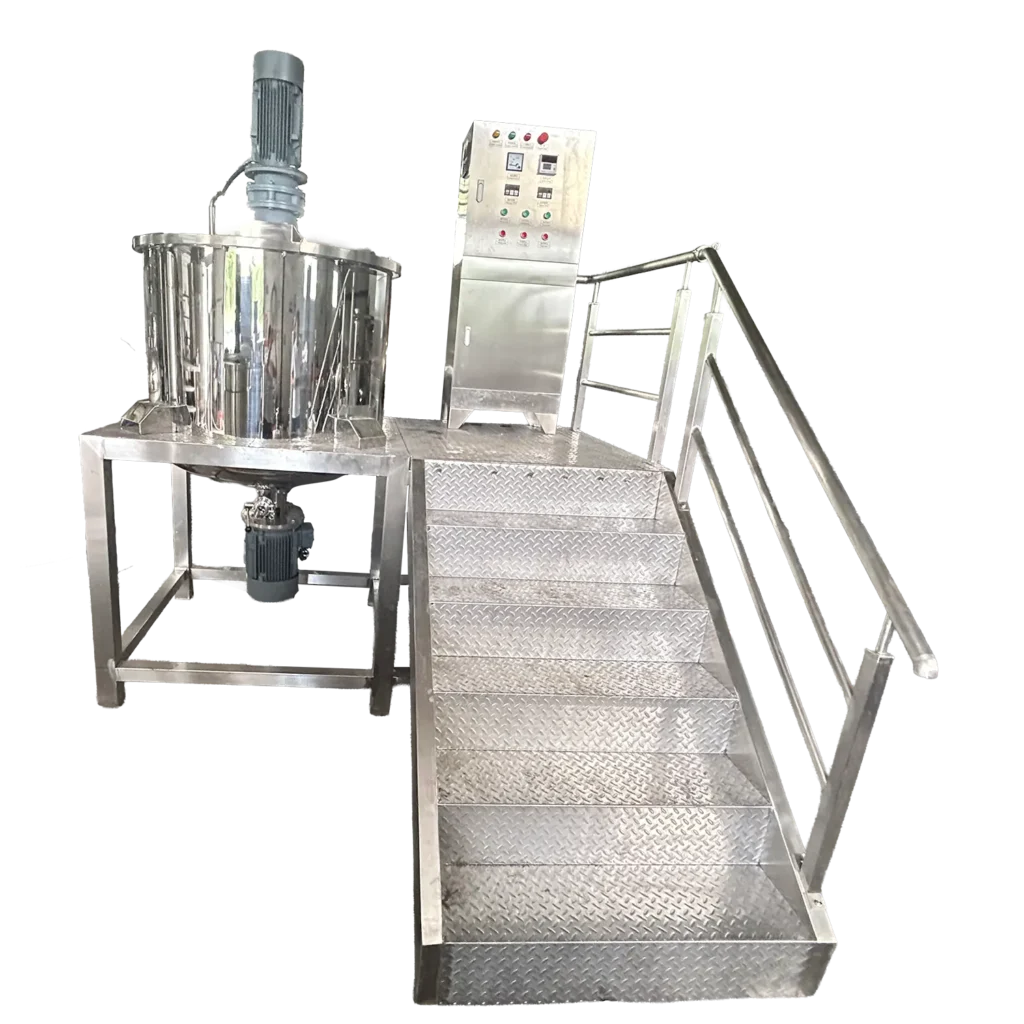
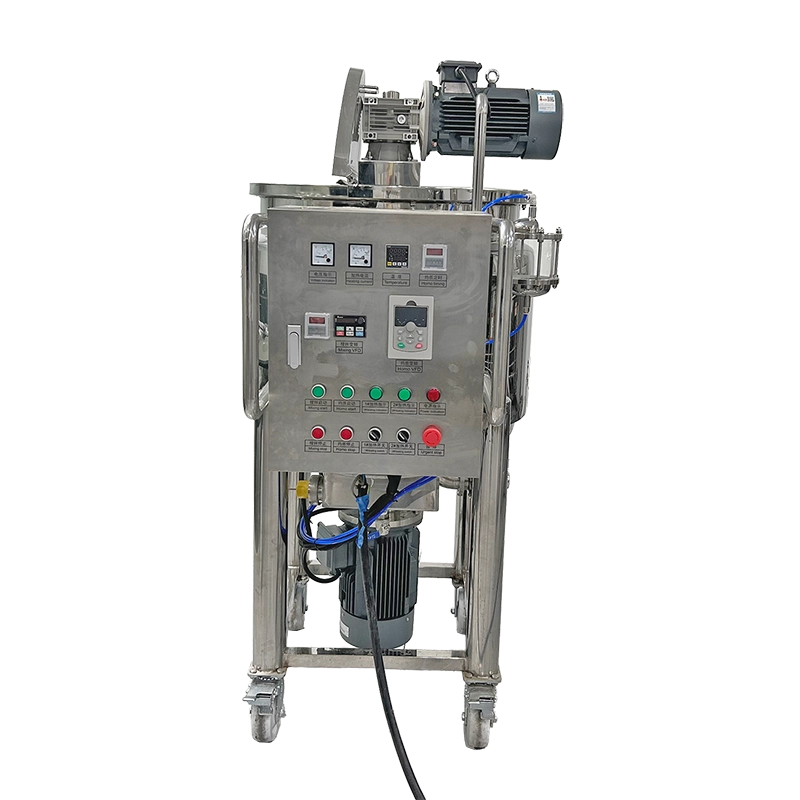
Ingredient preparation can include weighing liquids, premixing powders and bringing components to the temperature required by the recipe. Stainless steel mixing tanks can support preparation where their construction and agitation suit the product. Separate preparation vessels may help when the main processing vessel is occupied for a long period.
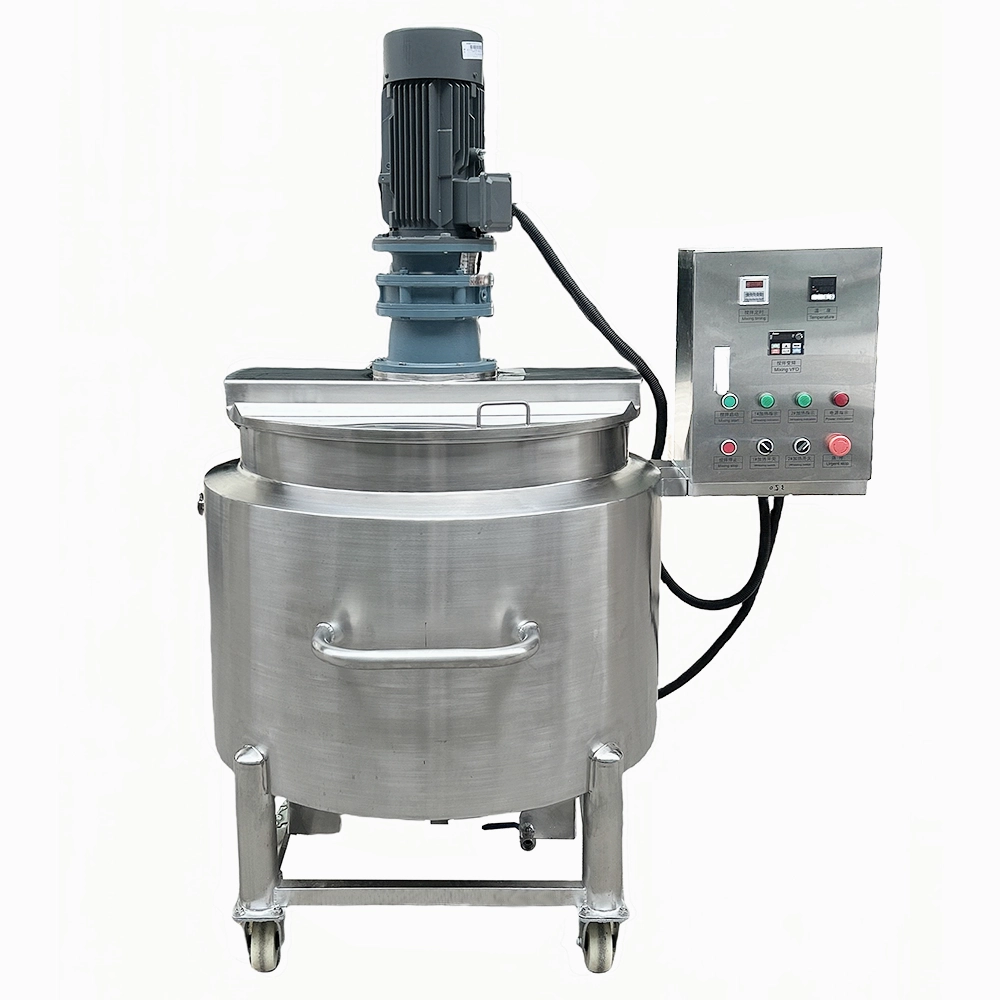
Where cooking or heated mixing is part of the process, a jacketed mixing tank with a scraper is an equipment arrangement to evaluate. The heating duty, agitation and discharge behavior should be specified together. A scraper-equipped vessel does not remove the need to assess the actual product and operating conditions.
Consider how ingredients reach the tank and how operators clean additions areas. Bags, drums and viscous ingredients can create very different handling tasks. The production layout should make those tasks manageable without blocking the discharge route. Heating and cooling services should also be available where the process needs them, with access for routine inspection and maintenance.
Emulsified Dressings Follow a Different Mixing Route
Emulsified Dressings Follow a Different Mixing Route
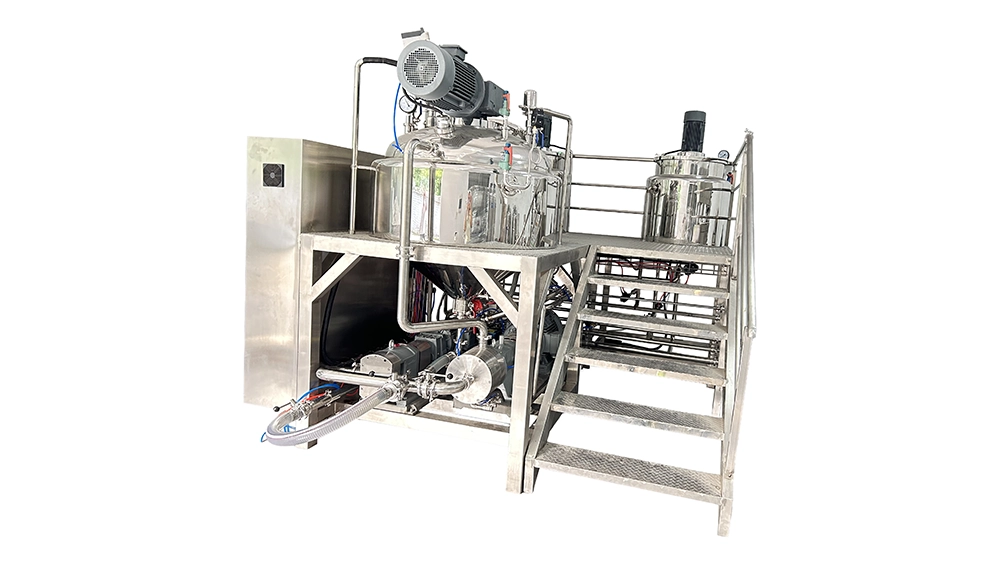
Mayonnaise and similar emulsified dressings require attention to the way ingredients are combined and the texture is developed. Vacuum emulsifying mixers may provide a relevant processing arrangement where the formula and production method call for emulsification and air management.
The mayonnaise emulsifying machine with separate oil and water tanks illustrates a configuration intended for that type of preparation. Review how the separate phases are prepared, how additions enter the main vessel and how the finished dressing is discharged. Those operations need to fit the recipe and the working schedule of the factory.
The mayonnaise and salad dressing production article gives more context for this product family. That route should not be copied automatically to every sauce. A chunky condiment may need gentle blending after its base is prepared, while another paste may require a different sequence entirely. The shared equipment decision should follow those process differences and the cleaning work between products.
Preserve Pieces during Holding and Transfer
Preserve Pieces during Holding and Transfer
For sauces containing pieces, the handling route should preserve the product characteristics that matter to the customer. Assess the vessel outlet, pump inlet, valves, hose connections and filling nozzle as one path. A suitable pump alone cannot compensate for a restrictive fitting farther downstream.
The required agitation during holding should also be defined. Some products need enough movement to maintain distribution, while others can be held without continuous mixing. The objective is a consistent finished pack, not simply keeping every agitator running at the same setting.
Storage and holding systems should therefore be selected using the product's waiting conditions and packaging schedule. Include the final part of the batch in trials, when the source level is lower and the distribution of pieces may be different. Inspect both the quantity and appearance of the filled product rather than relying only on the total fill weight as evidence that handling is suitable.
Match the Transfer Pump to the Sauce
Match the Transfer Pump to the Sauce
Fluid transfer systems need to be assessed with the finished sauce at its intended operating temperature. The route length, elevation and required supply rate influence the duty, while viscosity and solid content affect the suitability of the pump and connected parts.
A mobile rotary lobe transfer pump is one approach to evaluate for compatible viscous products. Its use with particles requires an individual review; the name of the pump principle does not establish a universal particle size or acceptable solid content. The pump selection guide provides a broader comparison of transfer options.
Agree on the way product reaches the pump, how the system responds when the filler stops and how operators empty and clean the route. For small batches, retained sauce in a long hose can be commercially important. For thick products, feeding the pump consistently may be as important as the nominal discharge flow. These conditions belong in the proposal before installation.
Filling Smooth Pastes and Particle-Containing Sauces
Filling Smooth Pastes and Particle-Containing Sauces
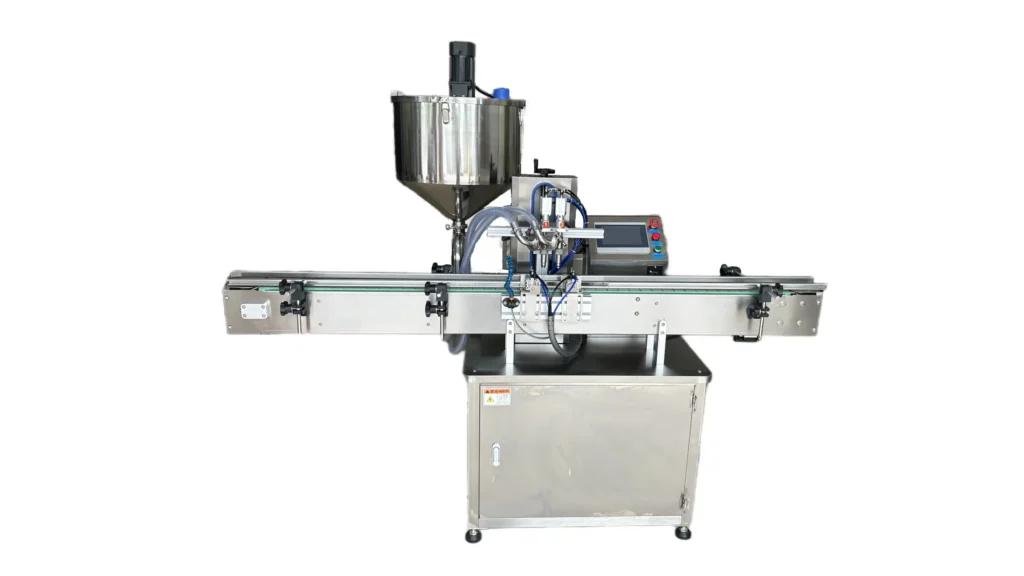
Paste filling machines provide dosing arrangements for products that need more than thin-liquid handling. The correct choice depends on the sauce, pack size, particles and filling temperature. A clean cutoff and a practical material path can matter as much as nominal cycle speed.
The double-head servo rotor pump filler with an agitator hopper is one available arrangement to assess for thick sauces and compatible particle-containing products. Hopper agitation and the filling path should be evaluated with the intended formulation. No universal particle allowance should be assumed without that assessment.
The rotary lobe pump filling article explains the application in more detail. For smooth products, other dosing approaches may also be suitable. Trials should include normal running, pauses and restart, plus inspection of the product in the package. Where a recipe contains pieces, verify that the filled portions remain representative of the batch, not merely that each container reaches the target overall quantity.
Temperature at Filling Changes the Equipment Duty
Temperature at Filling Changes the Equipment Duty
If the approved process requires warm or hot filling, identify the product temperature at the source vessel, transfer line and filling point. A heated processing tank does not automatically maintain the same condition all the way to the nozzle. Holding time and line stoppages also need consideration.
The heating, mixing and filling guide discusses how these stages interact. The equipment scope should state where temperature control is required and which parts provide it. If a hopper must maintain temperature, specify its heating function explicitly and coordinate it with the supply vessel, connecting hose and filling nozzle.
Packaging must be compatible with the intended process as well. Confirm container, closure and liner suitability with the packaging supplier. A machine being able to dispense warm product does not establish shelf life or validate a preservation method. The line should enable the manufacturer to follow its established process, with clear operating conditions and a practical response to interruptions in packaging.
Jars, Bottles and Spout Pouches
Jars, Bottles and Spout Pouches
The package changes container support, nozzle access and the closing sequence. A wide-mouth sauce jar may be straightforward to present but needs clean filling around the rim. A squeeze bottle can have a narrower opening and different requirements for cutoff and container stability.
Pouch filling machines provide another route for suitable sauces. The semi-automatic spout pouch filling and capping machine fills through an existing spout and uses screw capping. Particle-containing products require separate assessment of the flow path and fitment; the pouch format alone does not establish suitability.
The stand-up pouch filling guide is useful when comparing this route with rigid containers. Include empty-pack handling, cap supply and finished-pack removal in the workload estimate. For multiple sizes, provide the actual packages rather than only nominal fill quantities. Pouch dimensions, fitment position and the way a filled pouch is supported can affect the proposed arrangement.
Closing and Sealing the Finished Pack
Closing and Sealing the Finished Pack
Capping equipment should match the closure rather than be selected as a generic final step. Threaded jar lids, bottle caps and spout caps can require different presentation and support arrangements. Manual placement may remain appropriate for shorter runs, while longer runs can justify automatic closure feeding.
The semi-automatic four-wheel screw capper is an example of a separate closing station for compatible threaded closures. Where the package uses a foil liner, sealing machines may perform an additional operation after capping. Confirm the complete container, lid and liner combination before adding this stage.
Keep inspection access between filling and outer packing. Operators should be able to identify contamination around the closing surface, misplaced lids or visibly unsuitable packs according to the factory's checks. A closure operation should be assessed on the finished package, including any product around the rim, rather than only on empty containers used during machine adjustment.
Labels, Codes and Shipping Cases
Labels, Codes and Shipping Cases
Sauce packaging can involve glass jars, flexible containers or shaped bottles, each presenting a different labeling surface. Labeling machines should be matched to the container and label stock, including the available space after closures are fitted. Wet or product-contaminated surfaces should be addressed through the process and handling arrangement.
Coding equipment needs an accessible position for the required production information. Agree on the print area before deciding the conveyor and labeling sequence. The code should remain readable after the pack enters its retail carton or shipping arrangement, where applicable.
Secondary packaging equipment can support grouped packs and case handling. For heavy jars or larger food-service containers, the team should review manual handling and accumulation space. The line layout also needs a route for rejected packs and a place to replenish cartons. Those everyday tasks can determine practical output as much as the filling cycle.
Cleaning between Recipes and Ingredients
Cleaning between Recipes and Ingredients
Sauce production can involve frequent changes in flavor, color and ingredients. The factory's quality procedures should define any required separation and cleaning controls, including allergen-related controls where relevant. The equipment layout then needs to make those procedures practical.
Review removable product-contact parts, hose cleaning, vessel access and drainage. The cleaning access and dead-corner guide provides background for evaluating the installed product route. The article on CIP spray balls and manual cleaning explains why a spray device should not be treated as the entire cleaning system.
Include cleaning time and product retained in the system when comparing equipment arrangements. The product recovery article explores the latter issue. Recovery should follow the factory's quality procedures, particularly when a new recipe is due to start. A line that is fast during a long run may be less productive than expected if it is difficult to empty and clean between small orders.
Include the Final Containers in a Filling Trial
Include the Final Containers in a Filling Trial
The last part of a sauce batch deserves attention because supply conditions can change as the source vessel empties. Observe the final containers for quantity, appearance and representative distribution of pieces. This helps the team assess the operating method for completing a batch instead of judging the equipment only during its most stable running period.
Build the Proposal around Representative Products
Build the Proposal around Representative Products
For a complete production line, provide the sauce list, process sequence, batch quantities, intended filling temperatures and packaging samples. Describe particles by their actual characteristics and provide samples of the most demanding product. Include any upstream treatment equipment that will be supplied separately.
Agree on what the equipment trial needs to demonstrate: practical supply to the filler, acceptable texture, representative solids distribution, clean cutoff and workable closing. The manufacturer should also define the product quality checks and permitted holding conditions that the equipment must support.
StriversMachinery can coordinate processing and packaging equipment around that information. The proposal should show the manual tasks, utility connections and transfer interfaces as well as the machines. For factories with several recipes, schedule a realistic changeover alongside the production trial so the team can assess the work required to empty, clean and prepare the line for its next product.