
1000L PLC External Circulation Emulsifying Mixer for Shampoo, Cream & Toothpaste
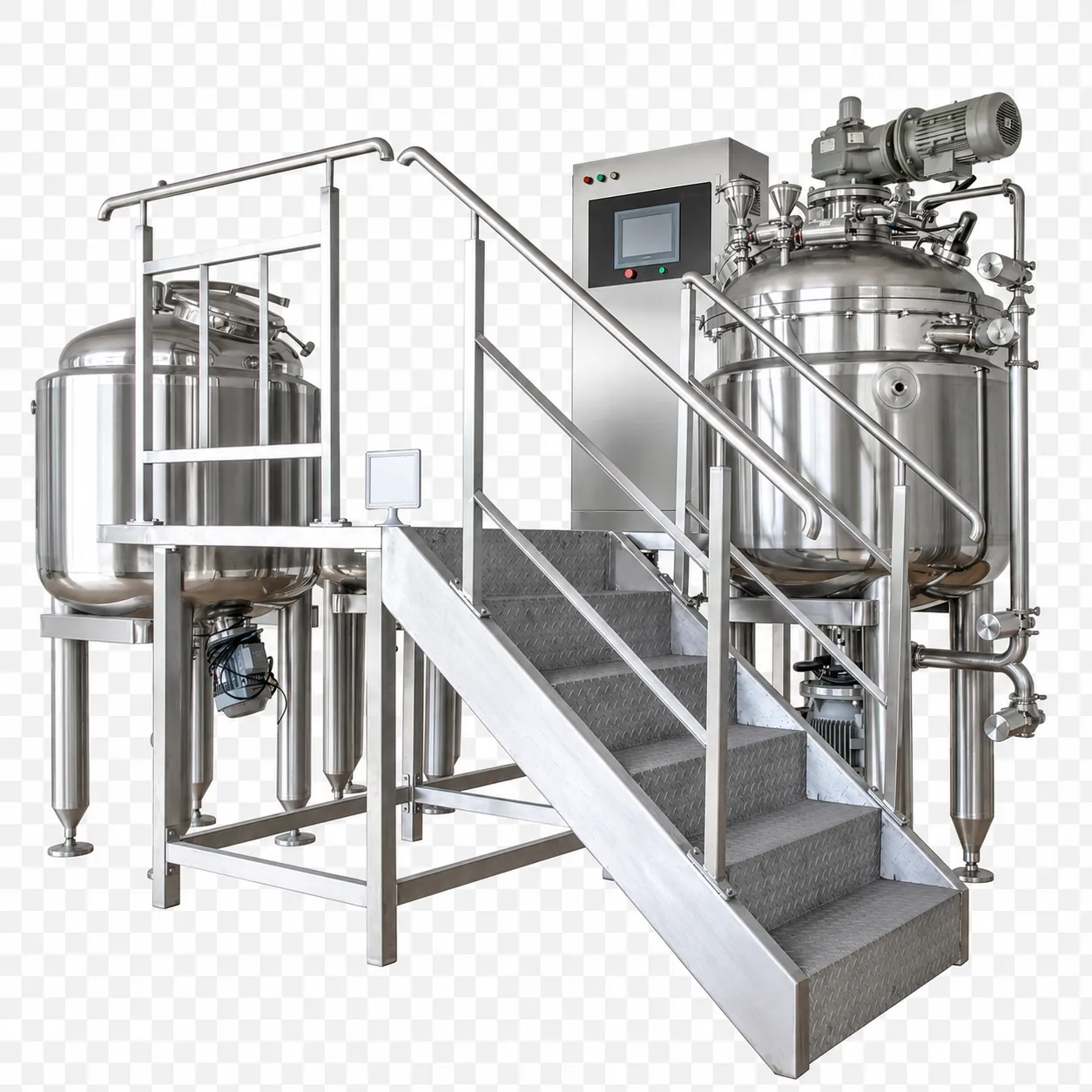
The 1000L PLC External Circulation Emulsifying Mixer is a fixed-head vacuum processing system for compatible shampoo, cream and toothpaste formulations. It combines scraped bulk agitation, bottom-entry homogenization and an external return circuit with Siemens PLC and HMI control. Within the vacuum emulsifying mixers range, this configuration suits production teams requiring coordinated batch processing and a defined external circulation route.
| Total Capacity (L) | 1200 | Vacuum Pump Brand | High-quality domestic/joint venture brands |
| Working Capacity (L) | 1000 | Discharge Method | Bottom Valve Discharge (Optional Rotor Pump) / Bottom Valve Discharge (Optional Air Pressure Assist) |
| Min Batch Size (L) | 300 | Discharge Valves | Ball Valve |
| Structure Type | Triple Layer (with Jacket & Insulation) | Mechanical Seal Brand | Single Mechanical Seal (John Crane/EagleBurgmann Optional) / Double Mechanical Seal (EagleBurgmann) |
| Contact Material | SUS316L Stainless Steel | Types of Upper Heads | Elliptical Head (2:1) / Fixed Top Head |
| Non-contact Material | SUS304 Stainless Steel | Top Openings & Accessories | Vacuum Port / Vacuum Feeding Port / Powder Feeding Port / Liquid Inlet / Fragrance Addition Port / Manway / Sight Glass with Wiper / LED Inspection Light / CIP Spray Ball / Vent Filter / Vacuum Gauge / Pressure Sensor / Compressed Air Inlet |
| Surface Finish | Interior Mirror Polish (Ra ≤ 0.4 μm) & Exterior Satin/Matte Finish | Motor Brand | Siemens |
| Jacket Design Pressure (MPa) | 0.3 | vem_electrical_components | Schneider / Siemens / Omron (Optional/Customizable) |
| Main Tank Mixer Type | Gate Agitator + Single/Dual Fixed Paddles | Oil & Water Pot | Equipped with Integrated Oil & Water Pre-treatment Pots |
| Mixing Speed (rpm) | 0–63 rpm | Oil & Water Pot Capacity (L) | Oil: 500 L / Water: 800 L |
| Mixing Motor Power (kW) | 5.5 | Explosion Proof | Standard Non-Explosion Proof (For Regular Cosmetics) |
| Frequency Control | Variable Speed with VFD (Delta, Siemens, ABB, Schneider, Optional) | Platform & Ladder | SUS Anti-slip Platform with Guardrails & Ladder |
| Scraper System | Wall-Scraping PTFE Scrapers | Voltage | Configurable to local grid (110V–480V, 50/60Hz, Single or 3-Phase) |
| Homogenizer Position | Bottom-entry Homogenizer | Total Power (kW) | 28 |
| Homogenizer Type | High Shear Stator-Rotor Homogenizer | Air Pressure | 0.4–0.8 MPa |
| Homogenizer Power (kW) | 15 | Drive Type | Electro-Pneumatic Combined |
| Homogenizer Speed (rpm) | 0–3000 rpm (Variable Speed) | Installation Type | Floor-Standing / Platform-mounted |
| Max Processing Viscosity (mPa·s / cP) | 50,000 | Automation Level | Fully Automatic |
| Heating Method | Electric Heating via Jacket / External Steam Heating (Optional) | Control System | PLC + HMI Touch Screen Control |
| Cooling System | Tap Water / Cooling Tower Circulation (Chilled Water / Glycol Circulation Optional) | PLC System | Siemens |
| Water Chiller | External Water Chiller Unit (Optional) | HMI / Touch Screen | Siemens |
| Temperature Control Accuracy | ±1°C | Machine Dimensions(L*W*H)mm | 4180*4080*3020 |
| Vacuum Degree (MPa) | -0.09 | Machine Weight (kg) | 3500 |
Product Gallery
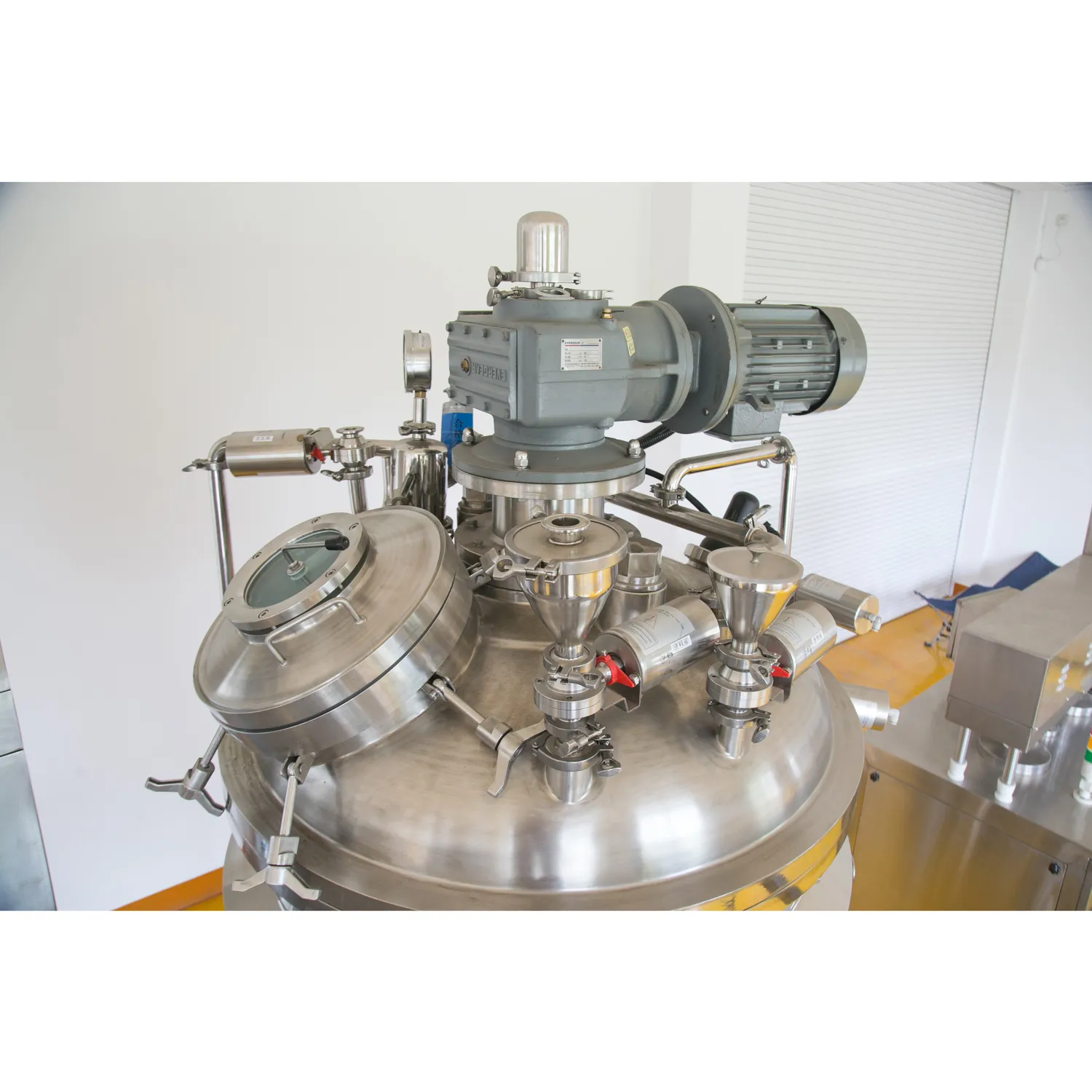
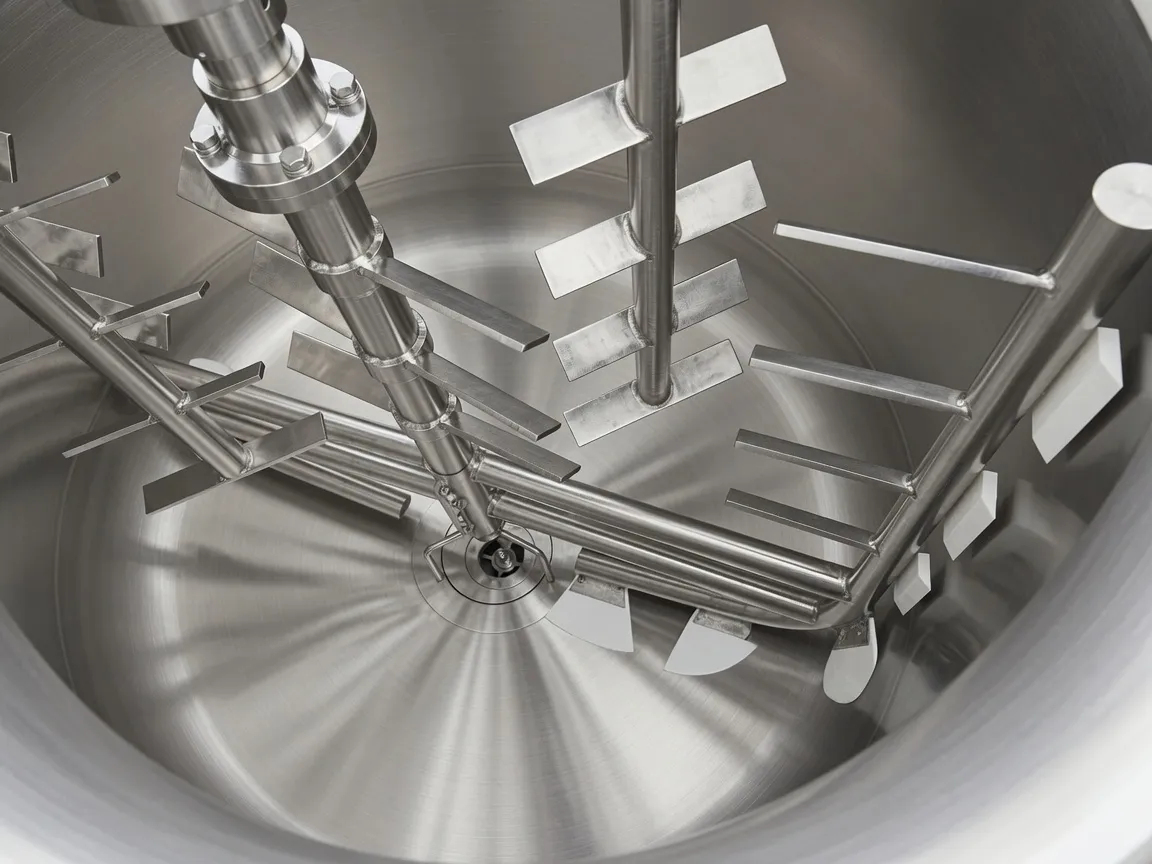
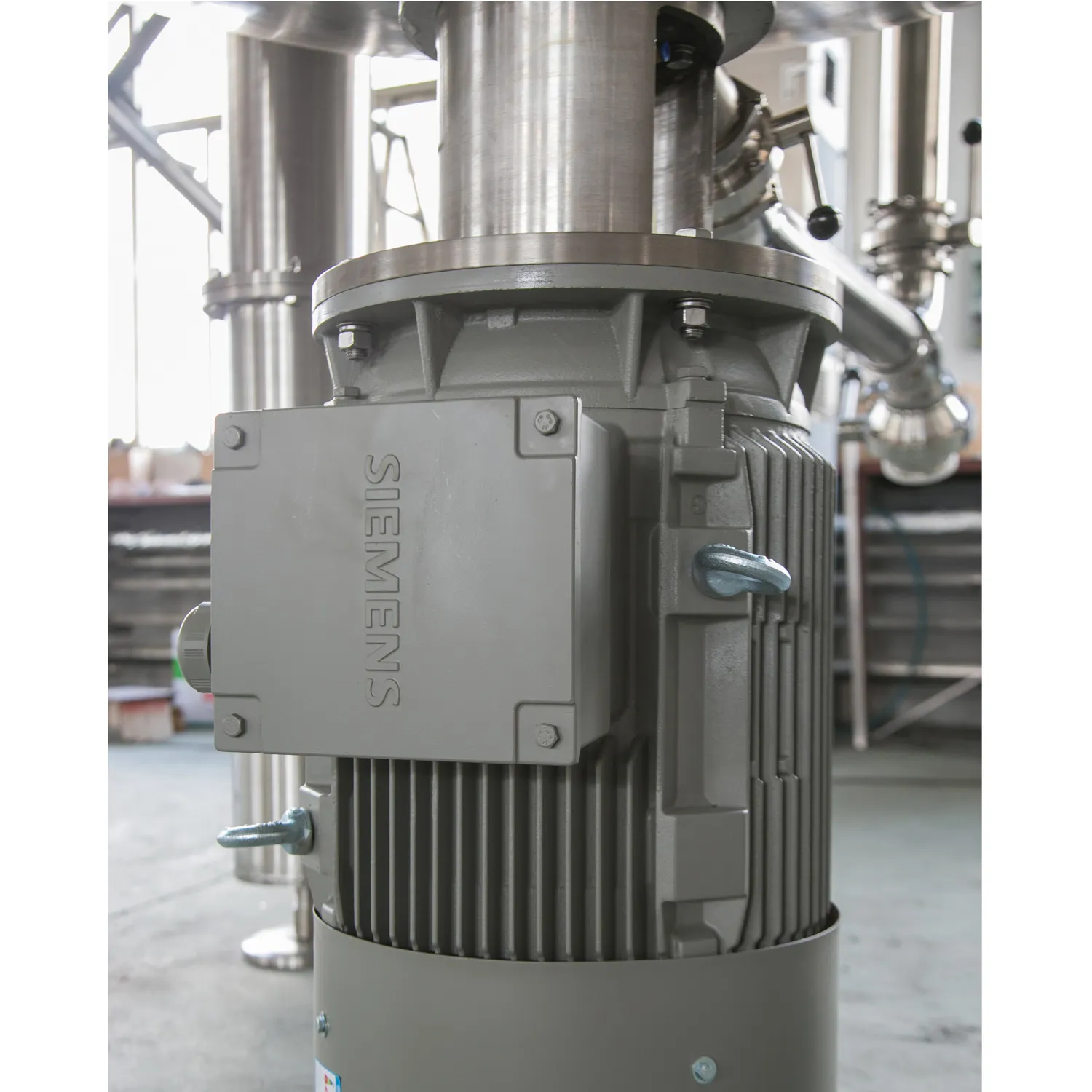
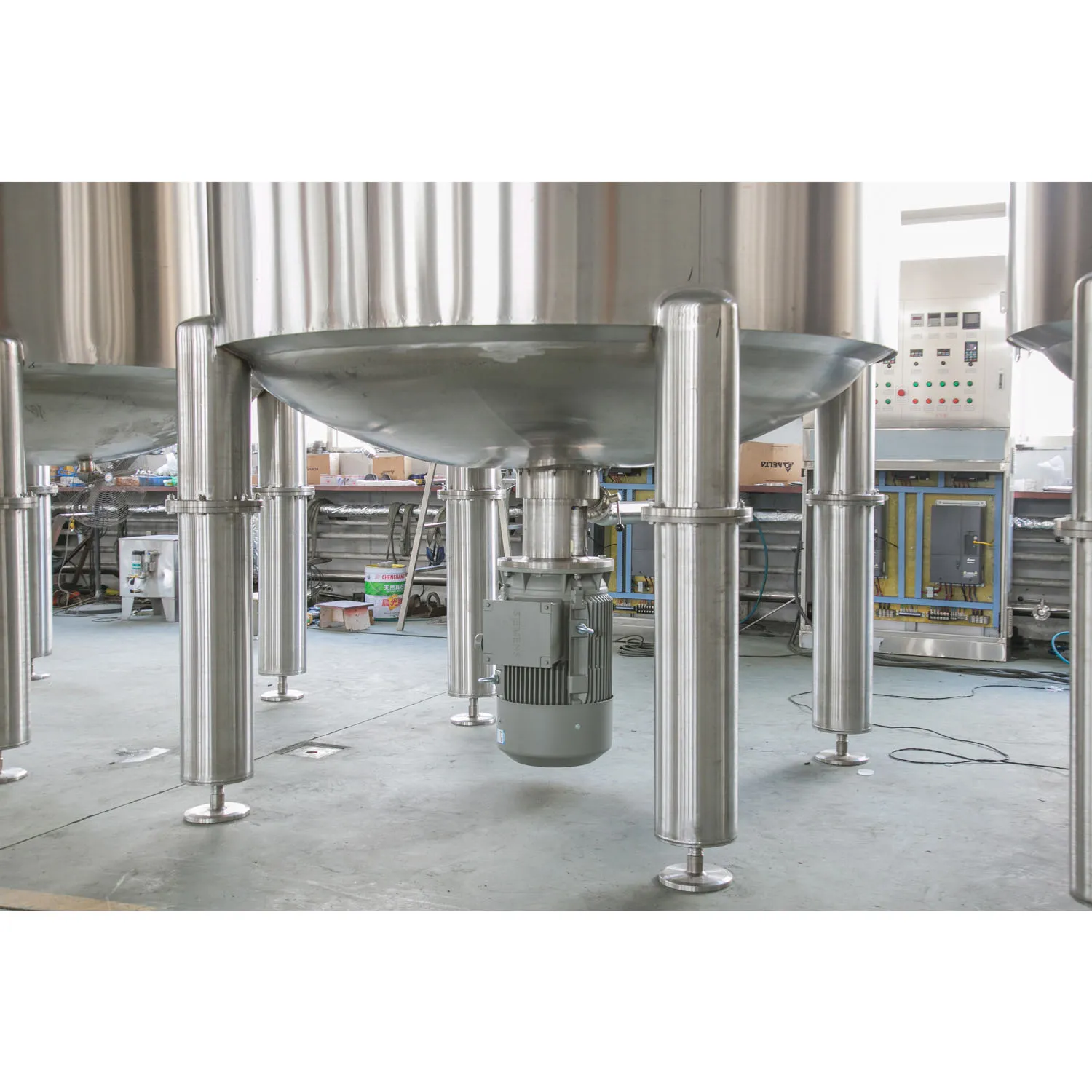
Product Video
Product Overview
This system provides a production platform for formulations requiring several coordinated stages: phase preparation, ingredient incorporation, thermal processing, high-shear mixing and vacuum treatment. Its external circuit carries material from the bottom homogenizer back into the main vessel, while the gate agitator and PTFE scrapers maintain bulk movement within the tank.
The homogenizer itself provides the conveying action for the circulation route. A separate circulation pump can be specified where the product and circuit require additional transfer capability. Pump selection should follow the actual viscosity, pipework resistance and required operating conditions.
Integrated oil and water preparation pots support separate phase preparation. Siemens PLC and HMI controls provide the specified control platform; the delivered automatic sequences and operator tasks should be documented in the agreed functional schedule.
Typical applications include compatible cosmetic creams, lotions and shampoo formulations. For toothpaste and oral care production, confirm viscosity, solids behavior and circulation performance using representative material rather than assuming every paste is suitable.
The fixed top head and platform access define this model’s operating layout. It is intended for manufacturers who can accommodate a stationary production installation and need the combined vessel, auxiliary-pot and circulation arrangement.
Machine Configuration
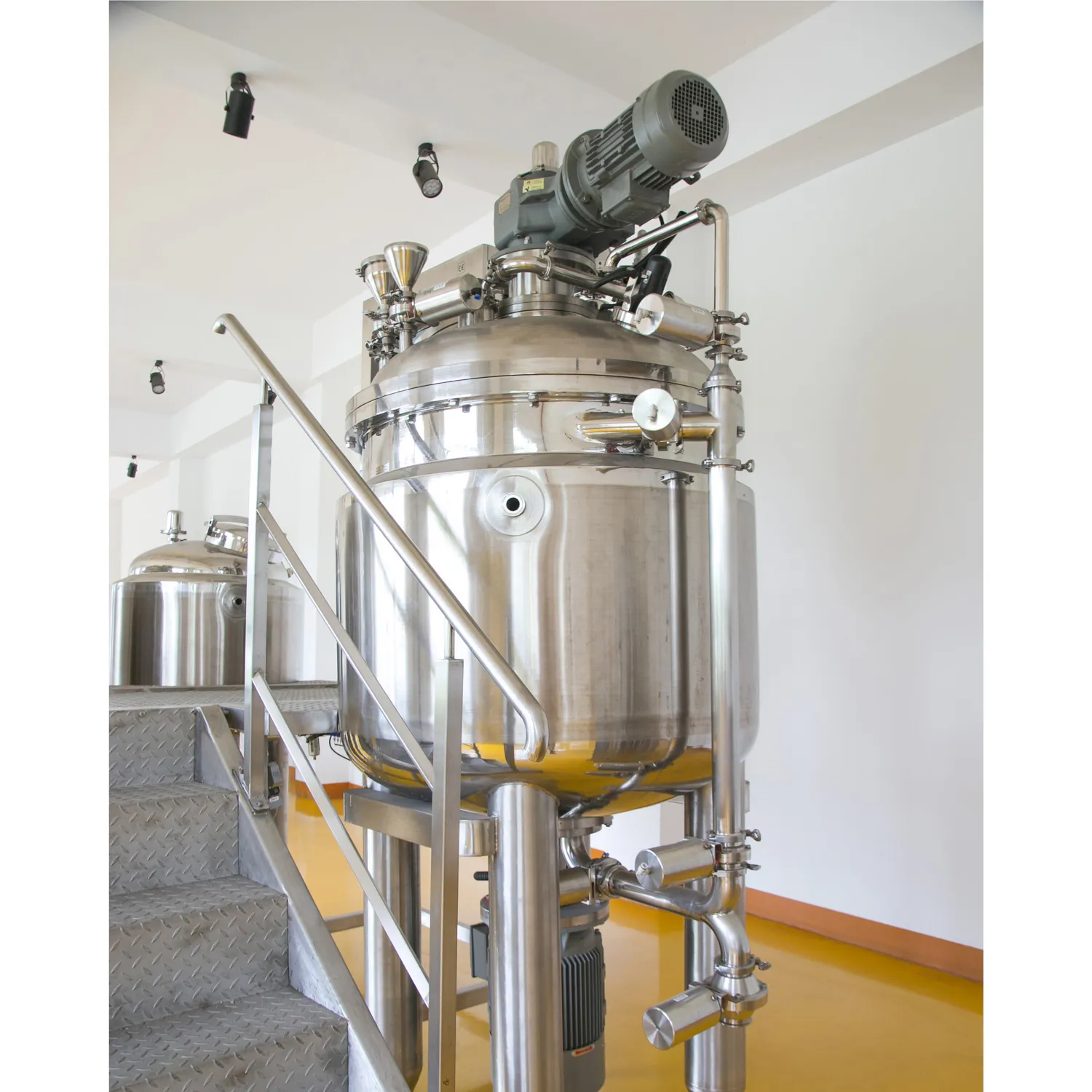
The main vessel combines a jacketed, insulated structure with gate agitation, fixed paddles and PTFE wall scraping. A bottom-entry rotor-stator homogenizer processes material entering its working zone and provides conveying action through the external return circuit.
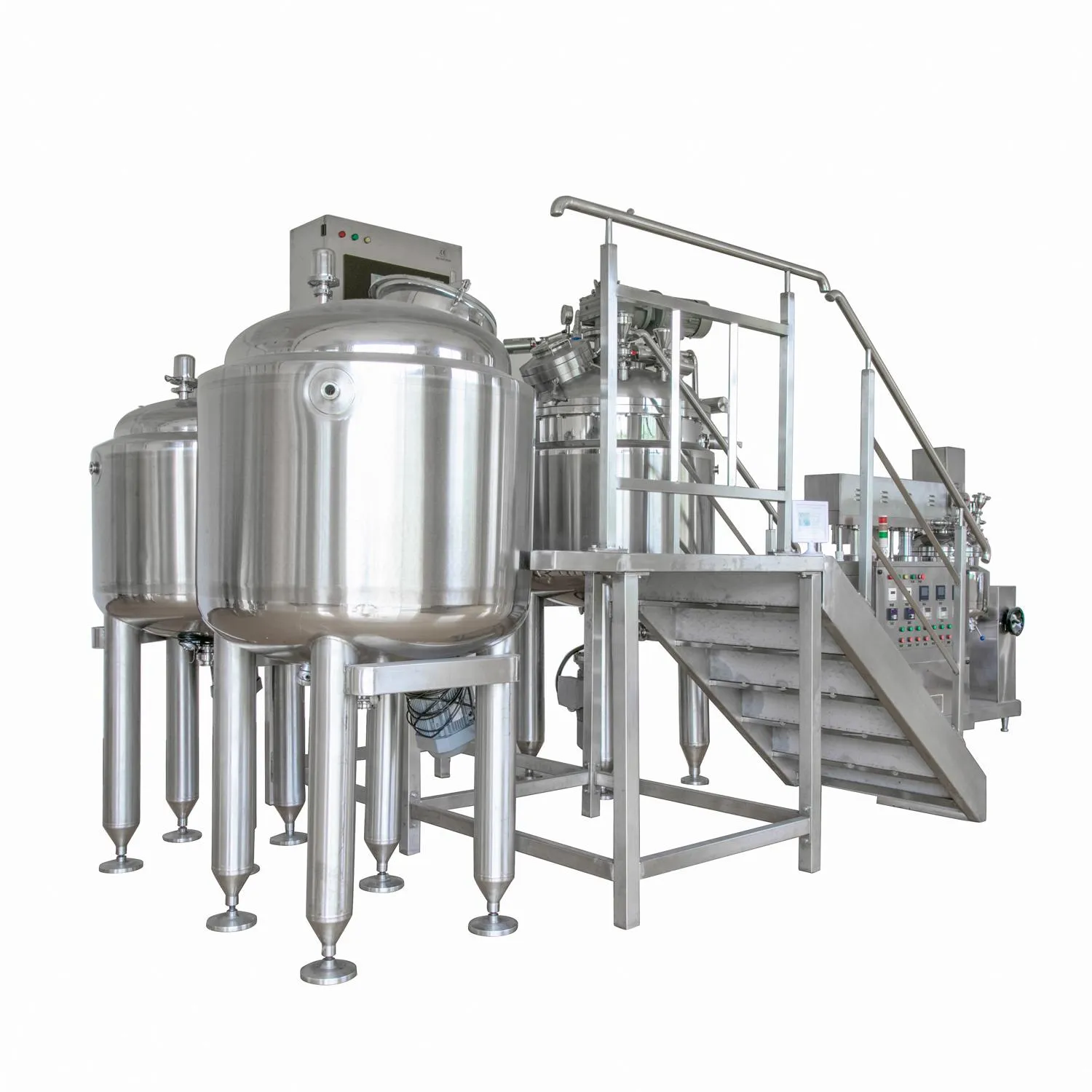
The circulation pipework returns product to the main tank. An additional circulation pump is optional and should be selected against the complete circuit duty. Integrated oil and water pots provide separate preparation capacity without changing the main vessel’s working-volume limit.
The fixed elliptical top head carries the specified charging, inspection, vacuum and cleaning connections. The vacuum system supports the agreed processing stages, while the jacket connects to the selected heating and cooling arrangement.
Siemens PLC and HMI controls coordinate the supplied functions through the agreed control program. Bottom-valve discharge, optional pump transfer and optional pressure assistance require separately defined operating arrangements. The platform, guardrails and ladder provide the specified access structure.
Key Features
- External circulation returns processed material from the bottom homogenizer to the main vessel.
- Homogenizer-driven conveying supports circulation without automatically requiring a separate pump.
- Optional circulation pumping accommodates duties requiring additional circuit transfer capability.
- Scraped bulk agitation complements localized high shear during batch processing.
- Separate preparation pots support formulation-specific oil and water phase handling.
- Jacketed construction provides connections for the selected heating and cooling services.
- Siemens PLC and HMI provide the specified platform for coordinated process control.
- Fixed-head construction supports a stationary production layout with platform access.
- Dedicated addition and inspection points support staged ingredient handling and batch observation.
Applications
- Cosmetic Cream & Lotion, and Skin Care
- Detergents, Liquid Washing & Household Cleaning
- Pharmaceutical & Ointment Products
- Sauce, Condiment & Food Paste
- Toothpaste & Oral Care Products
Recommended Machines

Working Principle
Production begins with ingredient preparation according to the approved formulation. Where required, oil and water phases are prepared in their respective auxiliary pots before entering the main vessel. Other ingredients may enter through the designated charging points at the appropriate stage.
The gate agitator moves the bulk batch, while PTFE scrapers act along the vessel wall. The jacket supplies the selected heating or cooling duty. These functions establish the product conditions needed for ingredient incorporation and homogenization.
Material entering the bottom rotor-stator homogenizer experiences localized high shear. The homogenizer also provides conveying action, moving material into the external circulation pipework and back to the main vessel. An additional circulation pump may be incorporated where the approved circuit requires it.
Agitation and circulation work together, but homogenizer rpm does not establish circulation flow or the number of batch passes. Product viscosity, working-head geometry, pipework and valve positions influence the actual circuit behavior.
Vacuum is applied at the stages defined by the process. Heating, mixing, homogenization and circulation settings follow the agreed PLC program and operator instructions. The exact automatic sequence depends on the supplied control functions.
After the batch meets its agreed checks, finishing additions and cooling proceed as required by the formulation. Product leaves through the bottom valve or the selected transfer arrangement. Pressure-assisted discharge is only used within the separately confirmed product-vessel pressure limits and approved procedure.
Optional Upgrades & Configurations
| Warranty | 24 Months | Payment Terms | 40% T/T Deposit, 60% Balance Before Shipment (Alibaba Trade Assurance Available) |
| Lead Time | 20–30 Working Days | Packaging | Standard Export Fumigation-Free Wooden Case |
After-Sales & Technical Support
🔧 Common Problems
Possible observable symptoms include uneven batch appearance, differences between samples, persistent agglomerates, excessive foam, retained air, unstable external return flow, intermittent circulation, unexpected product-temperature changes or difficulty reaching the intended vacuum condition. Operators may also observe abnormal homogenizer noise, shaft or drive vibration, motor or VFD trips, slow discharge, leakage around a seal or connection, product remaining in part of the circulation route after emptying, or visible residue after cleaning. Control-related observations may include a stage not starting, an unexpected pause in the automatic sequence or a displayed fault. These are potential observations rather than confirmed machine defects. Record the batch stage, product volume, valve positions, settings and displayed indications when investigating a symptom.
🛠 Troubleshooting
Problem: External return flow becomes weak or intermittent. Possible Cause: Valve routing, product level or viscosity is unsuitable for the operating condition; a circuit restriction may be present. Recommended Solution: Review the approved valve positions and batch conditions. Stop and isolate the equipment before checking for restrictions. Have the supplier assess pump requirements if the circuit duty has changed.Problem: Samples show uneven product condition. Possible Cause: Ingredient incorporation or bulk circulation is inadequate despite localized homogenization. Recommended Solution: Review charging order, agitation and sampling conditions. Assess the complete batch movement before increasing homogenizer speed or duration.Problem: Vacuum does not reach the intended condition. Possible Cause: An open vent, incorrectly seated connection, product foaming or a vacuum-system fault. Recommended Solution: Check accessible operating indications and approved valve settings. Arrange qualified inspection of sealing and vacuum-system components.Problem: The automatic sequence pauses unexpectedly. Possible Cause: A required condition or operator confirmation is absent, or a fault is active. Recommended Solution: Review the HMI message and function schedule. Correct the identified condition without bypassing operating protections.Problem: The homogenizer produces abnormal noise or vibration. Possible Cause: Unsuitable product coverage, restricted circulation, deposits or a mechanical fault. Recommended Solution: Stop the affected drive. Isolate the equipment before inspection and obtain qualified service support.Problem: Cleaning leaves residue in the external circuit. Possible Cause: The cleaning route or method does not reach the affected surfaces. Recommended Solution: Review valve routing, cleaning return and the approved component-access procedure before repeating the cleaning cycle.
🧼 Cleaning Method
1. Recover the remaining batch through the approved discharge arrangement. 2. Bring the vessel to the safe temperature specified for cleaning access. 3. Equalize the vessel pressure through the approved procedure before opening any product-contact connection. 4. Isolate energy sources according to the site's lockout procedure before manual access. 5. Configure the approved cleaning route through the vessel and external circulation circuit. 6. Pre-rinse the product-contact pathway using a medium suitable for the residue. 7. Apply the approved cleaning agent at the conditions defined by the cleaning procedure. 8. Clean the main vessel through the supplied spray provision using the approved supply arrangement. 9. Clean the external circuit through its designated cleaning route. 10. Clean the auxiliary pots according to their individual approved procedures. 11. Clean designated detachable valves and fittings separately where required. 12. Rinse the product-contact pathway until the specified cleaning-agent acceptance criteria are met. 13. Sanitize the equipment when the validated product-changeover procedure requires it. 14. Inspect accessible product-contact areas for retained residue. 15. Reassemble removed components according to their approved assembly instructions. 16. Release the system after the required cleaning checks have been completed.
📋 Maintenance
1. Isolate the system under the approved lockout procedure before preventive maintenance. 2. Equalize vessel pressure through the approved method before opening service connections. 3. Inspect accessible agitator components for damage or accumulated material. 4. Examine PTFE scraper blades for wear, deformation or damaged attachments. 5. Inspect the rotor-stator assembly during the manufacturer's scheduled service access. 6. Check the installed mechanical-seal arrangement for leakage or deterioration. 7. Maintain seal-support services according to the selected seal manufacturer's instructions. 8. Inspect external circulation connections and supports for visible deterioration. 9. Examine product-contact gaskets for damage or chemical attack. 10. Inspect the discharge valve according to its component service instructions. 11. Service the vacuum pump according to the installed pump manufacturer's maintenance schedule. 12. Inspect accessible heating and cooling connections for leakage. 13. Arrange qualified inspection of electrical terminals and protective devices. 14. Check process instruments against the site's approved verification procedure. 15. Verify the supplied stop functions and operating protections through the approved test method. 16. Record findings against the machine serial number and operating history.
⚙️ Installation
1. Review the approved general arrangement drawing before preparing the installation area. 2. Verify the delivery route against the transport dimensions and handling requirements. 3. Obtain approval of the floor for the complete operating loads. 4. Inspect the delivered equipment for visible transport damage. 5. Position the assemblies using the manufacturer's designated lifting arrangement. 6. Level the supports according to the installation instructions. 7. Secure the equipment according to the approved support design. 8. Assemble the platform access structure according to the supplied drawings. 9. Connect the external circulation pipework using the approved routing. 10. Install any separately supplied circulation pump according to its component instructions. 11. Connect the selected heating and cooling services. 12. Connect required vacuum-pump and mechanical-seal support services. 13. Connect the regulated compressed-air supply according to the pneumatic schedule. 14. Arrange electrical connection by qualified personnel using the final wiring documentation. 15. Verify protective earthing before electrical commissioning. 16. Commission the supplied control functions against the approved functional schedule. 17. Perform the approved liquid test of circulation and connected services. 18. Document the representative-product trial against the agreed acceptance criteria before routine production.
🔩 Spare Parts
Why Choose This Machine
- Connected batch treatment: The external return circuit provides a defined route between the bottom homogenizer and main vessel, allowing circulation to be assessed as part of the processing method.
- Complementary mixing functions: Gate agitation and wall scraping address bulk movement, while the rotor-stator head supplies localized shear. Their combined duty can be evaluated against the formulation’s changing behavior.
- Flexible circulation selection: Homogenizer-driven conveying is the confirmed arrangement, with a separate circulation pump available where the product and pipework justify it.
- Separate phase preparation: Integrated auxiliary pots support recipes requiring independently prepared phases before main-vessel processing, without assuming one mandatory charging sequence.
- Coordinated control platform: Siemens PLC and HMI support the agreed process functions and operator interface, with the automation scope documented for the actual production method.
- Production-scale integration: The fixed-head installation can be coordinated with ingredient supply, holding, transfer and packaging equipment around the required batch schedule.
Frequently Asked Questions
Installation Requirements
The listed machine weight is 3500 kg. Assess floor support using the complete operating loads, including product in the main vessel and auxiliary pots. Calculate material mass from the actual densities rather than treating every liter as one kilogram.
Confirm the electrical supply against the final motor, heater, VFD and control-panel schedule. The listed total power is 28 kW; cable sizing, protection and earthing require qualified electrical design.
Provide the selected heating and cooling services with defined supply conditions. Optional steam, chilled water or glycol arrangements require project-specific utility specifications. Confirm any vacuum-pump and mechanical-seal support services from the supplied component documentation.
The specified compressed-air supply is 0.4–0.8 MPa. Confirm required air quality, consumption and regulation for the actual pneumatic functions. This supply pressure is not the permitted main-vessel pressure.
Provide cleaning-water access, drainage and maintenance access to the external circuit. Include any separately supplied circulation pump, chiller or cleaning unit in the layout and utility schedule.
Related Articles


Technical Buyer's Handbook & Deep Insight
Ready to Get a Quote?
Contact our team directly for pricing, customization options, and delivery timelines.
💬 WhatsApp Us NowGet Your Download Link
Please fill in your details and we'll send the download link to your email.