
Juice, Beverage & Liquid Food





More About These Applications
Equipment for Juice, Beverages and Liquid Food
Equipment for Juice, Beverages and Liquid Food
A clear drink, a pulpy juice and a thick liquid food can require very different production arrangements. Their ingredients, suspended material, temperature requirements and packaging all influence the equipment list. The useful starting point is the approved product process, followed by the machines needed to carry it out at the required scale.
StriversMachinery supplies preparation, mixing, holding, transfer, filling and packaging equipment that can be configured around liquid food production. Thermal processing, preservation and hygienic controls must follow the product's established process requirements; a general mixing and filling line does not define those requirements by itself.
This page covers liquid products intended to flow through a beverage or liquid food route. Thick condiments and products with substantial solid pieces are addressed under sauce and food paste production. Keeping that distinction clear helps avoid selecting a thin-liquid filler for a product that needs different handling throughout the line.
Describe the Product beyond Its Name
Describe the Product beyond Its Name
Before discussing equipment, identify whether the liquid is clear, contains pulp, carries suspended ingredients or changes consistency with temperature. The same product name can describe several formulations. A juice with fine pulp is a different transfer and filling duty from a clarified beverage, even when both use the same bottle.
Provide information on ingredient addition, mixing time, permitted holding conditions and the intended filling temperature. If a process includes heating, cooling or a separate preservation step, identify where it occurs and what equipment performs it. Those stages should be coordinated with the packaging equipment rather than assumed to be included in a generic filler.
Mixing equipment can then be considered against the actual task: dissolving, blending, keeping an already prepared product uniform, or performing another defined operation. Avoid specifying high shear simply because it appears on an equipment list for a different drink. Texture and particulate retention may matter more than intensive processing.
Process Water and Liquid Ingredients
Process Water and Liquid Ingredients
Water treatment belongs in the production plan where water is used as an ingredient or for process duties requiring a defined quality. Water treatment systems should be selected using source-water information, required output quality and the amount needed during the production schedule.
Storage and distribution matter alongside treatment capacity. The plant needs enough available water at the preparation point without creating an unnecessarily large holding arrangement. Cleaning demand, production demand and periods when equipment is being serviced should all be considered by the project team.
For a treatment equipment example, the double-pass reverse osmosis system with storage tanks shows one available configuration. It should not be treated as a universal requirement for beverages. Ingredients supplied as concentrates, syrups or prepared liquids also need suitable receiving and transfer arrangements, with clear identification and a practical way to connect them to the preparation vessel.
Dissolving and Blending before Final Preparation
Dissolving and Blending before Final Preparation
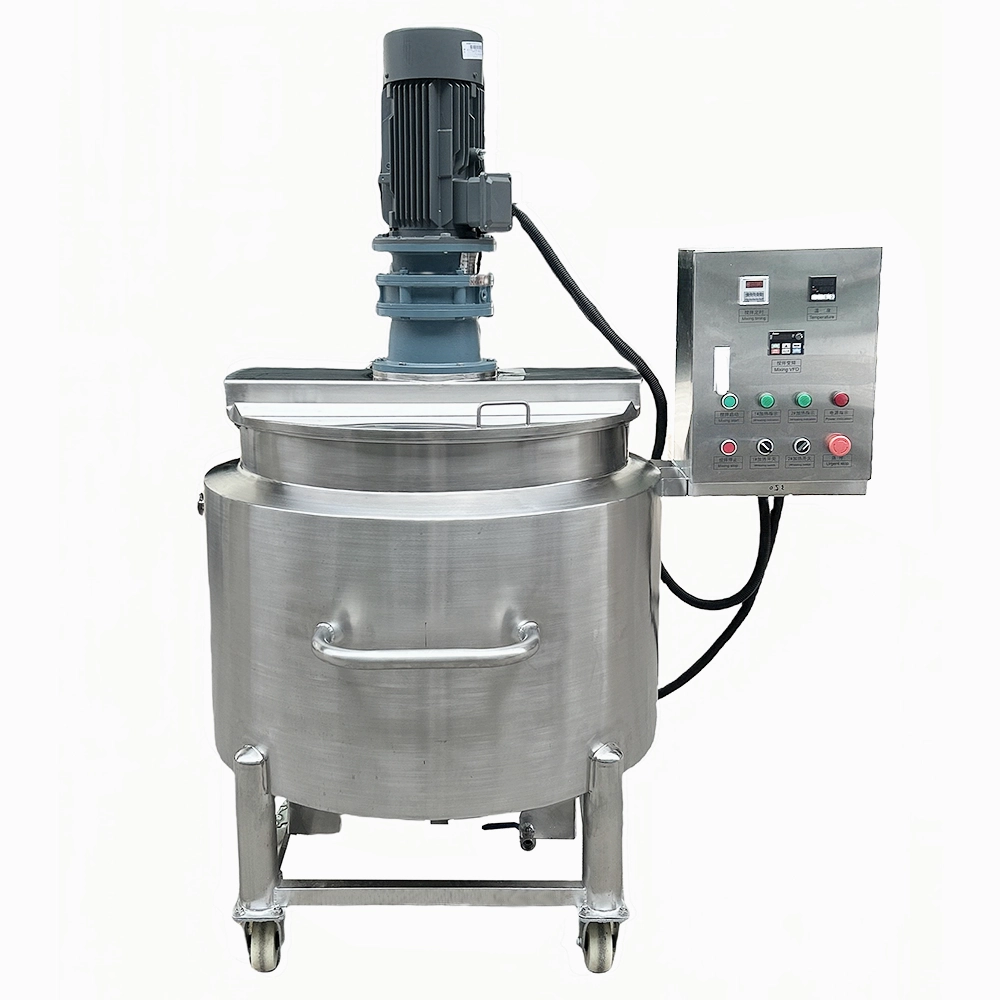
Some drinks begin with a concentrate or premix that is blended into water. Others require soluble ingredients to be prepared separately before the main batch is assembled. Stainless steel mixing tanks can provide these preparation functions when their construction and agitation match the product duty.
If the recipe requires heating during preparation, a jacketed mixing tank with an agitator is one equipment arrangement to assess. The required temperature control and cleaning access should be specified for the application. A jacketed vessel's presence does not mean that every product should be heated or that a preservation process has been established.
Plan additions so operators can follow the recipe without excessive manual transfer between containers. For products with several liquid ingredients, consider how each source is identified and connected. Leave enough space around the vessel to clean additions areas and handle ingredient containers without obstructing the route used for finished product transfer.
Pulp and Suspended Ingredients Change the Equipment Discussion
Pulp and Suspended Ingredients Change the Equipment Discussion
Products containing pulp or other suspended material need evaluation beyond a viscosity figure. The size, shape, concentration and sensitivity of that material can affect agitation, transfer and filling. Provide a representative product sample and identify whether the appearance of the suspended material must be preserved.
Holding agitation may be needed to maintain distribution, but its intensity should suit the product. The pump and nozzle passages also need review. A liquid can be easy to pour while still containing material that makes a narrow flow path unsuitable.
For a broader comparison of transfer approaches, the pump selection guide provides useful background. Product trials should examine the filled pack as well as the machine cycle: consistency of pulp distribution, acceptable appearance and clean filling behavior are practical observations. Do not assume that a successful water trial establishes performance with pulp or pieces, or that one nozzle arrangement will cover every seasonal formulation.
Coordinate Heating and Cooling with the Approved Process
Coordinate Heating and Cooling with the Approved Process
Where heating or cooling is part of the product process, define the required duty before selecting the equipment. Separate ingredient preparation, thermal treatment and filling-temperature control in the discussion. They may happen in different machines and serve different purposes.
Utility systems can support jacketed vessels or compatible process equipment. A steam generator, cooling circuit or chiller needs to match the connected duty and installation conditions. Equipment providing heat to a jacket should not be confused with direct-contact steam or a complete product treatment system.
The article on heating, mixing and filling temperature-sensitive products offers background for coordinating these stages. Confirm the acceptable product temperature at each handover and what happens during a packaging stoppage. The line arrangement should allow the production team to follow the established process; equipment descriptions alone cannot establish shelf life or validate a preservation method.
Holding Product before Packaging
Holding Product before Packaging
The preparation equipment and the packaging line do not always run at the same pace. Storage and holding systems can provide an intermediate step where the product's permitted holding conditions allow it. The holding vessel may need agitation, temperature control or simply a suitable covered arrangement.
Determine the maximum intended waiting period through the factory's product procedure, then design the operating schedule around it. A larger buffer is not automatically better if it increases the amount of product waiting for a stopped filler. The batch identification and release process should be clear to both processing and packaging staff.
The transfer connection should be accessible for inspection and cleaning. Consider the last part of a batch as carefully as the steady-running period: product remaining in hoses, a declining source level and interruptions can affect how the filler is supplied. These details become especially important when different flavors or product types use the same holding and filling equipment.
Transfer without Losing Product or Creating Cleaning Problems
Transfer without Losing Product or Creating Cleaning Problems
Fluid transfer systems should be selected using the complete route between preparation, holding and filling. Include flow requirements, product consistency, particulate content, temperature and the length and height of the connection. A pump that suits a clear beverage may not suit a thick or pulpy liquid food.
For suitable viscous products, a mobile rotary lobe transfer pump is one arrangement to evaluate. Its use should follow a compatibility review and product assessment rather than a general assumption that one sanitary pump covers all liquid foods.
Keep transfer lines as practical as the layout allows, with accessible connections and a defined cleaning method. The product recovery guide discusses residual product in liquid processing. Any recovery procedure should fit the factory's quality controls. Specify what happens when the filler stops, when the source vessel empties and when operators change to the next product, so the transfer equipment supports the actual working cycle.
Filling Bottles with the Intended Product
Filling Bottles with the Intended Product
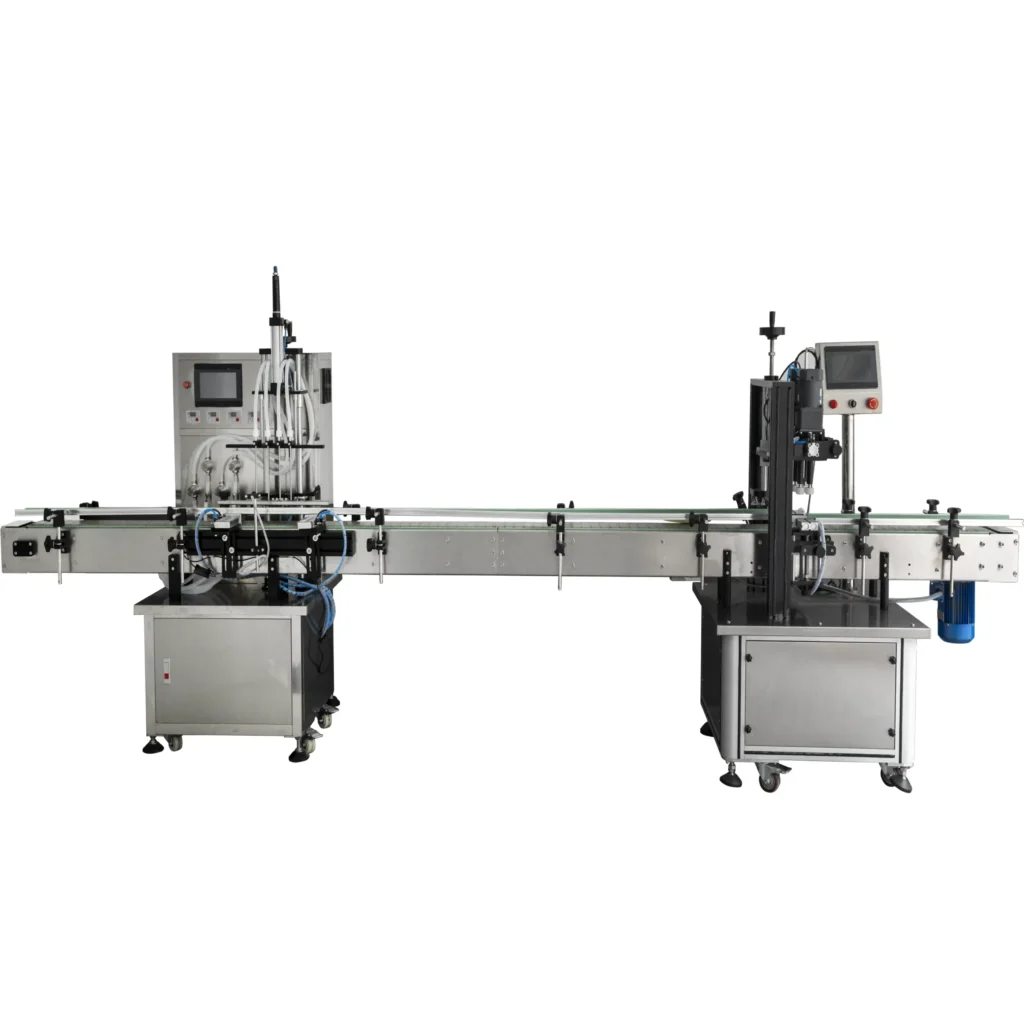
Liquid filling machines should be assessed against the product, package and filling conditions. Bottle neck size, container stability, foam behavior and the presence of pulp can all change the required arrangement. Fill quantity alone is not enough to select a machine.
A single-head servo gear pump filler with automatic feeding is one option to assess for compatible products. It should be evaluated with the intended liquid and packaging, including the material path and cleaning requirements. For thicker liquid foods, another dosing method may be more suitable.
Use a consistent procedure when comparing fill results. The filling accuracy testing methods article explains the measurement discussion in more detail. Production trials should also include how empty bottles are loaded, how filled bottles leave the station and how a run restarts after a pause. Those steps determine practical output and staffing, even when the dosing cycle itself is automatic.
Spout Pouches and Alternative Liquid Food Packs
Spout Pouches and Alternative Liquid Food Packs
Some liquid foods and drinks use spout pouches rather than rigid bottles. Pouch filling equipment handles a different package geometry, with attention to the spout, support arrangement and screw closure. Provide samples of both the empty and intended finished pack when discussing the line.
The semi-automatic spout pouch filling and capping machine combines manual loading with automatic filling and capping for compatible products. Products containing particles need individual assessment. This arrangement fills through an existing fitment; it does not form a pouch from film or replace an open-mouth bag sealing process.
The stand-up pouch filling guide offers more background on this route. Include operator loading time, cap supply and finished-pouch handling when estimating output. If the process uses a specific filling temperature, confirm that the pouch, fitment and machine arrangement are suitable together. Packaging format should support the established product process rather than force an unsuitable change to it.
Closure, Code and Label Coordination
Closure, Code and Label Coordination
Capping equipment must match the bottle and closure, including the method of presenting the cap. Screw caps, press-fit closures and other closing methods require different arrangements. For smaller runs, the semi-automatic four-wheel screw capper is an example of a manually handled closing station for compatible threaded caps.
Where the package includes an induction-compatible liner, sealing equipment may provide an additional operation after capping. This should be assessed using the complete bottle, cap and liner combination. A cap being tight does not by itself establish the performance of a separate seal.
Plan batch and date coding before deciding the positions of labeling machines. The code needs a suitable surface and should remain readable after labeling and packing. The production procedure should identify who changes the code, how it is checked and how incorrect packs are removed before they enter shipping cases.
Cleanability and Product Changeovers
Cleanability and Product Changeovers
Cleaning must cover the product route from the preparation vessel to the final filling nozzle. Review surfaces, valves, hoses and parts that need removal. The guide to cleaning access and dead corners is useful background when examining whether operators can reach and clean the actual installed arrangement.
Some equipment may use cleaning-in-place functions, while other parts require manual removal and cleaning. The CIP spray ball versus manual cleaning article explains why a tank-mounted spray device is only one part of that discussion. The complete cleaning procedure should reflect the product and the factory's quality requirements.
Flavor changes, allergen controls where relevant, and shifts between clear and pulpy products can influence equipment sharing. The factory's quality team should define the required separation and cleaning controls. Build the time and working space for those activities into the schedule, rather than relying on the filler's nominal speed to predict daily output.
Keep Product Release Separate from Machine Readiness
Keep Product Release Separate from Machine Readiness
The filler being ready does not necessarily mean that a batch is ready for packaging. Establish who confirms the product status and how that information reaches the filling team. The holding vessel, transfer connection and packaging materials should all correspond to the released batch. This practical handover is especially useful when several flavors or pack sizes share the same equipment.
Scope the Line around a Real Production Day
Scope the Line around a Real Production Day
The practical line specification should show how ingredients arrive, where product is prepared, how it reaches the filler and how finished packs leave. Include the approved process stages, package sizes, required daily output, expected changeovers and available utilities. Identify any equipment supplied separately so the interfaces can be coordinated.
Packaging line support equipment can provide bottle feeding, conveying and accumulation where those functions are needed. Manual loading can remain appropriate for some runs, but the staffing requirement should be visible in the proposal. Product inspection and rejected-pack handling also need space within the layout.
StriversMachinery can use this information to coordinate a complete production line scope. The project discussion should distinguish equipment functions from the product manufacturer's process validation and quality responsibilities. Agree on representative product trials and the intended packaging sequence so the proposed machines can be assessed against the work they will actually perform.