Paste Filling Machines

More About Our Machines
Paste Filling Machines for Thick and Structured Products
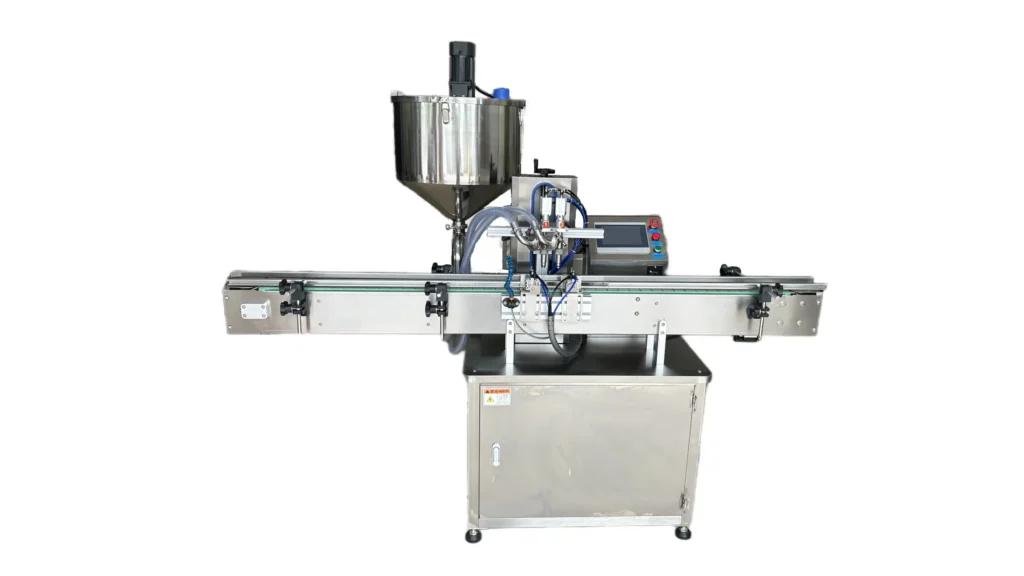
Paste filling machines dispense thick, viscous or structured products into compatible containers. The appropriate configuration must both receive the material consistently and control its delivery through the dispensing outlet.
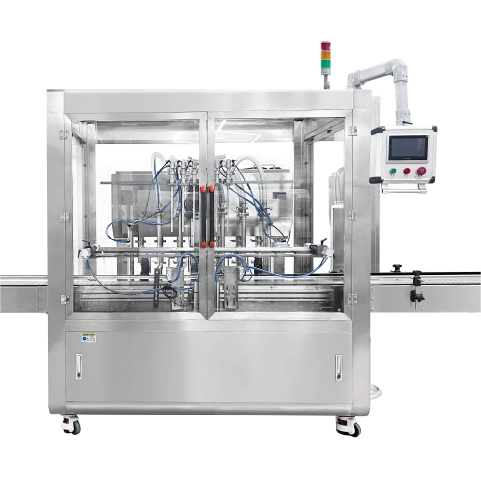
Within the broader Filling Machines range, this category includes semi-automatic and automatic equipment. Rotary lobe pump and piston-based filling arrangements provide different options for evaluating the intended product and packaging duty.
A product described as paste may flow slowly, retain its shape, contain particles or change consistency during handling. These characteristics should guide equipment selection rather than a general claim that one machine handles every high-viscosity formulation.
Individual product pages provide the confirmed dispensing method, operating functions and specifications. Category-level options should not be interpreted as standard features supplied with every machine.
Rotary Lobe Pump and Piston Filling Options
Rotary lobe pump filling machines are an available selection direction for this category. Piston-based filling equipment can also be evaluated where its product pathway and dispensing arrangement suit the application.
The choice should consider product feeding, material characteristics, required quantity, cleaning access and the behavior of the product at the nozzle. Neither method should be selected solely from the commercial product name.
| Configuration option | What to establish | Key selection consideration |
|---|---|---|
| Rotary lobe pump filling | The installed pump, metering controls and complete dispensing pathway | Compatibility with the product, feeding conditions and any particles |
| Piston-based filling | The cylinder, valve and nozzle arrangement | Product movement through the complete filling cycle |
| Servo-controlled dosing | The functions controlled by the servo system | Adjustment, repeatability and the agreed quantity-control method |
| Conditioned hopper | Any supplied heating or agitation provisions | Maintaining the product conditions required during filling |
| Assisted product feeding | The separate feeding equipment and its interface | Consistent replenishment without exceeding the filler’s approved conditions |
The rotary lobe pump filling guide provides related equipment-selection context. The actual configuration must still be assessed with representative product.
Product Flow Behavior and Feeding Requirements
Consistent feeding is a central selection consideration for paste filling. The dispensing unit needs an adequate product supply under its approved operating conditions throughout the production run.
Review how the material moves from the receiving vessel or hopper into the filling pathway. A large hopper alone does not establish that a structured product will reach the inlet consistently.
Relevant observations include whether the material settles, forms voids, separates or changes condition while being held. These behaviors may influence the suitable hopper, replenishment arrangement and operating method.
Where a viscosity value is provided, identify the measurement conditions. Temperature and test method should accompany the value so that it can support a meaningful equipment assessment.
Particle-Containing Products Need a Complete Pathway Review
Selected particle-containing products can be evaluated for paste filling, but compatibility depends on more than the pump alone. The inlet, valves, connections and nozzle also form part of the product pathway.
Describe particle size, shape, concentration and handling sensitivity. A formulation containing soft inclusions presents a different requirement from one containing hard or abrasive material.
Where preservation of inclusions matters, define the acceptable product condition after filling. The equipment should be assessed against that requirement rather than described as universally suitable for all particles.
A rotary lobe pump option does not independently establish passage clearance, wear resistance or gentle handling for every formulation. Those characteristics require confirmation for the installed components.
Servo Control and Filling Quantity
Servo-controlled dosing is a configuration option, not a complete description of the metering method. Confirm which component the servo drives and how the supplied controls establish the dispensed quantity.
Quantity adjustment should be evaluated alongside feeding consistency, product condition and nozzle behavior. A control system cannot be assumed to compensate automatically for every variation introduced upstream.
The target quantity, measurement basis and permitted variation should be defined for the intended product. Settings demonstrated with one paste may require reassessment for another formulation.
The guide to time-based and volume-based filling provides broader quantity-control context. Individual machine specifications remain the reference for the supplied dosing functions.
Heating, Agitation and Hopper Configuration
Heating and agitation can be assessed where the formulation requires controlled conditions during filling. Their purpose and operating requirements should be defined before selecting the hopper arrangement.
Heating should not be assumed necessary for every thick product. Likewise, agitation may be appropriate for a particular holding duty but should not be described as universally beneficial or equivalent to upstream processing.
Customized hopper design may address access, replenishment and the required product-feed arrangement. Confirm usable volume, cleaning access and the supplied functions rather than relying only on the hopper’s nominal capacity.
The heating and mixing filling guide provides related considerations for products whose condition needs management during packaging.
Nozzle Selection and the End of Dispensing
Nozzle suitability should be assessed around product flow, container access and the required deposit. Thick products may trail, form strings or leave residue at the outlet, depending on the formulation and dispensing arrangement.
Confirm the functions supplied to manage the end of the filling cycle. A specialized nozzle may address a particular handling requirement, but its presence does not guarantee residue-free or drip-free filling with every material.
For particle-containing formulations, nozzle suitability must be considered together with the rest of the pathway. A compatible pump does not establish that a restricted outlet is also appropriate.
Evaluation should include the condition of the package opening after filling, especially where residue could interfere with the next closure operation.
Containers and Packaging Formats
Container compatibility depends on opening geometry, support, stability and the space available for the filled product. Jars, bottles and flexible packages create different handling requirements.
Nominal container capacity alone does not establish suitability. Review nozzle entry, product placement and the headspace needed for the selected closure.
Where flexible packaging is required, assess the container-support and closure arrangement through pouch filling equipment. Paste-dispensing capability does not independently establish pouch handling.
For soft-tube packaging, the separate Tube Filling & Sealing Machines category addresses tube positioning and tail closure as part of the packaging duty.
Semi-Automatic and Automatic Paste Filling
Semi-automatic configurations retain defined operator tasks, while automatic equipment coordinates more of the supplied handling sequence. The appropriate arrangement depends on staffing, production continuity and package variety.
Identify container positioning, cycle initiation, product replenishment and filled-package removal separately. Automatic dispensing does not establish automatic handling of every surrounding task.
For integrated configurations, confirm which detection, alarm and response functions are supplied. Automatic discharge should not be confused with inspection and rejection of defective packages.
Compare the complete operating sequence with the production schedule. A higher automation level is useful only when its functions address the factory’s actual operating requirement.
Output, Replenishment and Multi-Product Scheduling
Required output should describe the complete duty: formulation, target quantity, container and available operating time. Nominal speed does not establish sustained production for every paste and package combination.
Product replenishment can be particularly important where the material is difficult to transfer or where the receiving hopper needs controlled loading. Include this task when assessing staffing and production continuity.
For shared equipment, cleaning and format conversion can influence useful output as much as the dispensing cycle. Review the actual sequence of production runs rather than comparing speed in isolation.
Future requirements should identify the expected additional formulations, particles or packaging formats. A new duty may require a revised product pathway or feeding arrangement rather than only different control settings.
Filling Acceptance and Representative Product Evaluation
Acceptance should assess the dispensed quantity and the condition of the filled product. Where particles or product structure matter, include the relevant observations in the agreed evaluation.
Define the quantity measurement basis, permitted variation and representative operating conditions. A test using an unrelated liquid does not independently establish performance with the intended paste.
The filling accuracy testing guide provides measurement context. Equipment-specific claims should follow the confirmed configuration and agreed acceptance method.
Product quantity, inclusion condition and the cleanliness of the container opening are separate checks. A satisfactory result for one should not be treated as evidence that all packaging requirements have been met.
Cleaning, Residue and Product Changeover
Cleaning requirements depend on the residue and the product-contact arrangement. Thick materials may remain in components after discharge, so review access across the complete pathway.
Confirm how the hopper, pump or metering assembly, valves, connections and nozzle are serviced. Different dispensing methods can require different disassembly or cleaning procedures.
The guide to cleaning dead corners in process equipment provides related access considerations. The selected component instructions must define the permitted cleaning method.
Stainless steel construction does not independently establish automatic cleaning, sterilization or compatibility with every cleaning chemical. Required cleaning provisions should appear explicitly in the equipment scope.
Upstream Preparation and Downstream Packaging
Paste filling equipment receives material that has already reached the required condition for packaging. Upstream preparation, holding and transfer should therefore be considered when defining the filler interface.
Related mixing equipment may prepare the product, while storage and holding systems may provide an intermediate supply arrangement.
Filled packages may require separate capping machines or sealing equipment, followed by labeling machines. Each interface must match the actual container and operating sequence.
For a wider connected equipment scope, review complete production line solutions. Individually automatic machines still require defined transfer and control interfaces.
Installation, Materials and Maintenance Requirements
Installation planning should allow access for material replenishment, package loading, cleaning and maintenance. Include the space needed to remove service components and change format parts.
Electrical, compressed-air and any heating-service requirements depend on the selected configuration. Separate feeding equipment should be included in the utility and layout review where supplied.
Product-contact compatibility should cover seals, valves, pumps and connections as well as visible stainless steel parts. Adhesive, abrasive or otherwise demanding formulations require a specific material and service assessment.
Maintenance planning should follow the installed component specifications. The category name alone does not establish wear life, lubrication requirements or replacement intervals.
Typical Applications
Chili paste, peanut butter, mayonnaise, ketchup, jam, sauces, adhesive compounds, toothpaste, cosmetic scrubs, selected pharmaceutical gels and industrial pastes, subject to confirmed product and equipment compatibility.
Key Factors to Evaluate Across Paste Filling Machines
- The product’s flow behavior at the intended filling conditions.
- The particle size, concentration and handling sensitivity where applicable.
- The suitability of rotary lobe pump or piston-based dispensing.
- The actual quantity-control functions and acceptance criteria.
- The hopper, replenishment and assisted-feeding requirements.
- Any specifically required heating or agitation provisions.
- The nozzle, package opening and end-of-dispensing behavior.
- The automatic functions and remaining manual tasks.
- The cleaning method and multi-product changeover requirements.
- The closure, downstream handling and installation interfaces.
StriversMachinery evaluates configurations according to individual project requirements. Define the paste, packaging components and production duty together before selecting the appropriate filling arrangement.