
Complete Production Lines
StriversMachinery designs and supplies integrated production line solutions for product preparation, holding, transfer, filling, and packaging. Projects range from selected equipment combinations to broader turnkey manufacturing systems, configured around the product, container, output target, and factory conditions. Mixing and emulsifying systems are our core manufactured products, with complementary equipment coordinated through long-term partners. Equipment matching, utility requirements, operator responsibilities, and future expansion are considered together to create a practical production arrangement.
More About Our Machines
Complete Production Lines and Integrated Equipment Solutions
A production line brings several equipment functions together around a defined manufacturing duty. Its value lies in how those functions work together: the processing stage supplies product in the condition required by filling, the handling arrangement presents compatible containers, and the packaging stages complete the intended pack.
StriversMachinery designs and supplies project-specific production line solutions for new facilities, capacity expansion, and the integration of additional manufacturing stages. A project can cover a selected group of operations or a broader arrangement extending from product preparation to finished packaging.
Selection begins with the product, package, production schedule, and factory conditions. These establish which functions are required, how equipment capacities should be matched, and where operators remain involved. The resulting arrangement should reflect the actual production duty rather than a standard sequence applied to every factory.
Partial Lines and Complete Manufacturing Systems
Production line scope can be organized at several levels. A filling and capping combination addresses a defined packaging duty. A processing and filling arrangement coordinates product preparation, supply, and dispensing. A broader manufacturing project can also include water preparation, supporting utilities, and downstream packaging where required.
Each scope needs a clear starting point and finishing point. Identify the material or package entering the supplied arrangement and the condition in which it leaves. This makes the role of existing equipment and remaining operator tasks visible.
The word complete refers to the agreed project duty. An equipment combination can be complete for filling and closure while receiving prepared product from another part of the factory. A wider turnkey project can include additional processing and packaging functions, with the actual equipment and service responsibilities defined for that facility.
Processing, Filling, and Packaging Modules
Manufacturing systems can combine several functional modules. The appropriate combination follows the formulation and packaging requirement, while individual equipment pages provide the model-specific configurations and specifications.
| Module | Main Equipment Direction | Interface to Establish |
|---|---|---|
| Product preparation | Mixing or emulsifying equipment. | Batch condition, discharge method, and readiness for downstream handling. |
| Holding and transfer | Suitable vessels and product-transfer equipment. | Available product quantity, receiving conditions, and replenishment. |
| Filling | Dispensing and container-handling equipment. | Product supply, target quantity, opening geometry, and output. |
| Closure and sealing | Compatible capping and sealing equipment. | Closure presentation, package support, and required finished result. |
| Product presentation | Labeling and coding equipment. | Surface condition, orientation, identification, and handling. |
| Outer packaging | Selected wrapping, cartoning, or grouped-pack operations. | Pack construction, quantity, support, and completed-pack removal. |
| Utilities | Water preparation and required service equipment. | Water quality, electrical supply, compressed air, and thermal services. |
These modules provide a planning framework. Some projects combine functions within dedicated equipment; others use separate stations linked through product transfer, conveying, or operator handling. The project arrangement should identify which modules are supplied and how their interfaces are coordinated.
Product Preparation and the Condition Required for Filling
The processing stage needs to deliver product in a condition suitable for the next operation. Relevant selection factors include batch size, flow behavior, temperature, and the holding period before packaging. A formulation’s commercial name alone does not define these requirements.
Review mixing equipment for the appropriate preparation task and vacuum emulsifying systems where the formulation requires that equipment class. Their role within a line depends on the actual product duty and the receiving conditions downstream.
The processing interface should identify discharge access, transfer routing, and the expected condition at filling. Where a product changes during holding, include that behavior in the equipment discussion. This helps coordinate preparation and packaging without treating a successful mixing batch as proof that every downstream handling arrangement will suit it.
Holding Capacity and Product Transfer
Holding arrangements can separate batch preparation from the pace of filling. Their useful capacity and receiving conditions should reflect the production schedule, product behavior, and planned replenishment method. The appropriate buffer is part of the line balance rather than an independent tank-size decision.
Review storage and holding systems together with the required fluid transfer equipment. The vessel, transfer path, and receiving machine need to handle the same formulation under compatible conditions.
Consider how product is moved, how the receiving level is managed, and how operators access the transfer components. Products requiring a particular temperature or handling condition need those requirements carried through the interface. The line specification should also address product remaining in vessels and transfer paths when a batch finishes or a format changes.
Filling and Capping Line Configurations
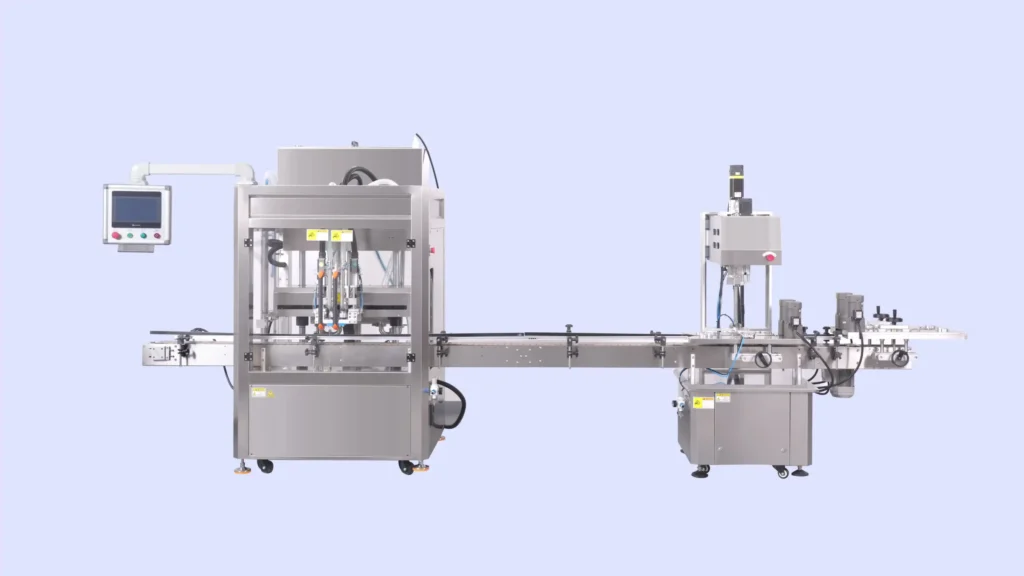
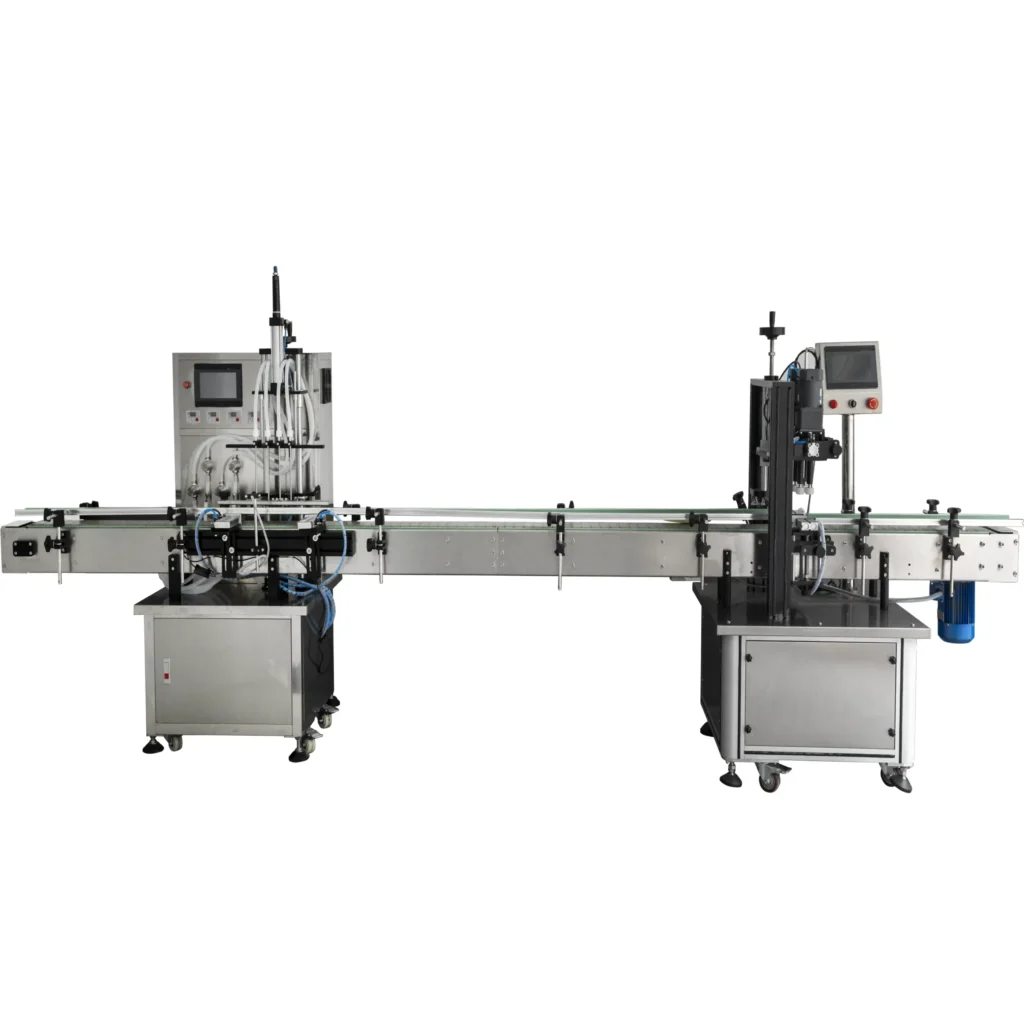
For projects centered on bottling, filling equipment is selected around product behavior, target quantity, container opening, and the required handling cycle. Closure equipment then receives the filled container in a suitable position and condition.
The servo tracking gear-pump bottling line and magnetic-pump filling and capping line provide individual product paths for reviewing actual combinations. Their product pages carry the equipment-specific details.
At category level, compare the interfaces: how prepared product reaches filling, how containers enter, how closures are presented, and how completed bottles leave. These selection dimensions apply across different layouts while allowing the installed arrangement to follow the product and packaging specification.
Capacity Balance and Production Scheduling
Line capacity needs a common production basis. Processing equipment is often discussed by batch quantity, while filling and packaging equipment may be described by completed containers or packs over time. The project must connect those measures using the intended operating schedule.
Include preparation, discharge, replenishment, cleaning, checks, and format changes when assessing available production time. A nominal machine rate describes only part of that schedule. The slowest recurring duty can limit completed output even when neighboring equipment has a higher stated capacity.
Plan the product mix as well as the largest single run. Several short batches may need a different balance of holding capacity, adjustment access, and staffing from a long campaign of one format. Capacity assessment should use acceptable finished products under representative conditions and identify where temporary accumulation or a buffer has a useful role.
Container Handling and Packaging Compatibility
Containers and closures influence the line as much as the formulation. Shape, wall strength, filled weight, opening geometry, and projecting components affect support and movement. Samples should represent the finished products handled during production.
The packaging line support equipment category covers related feeding, conveying, transfer, and accumulation functions. Select those functions around the presentation required at each receiving station.
Review the planned container family using more than overall dimensions. A new pump, shoulder profile, or flexible wall can change restraint or clearance requirements. Define reference positions and transfer heights so neighboring equipment can receive products consistently. For grouped packs, identify when individual units become a larger handling unit and which operation maintains the required arrangement.
Product Temperature and Thermal-Service Coordination
Some formulations require a specified condition during preparation, holding, transfer, or filling. The line arrangement should identify where that condition is needed and which equipment maintains it. A temperature-controlled processing vessel is only one part of that assessment.
Review the time between stages and the product’s behavior during that period. Receiving capacity, transfer distance, and pauses in packaging can affect whether the intended product condition reaches the filling point. Thermal requirements should therefore be considered alongside capacity and scheduling.
The guide to hot filling, cooling, and capping wax-based products provides application-specific context. For the production line category, the key selection task is coordinating the required interfaces and services; individual formulations and their manufacturing sequences belong in the relevant application discussion.
Closure, Identification, and Finished-Pack Preparation
The packaging modules should follow the actual container and required finish. Capping equipment applies the compatible closure, while sealing equipment addresses a separately specified seal interface, including suitable inner-foil applications where required.
For presentation, labeling equipment needs the intended application surface and product orientation. Variable information and outer packaging are selected according to the completed pack’s requirements, within the wider packaging equipment range.
Some formats combine dispensing and closing within dedicated equipment. Review tube filling and sealing equipment or pouch filling equipment for those packaging-specific arrangements. Their included functions determine which separate downstream stages remain useful for the project.
Automation and Operator Responsibilities
Automation should be described by the work performed at each stage. Product replenishment, container loading, closure presentation, cycle control, material changes, and finished-pack collection are distinct activities. A line can combine automatic functions with deliberate operator involvement.
Compare the required level of coordination as well as the number of automatic machines. Separate equipment may need agreed signals, transfer conditions, and responses to interruptions so the overall arrangement operates as intended. Control interfaces should follow the project’s actual equipment and operating requirements.
Operator planning should include routine checks, packaging-material replenishment, cleaning, and changeover work. These tasks influence staffing even when the principal production cycle is automatic. A clear division of responsibilities helps the factory assess both expected output and the skills needed to operate the supplied arrangement.
Factory Layout and Material Movement
The factory layout needs to support the intended movement of ingredients, prepared product, packaging components, and completed goods. Processing vessels and packaging machines have different access requirements, so footprint alone is an incomplete basis for placing them.
Allow space for operators, product supply, packaging replenishment, cleaning, and service. Review routes for bringing equipment into the building and moving format parts or auxiliary units after installation. Working clearance should remain practical when the surrounding area is in use.
The appropriate transfer arrangement may involve piping, hoses, conveyors, or operator movement according to the duty. Define those interfaces around access, product condition, and the available space. Future equipment positions should also be considered where expansion is planned, so the initial layout supports an agreed next stage rather than occupying every available service route.
Water, Compressed Air, and Other Utilities
Utility planning begins with the actual equipment arrangement. Required water quality, electrical supply, compressed air, heating services, and cooling services should be identified for each module and coordinated for the facility.
Where production requires on-site water preparation, assess water treatment systems against feed-water conditions and the intended use. Other service equipment belongs within the relevant utility systems scope. The selected arrangement may also use suitable existing factory services.
The factory utilities checklist provides a separate planning reference. For the line proposal, identify connection points, available service conditions, and responsibility for providing each service. This helps coordinate the equipment package with the infrastructure needed to operate it at the intended duty.
Cleaning, Product Changeovers, and Maintenance Access
Cleaning requirements follow the product-contact path and the residue left by the formulation. Review vessels, transfer components, filling pathways, and any shared product-supply connections together. Their combined access affects the practical changeover arrangement.
Identify which components are removed, which are cleaned in place using the approved method, and what services are needed. Cleaning provisions should follow the actual equipment construction and the factory’s requirements for the next product. Automated cleaning functions, where included, need a defined scope.
Maintenance planning also crosses equipment boundaries. Leave access to pumps, drives, valves, guides, and packaging application parts. Consider how service work affects neighboring equipment and where components can be handled. A line that shares product or packaging duties across several formats should be assessed against the routine work required between those formats.
Existing Equipment and Phased Expansion
An expansion project can retain suitable equipment while adding a missing stage or increasing capacity at a particular interface. Begin with the existing equipment’s actual condition, operating duty, discharge arrangement, controls, and available services.
Compatibility needs assessment at each connection. A useful processing vessel may require a different transfer arrangement for a new filler, while a packaging extension may change container spacing or accumulation needs. The selected addition should address the intended constraint within the wider system.
For phased projects, identify the current supply and the future stage separately. Space, service access, transfer points, and control interfaces can be considered during initial planning. This approach supports an agreed expansion direction while keeping the first installation matched to the production that will actually operate at that stage.
Installation, Commissioning, and Operating Support
Project implementation should connect the equipment specification with the conditions at the factory. Confirm delivery access, positioning, service readiness, inter-machine connections, and the operating references needed for the supplied scope.
StriversMachinery offers installation, commissioning, operator training, and technical support according to project requirements. These services can address the practical operation of the equipment arrangement and the responsibilities of the factory team.
Define commissioning and acceptance activities around the agreed product, packaging, and equipment functions. Production references should describe the intended result and the operating conditions used to assess it. Manuals, setup information, and training should reflect the supplied configuration, including routine operation, cleaning, format changes, and service access. A clear handover helps operators use the equipment as a coordinated arrangement rather than a collection of unrelated settings.
Equipment Supply and Project Coordination
Mixing and emulsifying systems are StriversMachinery’s core manufactured products. Complementary equipment is organized through long-term partner suppliers and coordinated within the agreed production line project. This arrangement supports selecting equipment according to the manufacturing and packaging duty.
For a multi-equipment project, document the supply responsibilities, interfaces, and services associated with each module. The factory and equipment team need the same understanding of what is provided, what uses existing infrastructure, and which tasks remain with operators.
Longer-term assessment can include staffing, utilities, changeovers, consumables, maintenance, and future format requirements alongside purchase price. The total cost of ownership guide provides further context for those operating considerations. Equipment selection should remain grounded in the actual production plan and the functions needed to carry it out.
Operating References and Routine Production Checks
Production references help the factory assess the arrangement consistently after handover. Identify the product condition, packaging components, target quantity, and finished appearance associated with each approved job. These references connect the equipment setup with the result expected from the line.
Checks should follow the duties actually performed. A filling check concerns the dispensed quantity and package condition; a closure check concerns the fitted closure; and a labeling check concerns placement and appearance. Where the project requires automatic inspection, define the characteristic being checked and the required handling response separately.
Also consider how operators resume a job after a pause, replenish materials, and change between products. The relevant setup information should make those routine tasks clear. For a line assembled from several equipment modules, shared production references help keep the settings and operating responsibilities coordinated across stations.
Packaging-material changes deserve particular attention. A revised cap, label construction, liner, or carton can affect a downstream task while leaving the formulation unchanged. Include the planned packaging family in the line assessment and retain accepted samples for repeat production. This gives future adjustments a practical basis and helps identify when a new format needs a different equipment interface.
Typical Applications
Creams, lotions, skincare products, shampoo, body wash, liquid soap, detergents, perfume, gels, sauces, and other compatible formulated products.
Application-Specific Equipment Planning
For product-focused equipment combinations, explore cosmetic cream and skincare applications, hair care and body wash applications, and perfume and fragrance applications. These sections provide the appropriate context for the particular product family.
At the complete-line level, compare the equipment modules, production balance, transfer conditions, packaging requirements, and factory interfaces. Product-specific requirements then refine that framework into a suitable project arrangement.
For an initial discussion, provide the intended products, batch and output targets, packaging samples, available factory layout, utilities, and existing equipment information. Include planned format changes and expansion priorities. StriversMachinery can use these inputs to discuss the appropriate production line scope and the equipment relationships needed for the project.