
Real Cases
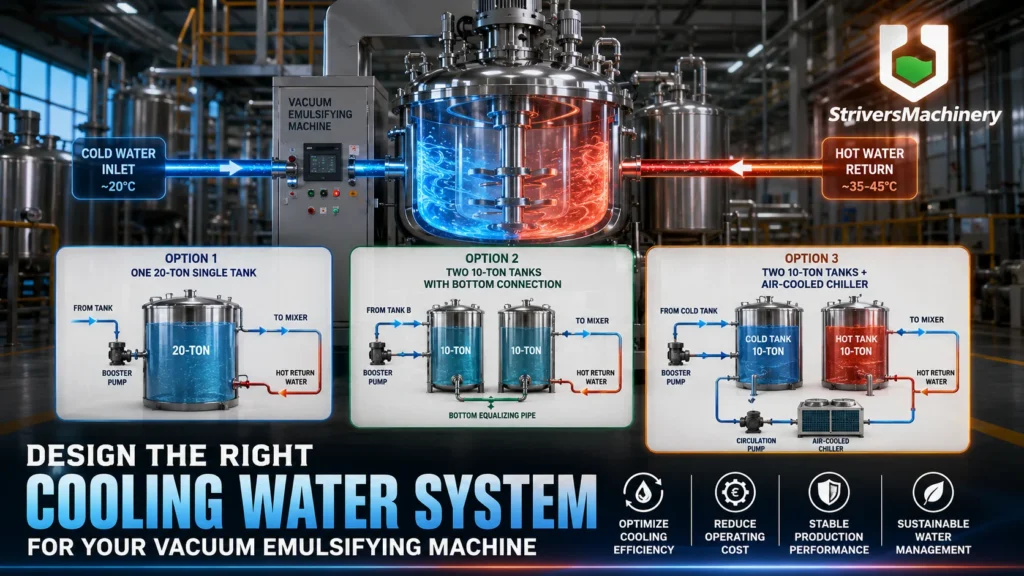
This guide evaluates jacket cooling for an assumed 1,000 kg batch cooled from 100°C to 50°C in approximately 60 minutes
It compares one 20-ton tank, connected dual tanks and storage with active cooling using actual working water volumes
The example gives about 52.8 kWh of product sensible heat per batch; storage and refrigeration must be assessed separately
Daily heat rejection, jacket transfer, tank levels and recovery measurements determine whether passive buffering can meet the duty
The final layout and any chiller must suit the repeated production schedule, site climate and equipment operating limits
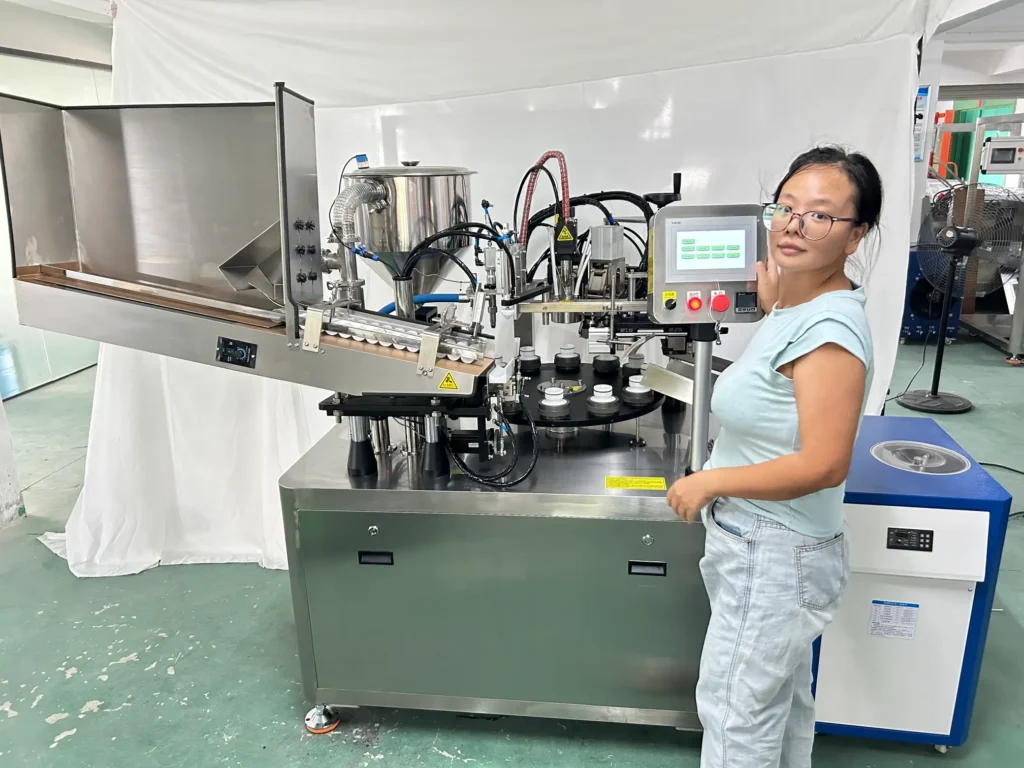
This guide explains normal shutdown of the demonstrated hot air tube machine while separating emergency, fault and power-loss responses
The five-step sequence disables heat, maintains specified cooling airflow, confirms cooldown conditions and then completes normal power-down
Below 80°C is the demonstrated configuration’s indicated reference, not a universal endpoint or safe-to-touch temperature
The confirmed Indonesia case records heating-assembly damage and replacement after a power outage interrupted cooling
Maintenance and recovery must follow the installed equipment’s instructions, including any required isolation and safeguards
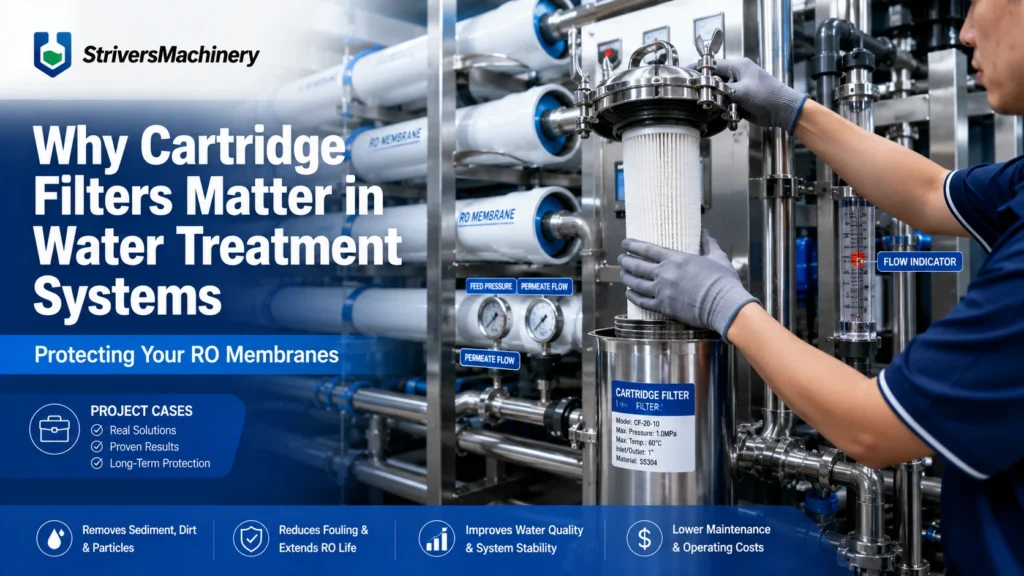
This case study follows a cosmetic OEM factory in Indonesia that saw rising RO pressure, falling flow, and shrinking membrane cleaning intervals, despite finished product staying within specification.
After ruling out the RO membrane, pump, and dosing system, the team found the real cause upstream: clogged and partially collapsed cartridge filters with bypass leakage letting fine particulate matter into the RO system.
Strivers Machinery recommended upgrading to properly specified dual-stage 5 μm and 1 μm cartridge filtration with differential pressure monitoring and a documented maintenance SOP.
Three months later, RO membrane service life more than tripled, unplanned downtime dropped to zero, and the factory saved an estimated USD 45,000–60,000 annually.

A cosmetic manufacturer’s 500L vacuum emulsifying mixer began losing vacuum performance after eighteen months of normal operation, with symptoms including slower vacuum pull, gauge fluctuation, and tiny bubbles in the finished product. The vacuum pump, piping, gasket, and valve all tested normal. Close inspection of the lid’s closing cycle revealed a roughly 1mm contact delay on one side during the final stage of travel. The actual root cause was minor foundation settlement beneath the equipment, caused by persistent floor moisture near a newly added CIP zone, which had shifted the machine’s base just enough to unevenly affect lid sealing pressure. Re-leveling the base resolved the issue completely.
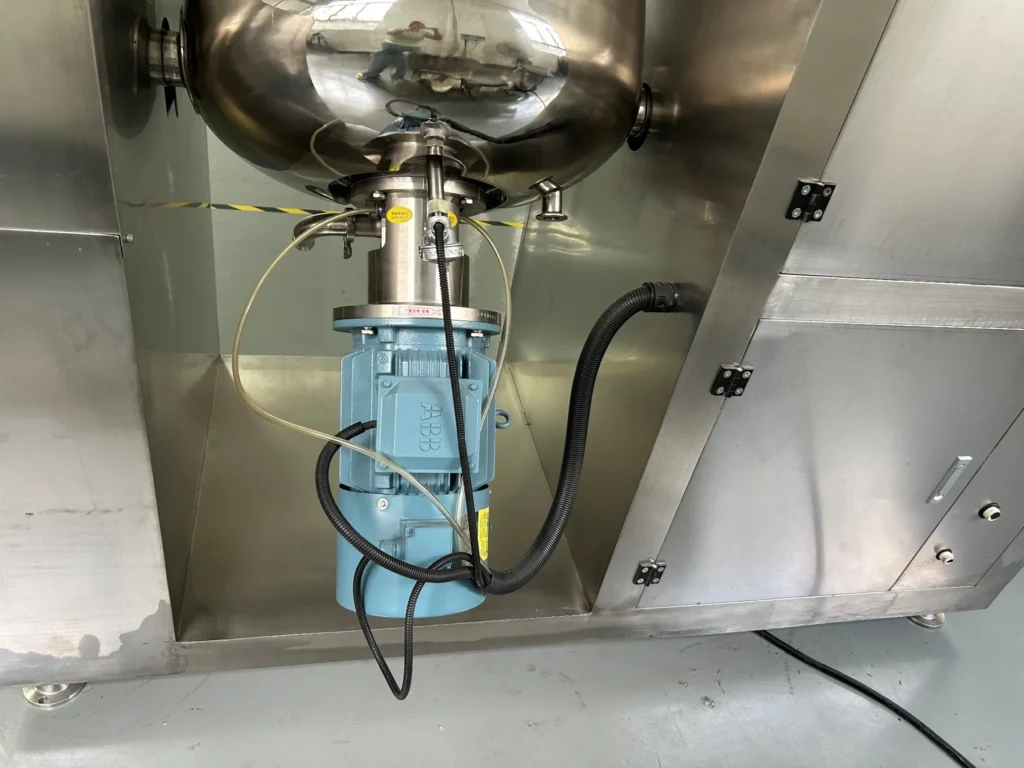
During a 1,000L cream batch at a cosmetic OEM factory in Guangzhou, the temperature reading jumped wildly the moment high-shear mixing started — swinging from 74°C to 31°C to 92°C and triggering an E02 fault code.
The initial suspects were a failed PT100 sensor, a faulty PLC module, or a temperature controller fault.
Tracing the signal step by step revealed the real cause: a loose sensor terminal connection, shaken slightly loose by sustained high-shear vibration.
The fix took under 30 minutes, and the case is a reminder that erratic readings are often mechanical, not electronic.
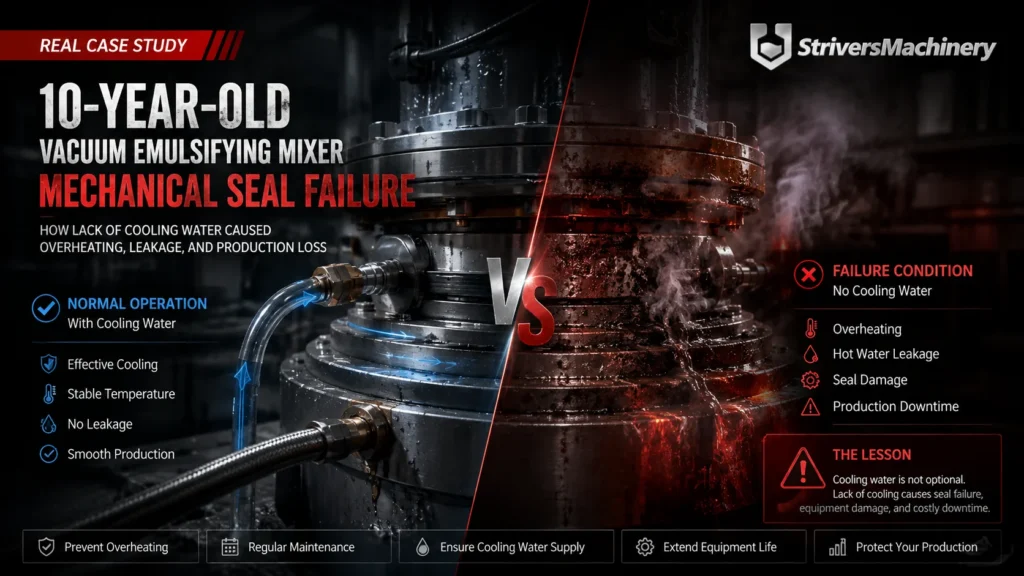
This case study documents a mechanical seal failure on a 10-year-old vacuum emulsifying mixer, caused when a newly hired operator forgot to refill the cooling water tank at startup.
It walks through the symptoms noticed, the emergency response that stopped the machine before further damage occurred, and the on-site inspection that confirmed the root cause.
The article explains why the motor was spared thanks to an immediate shutdown, and compares older manual cooling designs against modern water flow switch and PLC interlock systems.
It closes with four practical prevention tips and confirmation that similar safety upgrades can be retrofitted onto older machines already in service.