
Process Support Equipment


More About Our Machines
Process Support Equipment for Manufacturing Facilities
Process Support Equipment for Manufacturing Facilities
Process support equipment provides the services, holding arrangements, transfer functions, and packaging logistics used around production machinery. These systems help establish the conditions in which processing and packaging equipment can perform their intended tasks.
StriversMachinery supplies project-specific support equipment for new installations, additional production stages, and upgrades to existing facilities. Selection considers both the main equipment duty and the factory conditions surrounding it, including product behavior, available utilities, material movement, and operator access.
The range is organized into four categories: Utility Systems, Storage & Holding Systems, Fluid Transfer Systems, and Packaging Line Support Equipment. Each addresses a different interface within the factory. Together, they provide a useful framework for identifying the support needed by an individual machine or a wider equipment arrangement.
Four Categories of Production Support
Four Categories of Production Support
Support requirements can be grouped by what is being provided or moved: operating services, held product, transferred fluid, or packaging components. This distinction makes it easier to select the appropriate equipment and assign its role within the project.
| Category | Primary Role | Key Selection Factors |
|---|---|---|
| Utility Systems | Provide the services required by production equipment. | Service conditions, demand, operating schedule, and available infrastructure. |
| Storage & Holding Systems | Receive and hold material before its next use. | Working volume, product condition, hold duration, access, and discharge. |
| Fluid Transfer Systems | Move compatible material between equipment or locations. | Flow behavior, required duty, transfer path, materials, and cleaning. |
| Packaging Line Support Equipment | Prepare, feed, convey, and accumulate containers or packaging components. | Format, orientation, stability, spacing, and inter-machine coordination. |
Some projects require support from all four groups, while others address one particular need. The appropriate combination follows the equipment duty and the interfaces already available at the factory.
Utility Systems and Equipment Services
Utility Systems and Equipment Services
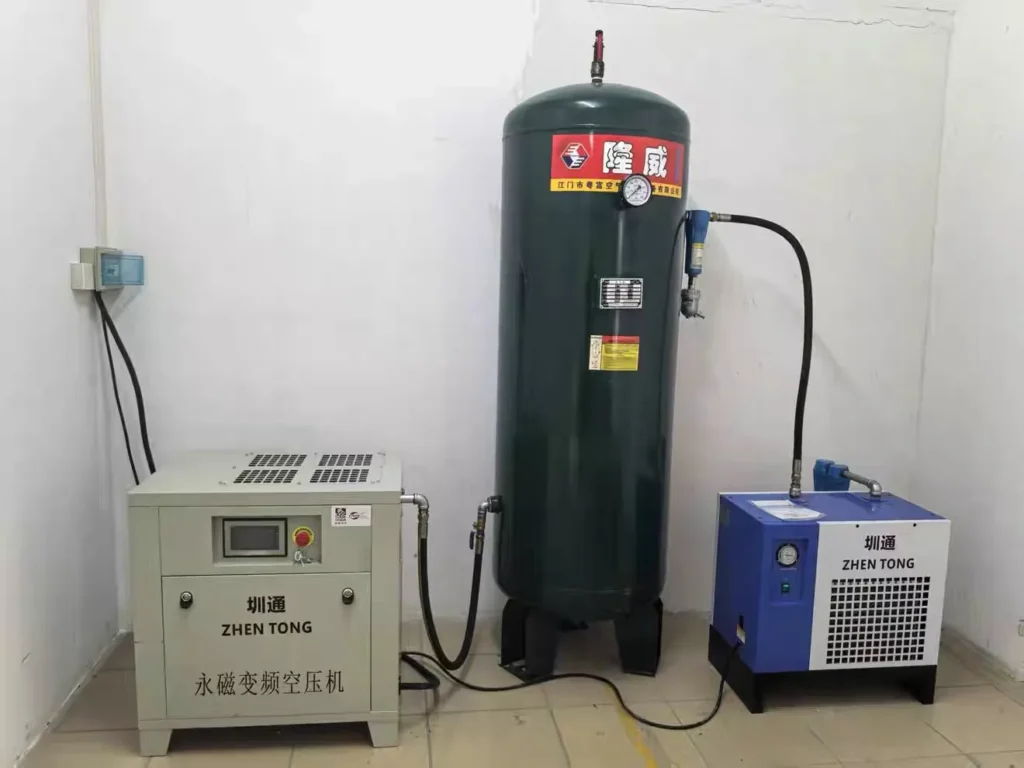
Utility systems provide services such as cooling, steam, compressed air, and dedicated cleaning support where required by the selected equipment. Their useful duty depends on the conditions needed at the receiving machine.
Begin with the production equipment requirements and the intended operating schedule. Identify which consumers operate together, how their demand varies, and which existing services are suitable. A service connection should be assessed by the conditions it can provide during production as well as its physical location.
Dedicated and shared arrangements address different installation priorities. A local service unit may suit a defined equipment duty, while a shared system may serve several consumers. The choice should account for operating conditions, distribution, maintenance access, and the effect of service interruptions on the supported equipment.
Cooling and Steam Support
Cooling and Steam Support
Cooling support can serve process temperature control or a specified equipment function. Identify the required duty, the receiving connection, and the available operating conditions before selecting the cooling arrangement. The service needed by one component may differ from the cooling requirement of the product itself.
Steam support should likewise be specified around its use. Supplying a compatible vessel jacket is a different interface from any application involving direct product contact. The selected arrangement needs suitable receiving equipment, service conditions, and provisions for routine operation.
An electric steam generator provides a product path for reviewing an actual service-equipment configuration. Use the equipment information and project requirements together when assessing its role. At the factory level, coordinate service availability with the production schedule, including preparation, holding, and other periods when demand may change.
Compressed Air and Cleaning Services
Compressed Air and Cleaning Services
Compressed-air requirements should consider the equipment using the air and the function it performs. Pneumatic movement and a specified packaging-cleaning operation can place different requirements on the delivered service. Define pressure, available flow, and required air condition for the actual use.
Air preparation and distribution belong in the service assessment. The guide to moisture in compressed-air systems provides related technical context. Confirm the intended service at the point where the equipment receives it.
Cleaning support is selected around the product-contact equipment and the permitted cleaning route. Identify the vessels, transfer paths, and dispensing components to be served, together with access and drainage. The arrangement should reflect which parts are cleaned through the assembled system and which require removal under the equipment’s cleaning instructions.
Storage, Holding, and Buffer Functions
Storage, Holding, and Buffer Functions
Storage and holding systems receive material before its next use. The required role may be bulk storage, short-term holding, or buffering between operations with different working cycles.
The role influences the selection criteria. General storage emphasizes the product and storage conditions. In-process holding considers how the material remains ready for the next stage. Buffering connects the available supply with the receiving operation’s demand.
Define the material entering the vessel, the useful quantity, the expected holding period, and the discharge destination. These details establish the vessel’s duty more clearly than nominal capacity alone. Any required heating, cooling, insulation, or agitation should follow the actual product condition and the selected configuration. The receiving and discharge arrangements should also accommodate replenishment and the practical end of a batch.
Working Volume and Product Condition
Working Volume and Product Condition
Total vessel capacity and working volume serve different planning purposes. The useful amount depends on the operating arrangement, required space above the product, and the amount that can be discharged under the intended conditions. Establish the working duty before matching it to the receiving equipment.
Product condition during holding also matters. Temperature, settling behavior, flow characteristics, and sensitivity to handling can influence the appropriate vessel arrangement. A storage description should identify the condition required at discharge rather than rely only on the product’s commercial name.
The distinction between holding and processing helps direct equipment selection. Review mixing equipment when the main duty is formulation preparation. A holding vessel with a confirmed conditioning function should be assessed according to that function and its place between production stages.
Fixed and Mobile Support Arrangements
Fixed and Mobile Support Arrangements
Fixed equipment can suit established production positions with defined service and product connections. Mobile equipment can serve approved locations where the required duty and handling conditions support movement. Each arrangement needs suitable access, positioning, and connections.
For mobile vessels or pumps, assess the condition during movement, the available route, and the work needed to connect and disconnect the equipment. Filled weight, product behavior, floor conditions, and accessible operating positions all influence suitability.
For fixed arrangements, consider installation space together with service access and the routing of product and utility connections. The choice should reflect the factory’s actual workflow. A flexible equipment position is useful only when the surrounding handling and service arrangements can support the intended use consistently.
Fluid Transfer Between Production Stages
Fluid Transfer Between Production Stages
Fluid transfer systems move material between vessels, processing equipment, and receiving machines. The transfer duty includes the source, product, route, destination, and required movement over time.
Selection should account for viscosity at the operating temperature, particle content where relevant, handling sensitivity, and material compatibility. The source and receiving conditions also matter: how product reaches the transfer equipment and how the destination accepts it are part of the same duty.
Review the pump together with its connections and transfer path. The pump selection guide provides deeper comparison context. At the support-system level, the goal is to match the complete transfer arrangement to the actual material and receiving requirement.
Pump Operation and Receiving-Equipment Interfaces
Pump Operation and Receiving-Equipment Interfaces
A transfer pump needs a duty suited to the available product supply and downstream demand. Review the intended flow, source conditions, receiving capacity, and how operation is started, stopped, or adjusted during production.
A portable Rotary Lobe Pump provides an individual equipment reference. Its product page identifies the actual configuration; suitability for a project also depends on the formulation and transfer path.
For connections to filling equipment, define how product reaches the receiving inlet or hopper and how replenishment is managed. Product transfer and package dosing are separate duties. The transfer arrangement should keep the receiving operation appropriately supplied, while the filler performs its specified quantity-control task.
Packaging Line Support Equipment
Packaging Line Support Equipment
Packaging line support equipment handles the containers and components entering, moving through, or leaving packaging stations. Relevant equipment groups include container preparation, feeding, cap supply, conveying, and accumulation arrangements.
Selection starts with the actual item being handled. Empty bottles, filled jars, unusual closures, and completed cartons differ in stability, orientation, and support requirements. Samples should represent the condition in which each item reaches the relevant support equipment.
The interface needs a clear presentation requirement. Identify orientation, spacing, transfer height, and the destination’s receiving conditions. Support equipment should be coordinated with the operation it serves, so its output reaches the next station in a usable condition. This is particularly important where operator-assisted and automatic tasks share one production area.
Container Preparation and Closure Supply
Container Preparation and Closure Supply
Container preparation should address the actual cleanliness requirement before filling. Liquid washing and air rinsing are different operations, and selection depends on the container condition and the material to be removed. The required result should be defined for the intended package.
Closure support also needs assessment of the complete component. Sorting, elevation, and presentation depend on cap geometry and how the receiving station accepts it. Pumps, triggers, and other projecting features can affect the appropriate handling arrangement.
The wider packaging equipment range covers the stations that complete closure, identification, and outer-pack tasks. Support equipment prepares and moves the items required by those stations. Keeping these roles clear helps establish the feeding duty and the packaging task it supports.
Buffering Product and Accumulating Containers
Buffering Product and Accumulating Containers
Bulk-product buffering and container accumulation address different forms of production imbalance. A holding vessel provides a quantity of product between operations, while an accumulation arrangement provides space for discrete containers or packs.
Assess either requirement against the timing difference it needs to accommodate. Batch preparation, intermittent replenishment, brief station pauses, and manual tasks can affect flow in different ways. The appropriate support arrangement depends on the product and the operating schedule.
Available space and material condition place practical limits on buffering. Held product must remain suitable for its next use, and accumulated containers must remain stable and appropriately presented. Establish the intended pause conditions and operating response so the support arrangement serves a defined purpose within the production area.
Connections to Processing and Filling Equipment
Connections to Processing and Filling Equipment
Main production equipment establishes the support duty at its interfaces. A vacuum emulsifying system may require specified thermal services, product-supply connections, and discharge arrangements. The required support follows its installed configuration and manufacturing task.
At the filling stage, support can include bulk-product delivery, container presentation, closure supply, and completed-pack movement. These functions should be assessed together with the receiving machine’s operating conditions.
For shared equipment, identify which services and connections belong to each use. This helps coordinate changeovers and prevents the layout from depending on an unavailable vessel, pump, or supply unit at the same time. Support selection should reflect the actual production schedule and the way operators move between tasks.
Layout, Connections, and Factory Services
Layout, Connections, and Factory Services
Support equipment needs room for normal operation, replenishment, connection changes, and maintenance. Positioning should account for the source and destination of materials as well as the equipment footprint.
Review access to valves, filters, pumps, connection points, and removable parts. Mobile equipment needs usable routes and approved working positions. Fixed equipment needs accessible connections and service space after adjacent machinery is installed.
Water requirements should identify the intended use and quality at the receiving point. Where on-site preparation is required, review water treatment systems. The factory utilities checklist provides broader planning context. Match available electrical, water, air, heating, and cooling services to the actual support and production equipment selected for the project.
Cleaning Access and Materials Compatibility
Cleaning Access and Materials Compatibility
Assess product-contact materials across the complete holding and transfer path. Vessel surfaces, pumps, hoses, seals, valves, and connections can have different material requirements. Compatibility depends on the formulation, operating condition, and permitted cleaning method.
Cleaning access should cover the places product enters, remains, and leaves. Consider emptying, removal of accessible components, and the services needed for the approved cleaning route. Packaging support equipment has its own housekeeping and service requirements around container-contact parts.
The guide to cleaning access and retained-product areas provides further context. For equipment selection, use the actual construction and cleaning instructions to assess how the support arrangement fits the factory’s product changes and daily operating work.
Operation, Coordination, and Routine Service
Operation, Coordination, and Routine Service
Define operator and equipment responsibilities at each support interface. Starting a transfer pump, replenishing packaging components, checking a receiving level, and responding to a paused downstream station are separate operating tasks.
Where automatic coordination is required, identify the signals, detection, and operating responses included in the arrangement. Shared services and connected equipment need agreed behavior when a supply changes or a receiving operation stops.
Routine service should follow the installed components. Access to consumables, working parts, and inspection points influences the practical layout. Consider how a support unit is serviced and how the affected production duty is managed during that work. This keeps operating continuity connected to the real equipment arrangement and the factory’s staffing plan.
Existing Facilities and Future Expansion
Existing Facilities and Future Expansion
Support projects can use suitable existing services and equipment. Assess their available duty, condition, connections, and operating schedule before selecting additions. A new production machine may need a revised support arrangement even when the existing factory infrastructure remains in use.
For expansion, identify the current requirement and the proposed next stage separately. Space, connection access, product routes, and service distribution can be considered around an agreed development plan.
Where several support functions are coordinated with new processing or packaging equipment, the complete production lines category provides the broader integration context. The support arrangement should remain matched to the equipment operating now, with future interfaces identified according to the intended expansion.
Equipment Supply and Project Preparation
Equipment Supply and Project Preparation
StriversMachinery’s core manufactured products are mixing and emulsifying systems. Complementary support equipment is organized through long-term partner suppliers and coordinated according to the project’s equipment interfaces and operating requirements.
For an equipment discussion, provide the main machine information, intended product or packaging components, output schedule, and available factory services. Identify existing vessels, pumps, utility units, and handling equipment that will remain in use. Drawings and representative samples help establish the connections and support needed at each receiving point.
The resulting proposal should identify the equipment supplied, the services available from the factory, and the work required to connect them. Installation, commissioning, operator training, and technical support can be arranged according to project requirements. Clear preparation information helps coordinate these activities around the actual site and the production duty the support equipment will serve.
Typical Applications
Typical Applications
Creams, lotions, shampoo, body wash, liquid soap, detergents, perfume, gels, sauces, and compatible formulated liquids and pastes.
Application References and Selection Criteria
Application References and Selection Criteria
For product-focused equipment combinations, explore cosmetic cream and skincare applications, hair care and body wash applications, and detergent and household cleaning applications. These sections connect support requirements with the relevant product family.
Across support equipment, compare the required function, source and receiving conditions, useful capacity, product or component compatibility, utilities, access, and operator responsibilities. Include cleaning, format changes, and the actual production schedule in the assessment.
Longer-term comparisons can consider energy, consumables, routine service, and changeover effort alongside purchase price. The total cost of ownership guide provides related context. StriversMachinery can discuss a support-equipment arrangement using the main equipment information, product requirements, available factory services, and intended expansion plans.