
Toothpaste & Oral Care Products


More About These Applications
Equipment for Toothpaste and Liquid Oral Care
Equipment for Toothpaste and Liquid Oral Care
Toothpaste and mouthwash may belong to the same brand, but their production routes are quite different. Toothpaste needs equipment that can prepare, move and dose a dense formulation into its final pack. Mouthwash usually follows a liquid blending and bottling route. Treating both as one generic oral care line can lead to unsuitable mixing, transfer and packaging choices.
StriversMachinery supplies processing and packaging equipment that can be configured around toothpaste, oral care gels and compatible liquid oral care products. The product manufacturer's established formulation and quality procedures define the required process; the equipment arrangement should make that process practical and repeatable.
This page follows those separate production branches. General skin gels and creams are covered under skin care manufacturing, while products requiring a pharmaceutical manufacturing context belong with pharmaceutical and ointment applications. Product names alone should not be used to infer regulatory status or equipment compliance.
Toothpaste Preparation Begins with Ingredient Handling
Toothpaste Preparation Begins with Ingredient Handling
Toothpaste preparation can involve liquids, powders and other additions introduced in a defined sequence. The equipment should allow operators to weigh, stage and add ingredients while maintaining a manageable working area. A dense finished paste places different demands on the vessel than the initial liquid charge.
Mixing equipment should be assessed against the entire batch sequence. Identify the required mixing, dispersion and air-removal functions, along with any temperature control specified by the formulation. Ingredients that need separate preparation may justify a premix vessel rather than occupying the main processing vessel for every task.
Include ingredient access, sampling and discharge in the discussion. A mixer that produces the required paste but is difficult to empty can become a production bottleneck. The proposed arrangement should also allow cleaning of the addition area and product-contact parts, with enough space for operators to work without obstructing hoses, access panels or the route used to remove finished bulk product.
Vacuum Processing and Finished Paste Appearance
Vacuum Processing and Finished Paste Appearance
Air management can be particularly relevant to toothpaste because the product's appearance and filling behavior are affected by its consistency and the air retained in it. Vacuum emulsifying and mixing equipment may provide a route for processing and deaeration where the formulation and manufacturing procedure call for those functions.
The external-circulation emulsifying mixer for toothpaste and related products illustrates one processing configuration to assess. Its suitability depends on the actual paste, ingredient sequence and discharge requirements. Review the circulation route and processing sequence with the actual toothpaste formulation, including any ingredients that require particular handling during preparation.
For background on circulation approaches, the internal and external circulation mixer article provides a separate technical resource. The equipment arrangement needs to support the manufacturer's established texture requirements and provide practical access for the planned quality checks. Confirm how the finished paste is sampled, released and transferred, so air control is considered beyond the mixing vessel itself.
Premixing and Product-Contact Materials
Premixing and Product-Contact Materials
Separate preparation can be useful when an ingredient needs dissolution or another defined treatment before it enters the main batch. Stainless steel mixing tanks provide one equipment category to evaluate for that duty. Specify the actual product-contact construction, seals and connections rather than relying on the frame material.
The 304 versus 316L stainless steel guide gives background for material discussions. Toothpaste formulations and cleaning agents should be reviewed for compatibility with the complete wetted path. Abrasive or otherwise demanding ingredients may affect component selection and maintenance needs.
Where water treatment is required by the formulation and factory quality procedure, water treatment systems should be coordinated with storage and distribution. The preparation team needs the required supply at the point of use, and the project should include cleaning demand. Avoid choosing treatment or material grades solely from a broad “oral care” label without the source-water and formulation information needed for the decision.
Holding and Moving Dense Toothpaste
Holding and Moving Dense Toothpaste
Once the batch is ready, it must reach the tube filler in a condition that supports consistent dosing. Storage and holding systems can provide an intermediate stage when the process and production schedule permit it. Define the required waiting conditions and whether agitation or temperature control is needed.
Fluid transfer systems should be selected using the finished paste, the transfer distance and the required supply to the filler. A mobile rotary lobe pump is one approach to evaluate for suitable products. It should not be treated as universally compatible with every abrasive formulation or as the dosing mechanism for the tube filler.
The pump selection guide offers a broader comparison of transfer principles. Include source feeding, hose length, end-of-batch emptying and cleaning in the assessment. Dense paste can make an apparently simple connection difficult to operate if the inlet arrangement and access for clearing or cleaning have not been considered.
Tube Material Determines the Closing Method
Tube Material Determines the Closing Method
Tube filling and sealing machines must be matched to the tube construction. Plastic and compatible laminate tubes use a different closing route from aluminum tubes. Provide the tube supplier's specifications and production samples before selecting the machine and format parts.
The aluminum, plastic and laminate tube guide explains the distinction in more detail. Tube diameter, length, opening and decoration all matter, but material and tail-closing requirements determine the basic equipment route. A machine described as a tube filler should not be assumed to close every tube construction.
Also identify how empty tubes will be loaded and how the printed face will be oriented. Coding, trimming or folding operations should be specified according to the actual machine and tube type. Confirm the acceptable finished tail appearance and the manufacturer's package checks, so the proposal covers a complete usable tube rather than only the filling stage.
Plastic and Laminate Toothpaste Tubes
Plastic and Laminate Toothpaste Tubes
For compatible plastic and laminate tubes, the automatic hot-air tube filling and sealing machine provides a route that includes automatic tube loading, filling and tail sealing. Its cooling equipment serves the sealing circuit. If the bulk toothpaste needs cooling before filling, provide that function through a separate, suitable process stage.
The filling system must be assessed with the intended paste and tube. Check supply to the filler, nozzle cutoff and contamination around the area that will be sealed. A satisfactory filling quantity is only one part of a satisfactory finished tube.
The hot-air and ultrasonic sealing comparison provides background on different sealing approaches. For a selected hot-air machine, the hot-air cooling and shutdown article is a useful operating resource. Use the selected machine's operating procedure when planning startup and shutdown. Operators need access to the controls and enough time to complete the required sequence at the end of a run.
Aluminum Tubes and Semi-Automatic Production
Aluminum Tubes and Semi-Automatic Production
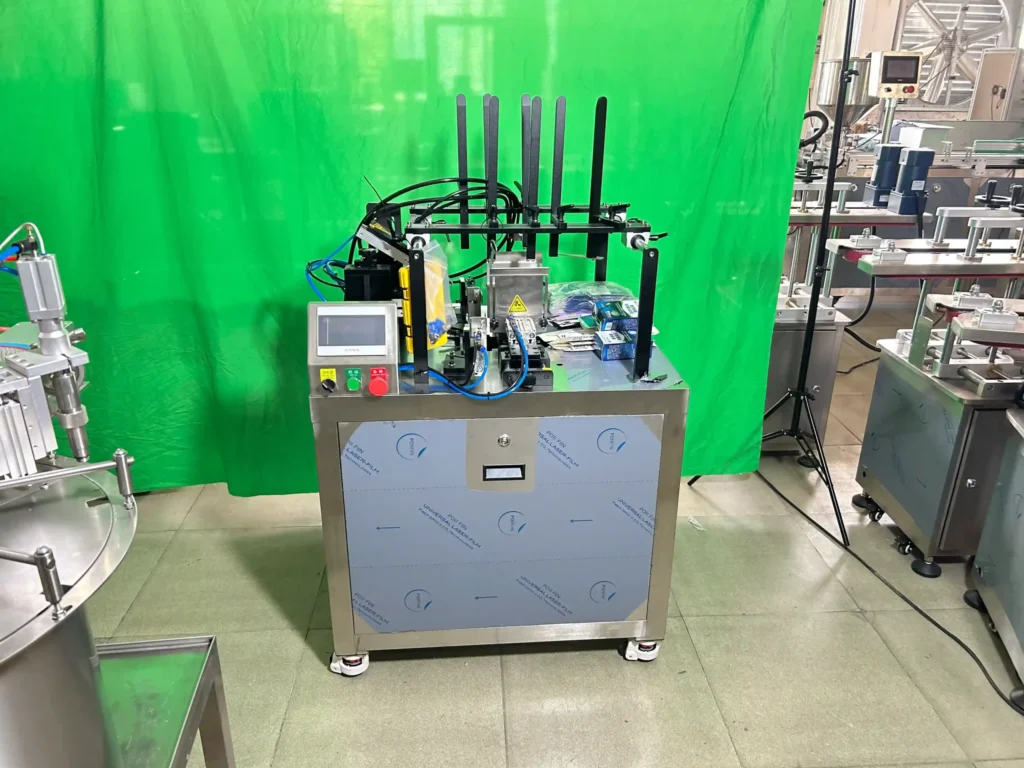
Where the product uses aluminum tubes, the semi-automatic aluminum tube filling and tail-folding machine follows a mechanical folding and crimping route. Operators place empty tubes in the holders, and the machine performs its configured filling and closing operations. This is different from heat-sealing a plastic tail.
The tube and folding tooling should be matched to the intended package. Aluminum tubes need folding tooling suited to the tube construction rather than the heated sealing and trimming arrangement used for plastic tubes. Coding and the selected fold arrangement should be reviewed with the actual tube samples and the desired finished appearance.
Semi-automatic loading can suit some production patterns, but output planning must include the operator's entire task. Empty tubes need to be supplied, finished tubes collected and unsuitable packs removed. For short runs or several tube sizes, changeover work can influence the preferred arrangement as much as the nominal machine cycle. Keep the manual steps explicit in the production proposal.
Mouthwash Uses a Separate Blending and Bottling Route
Mouthwash Uses a Separate Blending and Bottling Route
Mouthwash and other flowable oral care liquids should be assessed as their own formulations. A suitable blending vessel may be sufficient for some products, while other recipes need additional preparation steps. Their process should not inherit the dense-paste handling arrangement used for toothpaste.
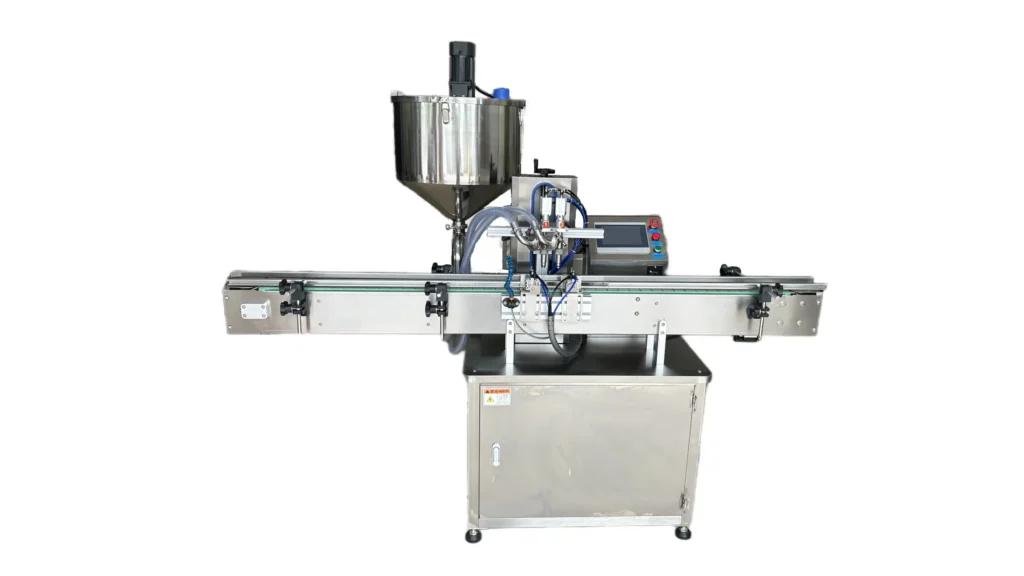
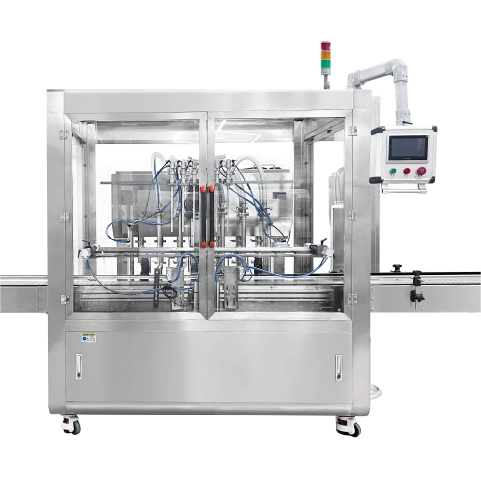
Liquid filling machines provide relevant dosing approaches for compatible liquids. The four-head magnetic pump liquid filler is one arrangement to evaluate where the liquid, materials and intended installation are suitable. Any alcohol-related equipment requirements should be reviewed against the actual formulation and site conditions.
Bottle size, neck geometry, cap design and foaming behavior all affect the packaging arrangement. Provide the complete package and representative product for trials. Coordinate the equipment with the manufacturer's quality procedure and required acceptance checks. The process, packaging components and manufacturing environment need to be assessed together as part of that work.
Closing, Labeling and Coding Oral Care Packs
Closing, Labeling and Coding Oral Care Packs
Bottle-packed oral care products may use screw caps or another defined closure. Capping equipment needs to match that system, including whether caps are manually placed or automatically fed. The semi-automatic four-wheel screw capper is an example of a separate station for compatible threaded closures.
Labeling machines should suit the bottle or outer-pack surface. Coding equipment must place the required production information in a readable position without conflicting with artwork or closure handling. Plan these positions before finalizing the conveyor sequence.
For toothpaste, cartoning equipment can be assessed using the filled tube, carton and any included leaflet. A line that fills tubes successfully still needs a practical way to orient and present them to the next operation. Include inspection and rejected-pack handling before cartons are grouped for shipping, so packing staff can keep product and batch identity clear.
Cleaning between Flavors and Formulations
Cleaning between Flavors and Formulations
Flavor changes and shifts between formulations can make cleaning a major part of the working schedule. The product manufacturer should define the cleaning procedure and acceptance criteria, including any special separation needs. Equipment must provide access to the vessel, transfer route and filling parts required by that procedure.
The guide to cleaning access and dead corners provides useful background. The article on CIP spray balls and manual cleaning explains why a single spray device does not describe a complete cleaning system. Determine which parts are cleaned in place and which need removal, handling and storage.
Include retained paste and cleaning time when comparing layouts. Shorter, accessible transfer routes may simplify changeovers, provided they still support the required production flow. Arrange a clear place for clean format parts and tools, and avoid relying on operators to improvise storage around the filler. The layout should support the next product as well as the current run.
Evaluate the Filled Tube as a Complete Package
Evaluate the Filled Tube as a Complete Package
Tube trials should include the intended decoration and closure components, not only plain tubes of a similar size. Orientation, coding position and tail appearance affect whether the finished pack matches the product specification. The manufacturer should define the inspection points and acceptable results before the trial begins.
Observe how filled tubes leave the machine and reach the next station. Soft packs can need suitable collection and handling, and a cartoning operation may require a consistent presentation. Manual collection remains an option, but its workload should be included in the planned staffing.
For a product range with several tube sizes, keep a list of format parts and adjustments associated with each size. Include the time needed to clean the product path and replace or adjust the holders and tooling where required. This makes the production schedule more realistic and helps the team identify whether short runs are better grouped by product, tube format or another practical constraint.
Trials and Line Capacity
Trials and Line Capacity
For oral care projects, evaluate the processing route and finished package together. Trials should use representative toothpaste or liquid, the intended tube or bottle and the complete closure arrangement. Agree on the product checks, fill measurement and package inspection required by the manufacturer.
The filling accuracy testing guide provides a reference for quantity checks, while tube seal or fold acceptance belongs to the complete packaging assessment. Nominal output should be reviewed alongside operator loading, product supply, format changes and cleaning. A fast filler cannot compensate for a difficult transfer route or insufficient preparation capacity.
For a complete production line proposal, provide formulations or relevant handling information, batch quantities, process steps, package samples and the expected product mix. StriversMachinery can coordinate equipment around that scope, keeping toothpaste and liquid oral care branches distinct and identifying the interfaces where utilities, transfer equipment or additional packaging machines are required.
Include the expected product changes and component replenishment work in the agreed operating schedule.