

Semi-Automatic Rotary Aluminum Tube Filling and Tail Folding Machine for Toothpaste, Glue & Skincare Products
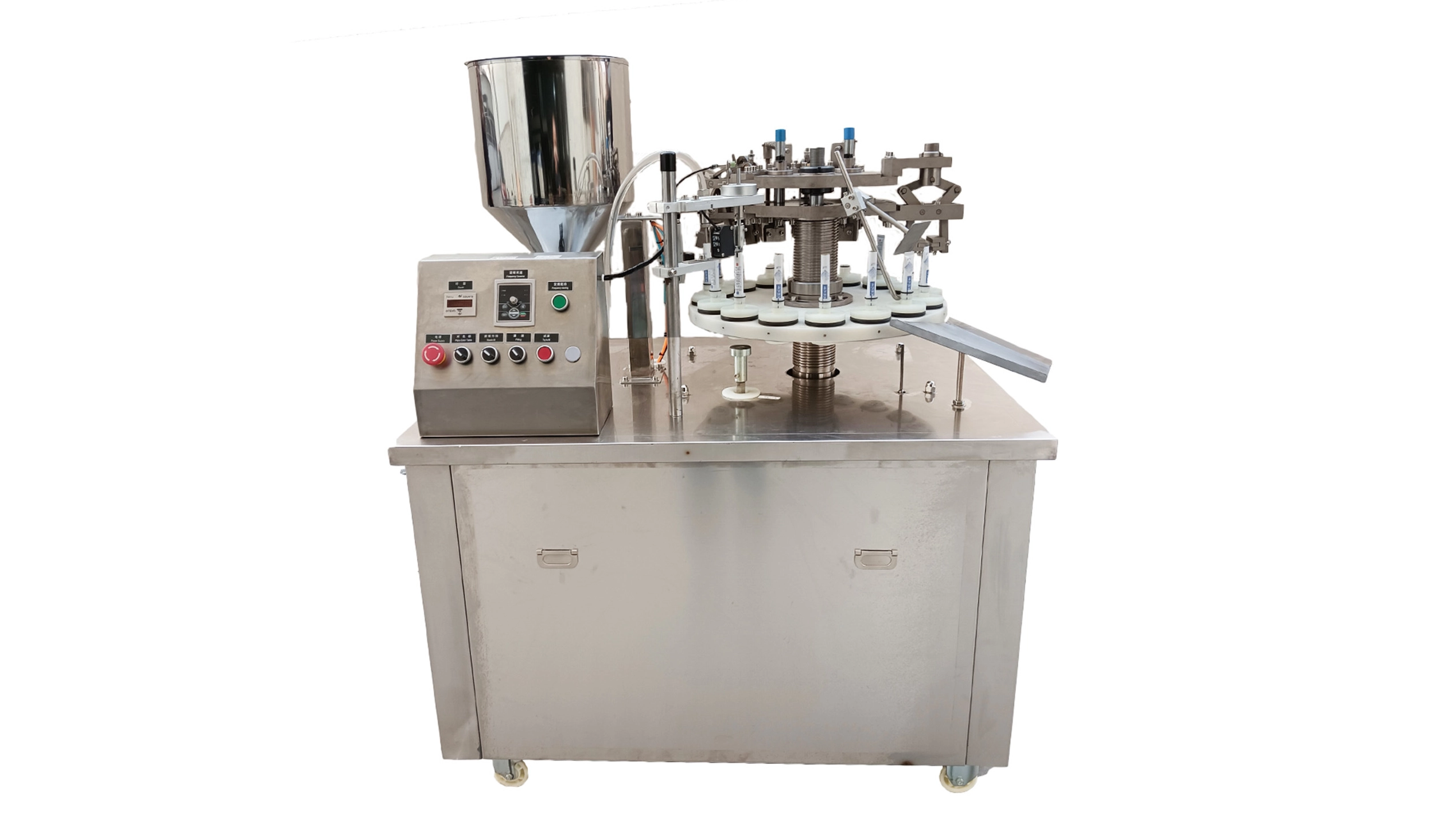
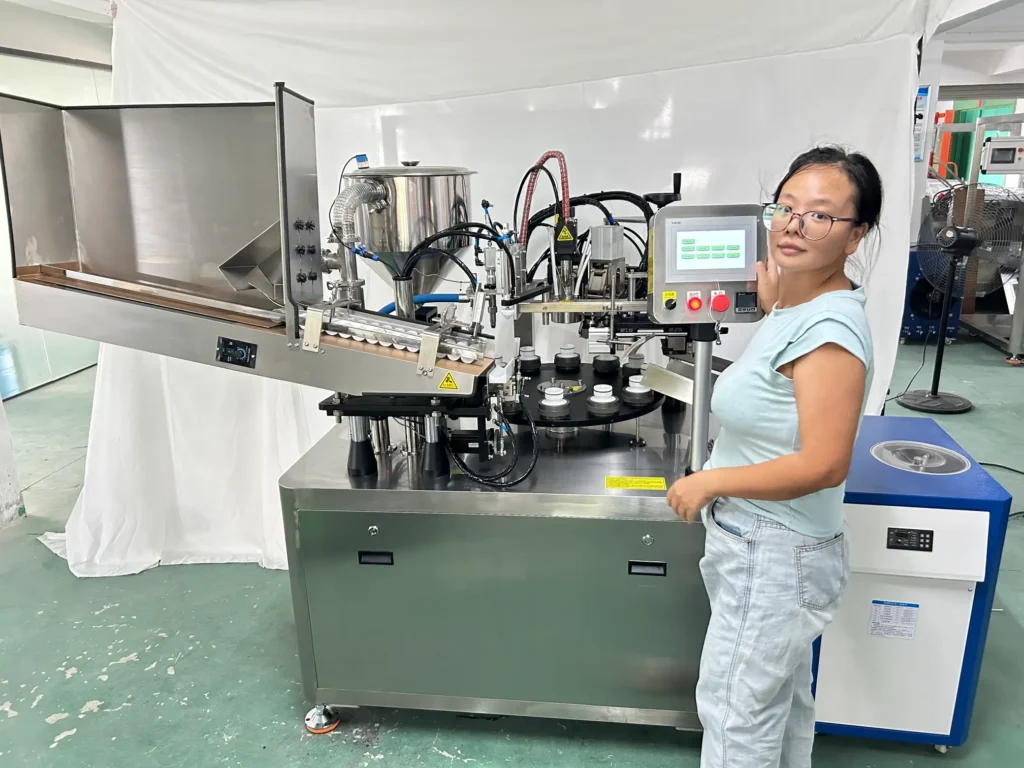
The Rotary Aluminum Tube Filling and Folding Machine combines manual tube loading with automatic orientation, piston filling, tail folding and embossing. Its rotary table has 16 tube holders, with three-fold or four-fold closing arrangements available for compatible aluminum tubes. Part of the tube filling and sealing equipment range, it packages suitable toothpaste, skincare products, ointments and single-component adhesives.
| Integrated Functions | Date Coding | Hopper Capacity (L) | 40 |
| Suitable Tube Material | Aluminum Tubes | Viscosity Range (cps) | Up to 50,000 cps (Customizable for higher viscosity) |
| Tube Diameter (Φ=mm) | 10–50 | Pneumatic Brand | Airtac / Festo / SMC (Optional) |
| Tube Length (mm) | 50–250 | Contact Material | SUS316L Stainless Steel (Pharmaceutical Grade) |
| Tube Orientation System | Photoelectric Mark Sensor & Mechanical Positioning | Machine Material | SUS304 Stainless Steel Frame |
| Filling Principle | Pneumatic Piston Filling | Anti-drip Nozzle | Anti-drip Nozzle Included |
| Filling Range (ml) | 5~300 | Voltage | Configurable to local grid (110V–480V, 50/60Hz, Single or 3-Phase) |
| Filling Accuracy | ±0.5% | Total Power (kW) | 1.5 |
| Filling Speed (Tubes/Min) | 25-30 | Air Pressure | 0.4–0.8 MPa |
| Filling Head/Heads | 1 | Drive Type | Electro-Pneumatic Combined |
| Feeding Method | External Rotor Pump/Diaphragm Pump/Piston Pump | Installation Type | Mobile (Caster-Mounted) |
| Sealing Method | Metal Tube Folding & Crimping | Automation Level | Semi-Automatic |
| Tail Shape | Straight Cut / Arc Cut / Wave Cut (Optional) | Control System | Push Button Control |
| Folding Type | 3 Fold / 4 Fold | PLC System | Panasonic |
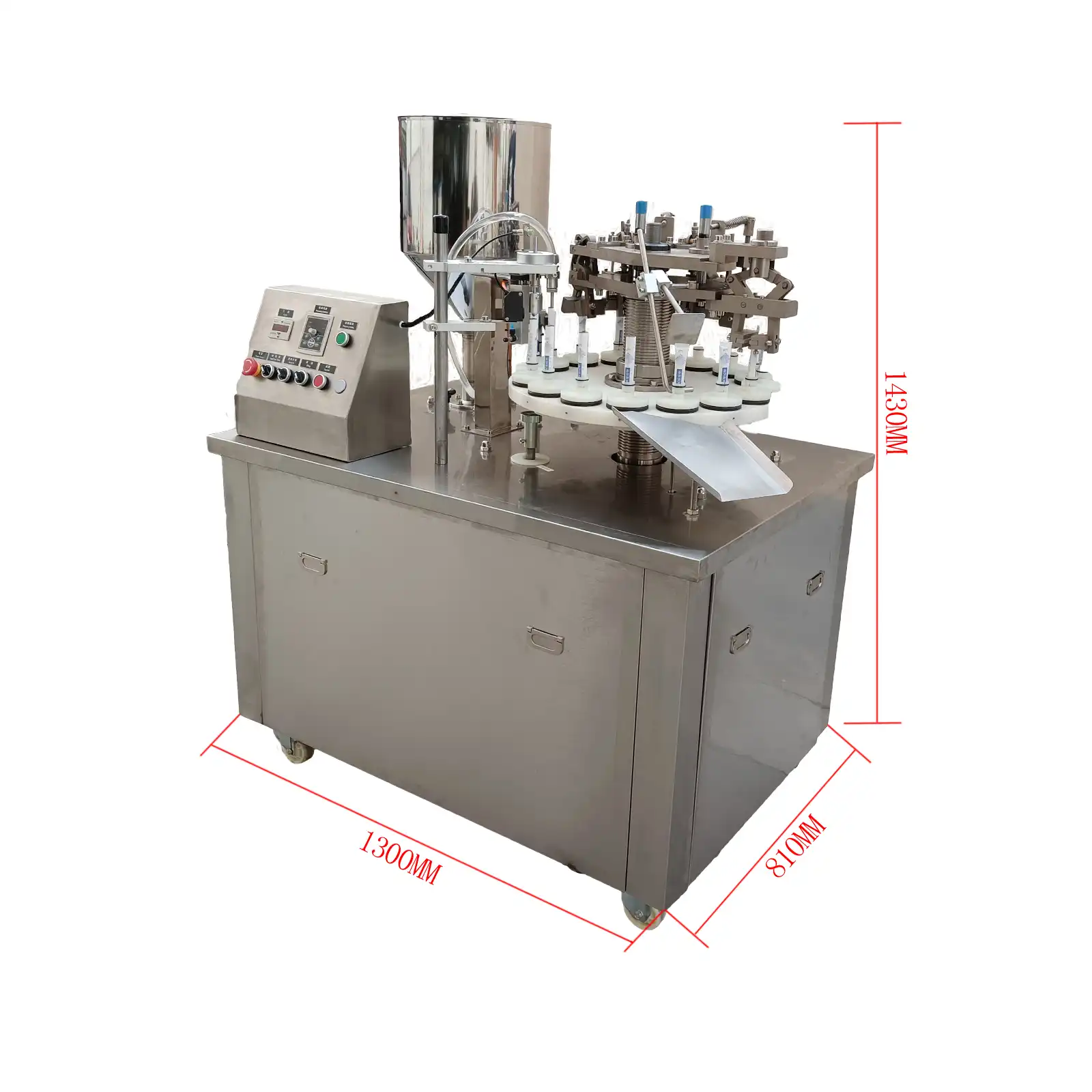
| Coding Method | Integrate Embossing Coding / Inkjet Printer, Laser Coding (Optional) | Machine Dimensions(L*W*H)mm | 1230*700*1400 |
| Tube Holder Quantity | 16 | Machine Weight (kg) | 350 |
| Hopper Type | Single Layer Hopper / Heating & Mixing Hopper (Optional) | ||
Product Gallery


Product Video
Product Overview
This semi-automatic machine fills aluminum tubes and closes their open tails by mechanical folding and crimping. Operators place empty tubes into the holders; the machine then carries out the processing sequence.
A photoelectric mark sensor and mechanical positioning system orient the tube before filling. The single pneumatic piston filling head dispenses product from a 40 L hopper, followed by the selected three-fold or four-fold tail-closing operation and integrated embossing.
For toothpaste and oral care packaging, the tube specification, fill quantity and required folded-tail finish are assessed together. The same approach applies to compatible cosmetic creams, ointments and adhesive formulations.
The filling range is 5–300 mL, with a rated speed of 25–30 tubes per minute. Suitable slurries and pastes can be assessed up to 50,000 cP; higher-viscosity duties require a customized configuration.
The standard hopper is single-layer. Heating and agitation are optional, as are external replenishment pumps. Each filling cycle handles one product component. The machine does not meter and mix two-part adhesives.
Machine Configuration
A 16-holder rotary table presents aluminum tubes to the orientation, filling and tail-closing stations. Operators load empty tubes manually, while a photoelectric mark sensor and mechanical positioning system establish their orientation.
The filling section comprises a 40 L single-layer hopper, one pneumatic piston filling head and an anti-drip nozzle. Optional hopper heating and agitation support products that need additional conditioning during filling.
The closing section uses aluminum-tube folding and crimping tooling, with three-fold or four-fold configurations available. Integrated embossing provides the standard coding method. Inkjet or laser coding can be selected separately.
Panasonic PLC control and a push-button interface manage the supplied functions. Schneider electrical components form part of the specified configuration. Pneumatic components are selected for the order.
A SUS304 stainless steel frame supports the machine, with SUS316L stainless steel wetted components in the product pathway.
Key Features
- Manual tube loading keeps the operator’s task focused on presenting empty tubes.
- A 16-holder rotary table coordinates movement between the processing stations.
- Photoelectric mark sensing and mechanical positioning orient printed tubes.
- Pneumatic piston filling dispenses one product component per cycle.
- An anti-drip nozzle controls product cut-off before tail closing.
- Three-fold or four-fold tooling closes compatible aluminum tube tails.
- Integrated embossing adds the selected code through the supplied coding arrangement.
- Optional hopper conditioning and replenishment equipment support application-specific requirements.
Applications
- Cosmetic Cream & Lotion, and Skin Care
- Pharmaceutical & Ointment Products
Recommended Machines

Automatic Hot Air Inner Heating Plastic & Laminate Soft Tube Filling Sealing Machine for Cream, Gel, Ointment, Toothpaste, Lotion, Cosmetic Paste
View Details
100 LITERS Hydraulic Lift Vacuum Emulsifying Machine for Cream, Lotion & Cosmetic Production
View Details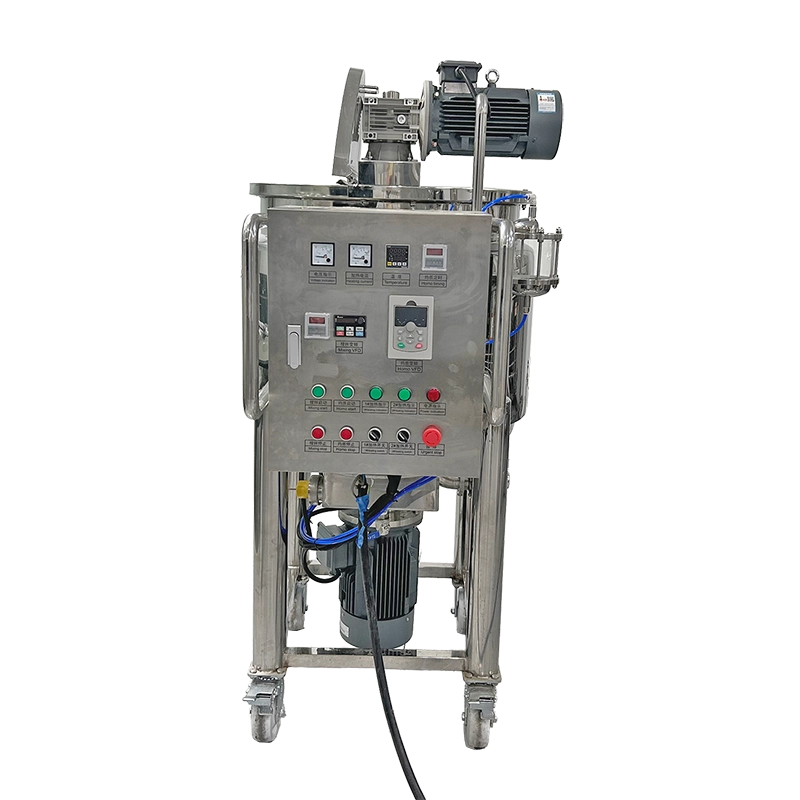

Working Principle
Prepared product is placed in the 40 L hopper. Operators load compatible aluminum tubes into the rotary holders, leaving the open tails accessible for filling and closing.
The table indexes the tubes through the processing stations. A photoelectric sensor reads the tube’s registration mark, and the positioning arrangement establishes the required orientation.
The pneumatic piston filling system draws product from the hopper and dispenses the selected quantity through the single nozzle. The anti-drip arrangement controls product cut-off at the end of filling.
The filled tube moves to the mechanical closing section. Tooling forms the specified three-fold or four-fold tail and crimps it into the required finished shape. Integrated embossing applies the selected code through the supplied arrangement.
The machine completes the tube-processing sequence while the operator continues presenting empty tubes at the loading position. Production pace depends on the product, quantity, tube format and loading conditions.
Optional heating or agitation maintains the product condition required for filling. External replenishment equipment can supply the hopper where included in the configuration.
Before routine production, representative tubes are checked for orientation, quantity, folded-tail condition and code readability. A change in tube or formulation requires the corresponding setup and acceptance checks.
Optional Upgrades & Configurations
| Warranty | 24 Months | Payment Terms | 40% T/T Deposit, 60% Balance Before Shipment (Alibaba Trade Assurance Available) |
| Lead Time | 15–20 Working Days | Packaging | Standard Export Fumigation-Free Wooden Case |
After-Sales & Technical Support
🔧 Common Problems
Possible operating symptoms include variation in filled quantity, product trailing after dispensing, residue in the tail-closing area or inconsistent product supply from the hopper. Tubes may sit unevenly in holders, orient differently from the intended artwork position or move irregularly through the rotary sequence. Closing-related observations include uneven folds, damaged tails, an inconsistent finished shape or an unacceptable result during package checks. Embossed characters may appear faint, displaced or incomplete. Operators may also observe repeated sensing messages, irregular pneumatic movement or interruptions in the processing sequence. During changeover, residue, color or adhesive material may remain in the product pathway. Record the product, quantity, tube format, selected fold and affected station when investigating an observation.
🛠 Troubleshooting
Problem: Filled quantity varies between tubes. Possible Cause: Product feeding, entrained air or piston-filling settings differ from the approved setup. Recommended Solution: Review the hopper condition and measure repeated fills before adjusting settings.Problem: Product remains in the folding area. Possible Cause: The fill quantity, nozzle setup or cut-off behavior is unsuitable. Recommended Solution: Compare the filled tube with the approved package setup before changing the closing tooling.Problem: Printed orientation varies. Possible Cause: Registration sensing, tube presentation or holder fit differs. Recommended Solution: Check the printed samples and clean accessible sensing surfaces through the approved method.Problem: The folded tail is uneven. Possible Cause: Tube position, tooling setup or tube condition affects forming. Recommended Solution: Stop and isolate the machine before inspecting the closing arrangement.Problem: Embossed characters are incomplete. Possible Cause: Coding parts, setup or the tail condition affects marking. Recommended Solution: Check the code tooling and representative completed tubes before adjusting the coding station.Problem: Tubes sit loosely or incorrectly in holders. Possible Cause: The holder or loading setup does not match the format. Recommended Solution: Verify the approved size parts and tube placement.Problem: The machine repeatedly pauses. Possible Cause: A required detection condition or operating permission is absent. Recommended Solution: Review the operating indication and correct the condition without bypassing protections.
🧼 Cleaning Method
1. Stop production through the approved shutdown sequence. 2. Remove tubes from the designated working positions. 3. Recover remaining product through the approved discharge route. 4. Bring heated components to the safe access condition where heating is fitted. 5. Isolate electrical and pneumatic energy before manual access. 6. Release retained pressure through the designated procedure. 7. Disconnect optional external feeding equipment where required. 8. Drain the hopper through the approved emptying arrangement. 9. Remove designated detachable nozzle and connection components. 10. Pre-clean the product pathway using a formulation-compatible medium. 11. Clean the hopper through its approved access method. 12. Clean the piston filling assembly according to its component instructions. 13. Clean detachable nozzle parts through their permitted method. 14. Remove cleaning-agent residue to the specified acceptance condition. 15. Clean tube holders and accessible rotary-table surfaces. 16. Clean folding and embossing tooling through the approved procedure. 17. Inspect accessible components for retained residue. 18. Reassemble removed parts using the specified fitting method. 19. Complete the required post-cleaning checks before production resumes.
📋 Maintenance
1. Establish the service schedule from the installed component documentation. 2. Isolate electrical and pneumatic energy before accessing service assemblies. 3. Release retained pressure through the approved procedure. 4. Inspect piston-filling seals for wear or deterioration. 5. Examine product connections and nozzle components for leakage. 6. Inspect tube holders for wear, damage or looseness. 7. Check accessible rotary-table attachments according to the service instructions. 8. Clean the photoelectric registration sensor through the permitted method. 9. Inspect mechanical positioning components for deterioration. 10. Examine folding and crimping tooling for damage or deposits. 11. Inspect embossing characters and their retaining components. 12. Check pneumatic tubing and fittings for visible damage. 13. Service installed cylinders according to their identified instructions. 14. Inspect optional heating and agitation components where fitted. 15. Arrange qualified inspection of electrical terminals and protective devices. 16. Test supplied stop functions through the approved functional method. 17. Inspect caster restraints before returning the machine to operation. 18. Record findings against the affected station or format.
⚙️ Installation
1. Review the approved machine layout and tube-format drawings. 2. Verify the delivery route against the final transport envelope. 3. Obtain approval of the supporting surface for the operating load. 4. Inspect delivered assemblies for visible transport damage. 5. Position the machine using the designated handling method. 6. Secure the caster-mounted base at its operating location. 7. Arrange electrical connection by qualified personnel using the final wiring schedule. 8. Verify protective earthing before electrical commissioning. 9. Connect regulated compressed air according to the pneumatic schedule. 10. Install the approved tube-holder set. 11. Prepare the orientation arrangement using representative printed tubes. 12. Set up the selected three-fold or four-fold tooling. 13. Install the required embossing characters. 14. Connect optional replenishment equipment where included. 15. Perform the specified pre-use cleaning procedure. 16. Verify supplied detection and stop functions. 17. Set the target filling quantity through the supplied adjustment method. 18. Check manual loading and the rotary processing sequence. 19. Evaluate filling, folding and coding with representative product and tubes. 20. Document the approved format setup before routine production.
🔩 Spare Parts
Why Choose This Machine
- Aluminum-specific closing: Mechanical folding and crimping provide the required equipment direction for compatible metal tubes, rather than applying a plastic-tube heat-sealing process.
- Limited routine loading work: Operators place empty tubes into holders while the machine carries out orientation, filling, folding and coding.
- Coordinated package presentation: Mark sensing and mechanical positioning support the required relationship between printed artwork and the finished tail.
- Selectable tail construction: Three-fold and four-fold configurations allow the closing arrangement to follow the tube and packaging requirement.
- Product-dependent hopper options: Heating and agitation can be added where the formulation needs them, while the single-layer hopper remains the standard arrangement.
- Separate replenishment choices: External feeding equipment can be selected around the product and production schedule without changing the machine’s single-component filling role.
Frequently Asked Questions
Installation Requirements
Prepare a level supporting surface and secure the caster-mounted base at its operating position. Assess the complete operating load, including product in the 40 L hopper and any connected replenishment equipment.
Match the electrical supply to the ordered voltage, frequency and phase configuration. The listed machine power is 1.5 kW. Use the final load schedule where hopper heating, agitation or separate coding equipment is selected.
Provide regulated compressed air within the specified 0.4–0.8 MPa range. Airflow and treatment requirements follow the pneumatic schedule.
Arrange empty-tube supply so operators can load the holders through the designated working position. Keep the operating area clear of moving stations.
Provide suitable cleaning-liquid collection and product recovery arrangements. Optional external pumps need their own compatible supply connections and service access.
For reactive, flammable or otherwise sensitive formulations, assess product compatibility and the complete installation before operation.
Related Articles


Technical Buyer's Handbook & Deep Insight
Ready to Get a Quote?
Contact our team directly for pricing, customization options, and delivery timelines.
💬 WhatsApp Us NowGet Your Download Link
Please fill in your details and we'll send the download link to your email.