A production manager once called us after a full pallet of finished cream tubes came back from a retail customer with a simple, damning complaint: half the tubes had cracked open along the tail seal during shipping. The formulation was fine. The tube supplier’s material was within spec. The actual problem was upstream of both — the sealing machine on the line had been purchased for a plastic tube, then quietly repurposed to run a laminated tube it was never designed to seal properly, and nobody had caught the mismatch until a warehouse full of product had already failed.
Tube packaging is widely used for cosmetics, pharmaceuticals, food, adhesives and chemical products. It can provide convenient dispensing and suitable protection when the formulation, complete package and sealing process are matched. A tube filling and sealing machine must suit the actual tube construction: conventional aluminum packaging tubes normally use mechanical folding and crimping, while compatible plastic and laminated tubes use a thermoplastic tail-sealing process. The shared equipment name does not establish interchangeability.
This guide compares aluminum, plastic and laminated tubes, including Aluminum Barrier Laminate (ABL) and Plastic Barrier Laminate (PBL). It explains how their construction affects sealing equipment, what to confirm in a quotation and where sample trials add useful evidence. StriversMachinery coordinates tube filling and sealing equipment with specialist manufacturing partners alongside our core mixing and emulsifying equipment, serving projects across more than 20 countries. Confirm the available configuration for the specific proposed machine.
The same checks apply when an existing line introduces a new package. Moving from an extruded PE tube to a laminate may be feasible on a suitable platform, but the new construction can require different tools, settings and verification. Introducing conventional aluminum tubes requires the appropriate mechanical closing capability. Treat each change as a defined engineering and quality review rather than assuming a familiar tube diameter makes the materials interchangeable.
Understanding the Three Tube Materials
Aluminum Tubes
Conventional collapsible aluminum tubes have a metal body and commonly use an internal protective coating selected for the contents. Intact aluminum offers very strong resistance to oxygen, water vapor and light transmission through the body. The complete package also includes the shoulder, closure and folded tail. Their integrity, coating compatibility and the product itself affect shelf life; the metal body alone does not guarantee the longest shelf life for every formulation.
Aluminum tubes are used for pharmaceutical ointments, hair color formulations, adhesives, greases and other products requiring an appropriate barrier and collapsible package. They retain deformation after squeezing and can dent during handling. Cost, remaining product and user experience depend on the specific tube, nozzle, closure and contents. Compare these features with the intended market rather than assuming aluminum is always more expensive or empties without meaningful residue.
The internal coating is a functional product-contact surface. Resolve coating compatibility, coverage and the relevant storage or stability assessment with the tube supplier and product team. The folding zone must also tolerate the specified closing process without unacceptable damage. Coating selection does not choose the machine by itself, but tube gauge, tail construction, fold geometry and product compatibility belong in the same package specification.
Plastic Tubes (PE/PP)
Plastic tubes are commonly based on polyethylene, with single-layer or multilayer constructions. Other polymers, including PP where specifically supplied, require confirmation rather than being treated as equivalent PE materials. Flexibility and spring-back depend on resin, wall construction and geometry. Identify the tube body, inner sealing surface, shoulder and cap separately; a generic “plastic tube” label is insufficient for either machine setup or package assessment.
Plastic tubes are common in skin care and personal care packaging, including facial cleanser, hand cream and sunscreen. Suitable structures can also serve food and other products. Appearance, dispensing and economics are useful selection factors, but barrier performance must meet the actual formulation and shelf-life needs. A single-layer PE tube and a multilayer barrier tube should not be assigned the same oxygen-protection rating simply because both are described as plastic.
Multilayer plastic tubes may incorporate a barrier layer such as EVOH. Their performance depends on the layer construction, thickness, environment and complete package. A laminate is not automatically a stronger barrier than every coextruded plastic tube. Ask for relevant material and package data under defined conditions, then verify compatibility and stability for the intended contents. Keep barrier selection separate from the evidence that the tail can be sealed reliably.
Laminated Tubes (ABL and PBL)
Laminated tubes use a composite web formed into a tube body. ABL includes an aluminum barrier layer; PBL uses a plastic-based barrier construction without that aluminum foil layer, often incorporating EVOH. Identify the actual specification rather than treating either abbreviation as one fixed material. Inner sealing layers, tie layers, decoration, wall thickness and the longitudinal seam can affect how a particular tube responds to heating, compression and handling.
Laminated tubes are used for toothpaste and oral care products, cosmetic creams, pharmaceutical creams, food pastes and other applications. Both appearance and protection can be tailored to the product. Cost and sealing difficulty vary with the supplied construction and required output. Some laminates have a narrow processing window, but it is inaccurate to classify every laminated tube as harder to seal than every extruded plastic tube or folded aluminum package.
ABL can provide strong light, gas and moisture protection, while suitable PBL constructions can also provide substantial barrier performance. Compare the supplier’s actual data and the finished package, including the closure and seams. PBL does not automatically mean lower cost, lower barrier or established recyclability. EPL’s laminate overview describes different barrier strengths, thicknesses and layer structures, illustrating why the complete specification matters more than a category label.
Choose the construction against formulation compatibility, barrier needs, appearance, handling and the intended waste-management system. Once a candidate package is identified, confirm that its sealing layer, dimensions and available tail are compatible with the proposed machine. A favorable material comparison cannot replace a package trial, and a good tail seal cannot compensate for unsuitable product-contact materials or inadequate barrier performance elsewhere in the package.
Aluminum vs Plastic vs Laminated Tubes
Barrier Performance
Barrier comparisons should distinguish the tube-body material from the complete filled and closed package. Aluminum foil or an intact metal body can provide strong protection, but closure leakage, seam defects, coating damage and product interaction may determine the actual outcome. Request relevant oxygen and water-vapor transmission data, light protection and compatibility evidence as appropriate. Do not convert a simple material ranking into a shelf-life promise; the formulation and storage conditions must be included in that assessment.
Mechanical Properties
Conventional aluminum tubes collapse and retain their shape after squeezing. Many PE tubes recover more readily, while laminate behavior varies with construction. Compare squeeze force, denting, recovery and dispensing on actual samples. Neither laminate nor plastic has an automatic advantage in compression or burst resistance: body design, wall thickness, seams, tail geometry and the selected test conditions all influence the measured performance.
A tube can fail at the tail, body seam, shoulder or closure, so record where a test sample fails. Mechanical strength and leak integrity are related but different properties. A higher burst result does not establish that the package has no small leakage path, and a passing leak check does not establish resistance to every distribution load. Define suitable tests and acceptance criteria for the intended product and handling conditions.
Branding and Consumer Experience
Recommended Equipment

Automatic Hot Air Inner Heating Plastic & Laminate Soft Tube Filling Sealing Machine for Cream, Gel, Ointment, Toothpaste, Lotion, Cosmetic Paste
View Details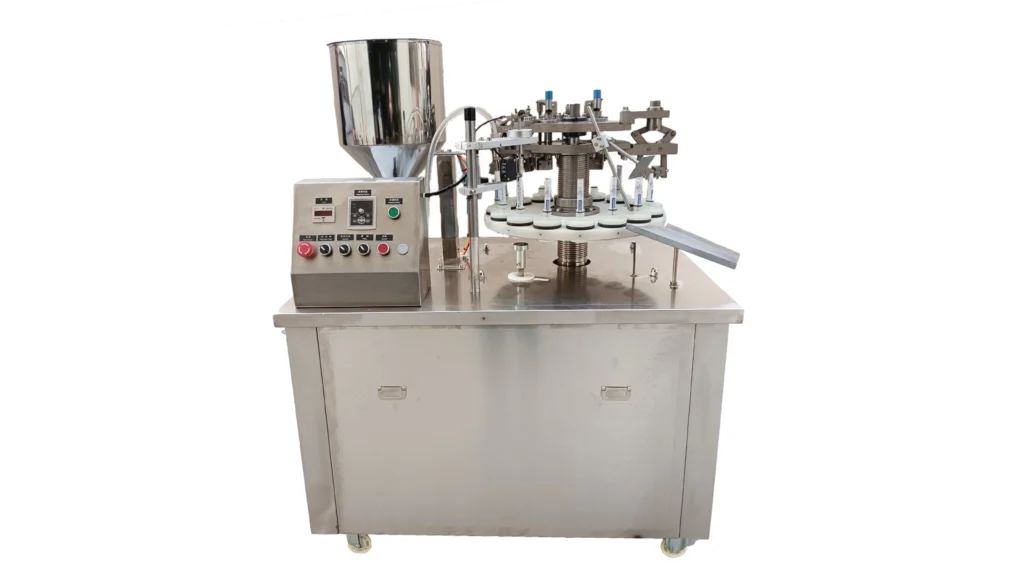
Semi-Automatic Rotary Aluminum Tube Filling and Tail Folding Machine for Toothpaste, Glue & Skincare Products
View Details

Plastic, laminated and aluminum tubes all support decoration options, although the available printing processes and finishes differ between suppliers and constructions. Avoid ranking aluminum printing as inherently inferior. Request decorated samples showing the intended artwork, code, fold or seal profile and appearance after handling. Assess the actual shelf presentation and legibility rather than predicting consumer preference from the material name alone.
Manufacturing Cost Comparison
Compare quoted tube prices at the actual dimensions, decoration, order quantity and construction. Add equipment, format parts, utilities, staffing, cleaning, changeover, maintenance and rejected product. No tube material guarantees the lowest overall cost. In particular, a mechanical aluminum-folding machine is not inherently slower than every plastic-tube machine, and a plastic-tube line is not automatically the simplest filling process. Filling behavior depends strongly on the formulation and dosing arrangement.
Compare accepted tubes per minute under the same defined conditions, including fill volume, product, tube format, coding and inspection. Rated speed, short active weld time and demonstrated line output are different measures. Report both gross output and rejects when judging a trial. Parallel stations and handling design can change the result, so compare the complete production sequence rather than deriving capacity from the sealing technology alone.
Sustainability and Recycling
Recyclability depends on the whole package and the destination collection, sorting and recycling system. Aluminum can be a valuable recyclable material, but coatings, residual contents, closures and local acceptance still matter. PE or PBL tubes also require assessment of shoulders, caps, barriers, inks and other components. ABL can be difficult to accommodate in conventional plastic recycling streams. “PBL,” “plastic” or “mono-material” should not be presented as proof that every finished tube will actually be recycled.
Ask for a recyclability assessment that applies to the exact package and relevant market. RecyClass guidance considers packaging features such as caps, labels and adhesives against a specified recycling stream. Keep design compatibility separate from real collection and processing availability. When a recyclable structure is changed to meet product protection needs, review both requirements together; improving a recycling attribute must not be assumed to preserve the original barrier and sealing performance.
Comparison at a Glance
| Selection factor | Aluminum tube | Plastic tube | Laminated tube (ABL/PBL) |
|---|---|---|---|
| Typical closing approach | Mechanical folding and crimping for conventional collapsible tubes | Compatible thermoplastic tail sealing | Compatible thermoplastic tail sealing; confirm the complete construction |
| Barrier assessment | Strong metal-body barrier; evaluate coating, closure and folded tail | Depends on resin, layers and complete package | Depends on foil or polymer barrier, layers, seams and complete package |
| Handling | Collapsible; retains deformation and can dent | Recovery and squeeze behavior vary with design | Flexibility and recovery vary with construction |
| Decoration | Evaluate supplier samples and available printing or finishing | Evaluate artwork, registration, code and finish | Evaluate artwork, seam, registration, code and finish |
| Cost and throughput | Compare actual quotations and accepted output | Compare actual quotations and accepted output | Compare actual quotations and accepted output |
| Recycling | Check complete package and local acceptance | Check design compatibility and local systems | Assess actual structure; PBL is not automatically recyclable |
| Essential evidence | Compatibility, closing trials and suitable package tests | Compatibility, sealing trials and suitable package tests | Compatibility, sealing trials and suitable package tests |
How Each Tube Is Sealed
Aluminum Tube Sealing: Mechanical Folding
Conventional collapsible aluminum tube tails are normally closed by mechanical folding and crimping. The selected closure may use a double, triple or saddle-style fold according to the tube and closing-system design; these are not a universal sequence in which every tube receives each fold in turn. Appropriate tooling forms and compresses the tail. Coding or embossing may be included, but a code or decorative impression does not by itself establish a tamper-evident feature.
Fold integrity depends on suitable tail allowance, tube gauge, tooling condition, alignment and the specified closing sequence. Where the tube uses a tail sealant or other closure feature, confirm its requirements with the tube and machine suppliers. A standard hot-air module does not substitute for mechanical folding. Norden distinguishes its metal-folding system from hot-air sealing and notes that some two-sided coding arrangements require a saddle fold to avoid tube damage.
Plastic Tube Sealing: Thermal Fusion
Compatible plastic tube tails are sealed by joining thermoplastic surfaces under suitable thermal and mechanical conditions. Hot air directs heated airflow into the tail; heated tooling supplies contact heat; ultrasonic tooling transmits vibration that produces localized heating in the loaded material. The usable process depends on the actual construction and tooling. Compression, setting or hold, trimming and coding follow the machine design; water-cooled sealing jaws are not a universal requirement for all three technologies.
Compare hot air and ultrasonic sealing on representative tubes and product. Localized ultrasonic heating may be useful for a sensitive application, but it is not heat-free or an automatic choice for a heat-sensitive formulation. Residue tolerance must also be demonstrated for the actual product and contamination condition, rather than used to excuse poor filling control. Neither technology has a universal throughput advantage. Verify finished package quality and relevant product effects at the required operating rate.
IWK’s published ultrasonic tube-sealing example lists 100 tubes per minute and identifies plastic, laminate and recycled tube applications. That is a specific manufacturer configuration, not a performance claim for another machine. It demonstrates why a general rule that ultrasonic sealing is always slow, or always requires cooled jaws, is unsuitable for procurement decisions.
Laminated Tube Sealing: Precision Heat Control
For ABL and PBL tubes, the tail-sealing process normally joins compatible inner thermoplastic layers rather than welding the foil barrier itself. Hot air, suitable heated-tool or ultrasonic arrangements may be available depending on the complete construction and supplied equipment. Specialized high-frequency systems can also be used for certain foil-containing laminates. Confirm the actual method and tools with the suppliers instead of assuming every machine accepts ABL or reserving all ultrasonic applications exclusively for PBL.
Check inner-layer fusion together with decoration damage, distortion, blistering, layer separation and the longitudinal-seam intersection. Temperature, energy delivery, contact, positioning and timing can interact. PID control regulates a measured channel; it does not directly prove the sealing-layer temperature or final joint quality. Establish an acceptable operating window for the actual tube. Material defects, contamination or unsuitable tools should be investigated rather than compensated for by simply increasing heat.
Which Tube Sealing Machine Do You Need?
Aluminum Tube Filling and Sealing Machine
An aluminum tube filling and sealing machine needs an appropriate filling arrangement and mechanical closing capability for the specified tube range. Confirm supported fold styles, tail allowance, diameter, length, tooling, loading and discharge. Coding and embossing should be defined where required. Servo drives, automatic feeding and inspection may be useful options, but they are not universal prerequisites for a correctly formed mechanical closure.
Assess the actual station design, repeatability and condition of the format parts. A mechanically driven system can produce reliable folds when properly designed and maintained; servo control alone does not guarantee alignment or low rejects. Request trials across the intended formats and record fold appearance, geometry and suitable package-test results. Include setup and changeover requirements when comparing semi-automatic and automatic configurations.
Related Solutions
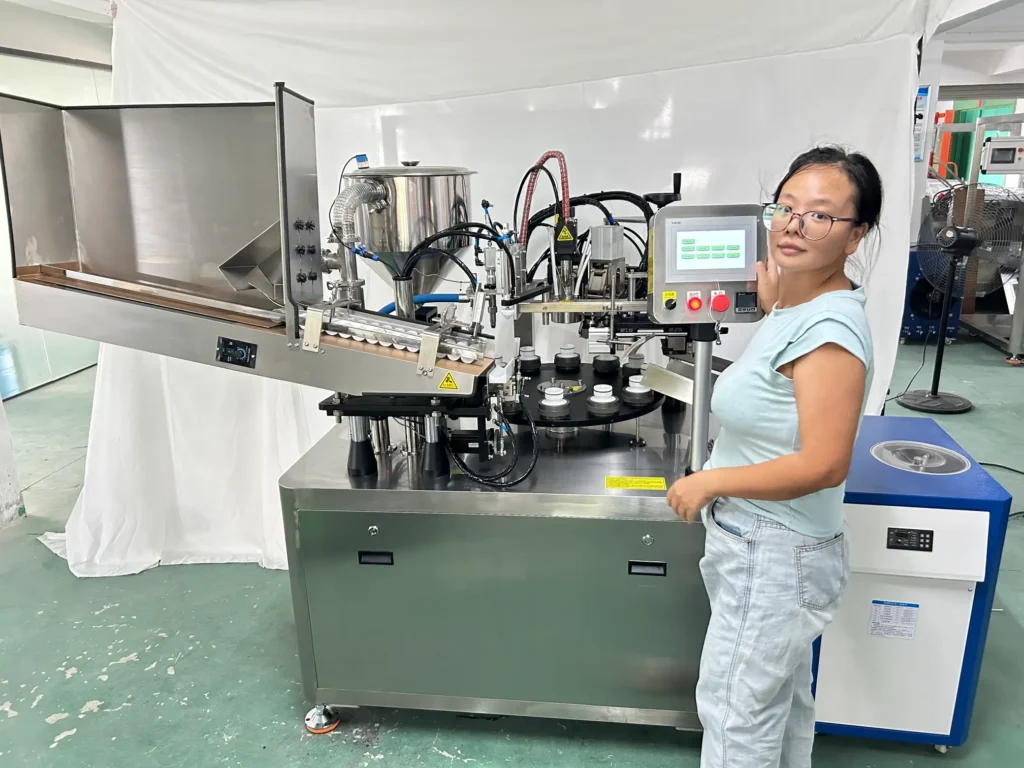



Plastic Tube Filling and Sealing Machine
A plastic tube filling and sealing machine requires a suitable filling system, positioning and the selected compatible sealing process. For a hot-air configuration, confirm heater and airflow arrangements, nozzle and format parts, compression, fitted cooling, trimming and coding as applicable. Servo filling and water cooling should be specified only where supplied or required by the design. The machine must demonstrate the required dose and seal performance with the actual product and package.
Printed tubes often need registration to align graphics with the finished tail. A photoelectric mark sensor may be sufficient for the agreed artwork and tolerance; a vision system is an option where the inspection or positioning requirement justifies it. Define the reference mark, acceptable alignment, handling of missing marks and reject function. A correctly oriented graphic does not establish seal integrity, so assess visual presentation and closure performance separately.
Verify dosing through a defined filling-accuracy test rather than relying on the drive type or a single demonstration. Include representative product condition, target fill, sampling and measurement. Planning factory utilities also helps distinguish the air, power and cooling services of the actual filler from the requirements of the upstream mixing equipment.
Laminated Tube Filling and Sealing Machine
For a laminated tube filling and sealing machine, specify the full ABL or PBL construction, seam, seal layer, dimensions and intended finish. Confirm the supported heating or welding module and the necessary format parts. Automatic indexing, recipes, registration and inspection depend on the machine platform and scope. Neither servo indexing nor a camera is mandatory merely because the tube is laminated; each feature should answer an actual production or quality requirement.
Trial the intended artwork and tube lots, including the seam region and any demanding decoration near the tail. Define acceptable seal width, trim, code legibility, print alignment and package integrity. A camera can check only the characteristics it is designed and validated to detect; it should not be described as proving every hidden bond or leakage condition. Agree which defects are detected automatically and which require separate sampling or testing.
Universal Multi-Tube Machines
Some platforms can run suitable plastic and laminated tubes using approved tools and settings. The shared thermoplastic sealing principle does not mean that only a recipe change is needed. Nozzles, supports, compression tooling, cooling and registration may also change. Extending a platform to conventional aluminum tubes requires the appropriate folding and crimping capability, whether provided through dedicated stations, a combination arrangement or an approved conversion.
A multi-material proposal should identify the supported tube specifications, closing modules, included format parts, conversion method and verification procedure. Not every design physically swaps whole sealing stations, and not every design needs servo adjustment or recipe storage. Review access, safeguarding and controls for the actual configuration. Obtain a written scope and representative demonstrations for each required material rather than accepting “universal” as sufficient evidence.
Flexibility can be valuable for contract packers and OEM manufacturers serving different packages. Its commercial value depends on order mix, utilization, changeover losses and additional tooling or maintenance. There is no general basis for promising payback within one or two years. Compare a defined multi-format platform with dedicated equipment using realistic production plans and total cost of ownership, including the cost of qualifying each new package.
Common Purchasing Mistakes
A serious purchasing mistake is assuming that equipment described as a tube sealer accepts any tube material. Conventional aluminum folding and thermoplastic tail sealing require different closing capabilities. The opening project illustrates a related but more specific mismatch: a line purchased for a plastic tube was repurposed for a laminated tube it could not seal properly. It does not prove that all plastic-tube machines are incompatible with laminates; it shows why the actual construction, tools and process must be checked.
Confirm tube diameter, length, wall construction, shoulder, cap and usable tail, together with the intended fill range. A stated diameter range alone does not establish compatibility with every tube in that range. Identify format parts and changeover checks for each SKU. If expansion is likely, agree which future formats are covered now and which require another trial or equipment review.
Inadequate process control can create inconsistent plastic or laminated tail seals, but PID control is only one part of the system. Airflow or acoustic coupling, sensor location, exposure, position, contact and fitted cooling also matter. Confirm that relevant readings and settings can be checked. Where defects occur, use structured tube-leakage troubleshooting to distinguish process variation from material, tooling, filling and handling causes.
Focusing only on purchase price overlooks maintenance, changeover, rejects, service and lost output. A cheaper machine may be appropriate for a defined workload, but its invoice does not establish lifetime economy. Compare the expected costs and assumptions explicitly, including how failures will be investigated and what support is included. Keep supplier promises separate from results demonstrated under the agreed conditions.
Size capacity against the intended production schedule, utilization and realistic growth scenarios. Include cleaning, format changes, stoppages and accepted output. More nameplate capacity is not always the cheapest or most flexible solution, and insufficient capacity does not inevitably require replacement within a fixed period. Compare shifts, extra equipment or a planned upgrade using the actual commercial and technical constraints.
Decision Guide
Review likely packaging changes before purchase. A future move from a PE tube to ABL, PBL or aluminum may affect tooling, utilities, closing hardware, controls and qualification. Ask for a documented retrofit scope rather than assuming compatibility from the base frame. Reassess product-contact parts and cleaning as well as sealing, especially when a contract manufacturer introduces a new formulation.
Check cleaning and maintenance access around the hopper, filling path, nozzles and closing stations. Review hygienic dead corners, disassembly, seals and the manufacturer’s approved cleaning method. For hot-air equipment, understand the specified normal shutdown and heater-cooling procedure separately from emergency stopping. For pneumatic functions, define the required air condition and assess moisture control; do not assume every hot-air system obtains all heating airflow from the factory compressor.
Plan sample testing before committing to a configuration. Agree representative materials, actual product where feasible, operating conditions, sampling and acceptance criteria. Trial output should be identified and segregated from saleable stock. A supplier’s preferred demonstration tube provides limited evidence for another construction or formulation, and a successful development trial is not automatically full process qualification or shelf-life validation.
Recommended Equipment Configurations
Start by reviewing the tube filling and sealing equipment range against the package specification. For compatible plastic and laminate tubes, assess the automatic hot-air inner-heating tube filler and sealer with the required tools and operating window. For conventional aluminum packaging, assess the semi-automatic aluminum tube filling and tail-folding machine or another appropriately specified platform. These are configuration starting points, not a claim that every listed machine supports every material or output discussed here.
Compare supported construction, dimensions, dosing, product viscosity and temperature, accepted production rate, tooling, finish, utilities, inspection and support. Plan product transfer to the filler and downstream cartoning, coding and handling where needed. Include destination installation requirements and the agreed factory acceptance testing for the filling machine. Separate applicable machinery conformity obligations from product-specific GMP and validation requirements. FDA does not maintain a general list of approved drug-manufacturing equipment; “FDA readiness” is not a substitute for identifying actual requirements and evidence.
How to Prepare and Evaluate a Tube-Sealing Machine Trial
Use this procedure to organize a representative machine trial. It supports a defined application decision and does not replace the manufacturer’s operating instructions or the product team’s qualification and stability work. Tests involving chemicals, pressure or other hazards require the appropriate approved method and competent personnel.
- Define the Trial and Acceptance Plan. Record the intended package, product, trial purpose, representative conditions, sampling, tests and acceptance criteria before setup.
- Identify the Tube and Product Samples. Label the tube specification and lot, layer construction, dimensions and product batch; retain the relevant supplier information.
- Verify the Approved Machine Setup. Have authorized personnel check format parts, closing module, safeguards, utilities and permitted starting conditions against the equipment instructions.
- Produce and Segregate Trial Output. Run the approved trial conditions, identify the samples and keep all trial output separate from saleable stock.
- Record Settings and Accepted Output. Record actual readings, settings, trial duration, total output, rejects and interruptions so complete machine performance can be compared.
- Inspect the Tail and Finished Package. Check the specified fold or seal, dimensions, trim, code, registration and visible defects, including the longitudinal seam where present.
- Perform the Agreed Package Tests. Apply suitable integrity and mechanical tests using the approved method and sampling plan; record results and failure locations.
- Investigate Failures and Repeat Controlled Trials. Review materials, filling, tooling and process conditions; change approved variables systematically and retain identified comparison samples.
- Document the Trial Decision and Limits. Record accepted conditions, unresolved items, sample disposition and any further product assessment, acceptance or qualification required.
Conclusion
Match the complete tube and product to the closing process. Conventional aluminum tubes normally require mechanical folding and crimping; compatible plastic and laminated tubes use an appropriate thermoplastic sealing process. Tube-body barrier properties do not alone establish shelf life, and material names do not guarantee machine compatibility, recyclability, the lowest cost or the highest speed.
Define the actual configuration, required accepted output, product-contact design and future formats. Where a complete production line is proposed, coordinate the filler with supply, inspection, secondary packaging equipment and packaging-line support equipment. Confirm responsibilities for the equipment and its interfaces instead of assuming that separate rated speeds add up to an integrated production result.
Use representative tube trials and suitable package tests before accepting the proposed application. Record materials, settings, output, defects and limitations, then decide what further development, acceptance or qualification is needed. Preserve the evidence for the approved configuration and review it when a tube, formulation or closing process changes. This is more useful than choosing from a universal ranking of aluminum, plastic and laminated tubes.