A Practical Guide to Modernizing Mixing, Filling & Packaging Lines
Learn which equipment can be upgraded, when retrofitting makes sense, and how to plan future automation before buying new machinery.
Quick Answer
Existing mixing, filling, and packaging equipment can often be upgraded through added instrumentation, controls, bottle handling, inspection, or line integration. Whether a particular machine is a suitable candidate depends on its condition, original design limits, documentation, support, and the intended duty. An upgrade should solve a measured production problem rather than simply add automation.
Not every machine is worth upgrading. Modular construction, accessible software, documented interfaces, and agreed expansion capacity can make later changes easier. They do not guarantee an economical retrofit: remaining service life, safety, cleaning requirements, installation downtime, and the performance of the complete line still need assessment.
Why Manufacturers Choose to Upgrade Instead of Replace
Upgrading existing equipment isn’t usually a purely technical decision. It’s driven by business pressure that shows up well before anyone starts researching retrofit kits.
Rising Labor Costs
Where labor cost or staffing constraints affect production, automatic feeding, handling, or recording may reduce repetitive work. Compare the actual labor hours that can be redeployed or avoided with the additional maintenance, training, and supervision required. Automation does not necessarily remove an entire operator position.
Increasing Production Demand
Order growth creates pressure for more throughput, but increasing one machine’s rated speed may not increase saleable output. Measure the line bottleneck, stoppages, changeovers, rejects, and upstream supply before selecting an upgrade. Sometimes a feeder, transfer arrangement, or changeover improvement delivers more than a faster main machine.
More Product Varieties
As a brand’s SKU count grows, production lines need to switch between formulations and container formats more frequently, which puts real pressure on equipment that wasn’t originally built for fast changeover or recipe flexibility.
New Regulatory Requirements
Applicable regulatory and customer requirements may create a need for better records, traceability, or process control. They do not universally require every cosmetic, food, or pharmaceutical machine to use digital batch records. Where regulated electronic records are used, assess the relevant requirements, access controls, data integrity, retention, and system validation. Installing a PLC or HMI alone does not establish compliance.
FDA’s Part 11 scope guidance ties applicability to the records and underlying regulatory requirements. Use it to frame the electronic-record assessment where relevant, not as a blanket instruction that every existing production machine must be digitized.
Digital Transformation
MES, SCADA, and ERP integration can improve visibility and coordination when the required data and responsibilities are defined. Establish which values, events, recipes, and identifiers must be exchanged, who owns the interface, and how communication failures will be handled. Connectivity is useful only when the resulting information supports an operating decision or required record.
Sustainability Goals
Extending useful equipment life can avoid premature replacement and reduce capital expenditure. Compare that benefit with the modified equipment’s energy use, cleaning demand, maintenance, and expected remaining life. Retaining an inefficient or unreliable machine is not automatically the more sustainable option.
Can Used Equipment Really Be Upgraded?
This is really the question this entire guide is built around, and the honest answer is: it depends, but not in a vague way — there are specific, checkable factors that determine it.
Mechanical Condition
Inspect the tank, frame, shafts, bearings, gearbox, supports, and relevant joints for the intended new duty. Available drawings, maintenance history, corrosion or wear measurements, and previous repairs help establish suitability. A sound-looking frame is not proof that it can support a higher torque, heavier attachment, faster motion, or changed pressure condition.
Available Spare Parts
If original parts are obsolete, investigate documented, technically suitable alternatives and the support available for them. An obsolete controller may be replaceable even when the original model is unavailable. Replacement becomes more attractive when essential parts cannot be supported safely or economically, rather than whenever an original part number disappears.
Control System Architecture
Unsupported or restricted controls can make expansion difficult. Check access to the editable PLC and HMI projects, software versions, licenses, passwords, device files, backups, and technical support. A communication port does not prove that the program can be modified. Replacing the controller may be viable, but the cost includes logic recreation, safety assessment, testing, documentation, and training.
Modular Design
Equipment built with modular construction from the start accepts additional components far more readily than equipment built as a single, tightly integrated unit with no separation between core function and add-on capability.
Expansion Interfaces
Reserved mounting points, cabinet room, documented I/O, and suitable connections can simplify future changes. Confirm the actual available capacity: a spare I/O address is different from an installed usable channel, and cabinet floor area is different from electrical or thermal headroom. Check network capability and safety-system expansion separately.
Supplier Support
Whether the original manufacturer, or a capable third party, can still provide technical support and documentation affects both the feasibility and the risk profile of any upgrade project.
Recommended Equipment


500L Vacuum Syrup Cooking & Mixing Kettle with Agitator for High Viscosity Sugar, Honey, Liquid Candy & Pharma Syrup
View Details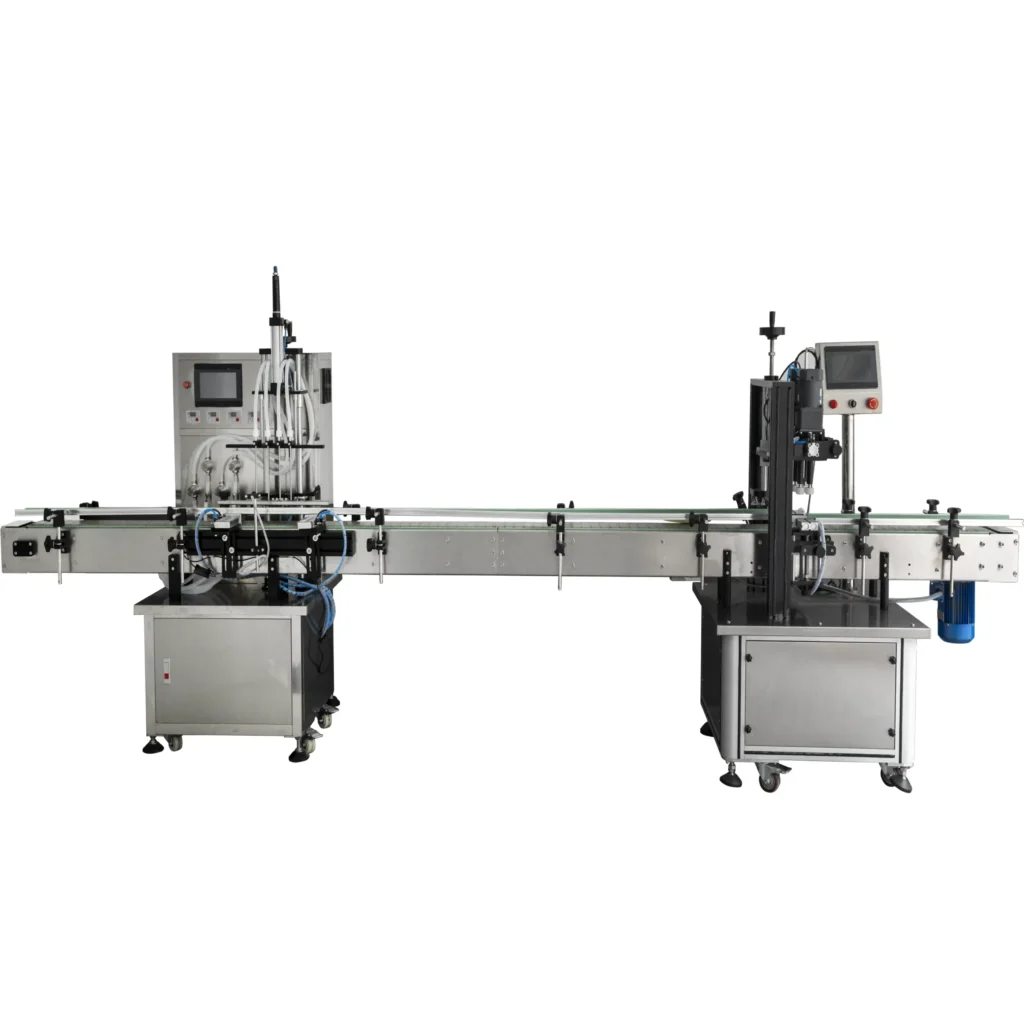
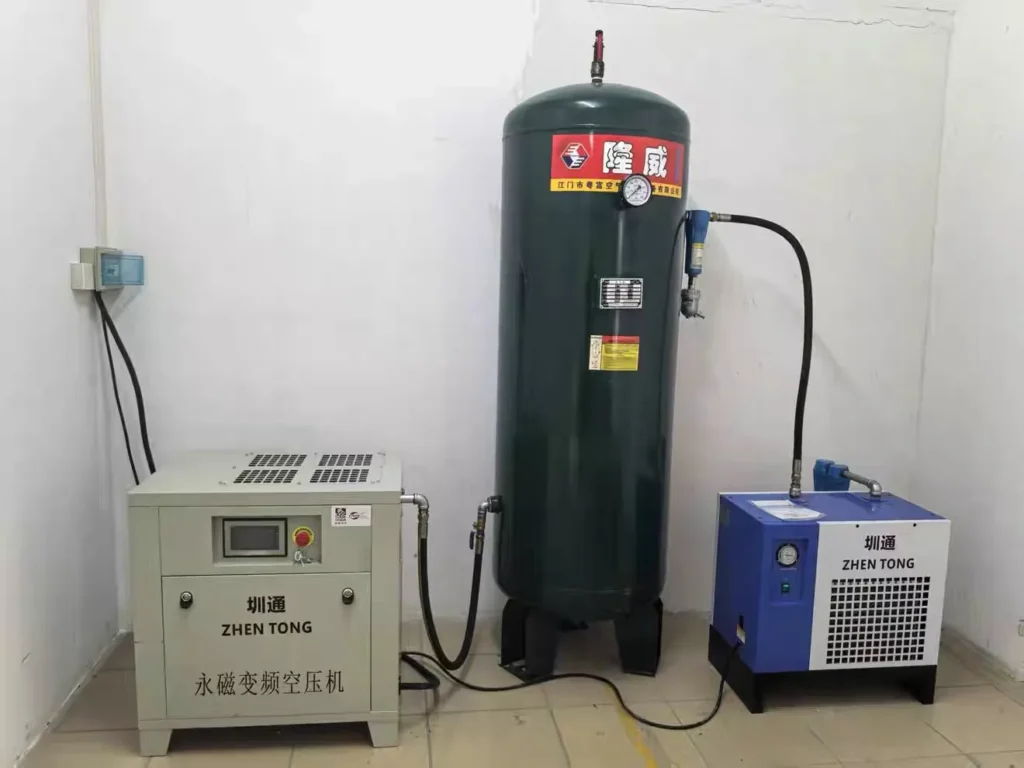
Equipment designed for defined expansion is often easier to modernize. Its interfaces and limits should be documented in the agreed technical scope. Original provision is one factor alongside current condition, process compatibility, safety, and lifecycle economics; it is not the single overriding test of feasibility.
How to Carry Out a Pre-Retrofit Equipment Survey
- Collect the Existing Records: Identify the machine and collect available drawings, manuals, nameplate ratings, maintenance records, software backups and current operating requirements.
- Plan Safe Access: Agree the survey scope and authorized personnel; use the required isolation and access procedure before close inspection, without vessel entry.
- Record Mechanical Condition: Inspect accessible structure, joints, drives, seals and wear points within the approved scope; photograph findings and list checks requiring specialist assessment.
- Inventory Controls and Interfaces: Have authorized personnel record controller versions, available projects, licenses, I/O, networks and documented electrical capacity using approved access procedures.
- Measure the Current Bottleneck: With normal safeguards active, record representative output, stops, changeover time, rejects and relevant process conditions without altering operating limits.
- Measure Space and Services: Record accessible installation dimensions, transfer heights, utilities and maintenance clearances against the proposed equipment layout.
- Prepare the Survey Report: Compare findings with the intended duty and list design reviews, missing evidence, test criteria, responsibilities and unresolved items before retrofit authorization.
Which Equipment Can Usually Be Upgraded?
| Equipment / change | Typical work | Main complexity factors |
|---|---|---|
| Mixing: instrumentation or controls | Sensors, supported PLC/HMI changes, recording | Access, calibration, software, safety interfaces |
| Mixing: changed process duty | Vacuum, heat transfer, homogenizer, SIP | Vessel and drive design, pressure/temperature limits, hygiene |
| Filling | Dosing, feeding, inspection, conveying | Product behavior, retained mechanics, timing, integration |
| Packaging | Inspection, cartoning, robotics, traceability | Handling, safety, accumulation, data, system acceptance |
Upgrade complexity depends on the work, not simply the equipment category. Adding a supported sensor or reporting function may be limited in scope. Changing a vessel’s pressure duty, modifying a shaft or seal assembly, or integrating a robot can require extensive engineering. Use the table as an initial screening guide, then assess the exact equipment and interfaces.
StriversMachinery manufactures core mixing and emulsifying systems and coordinates filling and packaging equipment with specialist partners. For vacuum emulsifying mixers, mixing equipment, filling machines, capping machines, labeling machines, and cartoning equipment, future upgrade provisions can be discussed during specification. Included interfaces, capacities, software access, and exclusions should be confirmed in writing; they are not standard promises for every model.
Upgrading Mixing Equipment
Mixing equipment upgrades break down into a few distinct categories worth understanding separately, since they address genuinely different aspects of performance.
Mechanical Upgrades
Changing between anchor, frame, disperser, scraper, or high-shear arrangements may extend the product range, provided the complete assembly is suitable. Review process performance together with shaft loading, critical speeds where relevant, torque, gearbox and bearing capacity, motor duty, seals, supports, and vessel clearances. A larger motor alone does not establish that the drive train or tank can accept the new duty.
Process Upgrades
Possible process changes include load cells, heat-transfer improvements, homogenization, or an engineered vacuum system. Adding vacuum to an atmospheric vessel requires assessment of external-pressure resistance, including buckling, lid and nozzle design, seals, and protective arrangements; wall thickness alone is insufficient. Adding a jacket, steam service, or SIP may change temperature and pressure duties and require a different vessel design or replacement. SIP is sterilization-in-place, not simply another cleaning attachment. Do not assume a basic tank can become a vacuum emulsifying mixer by adding a pump and homogenizer.
HSE’s plant design guidance identifies external differential pressure and buckling among vessel design considerations. Use an appropriately qualified designer to establish the permitted vacuum duty and protective measures; do not verify suitability by trial evacuation of an undocumented tank.
Instrumentation Upgrades
Temperature, pressure, vacuum, pH, conductivity, torque, level, and flow instruments can improve process visibility when correctly selected and installed. Confirm range, accuracy, response, wetted materials, cleanability, calibration, and installation effects. Added tank nozzles need structural and hygienic review; unnecessary or poorly capped branches can create cleaning problems.
Automation Upgrades
PLC control, HMI operation, recipes, batch recording, SCADA integration, and MES connectivity may improve repeatability and documentation. Define the required functions and failure behavior, retain controlled software backups, and test alarms, interlocks, recipes, and records. Remote monitoring requires controlled access and cybersecurity arrangements. Standard process controls do not replace a safety-rated function where one is required.
Typical Limitations
The limiting factors may include shell and lid design, corrosion allowance, joints, shaft and bearing loads, gearbox torque, seal capability, support strength, utilities, or cleaning access. Increased rotational speed can change vibration and process behavior, while a new attachment changes local loads. Review the complete modified system before fabrication. Where existing design information is inadequate, further investigation or replacement may be necessary.
Treat the modification as a controlled engineering change. Review new hazards, guards, interlocks, emergency stopping, restart behavior, cleaning access, and the safety of connected machines. HSE’s modified-machinery guidance gives a UK example of why substantial changes can require a new conformity assessment; apply the rules of the destination jurisdiction rather than assuming the original marking covers every later change. Update drawings, instructions, software, and acceptance records before returning the equipment to service.
Upgrading Filling Machines
Filling-line automation can sometimes be added in stages. First establish whether the existing dosing unit can operate repeatably within an automatic cycle and support the required bottle handling, safety, controls, and cleaning arrangements. A manually operated machine is not automatically convertible just because a conveyor fits beside it.
Semi-Automatic to Fully Automatic
Automatic bottle feeding, indexing, conveying, capping, labeling, and collection can reduce manual handling where integration is feasible. Confirm bottle stability, nozzle position, cycle timing, container detection, guards, interlocks, and safe restart behavior. The retained filler may remain the throughput constraint; in other cases, retaining it as a separate station is more practical than forcing full integration.
Accuracy Improvements
Servo-driven dosing or a suitable flow-meter system can improve control when matched to the product and existing mechanics. A checkweigher measures net or gross weight under defined conditions and can support rejection or an engineered feedback loop. Vision inspection detects defined visible defects or fill-level features; it does not inherently measure accurate fill volume. Inspection alone identifies problems rather than correcting the dosing process. Verify fill accuracy using representative products, containers, operating conditions, and a defined sampling plan.
Product Flexibility
Quick-change parts, recipes, and adjustable handling may broaden the validated format range. Confirm container dimensions and tolerances, neck access, nozzle reach, viscosity, particles, foaming, temperature, and cleaning requirements. Saved settings reduce setup work only when the mechanical adjustments and product behavior are sufficiently repeatable.
Data & Traceability
Batch coding, barcode or QR integration, serialization, and production reporting may support traceability where the product or customer requires them. Specify identifier allocation, data exchange, readability checks, reject confirmation, reconciliation, and retained records. A printed code alone is not a complete traceability system, and serialization is not a universal requirement for every packaged product.
Upgrading Packaging Equipment
Related Solutions

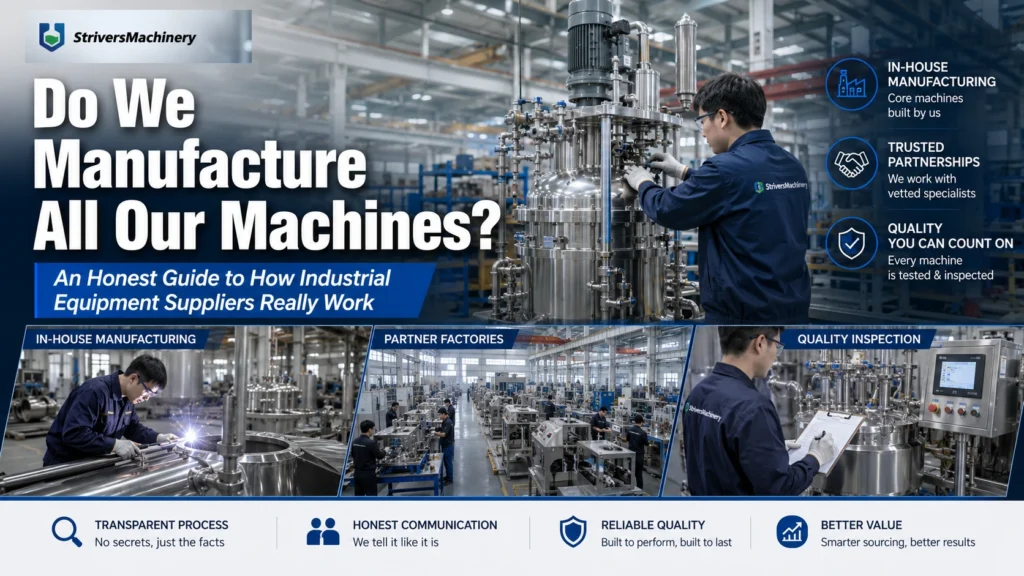


Downstream changes may include labeling, sleeving, cartoning, case packing, robotic handling, palletizing, wrapping, inspection, and track-and-trace. Assess container presentation, accumulation, transfer heights, cycle rates, reject handling, and interfaces across the line. Robot-ready mounting provisions are only a starting point: payload, reach, tooling, stability, access, safeguarding, and safety controls need assessment for the actual application.
When Is It Better to Replace Instead of Upgrade?
Upgrading isn’t always the right call, and it’s worth being honest about when replacement genuinely makes more sense.
| Situation | Retrofit may suit when… | Replacement may suit when… |
|---|---|---|
| Controls outdated | Mechanics remain suitable and a supported migration is feasible | Migration cost and remaining mechanical life give poor value |
| Frame in good condition | The complete machine meets the new duty | Other critical limits remain unresolved |
| Tank damaged | A qualified assessment permits a documented repair | Integrity, hygienic condition, or design evidence is inadequate |
| Capacity needs doubled | Measured bottlenecks can be removed within design limits | Required output exceeds practical process or handling capability |
| Original parts unavailable | Supported, compatible alternatives can be engineered | Critical functions cannot be supported safely and economically |
| Frequent failures | Root causes are identified and correctable | Reliability, obsolescence, and remaining life favor replacement |
If an upgrade quotation reaches roughly 60–70% of a comparable new machine’s purchase price, use that as a prompt for a fuller comparison, not a universal replacement rule. Compare equivalent scope and performance, including engineering, installation, production downtime, commissioning, validation where needed, training, spares, utilities, disposal, and expected remaining life. A smaller quotation may still be poor value if it leaves the main bottleneck or reliability problem unresolved.
Use the same production assumptions for each option: output of conforming product, planned operating hours, changeovers, cleaning, expected downtime, and support costs. Record uncertainties and compare plausible scenarios. A supplier’s headline speed or an attractive component quotation is not a complete return-on-investment calculation.
How to Future-Proof Your Equipment Before You Buy
Future-proofing means reserving capacity for credible future requirements, not purchasing every possible option. Define expected product families, throughput, automation, cleaning, utilities, and available floor space. Document which changes the supplied design anticipates and what would still require engineering review.
Mechanical Design Considerations
Reserve nozzles, sampling points, cleaning connections, instrument locations, or attachment space only where the likely future duty justifies them. Define suitable closure, cleanability, drainage, materials, structural loading, and permitted service conditions. Additional ports can introduce dead legs or leakage points if poorly designed. Discuss future viscosity, torque, speed, homogenizer, load-cell, and heat-transfer requirements as specified design cases rather than assuming a stronger frame makes every later change possible.
Electrical & Automation Planning
This is an area many equipment guides skip entirely, and it’s worth covering in real detail here, since it often determines upgrade feasibility more than the mechanical design does.
Plan control-panel expansion across several separate limits: mounting space, cable routing, terminals, power supply, protection, heat dissipation, enclosure rating, I/O, network capacity, and safety functions. A 20–30% allowance for usable mounting space may be a project planning target, but is not a universal electrical-capacity requirement. Ask which I/O channels and modules are installed and which are only provisioned. Select VFDs where variable speed is useful and the motor, cooling, torque, insulation, EMC, and application are suitable; not every motor needs one. Component standardization can simplify maintenance, but cross-brand systems can work well when responsibilities and interfaces are documented.
PROFINET, EtherNet/IP, Modbus TCP, and OPC UA can support integration, but serve different communication needs and are not interchangeable guarantees. Check device roles, supported versions and profiles, data maps, update rates, controller capability, licenses, and available gateways. Agree cybersecurity, remote-access permissions, and the consequences of a lost connection. A shared protocol does not establish application compatibility or a safety-rated link.
Production Line Planning
Perhaps the single most valuable mindset shift covered in this guide: don’t plan equipment purchases one machine at a time. Plan for the complete future production line, even if you’re only purchasing part of it today.
| Stage | Illustrative equipment / interface |
|---|---|
| Water supply | Water treatment supplying ingredient and cleaning duties as specified |
| Preparation and processing | Raw material preparation, vacuum mixing where required |
| Holding and transfer | Storage tank and transfer pump |
| Container supply and filling | Bottle unscrambler, filling machine |
| Closure and labeling | Capper, labeling machine |
| Secondary packaging | Cartoner, case packer |
| End of line | Palletizer and required dispatch handling |
Even when purchasing only two or three machines now, define future interfaces for the intended line: transfer height and direction, product and container range, sustainable throughput, accumulation, utilities, cleaning, control handshakes, and safety boundaries. The sequence above is illustrative; bulk processing may be batch-based while packaging runs continuously. Water treatment is a utility supply and may serve several operations rather than sitting in a single product-flow chain. Matching equipment heights and protocols does not make future additions automatically plug-and-play.
Equipment-Specific Upgrade Planning
Bringing the future-proofing principles above down to specific equipment categories makes them considerably easier to act on during an actual purchasing decision.
Decision Guide
Mixing Equipment
For mixing equipment, agree the expected future duty and document any reserved instrument ports, cleaning connections, drive capability, control provisions, load-cell arrangements, and attachment space. Confirm the allowed vessel pressure and temperature conditions separately. CIP readiness should define the supplied cleaning hardware and test scope rather than implying that any future formulation is already validated.
Filling Machines
For filling equipment, confirm the dosing architecture, container range, automatic-cycle capability, conveyor and cap-feeder interfaces, inspection space, reject arrangements, spare controls capacity, and required data export. “Servo-ready” should identify the compatible components and modification work; a label alone does not demonstrate a future conversion path.
Packaging Equipment
For packaging equipment, define modular transfer interfaces, container presentation, inspection and rejection, data handling, remote support, and possible future robotic integration. Record the anticipated loads, speeds, tooling, guarding, and safety-control responsibilities. A robot mounting point or spare network port does not establish a complete safe integration.
Questions to Ask Equipment Suppliers Before Purchasing
Ask the supplier which upgrades have been assessed for the exact model; what mechanical and electrical capacity is included; which I/O channels and communication functions are usable; whether editable software, licenses, and backups will be supplied; what safety reassessment would follow the proposed change; which parts have a supported replacement path; and how future integration will be tested. Ask about the scope and conditions of a ten-year support commitment rather than treating future parts availability as guaranteed. Agree responsibility for the retained machine, added equipment, software, commissioning, and final handover.
Common Upgrade Mistakes to Avoid
A handful of mistakes show up repeatedly across manufacturers trying to upgrade equipment that simply wasn’t specified with any of this in mind.
Mistake 1. Choosing only by purchase price without checking whether the equipment can meet credible future duties, or paying for expansion features that have no defined use.
Mistake 2. Treating empty cabinet space as proof of spare power, thermal capacity, protection, I/O, and network resources. Check each limit separately.
Mistake 3. Omitting useful planned interfaces, or adding excessive tank nozzles without considering cleanability, structural loading, closure, and future service conditions.
Mistake 4. Integrating controls without a documented communication, software-support, backup, and responsibility plan. Multiple brands are not automatically a defect; uncontrolled interfaces are the problem.
Mistake 5. Ignoring future factory layout entirely when specifying individual machines, resulting in equipment heights, conveyor directions, or footprints that don’t actually align once a complete line finally comes together.
Mistake 6. Accepting undefined software access or unsupported controls, then discovering that licenses, passwords, missing projects, or obsolete hardware prevent the required change.
Conclusion
Equipment upgrading is a decision about safe operating capability, production performance, remaining life, and total project cost. Start with the measured bottleneck and compare retrofit with replacement on equivalent scope. Original expansion provisions can help, but current condition, documentation, process requirements, safety, and commissioning evidence determine whether a specific proposal is worthwhile.
Manufacturers planning the next five to ten years can reserve practical interfaces and introduce automation in stages. Confirm those provisions against realistic product and output requirements, and reassess the modified machine or line before production resumes. StriversMachinery can review mixing, filling, and packaging projects with you and define the proposed equipment scope, retained components, partner responsibilities, and acceptance tests before an upgrade is agreed.