
Semi Automatic Stand-Up Spout Pouch (Doypack) Filling and Capping Machine for Liquid, Paste, Viscous Products, Shampoo, Detergent, Juice, Sauce and Cosmetic Packaging
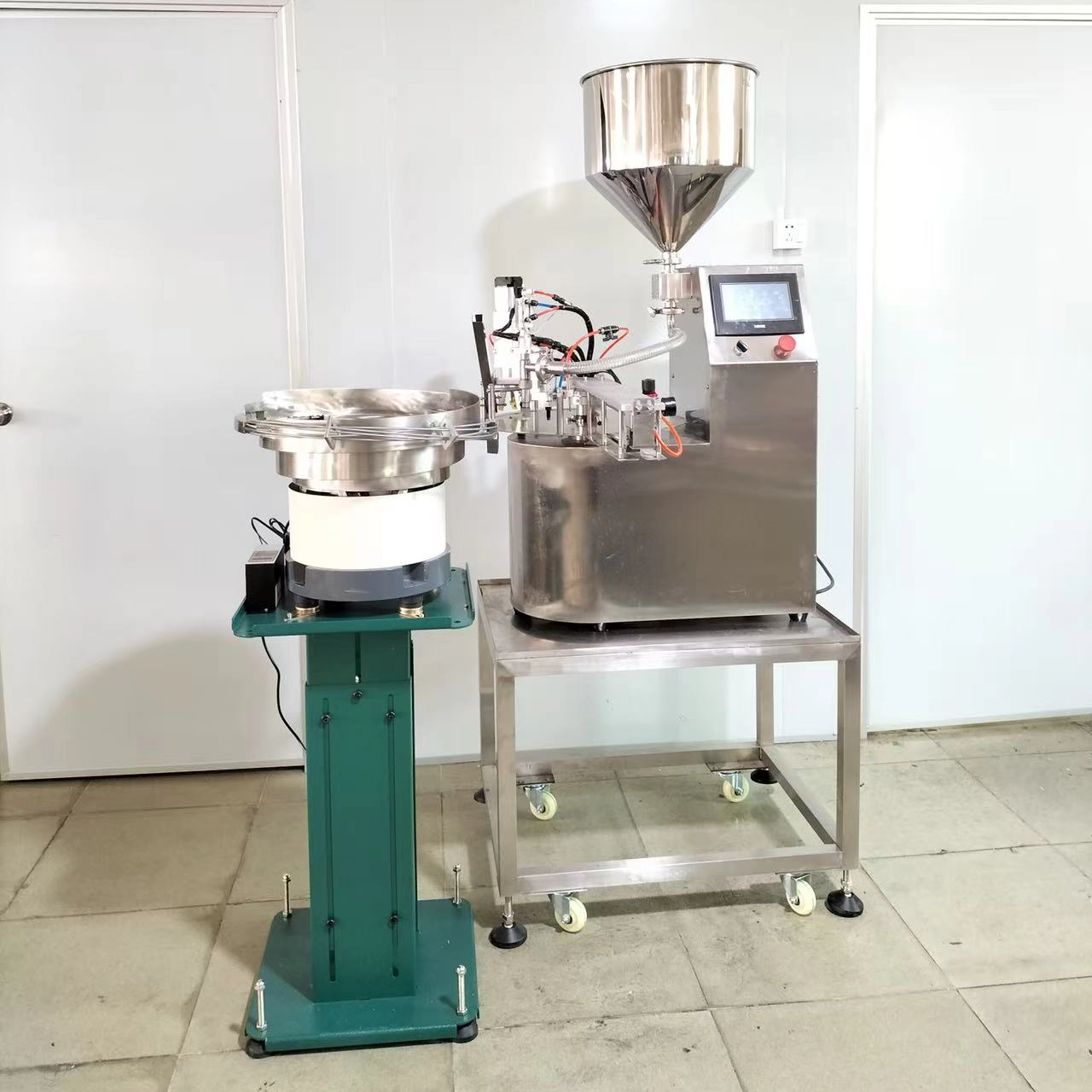
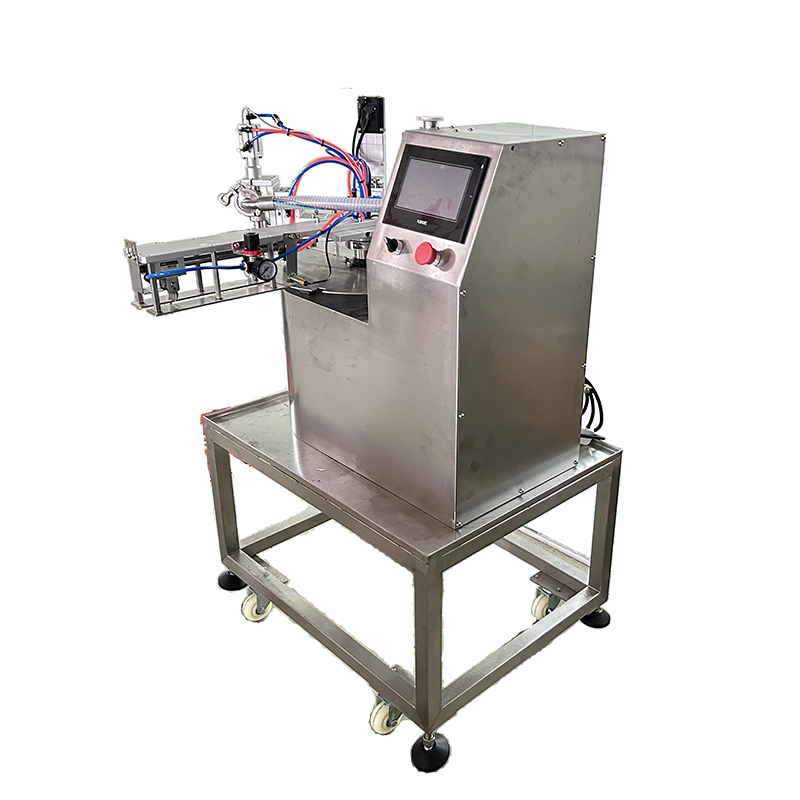
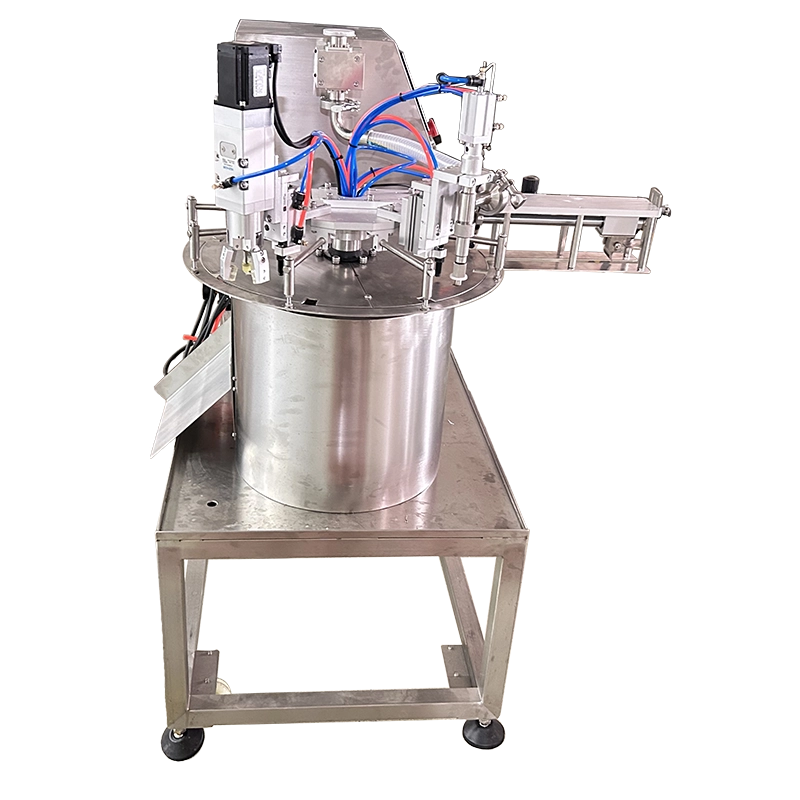
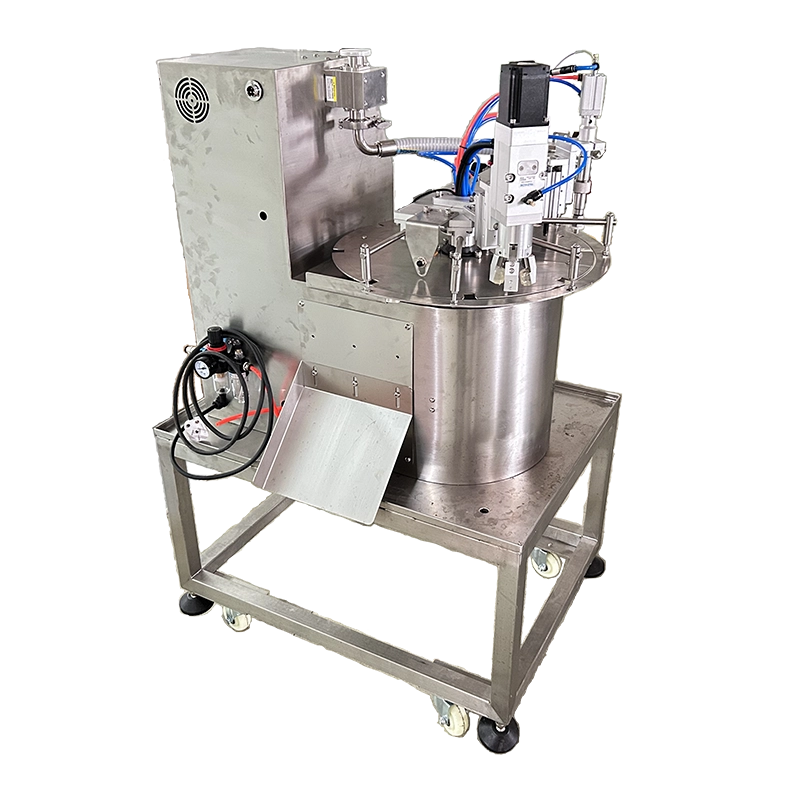
The Semi-Automatic Spout Pouch Filling and Capping Machine fills compatible liquids, lotions, and pastes through the openings of preformed spouted pouches. Operators load each pouch into its holder, while the machine performs rotary indexing, gear-pump dosing, automatic cap feeding, screw capping, and discharge. The benchtop arrangement serves manufacturers packaging shampoo, detergent, juice, sauces, and cosmetic products in matched screw-cap pouches.
| Integrated Functions | Pouch Opening / Pouch Discharge / Rotary Indexing / Automatic Filling / Cap Feeding / Screw Capping | Motor Brand | Top-Tier Chinese Servo (Inovance / Equivalent) |
| Filling Principle | Gear Pump | Servo Drive Type | Servo-driven Filling Pump Motor |
| Output Configuration | 1-out | Servo Motor Brand | Inovance/XINJE/Leadshine |
| Machine Layout Type | Rotary Filling Machine | Photoelectric Brand | SICK |
| fill_automation_level | Semi-Automatic (Tabletop / Floor Type) | Pneumatic Components Brand | AirTAC |
| Container Type | Stand-up Pouches / Bags | Cylinder Brand | Airtac |
| Container Material | PET/HDPE/PP | fill_electrical_components | Schneider / ABB / Siemens / Omron / Fuji /Mitsubishi(Optional/Customizable) |
| Product Viscosity | Low Viscosity (Water, Toner, Alcohol) / Medium Viscosity (Lotion, Shampoo, Oil) / High Viscosity (Cream, Paste, Mascara) | Voltage | Configurable to local grid (110V–480V, 50/60Hz, Single or 3-Phase) |
| Filling Volume Range (ml) | 5-5000 | Total Power (kW) | 3 |
| Filling Accuracy | ±0.5% | Air Pressure | 0.4–0.8 MPa |
| Filling Head/Heads | 1 | Drive Type | Electro-Pneumatic Combined |
| Filling Nozzle Movement | Fixed Type | Installation Type | Benchtop |
| Nozzle Type | Pneumatic Shut-off Nozzles (Anti-Drip) | Automation Level | Fully Automatic |
| Drip Prevention | Pneumatic Anti-Drip Mechanism Included | Control System | PLC + HMI Touch Screen Control |
| Production Speed (Bottles Per Minute) | 40-50 | PLC System | INOVANCE/Xinje or equivalent brand |
| Feeding Method | Self-priming | HMI / Touch Screen | Kinco/MCGS/INOVANCE/Xinje/Flexem or equivalent brand |
| Bottle Handling Method | Manual | Control & Interaction Systems | Semi-Automated (Efficiency-Focused) |
| Capping Type | Screw Capping / Continuous Thread | Machine Dimensions(L*W*H)mm | 1554*1370*1402mm |
| Material Contact Parts | SUS316L Stainless Steel (Pharmaceutical Grade) | Machine Weight (kg) | 200 |
| Machine Frame Material | SUS304 Stainless Steel Frame | ||
Product Gallery
Product Video
Product Overview
StriversMachinery’s semi-automatic Doypack filler combines manual pouch loading with an automatic filling and screw-capping sequence. It handles preformed pouches that already have an attached spout, rather than forming bags or heat-sealing an open pouch mouth.
The operator places each uncapped pouch into a matched holder. Rotary indexing then presents the spout to the filling and closing stations. Automatic cap feeding and placement prepare the package for screw tightening, followed by automatic finished-pouch discharge.
A servo-driven gear pump supplies the single filling head through an external product hose. This arrangement draws from a separate product source without an integrated storage hopper. Product selection can cover compatible low-viscosity liquids, lotions, and pastes, while particle-containing sauces require separate assessment of the pump, tubing, filling outlet, and pouch spout.
The machine is intended for worktable installation, with a supporting floor stand available as an option. Its loading requirement remains manual even though the subsequent processing operations are automatic.
Within the pouch filling machine range, this configuration focuses on preformed spout pouches with threaded caps. Package compatibility depends on the spout, holder, cap, and pouch body together.
Machine Configuration
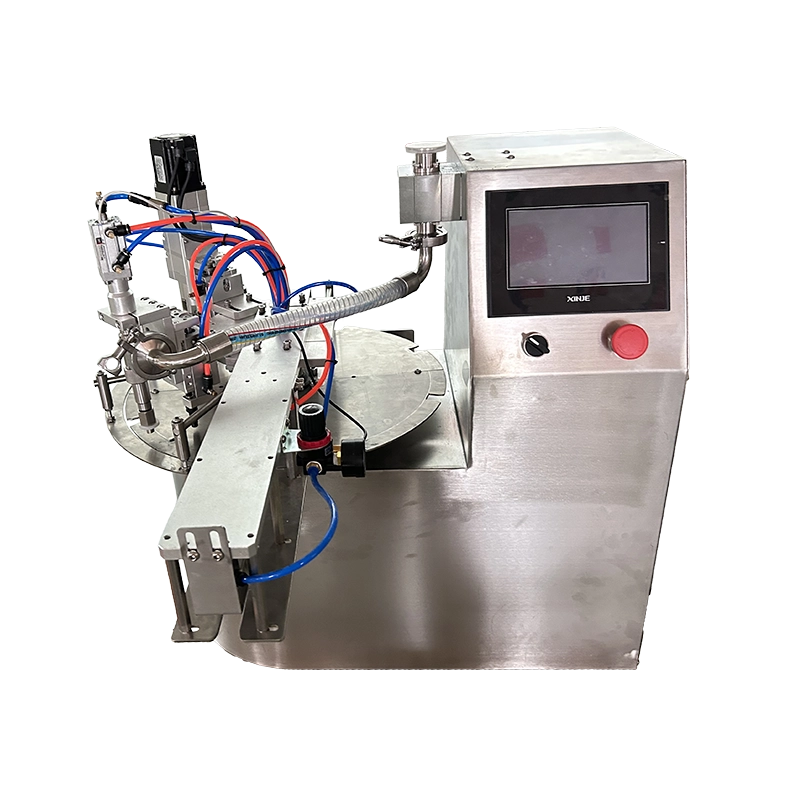
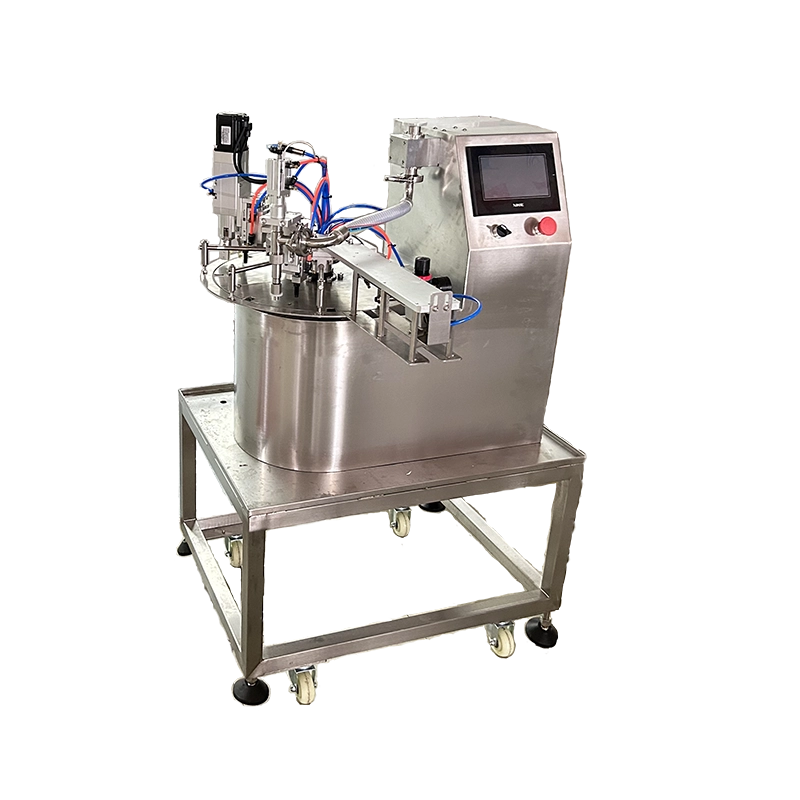
The standard arrangement combines manual pouch holders, rotary indexing, a servo-driven gear-pump dosing module, and one fixed-position pneumatic shut-off filling nozzle. Automatic cap feeding and placement supply the screw-capping station, while a discharge mechanism releases completed pouches.
An external product hose connects the pump to a separate material source. The configuration does not include an integrated storage hopper. PLC and touchscreen controls coordinate the processing sequence after manual pouch loading.
SUS304 stainless steel forms the frame, with specified SUS316L stainless steel product-contact metal components. SICK photoelectric components, AirTAC pneumatic components, and Schneider electrical components form part of the arrangement. Servo, PLC, and HMI selections follow the agreed order specification.
The machine is supplied for benchtop installation. A supporting floor stand is optional. Pouch holders, cap-handling components, and capping tooling are matched to the selected package.
Key Features
- Manual pouch loading combines with automatic processing through filling, screw capping, and discharge.
- Rotary indexing presents each loaded pouch to the successive processing stations.
- Servo-driven gear-pump dosing handles compatible liquids, lotions, and pastes.
- The external supply hose connects to a separate product source without a storage hopper.
- Pneumatic shut-off action helps control residual product release at the filling outlet.
- Automatic cap feeding and placement reduce individual cap-handling tasks during production.
- Matched screw-capping tooling closes compatible threaded spouts without pouch-mouth heat sealing.
- The benchtop arrangement can be paired with an optional supporting floor stand.
Applications
- Cosmetic Cream & Lotion, and Skin Care
- Detergents, Liquid Washing & Household Cleaning
- Juice, Beverage & Liquid Food
- Sauce, Condiment & Food Paste
Recommended Machines


Working Principle
The semi-automatic spout pouch filler processes preformed pouches through their attached spouts. Manual loading presents the package to the machine; automatic mechanisms then carry out indexing, dosing, cap placement, screw tightening, and discharge.
- Pouch loading: The operator places an uncapped spout pouch into its matched holder, presenting the opening in the required position.
- Rotary indexing: The rotary mechanism advances the loaded pouch between processing positions. Holder alignment supports consistent presentation of the spout to the stations.
- Product supply: The gear pump draws compatible product through an external hose from a separate source container.
- Quantitative filling: Servo-controlled pump movement delivers the selected dose through the fixed-position filling outlet and into the pouch spout. The pneumatic shut-off nozzle closes at the end of delivery to limit residual release.
- Cap feeding and placement: The automatic feeding mechanism presents a matched threaded cap and places it on the spout.
- Screw capping: The capping assembly tightens the cap onto the compatible spout thread.
- Finished-pouch discharge: The discharge mechanism releases the completed package for collection and subsequent handling.
The PLC coordinates station operation through the touchscreen interface. Pouch supply remains manual. The process does not include automatic removal of preinstalled caps, suction opening of ordinary open-mouth bags, or heat sealing of pouch film.
Optional Upgrades & Configurations
Custom Requirements
Corrosive-Resistant Construction for Strong Acids & Alkalis
Explosion-Proof Filling Systems for Flammable & Hazardous Environments
Custom Machine Layouts & Space-Saving Footprint Constraints
Extended & Custom-Length Long-Distance Conveyor Systems
Designated electrical component brands (Siemens PLC, Festo Pneumatics, etc.)
Irregular Bottle Shapes & Custom Packaging Solutions
Suitable Products
| Warranty | 24 Months | Payment Terms | 40% T/T Deposit, 60% Balance Before Shipment (Alibaba Trade Assurance Available) |
| Lead Time | 15–20 Working Days | Packaging | Standard Export Fumigation-Free Wooden Case |
After-Sales & Technical Support
🔧 Common Problems
Possible operating symptoms include difficulty locating a pouch in its holder, inconsistent spout presentation, or a pouch moving unevenly between stations. Filled quantities may vary, visible bubbles may appear in the product, or residue may remain around the filling outlet and spout. Product flow may become irregular during a run. Caps may arrive inconsistently, sit at an angle, or fail to engage the thread correctly. Finished caps may show uneven seating, visible damage, or inconsistent tightness. Other symptoms include abnormal indexing noise, irregular pneumatic movement, incomplete pouch release, or congestion at the discharge area. Product leakage may appear around accessible hose connections or on finished packages.
🛠 Troubleshooting
Problem: Pouches do not locate consistently in the holders. Possible Cause: Incorrect placement, mismatched spout geometry, or an unsuitable holder adjustment. Recommended Solution: Inspect the actual pouch and locating arrangement before adjusting the setup against the approved samples.Problem: Filled quantity varies. Possible Cause: Air entering the supply pathway, changing product condition, or an unsuitable dosing setting. Recommended Solution: Check the external source and accessible connections before repeating the agreed quantity test.Problem: Residue remains around the spout after filling. Possible Cause: Nozzle buildup, poor alignment, or an unsuitable shut-off sequence. Recommended Solution: Inspect and clean the outlet before reviewing alignment and operating settings with representative product.Problem: Caps sit at an angle or fail to engage. Possible Cause: Irregular cap presentation, mismatched components, or poor spout support. Recommended Solution: Inspect the cap feed and complete package before adjusting placement or capping.Problem: Caps show inconsistent tightness or damage. Possible Cause: Unsuitable closing adjustment, tooling mismatch, or variable packaging. Recommended Solution: Assess representative finished packages before reviewing the closing setup against the agreed acceptance method.Problem: Pouches hesitate during indexing or discharge. Possible Cause: Obstruction, incorrect package support, or an unsuitable handling adjustment. Recommended Solution: Stop and isolate the machine before inspecting the affected position and discharge route.
🧼 Cleaning Method
1. Stop the machine according to the operating procedure. 2. Remove remaining pouches and caps from the processing area. 3. Recover residual product using the approved handling method. 4. Isolate the electrical supply under the maintenance instructions. 5. Isolate the compressed-air supply according to the equipment procedure. 6. Relieve retained pressure before accessing affected components. 7. Disconnect the product supply hose according to the machine instructions. 8. Remove accessible product-contact components under the prescribed service procedure. 9. Clean the supply hose using a method compatible with the product and hose material. 10. Clean the pump pathway according to the installed pump instructions. 11. Clean accessible nozzle components according to their service instructions. 12. Rinse reusable contact parts where required by the approved cleaning method. 13. Clean pouch holders and accessible cap-handling surfaces. 14. Wipe external surfaces without flooding electrical or pneumatic components. 15. Inspect cleaned components for retained product or cleaning residues. 16. Dry reusable parts using the established production procedure. 17. Reassemble removed components according to the equipment instructions. 18. Record cleaning completion according to the facility’s requirements.
📋 Maintenance
1. Inspect the product supply hose for cracking, damage, or leakage. 2. Check accessible product connections for loosening or deterioration. 3. Examine the filling outlet for residue or irregular shut-off movement. 4. Inspect pouch holders for wear affecting spout support. 5. Check holder attachments according to the machine instructions. 6. Examine cap feed guides for buildup, damage, or misalignment. 7. Inspect capping tooling for wear affecting engagement with the cap. 8. Check accessible rotary handling components for obstruction or looseness. 9. Inspect the discharge arrangement for damage or retained packaging. 10. Examine pneumatic tubing and fittings for leakage or abrasion. 11. Check photoelectric sensing surfaces for contamination or displacement. 12. Inspect the worktable or optional stand for secure support. 13. Keep motor and drive ventilation areas clear. 14. Review electrical connections through qualified maintenance personnel. 15. Apply lubrication only where specified in the installed component instructions. 16. Verify filling and capping performance after relevant maintenance. 17. Record inspections, adjustments, and replaced components in the maintenance log.
⚙️ Installation
1. Position the supporting worktable or optional stand on a firm, level floor. 2. Verify support suitability against the machine and operating loads. 3. Place the machine according to the installation instructions. 4. Establish access for pouch loading, cap replenishment, and finished-product collection. 5. Secure the machine to its support using the prescribed arrangement. 6. Connect protective earthing through qualified electrical personnel. 7. Connect the electrical supply specified for the ordered configuration. 8. Connect compressed air within the required 0.4–0.8 MPa range. 9. Position the separate product source for the approved supply arrangement. 10. Assemble the product hose and connections according to the equipment instructions. 11. Fit pouch holders matched to the approved spout package. 12. Install cap-handling and capping components matched to the closure. 13. Check empty-pouch movement under the commissioning procedure. 14. Introduce representative product according to the approved handling method. 15. Adjust the filling setup using the target dose. 16. Verify filled quantity against the agreed measurement method. 17. Assess cap seating and finished-package performance. 18. Check automatic pouch discharge. 19. Document the accepted setup before routine production.
🔩 Spare Parts
Why Choose This Machine
- Focused spout-pouch processing: Filling and closing follow the package’s attached spout, providing a process route specific to screw-cap flexible packaging.
- Reduced repetitive closing work: Automatic cap feeding, placement, and tightening reduce the need for operators to handle every cap individually.
- Coordinated pouch presentation: Rotary indexing moves loaded packages through the processing sequence instead of requiring manual transfer between separate filling and capping machines.
- Separate product-source arrangement: The external hose allows the supply container to be planned alongside the upstream process without adding an integrated hopper to the filler.
- Controlled end-of-fill action: The pneumatic shut-off nozzle helps manage residual product release around the spout, supporting orderly presentation to the capping station.
- Defined installation choice: Benchtop supply and an optional floor stand allow the supporting arrangement to be selected against the available workspace.
- Practical automation boundary: Manual loading remains clearly defined while the subsequent operations are automatic, allowing staffing and handling requirements to be assessed realistically.
Frequently Asked Questions
Installation Requirements
A supporting floor stand is optional. Confirm its dimensions, working height, and supply scope separately from the standard benchtop assembly.
Provide an electrical supply matched to the ordered voltage, frequency, and phase configuration. The listed total power is 3 kW. Qualified personnel should complete protective earthing and electrical connection according to the equipment instructions.
Provide compressed air at 0.4–0.8 MPa with quality appropriate to the pneumatic components. Route cables, air lines, and product hoses away from moving parts and handling paths.
Position the separate product source to suit the pump and formulation. Assess hose routing, connection compatibility, and replenishment access. The surrounding production environment and cleaning arrangements must suit the product, including any relevant food, cosmetic, or chemical handling requirements.
Related Articles


Technical Buyer's Handbook & Deep Insight
Ready to Get a Quote?
Contact our team directly for pricing, customization options, and delivery timelines.
💬 WhatsApp Us NowGet Your Download Link
Please fill in your details and we'll send the download link to your email.