Start with a water-quality specification and a feedwater test. Single-pass reverse osmosis (RO) is a sensible first option when it can meet that specification throughout the expected feedwater range. Add a second pass or electrodeionization (EDI) when the required ionic quality calls for it. Plan microbial control across treatment, storage, and distribution from the start.
A shampoo factory and a serum factory can need different systems, but the product name alone cannot settle the choice. Daily demand, peak draw, source-water chemistry, cleaning arrangements, and quality at the point of use give you a much better starting point.
This guide explains how the parts work together, where each treatment helps, and what to ask before ordering. You can also compare the equipment arrangements in our water treatment systems range.

1. Define the Water You Need Before Choosing the Equipment
Water Quality Is More Than a Conductivity Reading
Water can affect product appearance, consistency, equipment deposits, and microbial quality. Define the relevant chemical and microbiological limits with your formulation and quality teams. Then specify where and how you will test them.
Conductivity is useful for tracking dissolved ionic content. It measures how well water conducts electricity and changes with ion type, concentration, and temperature. Resistivity expresses the reciprocal relationship when units and temperature are consistent. Neither reading tells you the microbial count.
Changes in water chemistry can affect a formulation, but conductivity alone cannot tell you whether a preservative system will work. Product stability and preservation need their own suitable tests. Our product-quality troubleshooting guide explains why a production problem needs more than one measurement.
| Check | Why It Matters | What to Agree |
|---|---|---|
| Conductivity and relevant ions | Track ionic removal and chemistry that matters to the formula | Limits, temperature basis, sampling location, and method |
| Hardness and scaling risks | Help select pretreatment and membrane operating conditions | Feedwater analysis, expected variation, and control method |
| Microbiological quality | Checks contamination risks in water used for production | Methods, locations, limits, frequency, and response to results |
| Organic content, where relevant | Supports investigation and control of an identified organic burden | Whether TOC or a more specific test answers the quality question |
| Flow and pressure | Confirm usable supply during production and cleaning | Daily demand, peak draw, supply pressure, and operating hours |
Set a Cosmetic Water Specification
There is no single conductivity number that suits every cosmetic formula and market. FDA cosmetic GMP guidance calls for regular chemical and microbiological testing of water, particularly water used as an ingredient. Turn that principle into an approved specification for your own products and factory.
Pharmaceutical Purified Water and Water for Injection are separate requirements. Using those terms in a quotation brings specific expectations; a skincare marketing category does not establish such a requirement. Record applicable customer and market requirements in the purchasing specification.
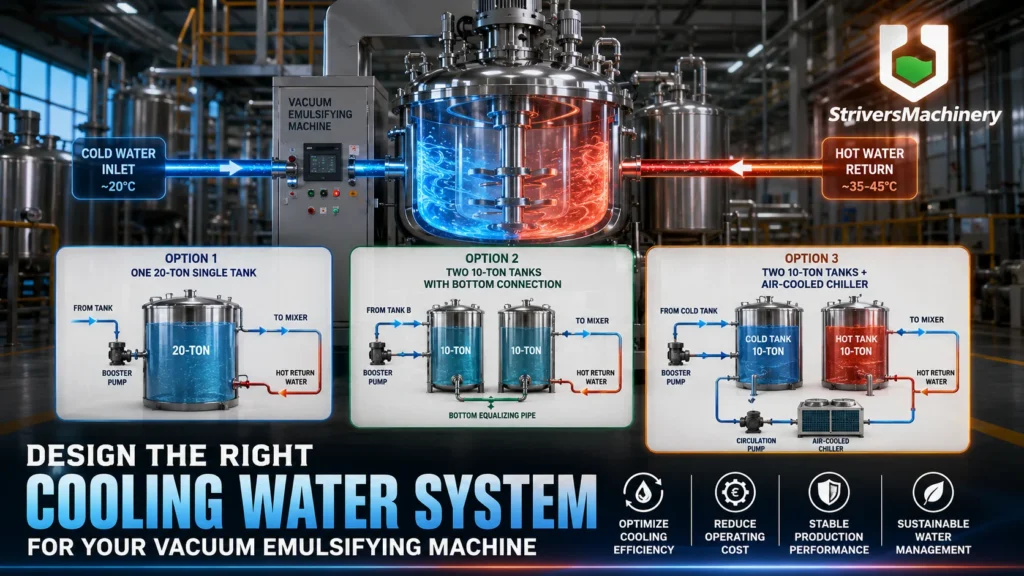
Include water in the early factory equipment plan. Ingredient water, final rinsing, general washing, and cooling services can have different duties. A recirculating cooling-water circuit, for example, serves a different purpose from the water added to a cream.
Define the target
Feedwater test, quality limits, daily demand, and peak draw
Select treatment
Pretreatment and RO; second pass or EDI when justified
Protect stored water
Suitable tanks, pipework, microbial controls, and maintenance
Check at use
Representative samples, operating records, and a response planConceptual planning map, not an installation drawing. Select microbial-control methods and optional treatment steps for the agreed duty.
2. Pretreatment: Protect the RO System from the Actual Feedwater
Pretreatment should address measured risks. Municipal water with seasonal turbidity changes and high-hardness groundwater need different design work. Test the source, review available supply records, and identify changes the system must handle.
Particle Removal
A media filter can reduce suspended particles where the feedwater calls for it. A cartridge filter provides another particle-control step ahead of the membranes. Select both for the expected loading, required flow, and maintenance arrangements.
Ask what a stated micron rating means. Nominal and absolute ratings need a defined test method and removal efficiency to be compared properly. An “absolute” label should not be read as a blanket guarantee that every particle above the stated size will always be stopped.
Activated Carbon and Oxidant Control
Activated carbon may be selected to reduce disinfectant residuals and certain organic compounds. Chlorine and chloramine require appropriate design and performance checks. Verify the residual reaching the RO against the membrane supplier’s requirements.
Carbon also needs maintenance and microbial control. Removing a disinfectant changes the conditions downstream, so include sampling and service access in the plan. A carbon vessel cannot be treated as a fit-and-forget component.
Hardness and Scaling
Where scaling is a risk, the design may use softening, suitable dosing, or other measures based on the water analysis and membrane design. Agree regeneration or chemical requirements, waste streams, and checks that show the treatment is working.
Our cartridge-filter and RO membrane case study shows why consumables and upstream maintenance deserve attention. Repeated membrane replacement is a reason to investigate operating conditions, not simply buy more membranes.

3. Single-Pass RO or Double-Pass RO?
Recommended Equipment

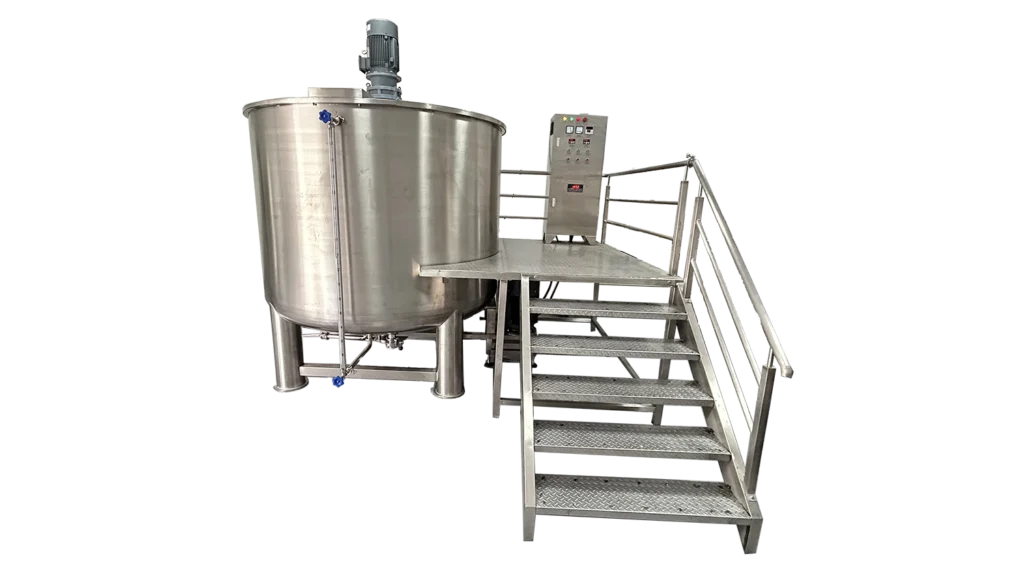
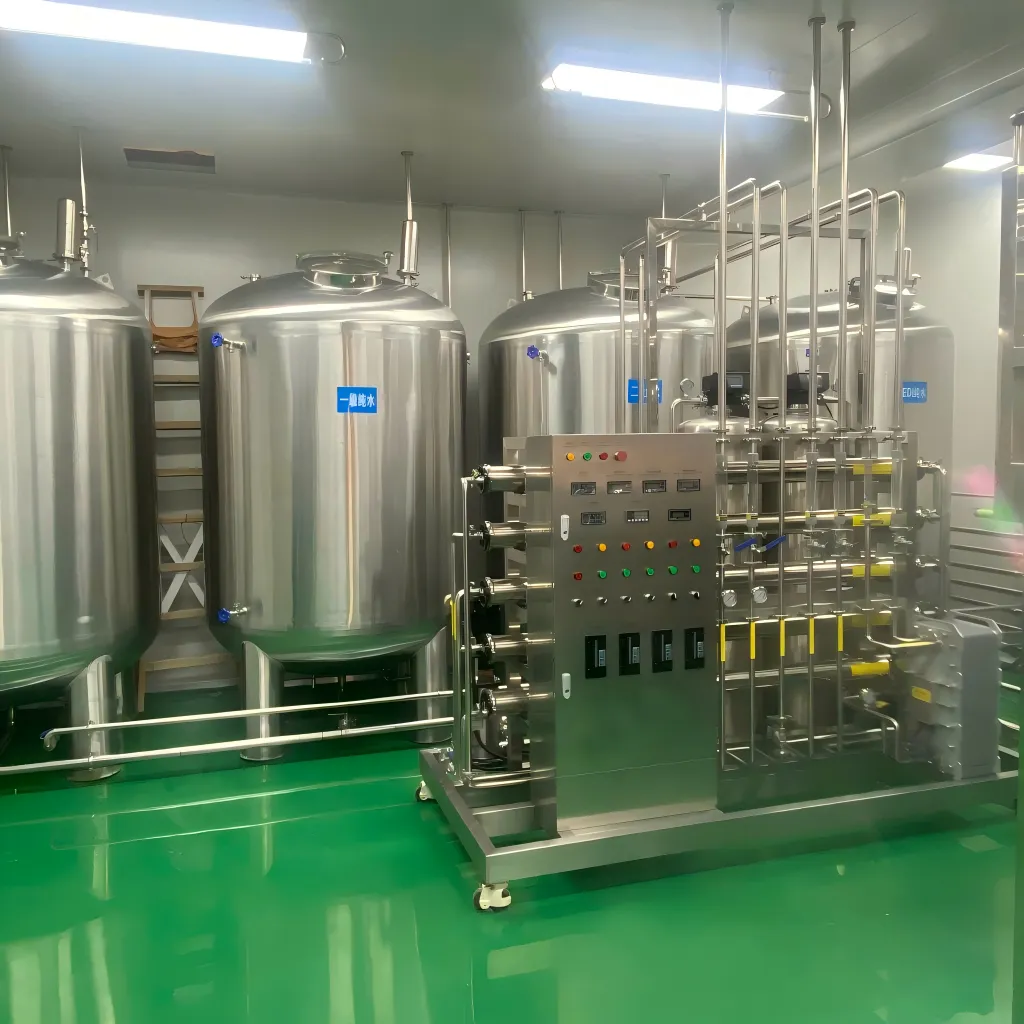
1000LPH Double Pass Reverse Osmosis Water Treatment System with Stainless Steel Pretreatment Tanks & Storage Tanks for Cosmetics, Pharma & Food
View Details
What a Pass Means
RO uses pressure to separate a lower-salt product-water stream from a more concentrated reject stream. In single-pass RO, feedwater goes through one RO treatment pass. In double-pass RO, the first pass’s product water feeds a second RO pass.
A membrane stage is different. Several stages can sit within one pass to manage flow and recovery. Count the actual treatment passes on the process diagram; the number of membrane housings or the phrase “two-stage” is not enough.
When Single-Pass RO Is a Good Starting Point
Start with single-pass RO when a supported design can meet the agreed water specification under expected feedwater and temperature conditions. It keeps the treatment arrangement simpler and can reduce equipment, energy, and maintenance needs.
Ask for expected product-water quality, output, recovery, and operating conditions together. A high output figure without its feed temperature and water analysis is difficult to use for planning.
When a Second Pass Helps
A second pass is worth considering when the first pass cannot reliably meet the ionic target or the customer requires a tighter margin. Check the combined system’s output and water balance, including how intermediate storage and reject streams are handled.
Our 1000 L/h double-pass RO system illustrates an equipment configuration to discuss. Its suitability for a project comes from the agreed water analysis, output, quality target, and supplied scope.
4. Where EDI Adds Value
EDI is an additional polishing step commonly used after suitable RO treatment. It combines ion-exchange materials, membranes, and a direct electrical current to remove remaining ionized and ionizable species. Choose it when the defined ionic target justifies the extra equipment and operating requirements.
Check the selected module’s feed limits, including the parameters its manufacturer specifies for hardness, oxidants, and other contaminants. Conductivity alone may miss part of the load; carbon dioxide and silica can matter to the design.
EDI is not a substitute for a storage and distribution hygiene plan. It also should not be sold as a universal organic-removal step. Keep ionic polishing, organic control, and microbial control as distinct jobs in the specification.
| Treatment | Main Job | Best Reason to Add It |
|---|---|---|
| Single-pass RO | Reduce dissolved salts and other contaminants according to membrane performance and feed conditions | The supported design meets the agreed product-water specification |
| Second RO pass | Treat first-pass product water again for further ionic reduction | A tighter ionic target or operating margin needs another pass |
| EDI after suitable RO | Polish remaining ionized and ionizable species | A defined ionic requirement and suitable feed justify continuous polishing |
| UV disinfection | Inactivate microorganisms within the unit’s validated operating range | The microbial-control plan needs a suitable UV treatment step |
5. UV, Ozone, and Microbial Control
What UV Does
UV disinfection can reduce viable microorganisms passing through a correctly selected and operated unit. Selection needs the required flow, water UV transmittance, target treatment performance, and the unit’s validated operating range. Lamp condition, sleeve cleanliness, monitoring, and maintenance all matter.
A lit lamp does not prove that the passing water received the required dose. UV also leaves no disinfectant residual in the downstream tank and pipework. Decide its position by looking at the contamination risks, water quality, and equipment arrangement together.
Equipment is often marketed as a “UV sterilizer.” For the water system described here, use disinfection as the working description unless a specific sterilization claim has been demonstrated. Buying a UV unit alone does not make the stored water sterile.
When Ozone Is Considered
Ozone can form part of a planned storage or distribution sanitization arrangement. If selected, the design needs a defined treatment method, monitoring, compatible materials, worker-safety measures, and controls for residual ozone and off-gas. Establish how water is made suitable for its next use.
UV and ozone perform different roles and may be combined in a suitable design. Neither is a mandatory add-on for every cosmetic factory. Avoid buying both before agreeing the microbial-control problem they need to solve.
Cleaning the Whole Water Path
Tank surfaces, valves, sample points, branches, and seldom-used outlets can all affect results. Include an effective cleaning or sanitization method for the complete agreed water path. A treatment device cannot reach an isolated dirty pocket by itself.
The same practical questions appear in our cleaning-system guide: what gets cleaned, how the cleaning medium reaches it, how it drains, and how the result is checked. Adapt the method to the water system and its materials.
6. Size Production, Storage, and Peak Supply Separately
Start with a Daily Water Budget
List ingredient water, relevant rinsing, sampling, flushing, and other treated-water uses. Put them against the production schedule. Then calculate how many productive hours the treatment system really has after planned cleaning, checks, and downtime.
The factory utilities checklist helps connect water demand with power, drainage, and other services. Include this work in your equipment buying specification before comparing model capacities.
A Worked Capacity Example
Illustration only: assume a factory needs 6,000 L/day for ingredients, 1,000 L/day for final rinsing, and 500 L/day for sampling and flushing. Total useful treated-water demand is 7,500 L/day. With six net productive treatment hours, the required average product-water output is 7,500 ÷ 6 = 1,250 L/h.
That is a design requirement at agreed feedwater and temperature conditions. It is not a model selection by itself. Ask the supplier to show how the proposed system meets it at the lowest feed temperature used in the design.
For a separate water-balance illustration, assume 60% overall treatment recovery. Producing 1,250 L/h then requires about 2,083 L/h of feedwater and generates about 833 L/h of concentrate. Over six hours, that is 12,500 L of feedwater and 5,000 L of concentrate. Pretreatment backwashing and softener regeneration are additional uses.
Check Concentrated Draws
Related Solutions


Suppose production takes 1,000 L in 15 minutes. A system making 1,250 L/h produces only 312.5 L during that interval. The remaining 687.5 L must come from usable stored water, assuming no other demand during the draw.
This calculation identifies a buffer requirement for that event. Tank selection must also allow for other draws, usable levels, refill time, sanitization, and water turnover. A large tank that sits full for long periods creates a different operating problem.
Check the delivery pump and pipework against the required draw rate and pressure as well. Our pump selection guide explains the flow, fluid, connection, and service details to put into that review.
Plan the Site Connections
Confirm source-water availability, supply pressure, electrical load, drains, concentrate handling, service access, and delivery clearances. Leave room to change filters and remove membrane elements. Our installation mistakes guide helps turn these items into a pre-arrival checklist.
For an existing factory, compare adding treatment capacity with better scheduling or storage changes. The equipment retrofit guide explains how to evaluate additions around a working production line.
7. Keep Water Quality Through Storage and Distribution
Choose Materials for the Actual Service
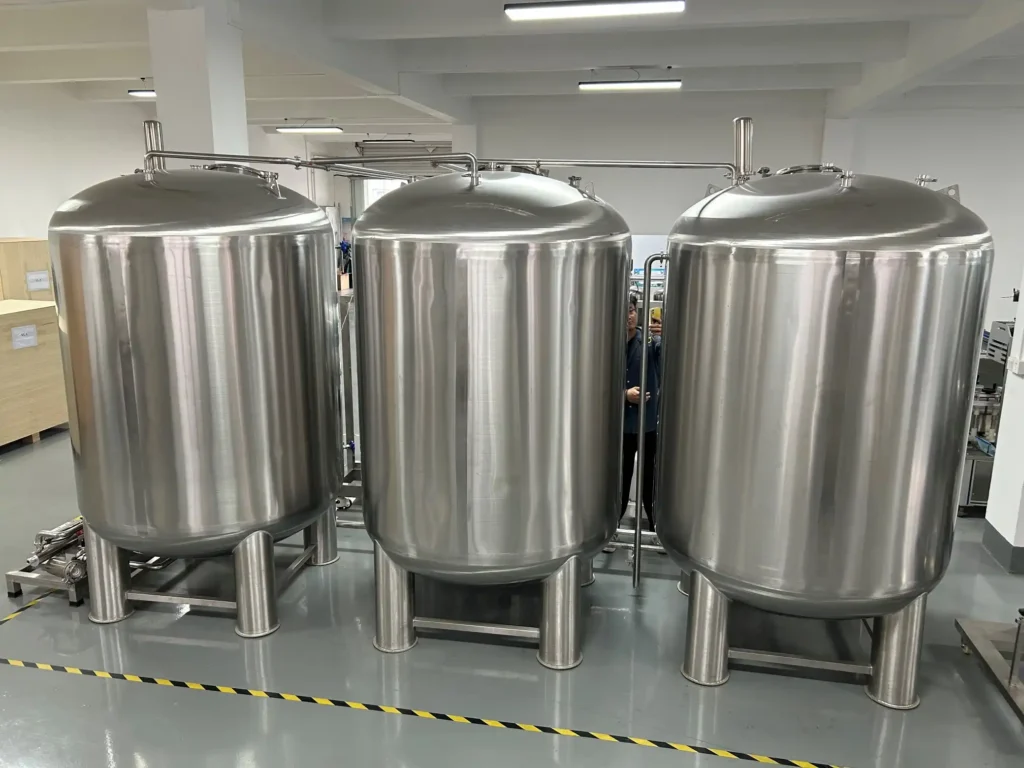
Choose tank, pipe, valve, and seal materials for the water chemistry, cleaning chemicals, temperature, and required finish. The 304 versus 316L stainless steel guide explains why grade selection needs those operating details.
Review drainage, cleaning access, vents, level controls, and overflow arrangements. A sloped or conical bottom can help drainage when the outlet and installation support it. It is one design feature among several that need to work together.
Design the Pipework for Use and Cleaning
Keep unnecessary branches short and make sampling and routine service practical. Water left in seldom-used sections can create trouble even when the RO outlet is satisfactory. Our dead corners guide explains the geometry behind that risk.
Agree joint quality and inspection requirements. Orbital welding can support repeatable weld production in an appropriate setup, but the finished joint still needs suitable preparation and inspection. For removable joints, the clamp and flange comparison helps explain access and connection choices.
Circulation can help manage water turnover and distribution, but velocity alone cannot prevent biofilm. The operating plan needs cleaning or sanitization, control of stagnant sections, maintenance, and checks at representative locations.
Measure at the Point of Use
Sample treated water at locations that answer the question: treatment outlet, storage, loop return where fitted, and relevant points of use. A good sample at the RO outlet cannot clear a contaminated branch downstream.
Keep results with operating readings, maintenance, sanitization, and recent changes. Use trends to decide where to investigate. The hygienic equipment design guide connects this day-to-day work with the original equipment layout.
8. Troubleshooting and Maintenance
Compare current readings with the system’s baseline and supplier instructions. Record feed temperature and chemistry before deciding that a lower output means membrane damage. Normalized performance data help separate operating-condition changes from deterioration.
| Symptom | Check First | Practical Next Step |
|---|---|---|
| Lower RO product flow | Temperature, pressures, feed conditions, instrument readings, and normalized trends | Identify the cause before adjusting pressure or selecting a cleaning method |
| Higher product conductivity | Feed conductivity, temperature basis, recovery, normalized salt passage, and seals | Verify readings, compare trends, and investigate the affected section |
| Rising cartridge-filter pressure drop | Flow, upstream particle load, filter condition, and pressure instruments | Service under the approved procedure and investigate unusually rapid loading |
| Good RO outlet, poor point-of-use microbial result | Sampling method, tank condition, unused branches, cleaning history, and distribution | Control affected water use under the quality procedure and investigate downstream locations |
| UV alarm or weak monitored signal | Water quality, flow, lamp hours, sleeve condition, and sensor condition | Follow the unit’s response procedure and verify suitable operation before release |
| EDI performance change | Module-specific feed limits, flow, electrical readings, and upstream performance | Use the selected module manual and involve technical support before changing settings |
Set filter and membrane service intervals from condition, manufacturer instructions, and site records. Pressure drop is useful for filter loading; it cannot establish filter integrity on its own. Use the specified test when integrity is a required check.
Track water, energy, consumables, testing, labor, and interruptions in the total cost of ownership. The hidden equipment costs guide also helps identify drains, chemicals, spare parts, and site work that a headline equipment price can miss.
Decision Guide
9. Three Project Lessons
Indonesia: Managing Variable Municipal Water
A shampoo and body-wash project used municipal water with moderate hardness and seasonal turbidity changes. The selected arrangement combined sand filtration, activated carbon, softening, single-pass RO, and UV ahead of stainless steel storage.
The system met the customer’s conductivity and production targets. Pretreatment helped manage feedwater variation. The lesson is to support a straightforward RO choice with the right upstream treatment and agreed acceptance conditions.
Saudi Arabia: A Defined Need for Ionic Polishing
A premium-skincare project used high-TDS groundwater. The formulation team set tighter ionic and conductivity requirements. The selected system combined pretreatment, double-pass RO, EDI, UV, and hygienic storage and distribution.
It met the defined water specification and improved batch consistency and rejection performance. The reason for EDI was the customer’s water target and source-water conditions. The product’s premium positioning alone would not have been enough to select it.
An Existing Factory: Fixing the Downstream Problem
An existing system had recurring microbiological problems despite satisfactory RO-outlet results. Investigation identified dead legs, inadequate circulation, and neglected pretreatment maintenance.
Rebuilding the distribution loop and restoring pretreatment maintenance brought microbiological results back within the agreed limits and improved the membrane replacement pattern. Treating the entire system solved a problem that outlet testing alone had missed.
What StriversMachinery Can Include in the Project
At StriversMachinery, we work from the source-water report, required water quality, production schedule, and site conditions. These inputs let us explain which treatment steps are needed and put generation, storage, distribution, controls, and service responsibilities into a clear proposal.
A useful scope review identifies the treatment equipment, usable tank capacity, included pipework and outlets, instruments, alarms, sampling points, cleaning arrangements, and site connections. It also identifies who supplies installation work, laboratory testing, commissioning materials, and any specialist services.
Agree the test plan before purchase. Our factory acceptance testing guide describes the wider approach to test conditions, records, and open items. For a water system, adapt that plan to output, pressures, recovery, quality checks, alarms, and the actual site arrangement. Site water-quality acceptance needs representative operating conditions and the agreed sampling plan.
Ask us to separate the equipment price from installation, consumables, documentation, testing, and optional work. Clear supplier and integration responsibilities make comparisons easier and give both teams a usable handover list.
Send your source-water test, daily demand, largest concentrated draw, target specification, destination utilities, and planned layout to [email protected]. StriversMachinery can then discuss a defined equipment scope and the checks needed to assess it.
Technical References
- FDA: Good Manufacturing Practice Guidelines/Inspection Checklist for Cosmetics
- FDA: Microbiological Safety and Cosmetics
- DuPont: Electrodeionization (EDI)
- DuPont: EDI-310 Module Manual
- NHMRC: Australian Drinking Water Guidelines — Disinfection with Ultraviolet Light
- Pall: Understanding Liquid Particle Removal Performance
- Outokumpu: Corrosion Tables
These references support the engineering principles discussed here. Drinking-water guidance is used for UV principles; it does not set a cosmetic factory’s water specification. Apply the manual and operating limits for the equipment actually selected.