
Cosmetic Cream & Lotion, and Skin Care






More About These Applications
Skin Care Equipment Starts with the Formula and the Pack
Skin Care Equipment Starts with the Formula and the Pack
A face cream, a body lotion and a clear facial serum can share a brand name while needing quite different production arrangements. The cream may need separate phase preparation, emulsification and controlled cooling. The serum may need careful blending without an emulsification stage. Their filling equipment must also handle different flow behavior, container openings and closure assemblies.
StriversMachinery supplies cosmetic cream and lotion production equipment covering preparation, mixing, holding, transfer, filling and packaging. We build our core mixing and emulsifying equipment and coordinate complementary machines through long-term partner suppliers. The equipment combination is planned around the product range, production schedule and available factory services.
This application covers skin creams, facial and body lotions, moisturizers, skin care gels, serums and facial cleansers. Shampoo, conditioner and body wash production has a separate hair care and body wash equipment pathway. Pigmented makeup products belong with color cosmetics and nail care, where pigment handling needs more attention.
Rich Creams, Light Lotions and Serums Need Different Arrangements
Rich Creams, Light Lotions and Serums Need Different Arrangements
Start with the actual formulation and its behavior during production. A rich cream may become considerably harder to move after cooling, while a light lotion can remain easy to pump but still need controlled emulsification. A serum can be a thin solution, a gel or an emulsion; its name alone does not identify the required mixer or filler.
| Product | Processing priority | Downstream consideration |
|---|---|---|
| Rich cream | Phase preparation, emulsification and movement of the cooling batch | Transfer and dosing at the intended filling temperature |
| Light lotion | Uniform blending and the emulsification required by the formula | Bottle stability, nozzle control and pump closure assembly |
| Serum or toner | Ingredient dissolution or blending, with additional processing where needed | Small containers, controlled dosing and matched closures |
| Skin care gel | Powder incorporation, hydration and suitable agitation | Air management, stringing and clean nozzle cutoff |
| Facial cleanser | Mixing suited to an emulsion, gel or surfactant formulation | Foam behavior and the chosen bottle or tube |
A representative product sample and its processing instructions are more useful than a description such as “medium viscosity.” Include the temperature at which the product will leave the mixer and enter the filler.
Build the Process around the Stages the Product Needs
Build the Process around the Stages the Product Needs
A typical emulsified cream route runs from water and ingredient preparation through phase mixing, emulsification, cooling, holding, transfer and filling. Closure assembly, labeling, coding and outer packing follow. Some factories transfer directly from the processing vessel to the filler; others use a separate holding vessel so the mixer can start another batch.
A cold-process lotion may omit phase heating. A water-based serum may use a blending vessel without a vacuum emulsification stage. An anhydrous balm follows another route, with melting and filling temperature often becoming central decisions. Our article on hot filling, cooling and capping wax-based products covers that separate manufacturing sequence.
Write down the intended route for each product before combining them into one equipment list. This shows which machines can be shared, where cleaning is needed between products, and whether separate preparation or holding vessels would remove a practical bottleneck.
Water and Ingredient Preparation
Water and Ingredient Preparation
For water-containing skin care products, the process starts before ingredients reach the main mixer. The water supply must suit the formulation and the factory’s quality requirements. Water treatment systems should be considered together with treated-water storage, distribution and the amount needed during a production shift.
Ingredient preparation may include weighing liquids and powders, dissolving soluble ingredients or preparing an oil phase. Separate preparation vessels are useful when those tasks must happen while the main vessel is occupied. They should follow the recipe’s sequence and temperature requirements rather than adding an unnecessary stage to every batch.
Keep ingredient addition practical: operators need a safe working position, enough space for containers and access for cleaning. The guide to adding fragrance and active ingredients discusses addition timing in more detail; the machine arrangement should allow the production team to follow its established process.
Mixing and Emulsification for the Intended Texture
Mixing and Emulsification for the Intended Texture
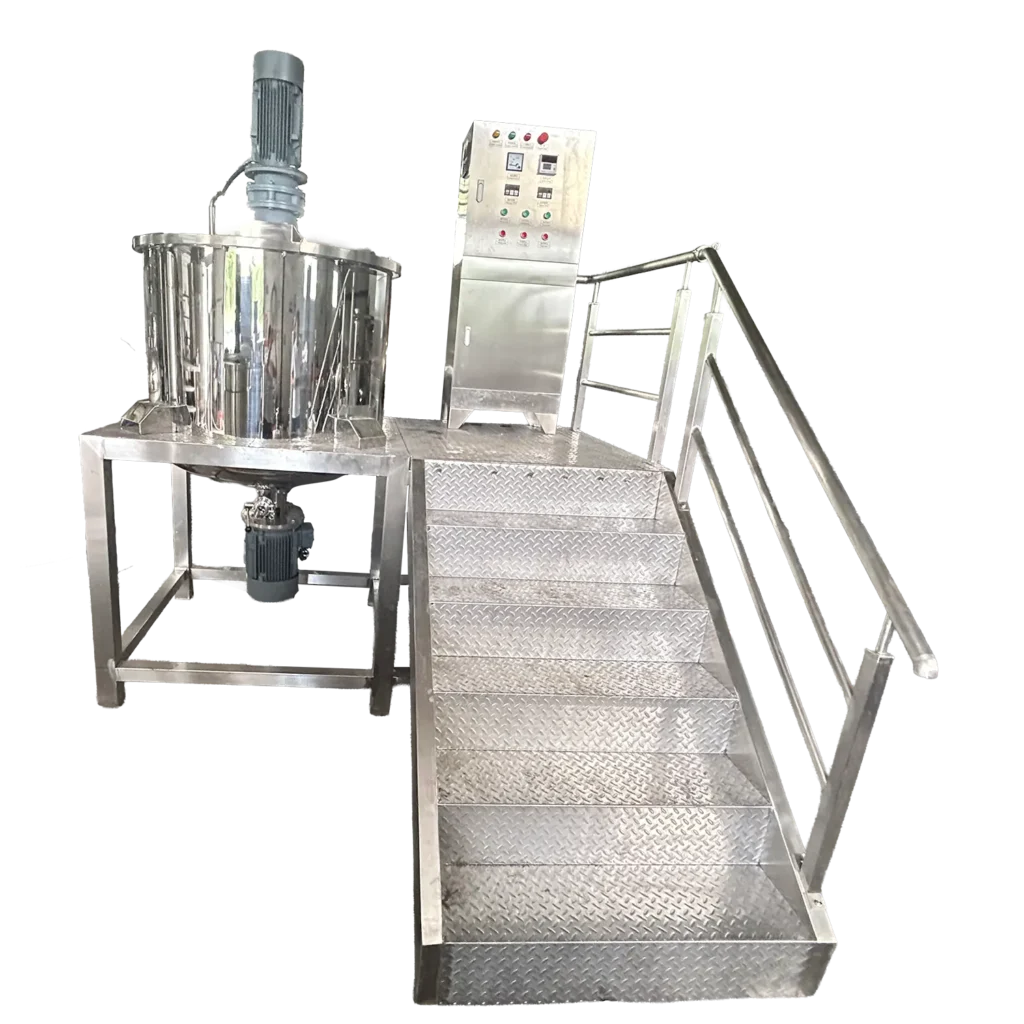
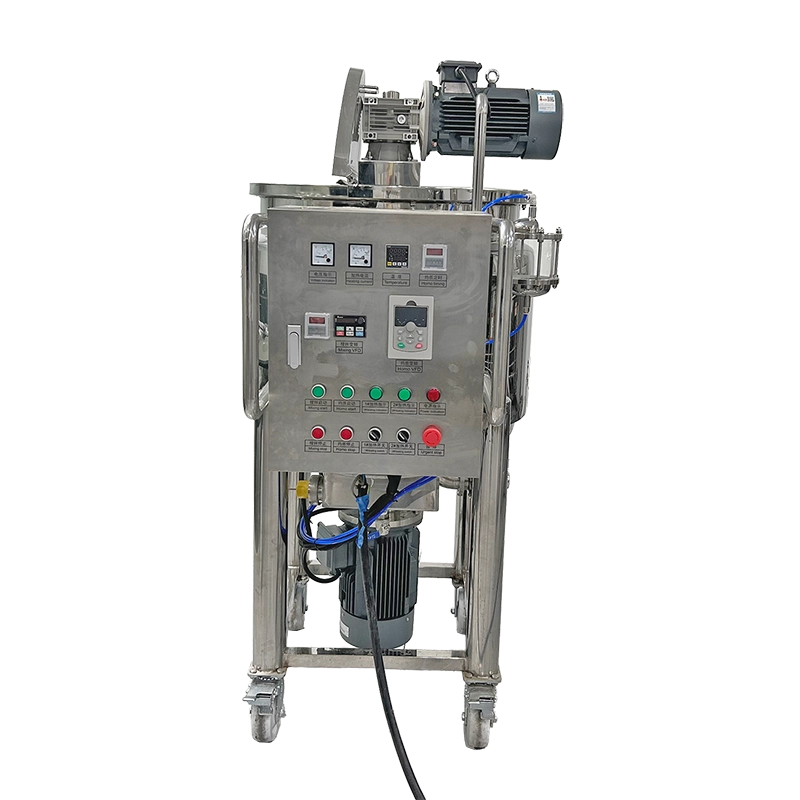
For emulsified creams and lotions, vacuum emulsifying mixers combine processing functions that can suit phase mixing, homogenization and air removal. The required configuration depends on the formulation, batch size, heating and cooling duties, and how the finished product will discharge.
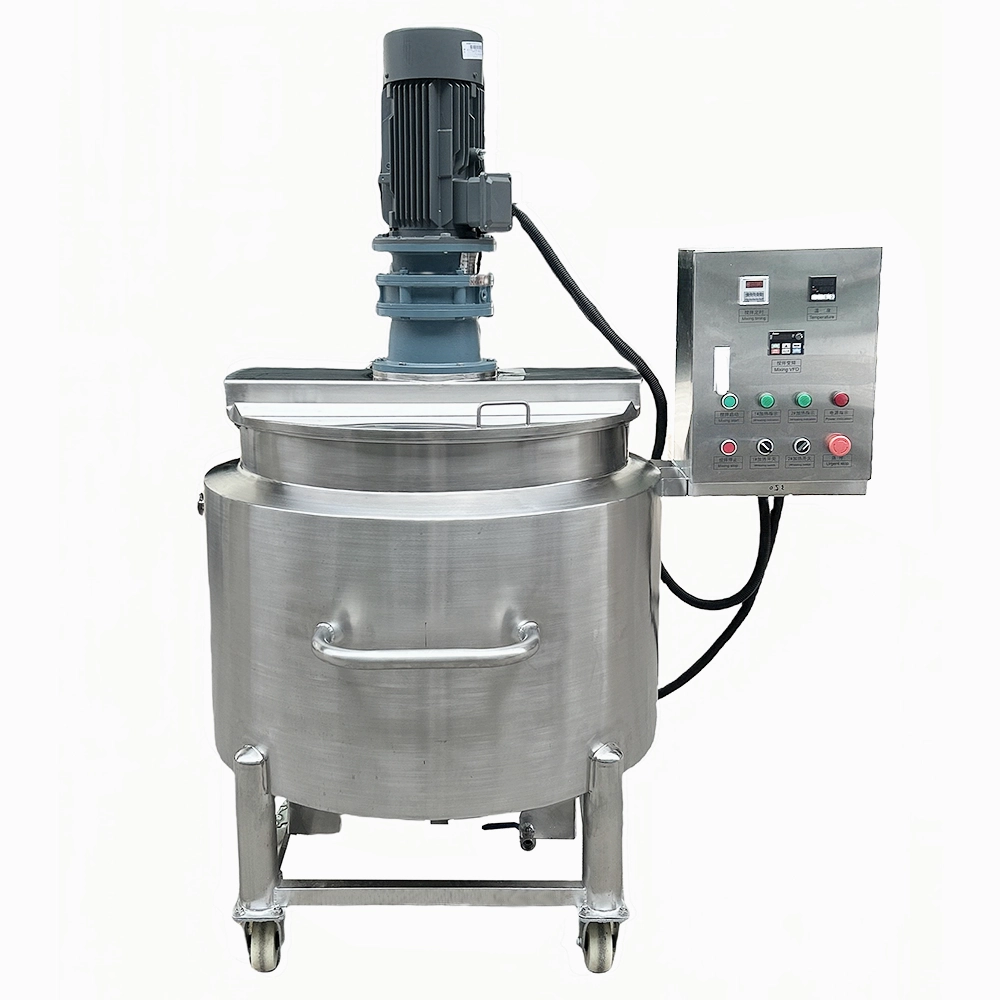
Other skin care products may be better served by homogenizing mixing tanks or simpler blending arrangements. The aim is to provide the mixing action the formula needs through each stage. More shear is not automatically better, particularly when later additions or the finished structure need gentler handling.
Where access to the vessel is a priority, a hydraulic lift vacuum mixer with button controls illustrates one available arrangement. Its product page provides the machine details. At the production-planning stage, the more useful questions are whether operators can add ingredients, inspect the vessel and clean the working parts without making every changeover difficult.
Cooling, Holding and Releasing the Batch for Filling
Cooling, Holding and Releasing the Batch for Filling
A mixer finishing its emulsification stage does not necessarily mean the batch is ready to fill. Cooling, later ingredient additions and the factory’s quality checks can all keep the vessel occupied. Include those activities when estimating daily output.
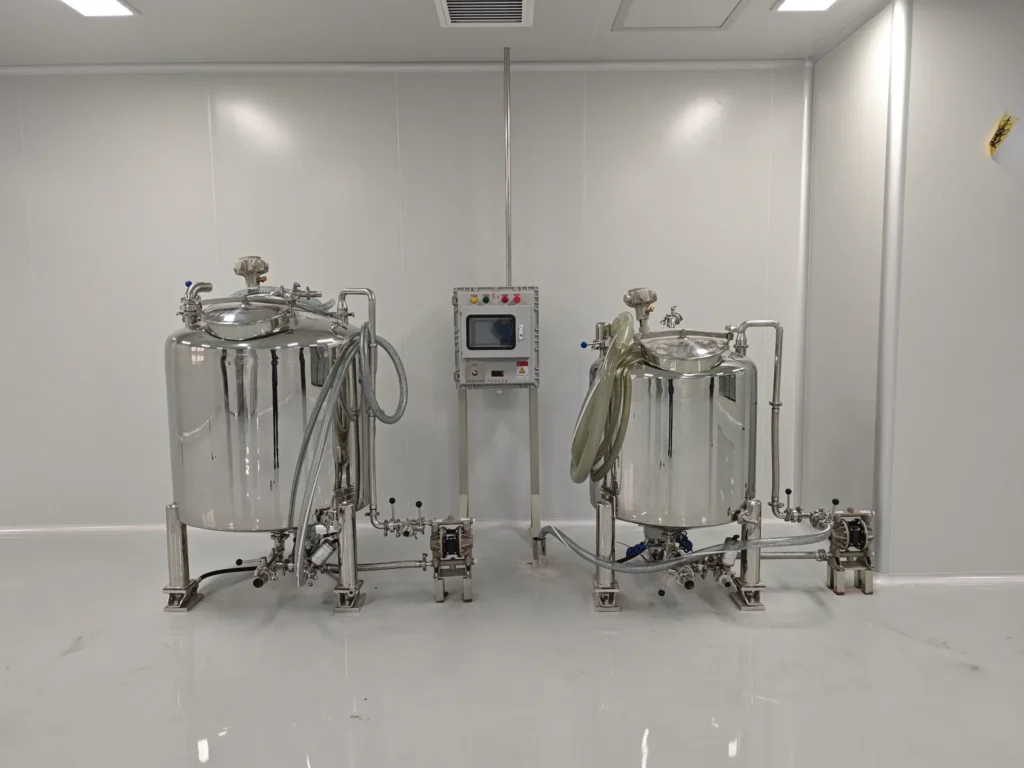
Storage and holding systems can separate processing from packing, provided the vessel suits the product and its permitted holding conditions. Some batches need gentle agitation or temperature control; others only need a covered transfer and holding arrangement. These functions should be specified individually.
Plan the handover between production and packaging. The team needs to know which batch is ready, its intended filling temperature and which filler it will supply. A large buffer tank is not always useful for a factory making many small batches. Mobile vessels or smaller dedicated holding arrangements may make product changes easier to manage.
Transfer Cream without Making Filling the Bottleneck
Transfer Cream without Making Filling the Bottleneck
The transfer route connects the finished bulk product to the filler. Hose length, elevation, product temperature and viscosity all affect that task. The pump must supply the filler consistently without making the product difficult to handle or leaving excessive material behind during a changeover.
A mobile rotary lobe transfer pump is one arrangement to evaluate for creams, lotions and gels. Suitability depends on the actual formulation and transfer conditions. It should not be treated as a substitute for the filler’s dosing system.
Consider what happens at the end of a batch as well as during steady transfer. Small premium batches can leave a meaningful proportion of product in long hoses and pump chambers. Place the holding vessel and filler close enough for practical transfer, while preserving operator access and a workable cleaning route.
Keep connections accessible and give operators room to disconnect and clean hoses. Where several product types share the same route, review the cleaning work as carefully as the pumping duty. The pump selection guide provides a broader comparison of transfer approaches.
Filling Creams and Lotions into Jars and Bottles
Filling Creams and Lotions into Jars and Bottles
Choose the filling arrangement using the finished product at its filling temperature, together with the actual package. A wide-mouth cream jar and a narrow-neck lotion bottle present different nozzle access and handling conditions. Stringing, dripping and trapped air also need attention during product trials.
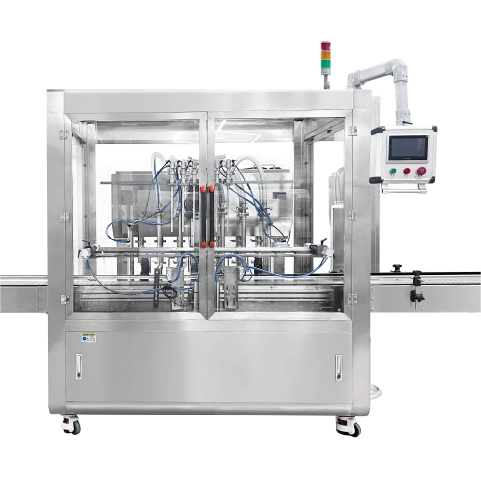
Cream filling machines cover arrangements for viscous skin care products. A semi-automatic vertical gear pump filler can suit work where operators place and remove each container. A multi-head automatic gear pump filler provides a different approach when conveyor handling and repeated filling cycles fit the production schedule.
Water-like products may follow the liquid filling route instead. For every format, assess the complete cycle, including container presentation and removal. Compare output using your product and pack, and agree on a filling accuracy testing method before using a machine’s rated output in the production plan.
Tube and Airless Packaging Need Their Own Assembly Steps
Tube and Airless Packaging Need Their Own Assembly Steps
Hand creams, facial cleansers and skin care gels are often packed in tubes. The tube material determines the closing process, so tube filling and sealing equipment should be selected with the packaging supplier’s tube specification in hand.
An automatic hot-air tube filling and sealing machine is a relevant route for compatible plastic and laminate tubes. Aluminum tubes use a different tail-closing method. Tube loading, orientation, coding and finished-tube handling also belong in the equipment discussion.
For airless packs, review the bottle, piston, pump and closure as an assembly. Airless pump bottle filling and sealing equipment must match that assembly sequence. The package’s appearance alone does not tell you which parts arrive preassembled or which operations the production line must complete.
Closing, Labeling and Packing the Finished Product
Closing, Labeling and Packing the Finished Product
After filling, the package needs the closure operation specified for its design. Capping machines handle compatible screw caps and pump closures. Containers using an induction-compatible foil liner may also need a separate sealing operation after the cap is fitted. Confirm the container, liner and closure combination before selecting that stage.
For lotion pump bottles, a servo four-wheel capping machine is an option to assess against the closure geometry. Decorative shapes, pump orientation and fragile containers can change the handling arrangement.
Labeling equipment must suit the surface carrying the label, whether it is a round jar, flat bottle panel or carton. Confirm the print position and code readability before arranging final packing. Secondary packaging equipment can then be planned around retail cartons, grouped packs and shipping cases, with space left for inspection and rejected packs.
Daily Output Depends on the Whole Working Schedule
Daily Output Depends on the Whole Working Schedule
A factory making one lotion all day has different needs from a contract manufacturer changing formulas and packaging several times per shift. Include preparation, mixing, cooling, transfer, cleaning and format changes when estimating usable output. A faster filler will not solve a shortage of released bulk product.
Packaging trials should include the complete container set: bottle or jar, cap or pump, liner where used, and label. Dimensional drawings help with initial planning, but physical samples allow the equipment supplier to assess how the pack stands, travels and closes. Include every intended size rather than assuming the largest and smallest behave alike.
For smaller runs, manual container loading and separate machines can make sense when operators can keep pace. For longer runs, bottle feeding, conveyors and accumulation can reduce repeated handling. Define which operations remain manual so staffing requirements are clear.
The packaging line support equipment arrangement should reflect those decisions. Leave room to replenish containers and closures, remove finished goods and clear stoppages. Automation is most useful when the surrounding work is organized to support it.
Utilities, Cleaning and Product Changeovers
Utilities, Cleaning and Product Changeovers
Check electrical supply, process water, cooling, compressed air, drainage and service access before settling the equipment layout. The cream factory utilities checklist covers the supporting services that are easily overlooked when attention stays on the emulsifier.
Cleaning requirements extend from the preparation vessels through the transfer hoses to the filling nozzles. Review access to product-contact surfaces, parts that need removal, and where cleaning liquids will go. A spray device inside a tank does not describe the entire cleaning arrangement; the article on CIP spray balls and manual cleaning explains that distinction.
Material selection should cover the complete product path, including hoses, seals and valves. The 304 versus 316L stainless steel guide is useful background, while the final specification should reflect the formula and cleaning procedure. Include changeover time in the production schedule rather than treating cleaning as spare time between batches.
Plan Product Trials before Expanding the Line
Plan Product Trials before Expanding the Line
Before increasing batch size or adding automation, confirm that the product can be made, transferred and filled using the intended sequence. Trials should use representative ingredients and packaging. Record observations that affect equipment decisions, such as discharge behavior, air in the product, nozzle cutoff and cleaning access.
For a new formula, moving from laboratory formulation to production involves more than increasing ingredient quantities. Preparation time, cooling and handling can change the practical workflow. Agree on the product checks and operating conditions that will be used to assess the larger batch.
Keep a written list of what is included in the proposed supply: product hoses, transfer pumps, closure feeding, conveyors and utility connections. This gives the production team a clearer picture of the work that remains on site before the equipment can run together.
When discussing a complete production line, provide your product list, batch schedule, required daily output, packaging samples and available utilities. StriversMachinery can use that information to develop a coordinated equipment proposal, whether the project begins with a mixer and separate filler or covers processing through final packing.