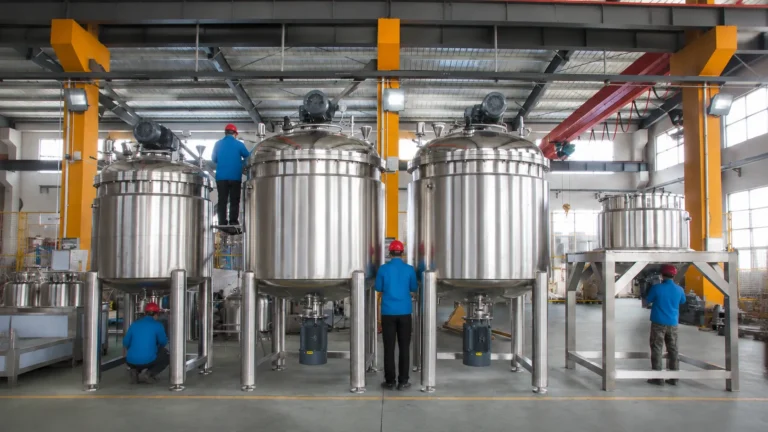

Choose a hydraulic lifting disperser frame for the cleaning conditions in your factory. Stainless steel suits frequent wet cleaning, moisture and product splashes. Painted carbon steel remains a practical option in a dry area where the coating can be inspected and repaired. The same material comparison applies to a hydraulic-lift homogenizer, while its working head is selected separately.
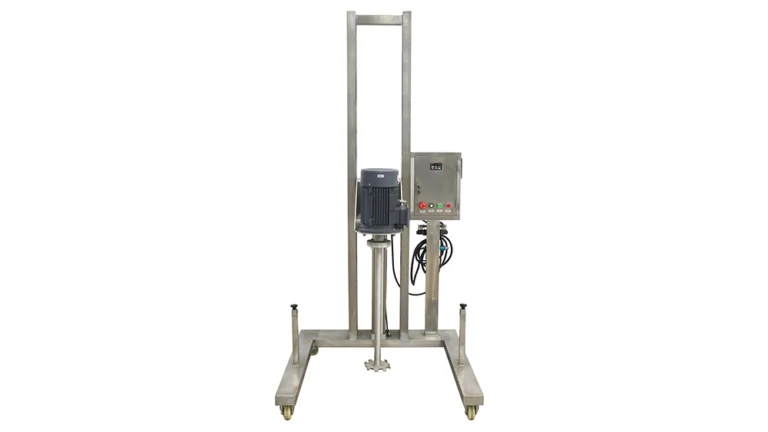
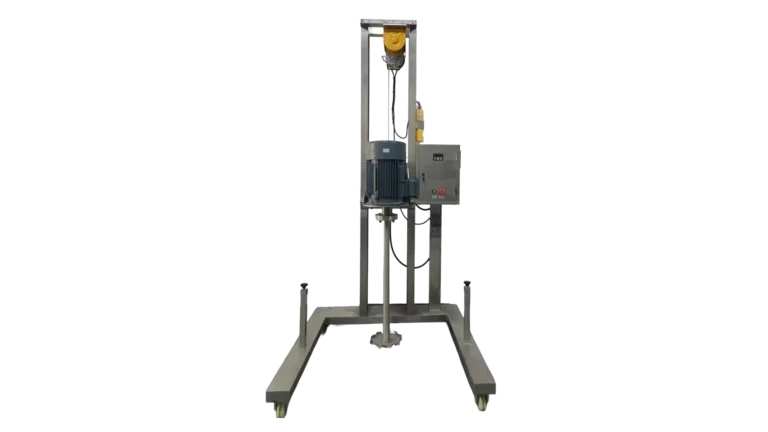
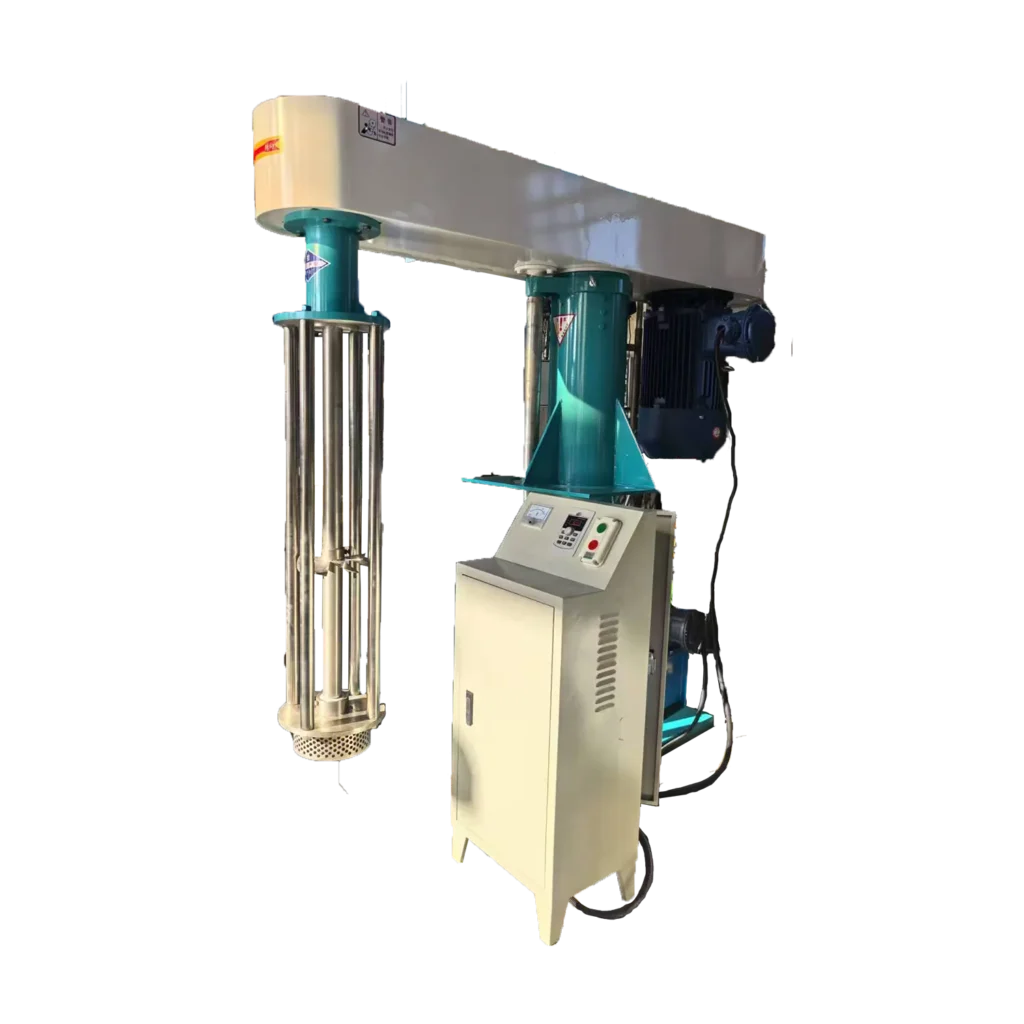
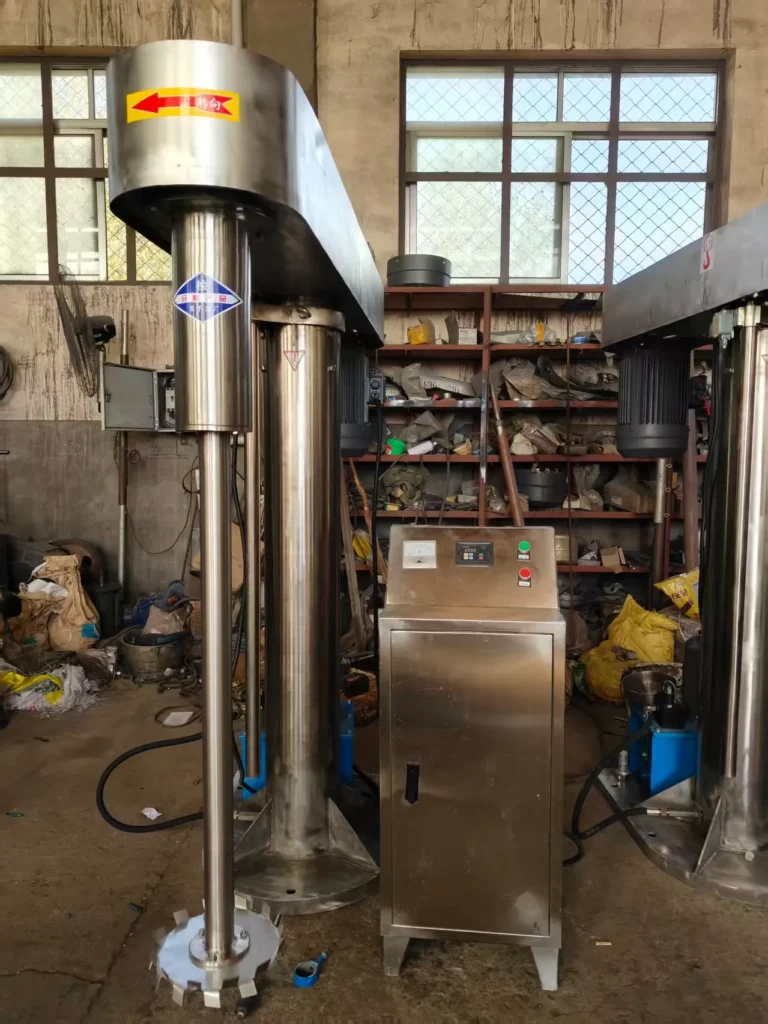
At StriversMachinery, the stainless disperser shown here is stainless steel except for the motor and hydraulic oil tank. Its stand is 304 stainless steel. It has the same power, speed and other operating configuration as the painted-frame version. The upgrade focuses on construction, cleaning and maintenance.
Choose the dispersing disc or rotor-stator head for the product first. Then select the lift arrangement, vessel layout and material specification around the production task.
1. Start with the Job: Dispersion or Homogenizing?
A customer asking for a “hydraulic mixer” may be describing two different machines. Before discussing the stand, we would settle what the product needs.
A high-speed disperser uses an open dispersing disc. It draws material through the working zone to wet powders and disperse agglomerates. Paint, ink, pigment slurry and suitable chemical mixtures are common duties. The disc, batch circulation and product viscosity have to work together.
A rotor-stator homogenizer draws product through a close working head and applies high shear. We would assess it for suitable emulsions, lotions, liquid soap and other products that need this form of processing. The workhead and available circulation determine whether it suits the batch.
Our high-speed dispersers and high-shear mixers are separate equipment groups for that reason. Buying the right frame around the wrong working head will not solve the process.
| Question | Hydraulic-lift disperser | Hydraulic-lift homogenizer |
|---|---|---|
| What does the working head do? | Powder wetting, mixing and dispersion with an open disc | High-shear processing through a rotor-stator head |
| What drives selection? | Disc design, speed, circulation, product and batch size | Workhead design, speed, flow, product and batch size |
| What does the lift add? | Access for changing vessels and removing the disc | Access for changing vessels and removing the workhead |
| What does the stand material change? | External corrosion, cleaning and surface maintenance | The same external duties, assessed around the actual assembly |
For either machine, tell us the product, working volume, viscosity at processing temperature and container dimensions. The cosmetic equipment buying guide explains how to turn those details into a specification.
2. Why Choose a Hydraulic Lift?
It makes vessel changes and cleaning easier
The lift raises the shaft and working head so the vessel can be removed or changed. It saves operators from manually handling a heavy assembly. It also gives access to the shaft, underside of the head and vessel rim.
This is valuable in multi-product work. The machine can serve compatible vessels within its working envelope, provided their height, diameter and fixing arrangement suit the design. A second vessel can also help organize the next batch or cleaning task.
We would define that envelope before ordering. Measure the working position, the height needed to clear the vessel and the overhead space available in the factory. Include the route for bringing a container into position. A lift that clears the rim but leaves no room to move the vessel is a poor layout.
The lift brings its own service work
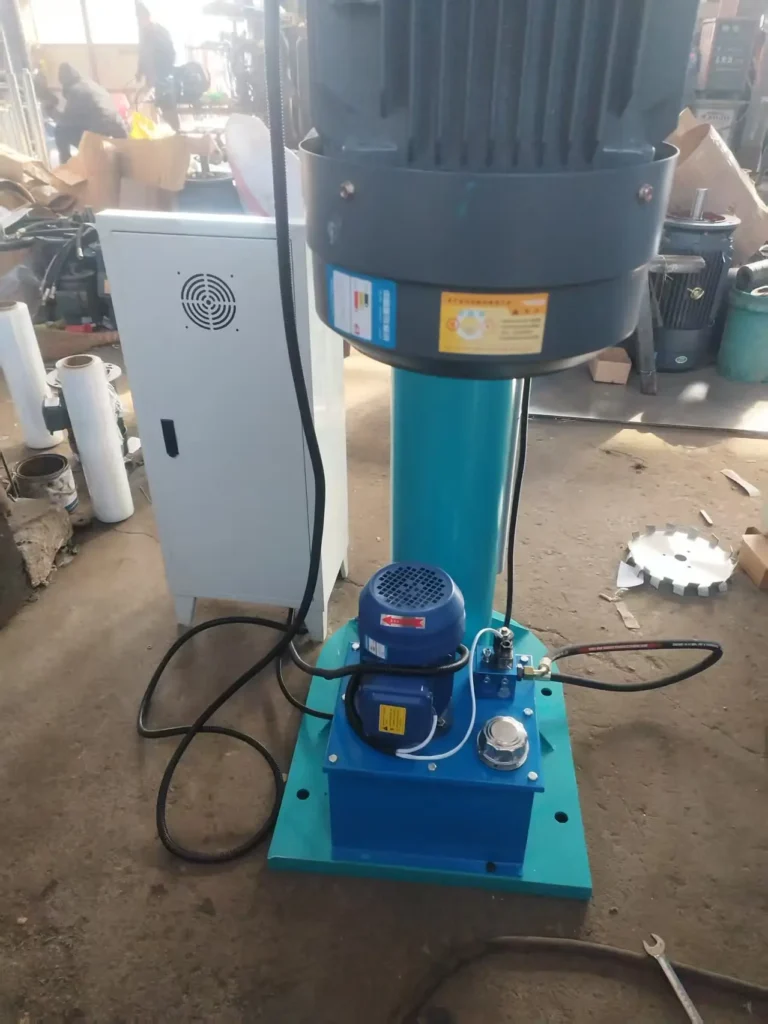
Hydraulic lifting needs an oil reservoir, pump, valves, cylinder and associated connections. These require inspection and access. Oil leaks need prompt attention, especially near open product. Put the hydraulic station where it can be serviced and where a leak can be managed.
The structure also has to carry the head through its designed travel. Specify the permitted operating positions, vessel fixing and the required protection against unintended movement. Position holding and safe support for maintenance are different tasks. The equipment procedure should cover both.
Electric, pneumatic and manual lifts remain alternatives. We would compare them by head load, travel, operating frequency, available utilities and service access. For frequent changes with a substantial head assembly, hydraulic lifting is a strong candidate. For a smaller duty, a simpler lift may be enough.
3. Hydraulic Lifting Disperser Frames: Stainless vs Painted Steel
The stainless version goes beyond the stand
The photographed stainless model is not just a stainless cover over the earlier painted stand. For this supplied configuration, the machine is stainless steel apart from the motor and hydraulic oil tank. The 304 stand is part of that wider construction.
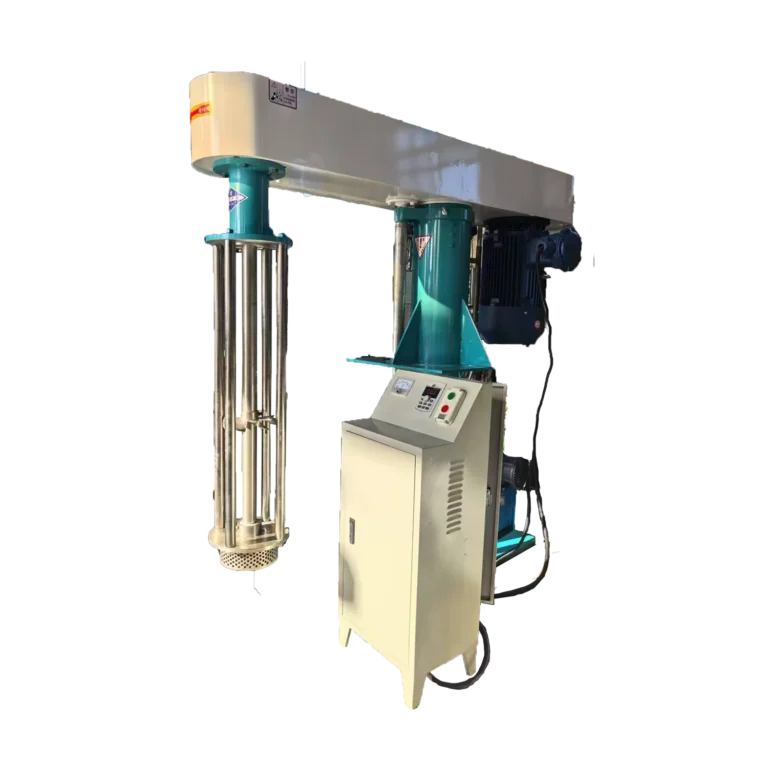
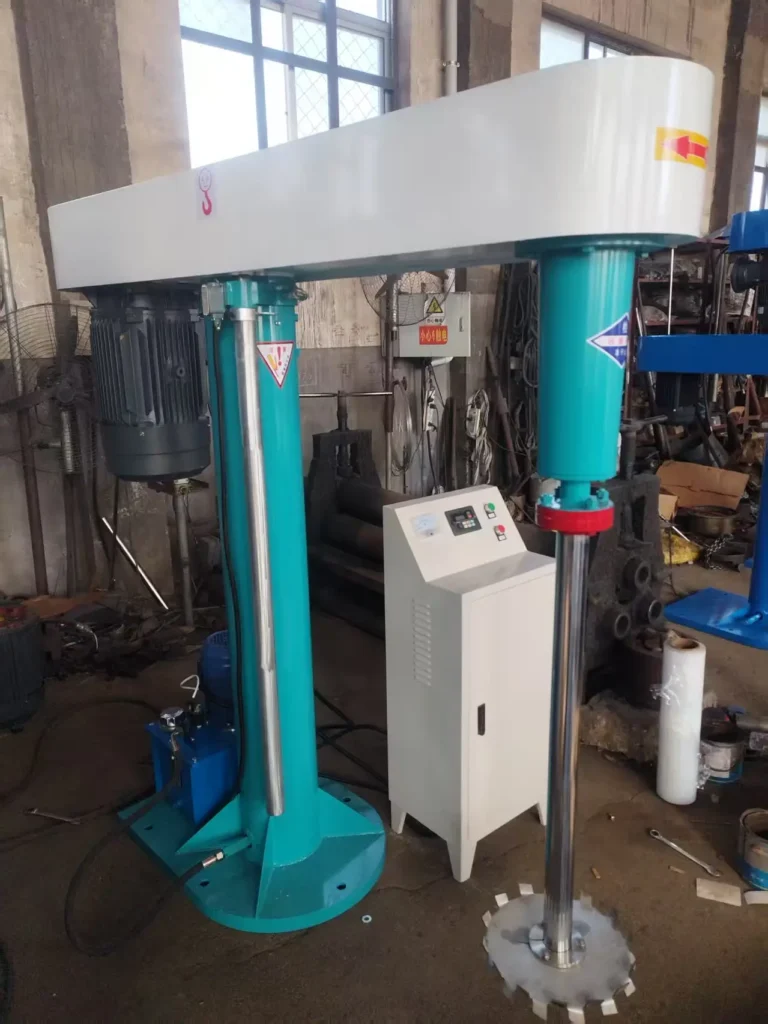
The two supplied photos show that version. The 7.5kW hydraulic-lift disperser product page describes the earlier painted carbon steel frame model. Use it to understand that configuration, and identify the stainless option separately on the quotation.

| Comparison point | Stainless disperser shown here | Earlier painted-frame disperser |
|---|---|---|
| Stand | 304 stainless steel | Painted carbon steel |
| Wider material scope | Stainless construction apart from the motor and hydraulic oil tank | Materials identified by component on the painted-model specification |
| Power and speed | Same specified operating configuration as the paired painted version | Same specified operating configuration as the paired stainless version |
| Main purchasing difference | External material, cleaning and surface maintenance | Coating condition and repair form part of maintenance |
| Process result | Selected from the working head and operating conditions | Selected on the same process basis |
We would keep the same product and process targets for both quotations. The stainless option is an external construction choice. It should not be sold as extra dispersion performance when the operating configuration is unchanged.
Product-contact material is a separate line
The stand supports the machine. The shaft, disc or rotor-stator head contacts the product. Identify their grades separately, even on a machine with extensive stainless construction.
“Stainless steel” names a family of materials. A 304 stand does not mean every stainless component has the same grade. Use the 304 versus 316L equipment guide for the product-contact discussion. Put the agreed materials beside the relevant parts in the quotation.
4. Where Stainless Construction Earns Its Cost
Frequent cleaning and product splashes
For a machine cleaned often, we would favor the stainless construction. Operators can clean the exposed surfaces without also maintaining a paint film on the stainless parts. That is a practical advantage around lotion, surfactant and water-based product handling.
Look at the places operators actually wipe: the column, lower stand, head housing, controls enclosure and area beside the vessel. Product can dry on these surfaces between batches. Cleanable joints and accessible corners reduce the work involved in removing it.
The benefit comes from the completed assembly. Good weld finishing, access beneath covers and surfaces that shed water matter. Our hygienic design and surface-finish guide covers those construction details.
Fewer coating repairs on the stainless parts
A painted frame may need local coating repairs after impact, scraping or corrosion. That work needs preparation, compatible repair materials and time for the repaired area to return to service. Stainless construction removes that paint-maintenance task from the stainless parts.
This advantage is most valuable where damage or cleaning exposure repeats. In a dry room with careful handling, the difference may be modest. In a busy wet-cleaning area, repeated repairs can become an avoidable maintenance job.
Stainless still needs the right cleaning method
Keep cleaning chemicals compatible with the selected grades and remove residues as instructed. Chloride deposits and aggressive cleaning conditions can damage stainless steel. Near-sea air, poor-quality rinse water or retained cleaner deserve attention when selecting the material and procedure.
Outokumpu’s corrosion guidance explains why stainless performance depends on the exposure as well as the grade. For a strongly corrosive environment, we would review the actual chemicals and conditions before settling the material specification.
The motor and hydraulic oil tank remain exceptions on the stainless machine described here. Their cleaning exposure needs its own plan. A stainless exterior does not turn the complete machine into a pressure-wash-rated assembly.
Compare the same cleaning task
Ask the operator to walk through a normal changeover. Which surfaces collect splashes? Can the underside of the head housing be reached? Does cleaner collect around the base? Can the controls be wiped without sending liquid toward a cable entry? This review often tells us more than a polished overall photograph.
For a direct comparison, use the same residue, cleaning method and starting condition. Record the hands-on work, access steps and any areas that need a second pass. Keep cleaning time separate from waiting, dismantling and drying. That makes a claimed labor saving easier to evaluate.
Also record coating condition before the review. A damaged painted frame needs repair, while a newly supplied frame should be assessed in its delivered condition. For the stainless version, look at joints and sheltered areas as well as the broad visible surfaces. These are the places where the cleaning plan has to work.
5. Where Painted Carbon Steel Is the Sensible Purchase
Dry production with controlled external cleaning
For a dry workshop using mainly wiping and controlled cleaning, a well-made painted frame can be the better-value choice. Put the money into the working head, drive, vessel arrangement and controls needed by the process. The paint should suit the external exposure and be accessible for inspection.
This can fit suitable coating, ink, adhesive and general chemical production. The industry name alone does not decide it. A water-based coating line washed down frequently may place more demand on the frame than a dry cosmetic development room.
Plan to maintain the coating
Inspect the base, fasteners, edges and places where operators or containers can strike the frame. Repair coating damage before corrosion spreads beneath it. Keep cleaning residues and standing water away from vulnerable joints.
A solvent used for product cleaning may also affect the coating. Agree the external cleaning products with the supplier. The same review should cover seals, hoses and cable components exposed to the cleaner.
The tropical factory maintenance guide helps organize the effects of heat, humidity and local water. Use the actual room conditions, rather than assuming every installation in one country has the same exposure.

6. Will the Stainless Version Be Stronger or Mix Better?
For the paired dispersers in this comparison, we would specify the same process result. The power, speed and other operating configuration are unchanged. There is no reason to promise a finer dispersion or shorter batch solely from the material change.
The support still matters. Its column, arm, guides, welds, base and anchoring carry the operating loads. A long overhang, poor vessel fixing or a flexible support can create problems with either material. Review the structure for the actual head, shaft and batch.
Stainless steel and carbon steel have different material properties. Neither material name gives the assembled machine’s stiffness. Outokumpu’s mechanical-properties guidance is a useful reference for separating material behavior from structural design. We would assess the complete support instead of choosing a winner from the alloy label.
If a machine vibrates, start with the head balance, shaft condition, bearings, mounts, vessel fixing and working conditions. Use the equipment noise guide to separate sources around the installation.
Likewise, a shiny housing does not identify the power path inside it. The belt-drive and direct-drive comparison explains the separate drive decision. Match transmission and shaft support to the process, then choose the external construction for the room.
For development trials, use the laboratory equipment guide to define what the test needs to reproduce. When moving to a larger batch, the scale-up guide helps keep circulation and operating conditions in the discussion. A frame upgrade is a different decision from scaling the process.
7. How We Would Choose for Each Machine
Hydraulic-lift disperser
Choose the stainless construction when frequent wet cleaning, product splashes or coating maintenance make it worthwhile. Choose the painted frame for a suitably dry area with a practical coating-care plan. For the paired machines described here, hold the processing requirements constant while making that choice.
The disc must suit the product and vessel. Keep its working position, circulation and vessel fixing in the specification. Changing the stand material does not correct poor powder wetting caused by the wrong disc or batch conditions.
Hydraulic-lift homogenizer
For a homogenizer working around open lotion, liquid-soap or similar batches, we would give cleaning access a high priority. Choose the external construction around the exposure. Then select the rotor-stator head, shaft and batch range for the formulation.
The hydraulic-lift high-shear homogenizer shown on our existing product page has a painted carbon steel frame. It is a separate machine from the stainless disperser photographed above. Its material schedule and workhead belong on its own order specification.
If the process also needs controlled vessel heating or cooling, settle the vessel package early. A jacketed mixing tank is another layout to assess when those duties dominate the job. The lift is one part of the production arrangement.
Our scenario-based recommendation
| Factory situation | Where we would start | What to settle before ordering |
|---|---|---|
| Frequent wet wiping, splashes and product changes | Stainless construction | Cleaning chemicals, drainage and access around all exposed components |
| Dry area with wiping as the main cleaning method | Painted carbon steel | Coating specification, inspection and local repair method |
| Heavy head or demanding batch | Structural review for either material | Head load, overhang, guides, base, vessel fixing and working positions |
| Aggressive cleaning or salt exposure | Exposure-based material review | Chemicals, concentration, temperature, residues and component protection |
| Frequent changes between vessels | Lift and vessel-layout review, then frame material | Travel, head clearance, fixing and operator space |
| Existing sound painted machine | Maintain it before replacing it | Actual corrosion, cleaning problems, repair cost and remaining service value |
8. Compare the Full Cost Without Inventing a Payback
The stainless option may cost more to purchase. The saving, where it exists, comes from the work it removes or simplifies. List the external cleaning task, coating repair, corrosion treatment and production interruption for the two options.
Keep the installed scope the same. Include the same working head, motor and control configuration, hydraulic arrangement, vessel fixing and commissioning tasks. Our hidden equipment costs guide helps identify missing items before comparing quotations.
We would use the machinery TCO guide to record the costs over a common period. Enter the actual quoted difference and your own cleaning and service figures. Leave resale value out unless you have a reasonable basis for it. Do not choose a material on a promised resale premium alone.
No percentage price premium, coating life or payback period is assumed here. Those figures belong to the quotation and the factory’s maintenance record. For these paired dispersers, the construction change gives no basis for adding an energy saving to the cost model.
For an existing machine, review a targeted repair before ordering a replacement. The equipment retrofit guide helps separate a frame or coating problem from a wider process upgrade.
9. What We Would Put on the Order and Test Record
Material and construction
List the frame, covers, working shaft, disc or rotor-stator head and accessible product-contact parts by material. For this stainless disperser, carry the motor and hydraulic oil tank exceptions into the material description. Identify the stainless grades by component where required.
For the painted frame, specify surface preparation and the agreed coating system. Record the repair method and any cleaning restrictions. Inspection should include edges, joints, base areas and places where water or product could collect.
Use the cleaning dead corners guide to review access. Use the CIP versus manual cleaning guide to define the work. An exposed lifting head and a closed CIP circuit are different cleaning arrangements.
Lift, layout and hydraulic equipment
Measure the proposed vessel. Put its diameter, height, rim, handles and fixing points on the layout. Show the head’s working and raised positions, overhead space and route for vessel changes. Specify the intended working range and the required safety functions with the supplier.
The installation mistakes guide covers access and setup issues. The factory utilities checklist helps allocate power, space, cleaning services and other connections. Keep the hydraulic station accessible after installation.
Before maintenance near the raised assembly, follow the supplied isolation and support procedure. Guard access to the rotating shaft and head during operation. Agree operating limits, lift controls, stops and return-to-service checks as part of the equipment review.
Walk through a vessel change
Use the intended container during the layout review. Follow the approved demonstration procedure while the supplier shows the raised clearance, container route and fixing arrangement. Include handles, lids, hoses and anything else that occupies the space around the vessel. A drawing of the cylinder diameter alone can miss these obstructions.
Ask the operators where they will stand and where the removed vessel will go. Then ask maintenance how it will reach the hydraulic station and drive. Leave those routes available when planning the surrounding equipment. This is a practical reason to review the machine in its installation layout before releasing the order.
Performance and handover
Test with a representative product and the intended vessel. Record batch quantity, temperature, working head, speed settings, processing time and the agreed product checks. For the two disperser versions, use the same process targets. Keep lift and material inspections separate from the processing result.
At handover, obtain the agreed drawings, operating instructions, hydraulic service information and spare-parts identification. Record unresolved items and the owner of each action. This gives operators and maintenance a clear starting point.
| Item | What the buyer should receive |
|---|---|
| Material scope | Identified stainless and painted parts, grades where specified and the stated exceptions |
| Operating configuration | Working head, motor, speed range and control arrangement |
| Lift and vessel layout | Working envelope, compatible vessels, fixing and installation requirements |
| Cleaning | External method, product-contact procedure and component restrictions |
| Service | Hydraulic instructions, coating repair where relevant, access and spare identification |
| Acceptance | Test conditions, results, corrective work and agreed handover records |
10. Our Recommendation
For frequent wet cleaning and repeated product splashes, we would start with the stainless construction. It removes coating upkeep from the stainless parts and gives the cleaning team a more practical external surface to maintain.
For a dry workshop, a well-designed painted carbon steel frame can be the sensible purchase. Keep the coating in good condition and spend the rest of the budget where it helps the process.
For the paired StriversMachinery dispersers in this article, the operating configuration is the same. Choose the external construction for the environment. Choose the disc or rotor-stator head for the product. That keeps the purchase focused on the work the machine will actually do.
Send StriversMachinery your product, working batch, vessel dimensions, cleaning method and room conditions through the inquiry form or WhatsApp. Tell us which construction you prefer. We can then review the lift layout, operating configuration and material scope together.
Technical References
- ROSS: All About High-Speed Dispersers — disc dispersion and the difference from rotor-stator processing
- Silverson: Batch Mixers and Hydraulic Floor Stands — separate workhead, contact-material and stand choices
- Outokumpu: Corrosion Resistance of Stainless Steel — corrosion mechanisms and cleaning exposure
- Outokumpu: Mechanical Properties — material behavior used in structural selection
- FDA: Cosmetic GMP Guidelines and Inspection Checklist — equipment condition and cleaning considerations