How heat, humidity, rainfall, and coastal environments change industrial maintenance strategies.
A maintenance program can miss important risks when its assumptions do not match the actual installation. In a hot, humid or coastal factory, repeated bearing failures, intermittent control faults or unexpected staining deserve investigation. Ambient exposure may contribute, but these symptoms do not automatically exclude equipment defects, incorrect selection, installation errors or process problems. Effective tropical climate maintenance starts with the manufacturer’s instructions and equipment ratings, then uses site conditions and failure evidence to identify necessary adjustments.
This guide explains how heat, humidity, rainfall and coastal salt exposure can affect industrial equipment, which conditions to inspect and how to adapt a maintenance program without replacing engineering judgment with a universal tropical checklist. At StriversMachinery, we supply and coordinate mixing, filling and packaging equipment for manufacturers in different operating environments. The aim is to help maintenance managers and factory owners define a program for their actual equipment, exposure and production needs.
Why Climate Should Be Part of Your Maintenance Strategy
Tropical sites can experience sustained heat, high humidity, intense rainfall and seasonal storms. Coastal sites may also receive salt deposits. These conditions vary considerably between locations and between rooms in the same factory. A climate-controlled production area, a semi-open utility room and an outdoor loading area should not be assigned identical maintenance requirements. Record conditions where the equipment operates, including shutdown periods and seasonal events, rather than relying only on a regional climate label.
Climate belongs in equipment selection, installation and ongoing maintenance for cosmetics, pharmaceuticals, food, chemicals and personal care production. Check whether actual ambient temperature, moisture, dust, cleaning and corrosive exposure remain within the specified limits. Where they do not, maintenance alone may be insufficient: relocation, environmental control, suitable protection or another design change may be needed. Agree such changes with the relevant equipment and component suppliers.
The same physical mechanisms can occur in temperate facilities with washdown, cold surfaces, poorly controlled rooms or coastal exposure. They are not exclusive tropical failure modes. Likewise, a properly specified and controlled tropical installation need not suffer accelerated deterioration in every component. The useful distinction is between the equipment’s assumed service conditions and its measured exposure, not between a good temperate manual and a universally unsuitable tropical one.
1. How Tropical Climates Accelerate Equipment Deterioration
Rather than treating “tropical climate” as a single, undifferentiated challenge, it’s worth understanding each environmental factor separately, since each one damages equipment through a genuinely different mechanism.
High Temperature: The Hidden Driver of Equipment Aging
High ambient temperature reduces the temperature difference available for heat rejection and may increase motor, bearing, lubricant and cabinet operating temperatures. Check rated ambient limits, load, cooling arrangements and any manufacturer-required derating. Lubricant oxidation, elastomer aging and electronic component life can be affected by temperature, but the response is component-specific. Do not infer remaining life from outdoor temperature alone or continue operating outside specified limits on the assumption that more frequent servicing will compensate.
A gradual rise in temperature may be easier to identify through trends than through an isolated reading. Compare like-for-like load, speed, production state and measurement location. A warm bearing or cabinet can also reflect blocked cooling, excessive load, alignment problems, electrical imbalance or another fault. Establish normal ranges from the equipment guidance and site baseline, then define how an abnormal result will be investigated and escalated.
When interpreting an unusual temperature reading, first confirm the measurement method and sensor condition. A temperature-reading fault can resemble genuine overheating, while a convenient external measurement may not represent a winding or internal bearing temperature. Record the instrument, location and operating state so future readings are comparable. A change in replacement frequency can justify investigation, but correlation with hot weather alone does not establish the root cause.
High Humidity and Condensation
Moisture can contribute to corrosion, contamination, insulation problems and intermittent electrical faults. Its importance relative to heat depends on the equipment and exposure; neither should be declared universally more damaging. Distinguish liquid entering through a damaged seal or gland from condensation forming inside the enclosure. Record whether symptoms follow rain, cleaning, cooling, overnight shutdown or door opening, and consider other possible electrical and mechanical causes during diagnosis.
Condensation occurs when a local surface reaches or falls below the dew point of the air touching it. The average cabinet air temperature can remain higher while a wall, cold pipe or component surface condenses moisture. Night cooling, air conditioning, chilled services and changing operating loads can all contribute. Record air temperature and relative humidity alongside relevant surface temperatures. Heating changes temperature and relative humidity; it does not by itself remove the water vapor present.
Heavy Rainfall, Flooding, and Water Exposure
Heavy rain, roof leaks, splashing, cleaning and flooding create different water exposures. Check cable entries, enclosure seals, pipe penetrations, drainage and the location of sensitive components. An enclosure suitable for specified water jets is not automatically suitable for immersion. If electrical equipment is flooded or visibly wet, arrange safe isolation and competent assessment; wiping or drying the outside is not sufficient evidence that the equipment can be returned to service.
Before a wet season, review roof and drainage condition, water entry paths, stored materials and the equipment shutdown or emergency plan. Use the site’s actual storm history and relevant building or drainage assessment rather than prescribing one universal rainfall allowance. Inspect after significant events where the plan calls for it. Recurring exposure should trigger an engineering review as well as cleaning and repair; repeated maintenance cannot reliably compensate for an unresolved leak above a control panel.
Coastal Salt Air and Marine Corrosion
Salt deposits can make a moist environment more corrosive, especially on exposed or poorly cleaned surfaces. Stainless steel may develop tea staining, while carbon steel, fasteners and electrical connections can suffer other corrosion damage. Distinguish cosmetic staining from pitting, crevice corrosion or deterioration affecting structural or electrical function. Brown discoloration can also come from carbon-steel contamination, weld condition or chemicals, so appearance alone is insufficient to diagnose chloride attack or an incorrect steel grade.
Distance from the sea is only one exposure indicator. Prevailing wind, shelter, salt deposition, surface orientation, cleaning and local pollutants affect the installed condition. ASSDA’s tea-staining guidance explains the roles of deposits, drainage, finish and grade selection. It describes tea staining itself as a cosmetic form of surface corrosion, while identifying conditions that can lead to more serious corrosion. Inspect the actual surface and damage rather than treating every brown mark as a structural defect.
Biological Contamination and Environmental Pollution
Warm, damp and contaminated areas can support biological growth and pest activity, but the risk also depends on nutrients, housekeeping and environmental control. Fouled filters, condensate trays, sensors or equipment surfaces can affect airflow, measurement and hygiene. Dust combined with moisture may promote deposits and corrosion; it is not always abrasive or chemically aggressive. Identify the contamination and its pathway before selecting a cleaning or prevention measure.
Coordinate maintenance, sanitation, HVAC and pest-control teams where their responsibilities meet. Removing visible growth without correcting a wet condensate tray, leak or residue source can leave the underlying problem unresolved. Review hygienic dead corners and cleaning access where contamination could reach production areas. Use approved cleaning materials and methods, and keep liquid cleaning away from electrical components unless the equipment and procedure specifically permit it.
2. Which Industrial Equipment Is Most Vulnerable?
Use the following table to identify questions for an equipment-specific review. It is not a ranking of which machine will fail first or a replacement for the maintenance instructions. Several risks can affect the same machine, and local environment, operating load, cleaning and installed protection may matter more than the equipment category.
| Equipment or system | Exposure to assess | Inspection or maintenance focus |
|---|---|---|
| Vacuum emulsifying mixer | Drive temperature, moisture, product and cleaning conditions | Follow the drive, vacuum and actual seal-support instructions; investigate leakage separately |
| Mixing tank | External deposits, contact chemistry, wet areas and gasket conditions | Inspect surfaces, joints, drainage and the specified product-contact materials |
| Filling machine | Cabinet temperature, condensation, sensor exposure and product residue | Check approved enclosure protection, dosing-path hygiene and relevant condition trends |
| Transfer pump | Product condition, support services, alignment and environment | Review the actual seal, cooling, lubrication and operating requirements |
| Compressor and air treatment | Cooling conditions, inlet load and condensate | Maintain drains and dryer; verify performance for actual pressure, flow and temperatures |
| Motor or gearbox | Ambient and component temperature, load and contamination | Check cooling, rated limits, lubricant specification and approved service intervals |
| Control cabinet | Cold surfaces, moist air, ingress and internal heat | Assess dew point, seals, glands and the fitted heating or cooling system |
| HVAC and building | Incoming moisture, fouling, leaks and drainage | Check coils, filters, condensate and the intended room conditions |
Map the individual assets, not just the product families. For vacuum emulsifying mixers, separate the drive, vacuum system, mechanical-seal support and control cabinet. For mixing tanks, distinguish product-contact surfaces, external structure, gaskets and any heating or cooling connections. For filling machines, include the dosing path, sensors, actuators and electrical enclosure. This produces more useful inspection tasks than assigning one generic tropical risk to the complete machine.
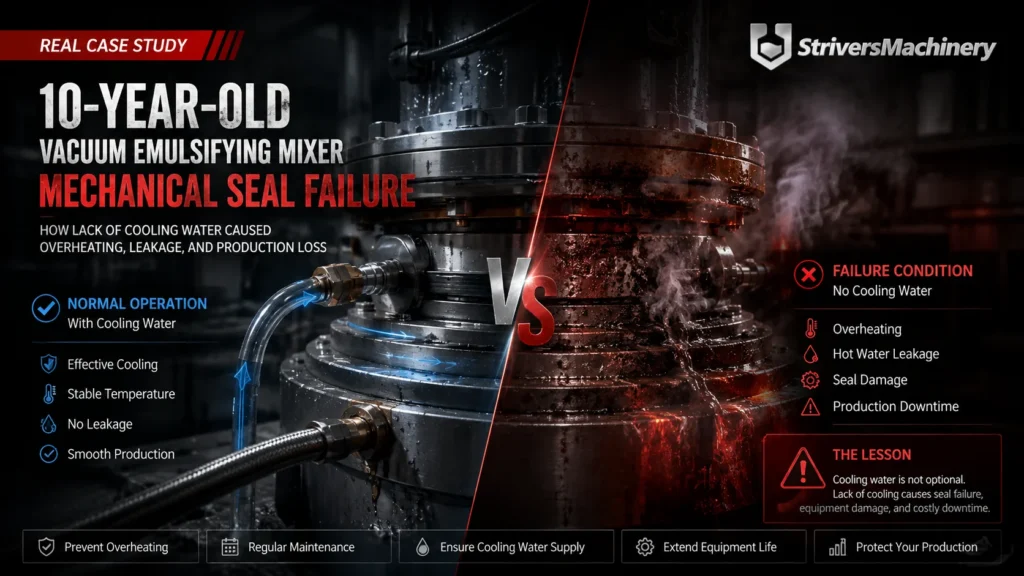
Mechanical-seal leakage, for example, may involve product conditions, alignment, wear or the specified cooling and support services. Review the actual seal assembly rather than assuming that additional lubrication or a colder room will solve the issue. A mechanical-seal cooling failure case illustrates why the support circuit must be investigated separately from general room temperature. Apply the same approach to transfer pumps and other auxiliary equipment.
Record local exposure at open doors, windows, loading areas, washdown points and chilled lines. For compressed-air systems, review compressor cooling, receiver drainage, dryer performance and downstream pipe conditions. Moisture in compressed air requires its own treatment and maintenance assessment; lower room humidity alone does not prove that pneumatic equipment receives suitably dry air.
A compressor package combining a screw compressor, receiver and refrigerated dryer still needs a site-specific air-quality and capacity review. Check the selected package and utilities against actual demand and rating conditions, then monitor drains and dryer performance. The presence of a dryer does not establish suitability for every pneumatic or product-contact air use.
3. Why Standard Maintenance Schedules Need Site-Specific Review
Recommended Equipment
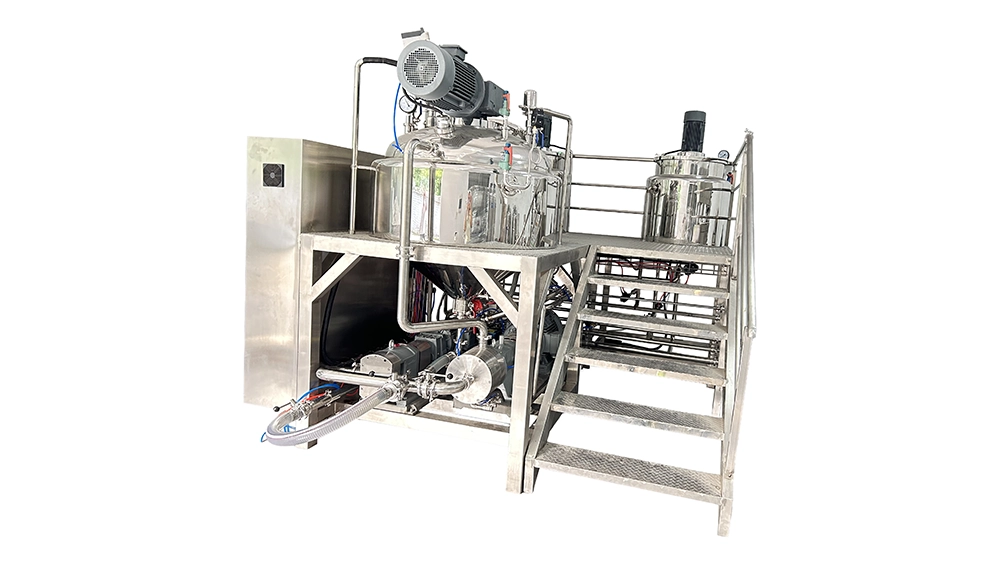
300L Vacuum Mayonnaise Emulsifying Machine with 3-Stage Inline Homogenizer & Oil Water Tanks for Salad Dressing, Ketchup & Sauce Processing
View Details
48kW Industrial Electric Steam Generator Boiler for Reaction Vessel, Emulsifier & Sterilization
View Details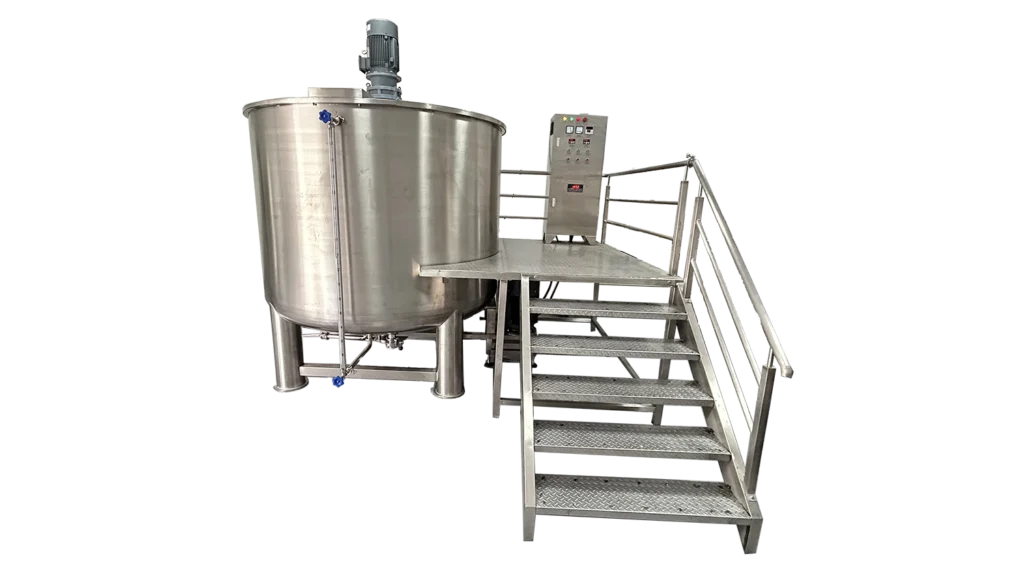

The manufacturer’s schedule is the starting point, including any environmental limits, severe-service provisions and mandatory tasks. Review it against actual operation and failures. A schedule may already account for tropical service; its country of origin does not establish otherwise. Where changes are needed, document the basis, responsibilities and supplier guidance. Do not remove safety-related tasks or extend required intervals merely because recent inspections found no problem.
Where Equipment Deterioration Can Accelerate
Some exposed components may require closer observation, cleaning, servicing or replacement, while protected components remain suitable for the original program. Assess actual temperature, water or particle contamination, running hours, duty and recorded condition. Shortening every lubrication or replacement interval can waste resources and may introduce overgreasing, disturbance or contamination. Inspection frequency, lubrication frequency and replacement criteria are separate decisions.
A quarterly-to-monthly corrosion inspection change can be justified for a particular exposed installation, as in the case below. It is not a general conversion factor for tropical service. Set review intervals from the rate of deterioration, detectability, consequence and time available to respond. Where evidence is limited, an agreed initial observation program can help establish an appropriate baseline without claiming a universal service-life prediction.
Keep the equipment-specific service reference available at the point of planning. A vacuum emulsifying mixer troubleshooting and maintenance guide can help organize a mixer review, but the actual model instructions and installed component requirements remain authoritative. A different pump, dryer or filling machine needs its own approved service information.
Failure Modes Become Different
Heat, condensation, corrosion and biological contamination can alter the balance of failure mechanisms at a site. They also occur outside tropical regions. Do not assume an intermittent control fault is caused by moisture simply because the location is humid. Investigate supply quality, connections, sensors, cooling, components and the observed environmental pattern. Locally collected records help determine which mechanisms deserve additional attention and which remain unconfirmed.
Train personnel to recognize relevant symptoms and to preserve useful information: when the fault occurred, operating state, weather or cleaning event, alarms and safe observations. A general manufacturing troubleshooting approach helps separate symptoms from causes. Escalate tests or access requiring electrical, structural or other specialist competence rather than expecting a routine operator inspection to diagnose every failure.
Maintenance Costs Shift
Choose preventive, condition-based and corrective tasks according to risk and economics. Some low-consequence items can reasonably be replaced after failure; others require planned inspection or protection. Predictive technology is valuable where a detectable change gives enough warning for a useful intervention. Neither reactive maintenance nor sensor-based monitoring is automatically the most expensive or best approach in every application.
Compare maintenance proposals using recorded downtime, repairs, consumables, labor and production impact. Include the hidden costs of equipment ownership, such as access, specialist support, storage and unavailable spares. State assumptions and uncertainty when estimating avoided failures. A larger maintenance budget is not evidence of inefficiency, but a proposed increase should explain which failure mechanism it addresses and how effectiveness will be reviewed.
For a new purchase, compare the cheapest machine proposal with the cost of the protection, access and support the site actually needs. Identify which equipment is made in-house and which specialist systems come from partner manufacturers, and assign maintenance documentation and service responsibilities accordingly. A lower quotation is not inherently unsuitable, but omitted requirements should be resolved before ordering.
Safety Risks Increase
Moisture, degraded electrical connections, leaking chemicals, corroded structures and wet floors can create serious hazards. Identify them through the site’s risk and maintenance processes. Confirm isolation and access requirements before intrusive work. Heat-stress controls must be coordinated with required task protection; choosing lighter PPE cannot justify removing necessary electrical, chemical or mechanical protection. Equipment operating limits and environmental alarms should have defined escalation actions.
Production and hygiene requirements also matter. A failed HVAC system may require assessment of room conditions and product impact, but it does not automatically invalidate every room or batch. Use the applicable quality procedures and recorded environmental evidence. Equipment maintenance, sanitation, worker protection and product release are connected responsibilities, and an action acceptable for an external frame may be unsuitable for a product-contact surface or controlled area.
4. Climate-Adapted Maintenance Strategies
The measures below should follow the identified exposure and failure mechanism. Verify the complete installation after a change, including heat dissipation, enclosure penetrations, hygiene and access. Where a modification changes controls, safeguarding, materials or utilities, use the relevant approval and equipment-upgrade review rather than treating it as a routine consumable replacement.
Review Inspection Frequency
Prioritize assets where the exposure and consequence justify closer observation. Use trends and findings to select tasks, inspection points and response criteria. An operator may check external indicators or visible leakage while an intrusive cabinet inspection requires another procedure and competent personnel. Where a trend worsens rapidly, increase appropriate monitoring or stop for investigation rather than merely scheduling the next calendar visit sooner.
Upgrade Lubrication Management
Review the lubricant specification, actual bearing or gearbox temperature, speed, load, water exposure and delivery method with the equipment and lubricant suppliers. Confirm viscosity, consistency, additives, seal compatibility and any relevant product-contamination requirements. High-temperature or water-resistant grease is not automatically suitable for every bearing, gearbox or seal. Check grease compatibility and the approved changeover method before introducing another product; avoid topping up with a different grease simply because it carries a tropical-service description.
SKF’s relubrication guidance illustrates how operating temperature affects intervals under defined bearing and grease conditions; its adjustment rules should not be generalized to every machine. Mobil’s industrial lubricant guidance also warns that mixing greases can cause incompatibility. Apply the relevant supplier guidance and the actual component requirements rather than choosing a replacement only by a high-temperature or water-resistant label.
Protect Electrical Systems Against Moisture
Select enclosure protection against the actual dust, rain, spray and cleaning exposure. IP65 and IP66 describe specified ingress protection and are not general certificates of resistance to humid air, internal condensation, corrosion or flooding. Cable glands, doors, seals, vents and added components affect the assembled installation. Separately assess dew point, cold surfaces, internal heat load and the need for controlled heating, cooling, dehumidification or approved pressure-management arrangements.
An anti-condensation heater can help maintain relevant surfaces above dew point when correctly selected, located and controlled. It does not remove moisture or replace the cooling needed by a heavily loaded cabinet. Rittal’s enclosure guidance discusses both heating and cooling with managed condensate removal. Review the proposed modification with competent personnel, including mounting, clearances, controls and equipment temperatures. Do not present a heater retrofit as a guaranteed cure for all intermittent faults.
Strengthen Corrosion Protection
Assess 304 versus 316L stainless steel against chloride exposure, product and cleaning chemistry, finish, fabrication, crevices and maintenance. A suitable 316 or 316L grade generally offers improved chloride-corrosion resistance over 304, but it is not immune to attack. Some conditions require another material or design. Remove deposits using an approved method and avoid surface contamination from inappropriate tools or chemicals.
Protective coatings, fasteners and approved corrosion treatments can be useful for defined external locations. Confirm compatibility and application boundaries. Do not spray product-contact surfaces, electrical connections, seals or hygiene-sensitive areas indiscriminately. Review drainage, crevices and dissimilar-metal contact as well as the nominal material grade. A corrosion-resistant replacement should preserve mechanical, hygienic and electrical requirements, not just improve appearance.
Where cleaning or salt removal changes, review the difference between CIP and manual cleaning and confirm the approved chemical, concentration, exposure and rinse conditions. Hygienic radius and drainage design can reduce residue traps, but geometry alone does not establish cleanability. Keep cleaning requirements for product-contact equipment distinct from treatments applied to external frames.
Improve HVAC and Environmental Control
Assess HVAC against actual sensible and latent loads, room requirements and incoming air. Check filters, coils, condensate removal, seals and controls using the approved service plan. More ventilation is not always a humidity remedy: introducing humid outside air can increase the moisture load. Cabinet cooling and room conditioning are different systems and should be assessed at their own measurement points.
Track temperature and humidity where they affect equipment or product, including after shutdown and during door opening or cleaning. Chilled surfaces can condense moisture even in an otherwise acceptable room. Investigate condensate leaks, blocked drains and unsuitable cooling setpoints. Restore the intended environmental performance rather than assuming a running air conditioner proves adequate humidity control or that dehumidification alone will resolve a heat-rejection problem.
Adopt Predictive Maintenance Technologies
Related Solutions


Select condition-monitoring methods for detectable failure mechanisms and assets where intervention has value. Temperature trends, vibration, thermal imaging, oil analysis and corrosion checks answer different questions. Define the measurement location, operating state, baseline, alert criteria and response. An IoT sensor does not automatically identify the cause of an alarm, and collecting more data is not useful unless someone can assess and act on it.
Interpret readings with their limits. Thermal images depend on access, load, emissivity and reflections; temperature alone does not diagnose every loose connection or bearing problem. Oil-analysis sampling must be consistent and interpreted against the lubricant and application. Electrical inspections and thermal surveys need an appropriate safe-work method. Compare the cost and coverage of monitoring with other controls rather than promising universal payback.
5. Maintenance Beyond Equipment
Equipment protection depends on its surroundings. Coordinate building repairs, drainage, housekeeping, utility maintenance and production planning. A maintained mixer below an unresolved roof leak remains exposed. In a complete production line, check how a utility interruption or wet transfer area affects other machines and the quality of material moving between them.
Factory Infrastructure
Inspect roof condition, penetrations, drains, gutters and areas where water can collect or enter production. Review the flood and storm plan for access, safe shutdown, isolation and recovery. After an event, assess both equipment condition and contamination before restarting. Include installation mistakes and water-entry paths in the review so repairs address the cause instead of repeatedly replacing damaged parts.
Spare Parts Storage
Store spares according to their specified packaging, temperature, humidity, light and shelf-life requirements. Bearings may need preserved packaging; electronic assemblies may need moisture and electrostatic protection; elastomer seals need appropriate storage and age control. Not every part requires a fully conditioned warehouse. Use protected local storage or dedicated controlled space where justified, and inspect packaging or indicators before issuing the part.
Identify stock by part number, revision, compatibility and expiry or review date where relevant. First-in-first-out rotation is useful, while first-expiry-first-out may be more appropriate for dated items. Select critical spares from failure consequence, lead time and service history rather than stocking the same seals, bearings and connectors for every machine. A spare part that no longer meets its storage or specification requirements should not be installed merely because it is available.
Workforce and Safety Management
Train maintenance personnel in the site’s actual moisture, corrosion and heat-related risks. Provide task planning, hydration, rest and suitable work arrangements through the site’s heat-stress program. Keep the PPE required for the hazard and address its additional thermal burden through appropriate controls. Schedule demanding work during cooler periods where feasible, without substituting convenience for isolation, competence or safe access.
Include storm warnings, water ingress, wet electrical equipment and environmental alarms in escalation training. Define who may stop equipment, who assesses electrical or structural concerns, and how production is released after repair. Remote technical support can help review records and symptoms, but does not replace competent local inspection or authorization for hazardous tasks.
6. Practical Tropical Maintenance Checklist
The daily, weekly, monthly and quarterly groups below are example planning windows, not mandatory intervals for all tropical factories. Retain original equipment requirements and assign tasks according to risk, condition, operating hours and site procedures. Separate routine external observations from intrusive servicing and specialist testing. Define what finding requires immediate action rather than waiting for the next scheduled review.
Daily
During the agreed operating checks, observe accessible leaks, standing water, alarms, unusual noise and temperature indicators. Keep ventilation paths clear using the permitted method. Record relevant room or utility readings and report changes. Do not wipe wet electrical components, open energized cabinets or remove guards as part of a routine visual check. Use the site’s response procedure for water near electrical equipment or a suspected hazardous defect.
Weekly
At the assigned service opportunity, review filters, cooling paths, drains and exposed corrosion-prone locations. Check cabinet seals, glands and environmental records by an approved method; intrusive access requires the appropriate isolation and competence. Check lubricators against the machine’s actual schedule rather than adding grease automatically each week. Review compressed-air drains and dryer condition where relevant to installed pneumatic functions.
Monthly
Review temperature and condition trends, seal or hose findings, HVAC performance and drainage observations at the frequency justified for the site. Arrange specialist checks where indicated. Insulation-resistance testing is not a universal monthly operator task: inappropriate test voltage can damage PLCs, VFDs, sensors and other electronics. Competent personnel must define the isolated test circuit, disconnect or protect sensitive devices as required, follow the applicable instructions, and ensure the circuit is safely discharged before return to service.
Fluke’s insulation-testing guidance specifically cautions against applying test voltage to connected sensitive electronics. This is why the scope and method must be determined before testing a complete machine circuit. The checklist is a planning aid and should not be used as a stand-alone electrical test instruction.
Quarterly
Decision Guide
At the planned review, compare failures, downtime, inspection findings and environmental trends. Arrange thermal surveys, lubricant analysis or coating assessment where those methods are justified and safely accessible. Replace consumables according to the applicable instructions and condition, not simply because three months have elapsed. Revise documented intervals and response thresholds with the responsible team, preserving mandatory tasks and recording the basis for changes.
How to Assess Climate-Related Maintenance Risks in a Factory
Use this assessment procedure when introducing or reviewing the program. It does not authorize electrical tests, structural inspection or other specialist work outside the person’s competence. The outcome is a documented site plan, not automatic selection of a new material, lubricant or enclosure rating.
- Collect Equipment and Service Information. Gather manuals, rated environmental limits, maintenance schedules, drawings, failure records and applicable site procedures.
- Map the Actual Exposure. Walk the permitted areas and record heat sources, wet zones, salt deposits, cleaning, roof leaks, chilled services and seasonal changes.
- Record Comparable Environmental Conditions. Measure air temperature and relative humidity and relevant surface temperatures with suitable instruments at identified operating and shutdown conditions.
- Review Failures and Inspection Evidence. Compare alarms, repairs, corrosion, leaks, lubricant findings and downtime with operating conditions without assuming climate is the only cause.
- Compare Conditions with Equipment Requirements. Identify gaps against the approved ratings, installation and service instructions, including cabinet cooling, seal support and utility performance.
- Prioritize Tasks and Engineering Reviews. Rank the findings by consequence, deterioration and response time; escalate unsafe conditions and assign specialist assessments where needed.
- Approve the Maintenance and Modification Plan. Agree tasks, intervals, limits, competence, isolation, materials and any supplier-approved changes with the responsible teams.
- Implement and Record the Approved Actions. Carry out authorized work using the applicable procedures and document measurements, parts, settings and verification before release.
- Review Results and Refine the Program. Compare condition, downtime, quality and cost trends, then document justified changes while retaining mandatory requirements.
7. Case Study: How Climate-Adapted Maintenance Reduced Downtime in a Tropical Cosmetic Factory
Working through an actual field example makes the concepts covered throughout this guide considerably more concrete than the general principles alone.
Background: A cosmetic manufacturer operating a coastal facility in a tropical region was running a production line including vacuum emulsifying mixers, filling equipment, and supporting utility systems, following a maintenance schedule largely inherited from the equipment manufacturer’s standard documentation.
Challenges: The facility was experiencing recurring unplanned downtime, particularly around electrical faults that seemed to appear intermittently without an obvious pattern, along with a corrosion rate on stainless steel components that seemed considerably faster than expected for equipment of that specification and age.
Root Causes: Investigation traced the electrical faults directly to overnight condensation inside PLC cabinets, with internal surfaces reaching the dew point of the adjacent humid air during temperature changes. The accelerated corrosion traced back to the facility’s coastal location combined with a stainless steel specification that had not adequately accounted for the chloride exposure at the installation.
Solutions Implemented: The facility upgraded electrical cabinets to a higher IP rating, added anti-condensation heaters to address overnight surface condensation, shifted from a quarterly to a monthly corrosion inspection schedule specifically for coastal-exposed equipment, and began specifying 316 stainless steel for new equipment and replacement components in place of the original 304 specification.
Results: Unplanned electrical downtime dropped meaningfully following the cabinet upgrades, corrosion-related component replacement frequency declined once the stainless steel specification was corrected going forward, and the facility’s overall equipment effectiveness improved as a direct result of fewer unplanned stoppages disrupting production schedules.
Lessons Learned: The facility’s maintenance team found that the existing program did not adequately address the actual overnight condensation and coastal corrosion conditions. Site-specific changes to the protection, materials and inspection program resolved the recurring problems. The quarterly-to-monthly change and use of 316 were measures for this installation, not universal instructions for all tropical equipment.
The verified results support the actions taken at this facility. They do not establish that a higher IP rating alone prevents condensation, that 316 eliminates every corrosion mechanism or that all factories should adopt monthly corrosion inspections. For another installation, identify the actual exposure and failure cause before selecting an equivalent response.
Conclusion
Heat, humidity, water and salt exposure can affect reliability, hygiene and safety, but their consequences depend on equipment design and installed conditions. Use the original equipment instructions and ratings as the baseline, then address gaps supported by measurements and failure evidence. Review protection, materials, utilities, maintenance and the building together rather than relying on shorter servicing intervals to compensate for an unsuitable installation.
StriversMachinery can help coordinate equipment configuration, support requirements and supplier guidance for the intended operating environment. Identify site conditions early, including cooling, compressed air, cleaning, water exposure and maintenance access. For installed equipment, retain useful records and agree the scope of any modification or specialist investigation. Material names, IP ratings and sensor functions should describe an actual supported configuration rather than a generic tropical upgrade.
A useful climate-adapted program has clear tasks, responsible people, evidence-based intervals and actions for abnormal findings. Review its effect on downtime, condition, quality and total cost of ownership, and refine it as the site or equipment changes. The goal is reliable equipment within its intended operating conditions, supported by an appropriate maintenance plan rather than a fixed schedule applied to every factory.