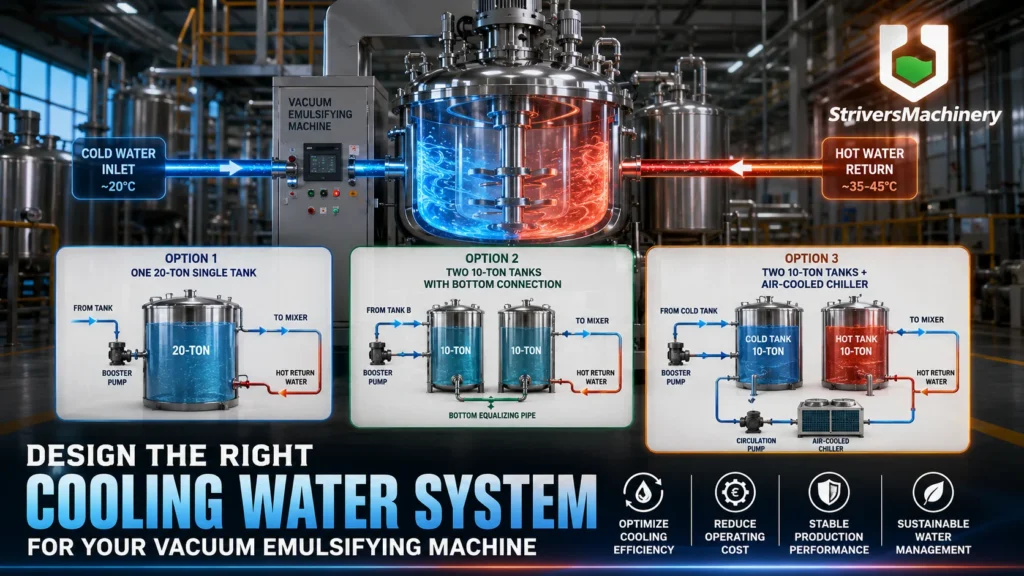
A hydraulic lift high shear homogenizer for paint is worth considering when a rotor-stator workhead improves the wetting, deagglomeration or emulsifying task in your paint process. It is not an automatic replacement for a high-speed disperser or bead mill. Start with the product result you need, then compare the equipment in a representative trial.
Keep a saw-tooth disperser when it meets the specification at a useful cycle time. Evaluate a rotor-stator when localized high shear or a different powder-incorporation method addresses a clear limitation. Keep milling in the process when the required fineness and coating performance still need it. The hydraulic lift adds access and positioning; it does not create the dispersion result by itself. The hydraulic lift high shear homogenizer for paint enhances these processes significantly.
Why Paint and Coating Quality Needs More Than Shear
Understanding the Hydraulic Lift High Shear Homogenizer for Paint
This equipment is essential for achieving optimal dispersion quality in paint and coating manufacturing.
Pigment processing has three connected jobs: wet the powder, break down suitable agglomerates, and keep the dispersion stable. Good equipment helps deliver the mechanical work, while the vehicle, dispersant and formulation help the particles remain distributed.
If you improve only the mechanical step, the batch can still flocculate, settle or change appearance later. Treat formulation and equipment as parts of the same process rather than competing explanations for a defect.
Pigment Agglomeration and Poor Wetting
Agglomerates can leave specks, poor color development or inconsistent appearance. Check whether the liquid wets the powder, how fast material is added, and whether the batch moves effectively through the working zone.
Increasing speed is useful only if it improves that work. A badly fed powder raft, dry pocket or overloaded working zone can remain a problem even with a larger motor. Separate agglomerate breakup from changes to the pigment’s primary particles or strongly bound structures.
Sedimentation
For settling, check dispersion quality together with density differences, low-shear rheology, flocculation and storage conditions. A smaller agglomerate size can help, but more shear alone does not establish storage stability.
Compare the fresh batch with the stored sample. Check both the amount of settling and whether the sediment redistributes acceptably. Do not dismiss a needed formulation change as merely hiding an equipment problem.
Floating Color and Uneven Gloss
Floating and flooding can involve pigment stabilization and compatibility between the color concentrate and base paint. Gloss also depends on formulation, film formation, application and drying. Dispersion is important, but it is only one part of the investigation.
The product-quality troubleshooting approach is useful here: identify when the defect appears and compare controlled samples before assigning a cause. A smooth-looking wet batch is not enough evidence that the dried coating will perform correctly.
Long Dispersion Time
If cycle time is excessive, check powder addition, wetting, solids loading, viscosity, circulation and the chosen endpoint. A rotor-stator may shorten a suitable duty; another process may need improved feeding, a different dispersant or milling.
For an existing machine, review the practical upgrade options before ordering a replacement. Sometimes the useful change is to the feed arrangement, workhead or process sequence.
What the Hydraulic Lift Actually Adds
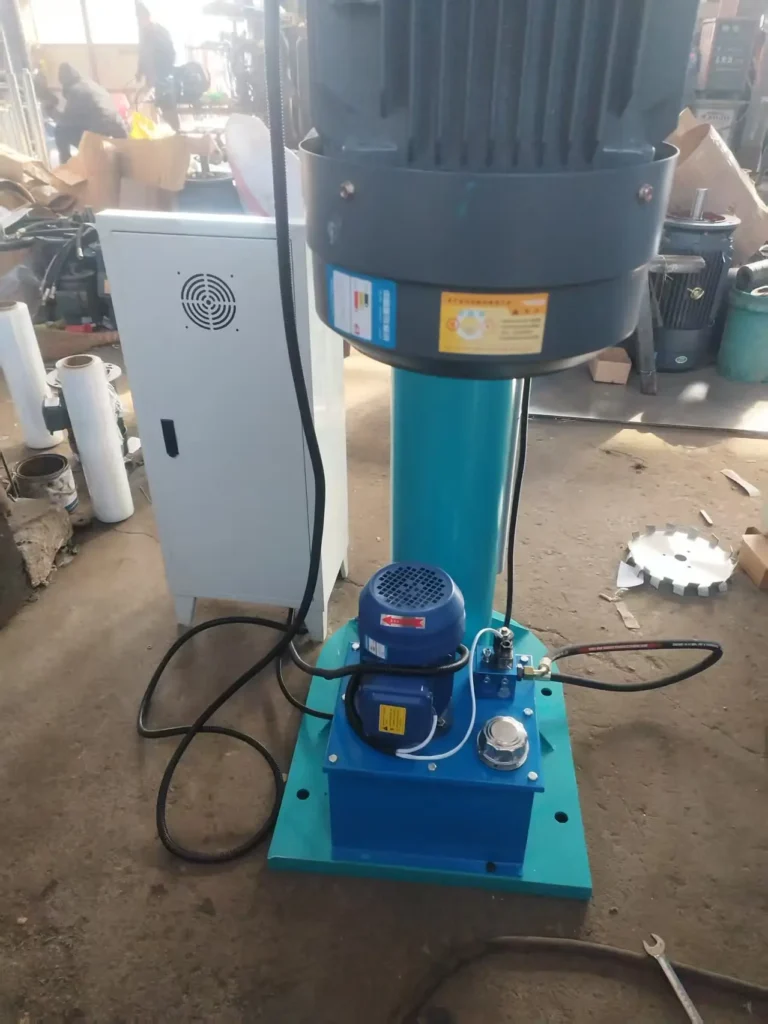
A hydraulic lifting column can raise the mixing assembly for access and lower it into the working position. Depending on the construction, it can support vessel changes or repositioning. Those are practical handling benefits, separate from the workhead’s processing performance.
One machine can serve several tanks only when the geometry, working levels, lift travel, support and handling arrangement allow it. A fixed column does not automatically move between vessels, and a head that works in one tank may circulate poorly in another.
For a hydraulic-lift rotor-stator mixer, request the working-position drawing and application review. The supplier should establish the coating duty from the actual formulation rather than extending a general product description to every paint.
Check guarding, vessel restraint, position detection and the permitted movement sequence. The lift is for the equipment’s intended positioning and maintenance tasks. It should not be treated as permission to raise an operating workhead out of the batch.
Saw-Tooth Disperser, Rotor-Stator or Bead Mill?
| Equipment | Useful role to evaluate | What decides whether it is enough |
|---|---|---|
| Saw-tooth high-speed disperser | Powder incorporation, wet-out and dispersion in a suitable flowing batch | Formulation, disc and tank geometry, solids loading, power input, temperature and measured endpoint |
| Rotor-stator high shear mixer | Localized high-shear deagglomeration, emulsifying or suitable powder-processing duties | Workhead design, material flow through the head, viscosity, abrasive duty and trial results |
| Bead or other suitable media mill | Further dispersion or milling when the specification requires that processing step | Feed quality, pigment and vehicle, media and mill design, temperature control and final product results |
These machines can work together. A disperser may prepare a mill base; a rotor-stator may improve a suitable premix; a mill may still be needed to meet the final requirement. Compare the whole route, not a ranking of machine names.
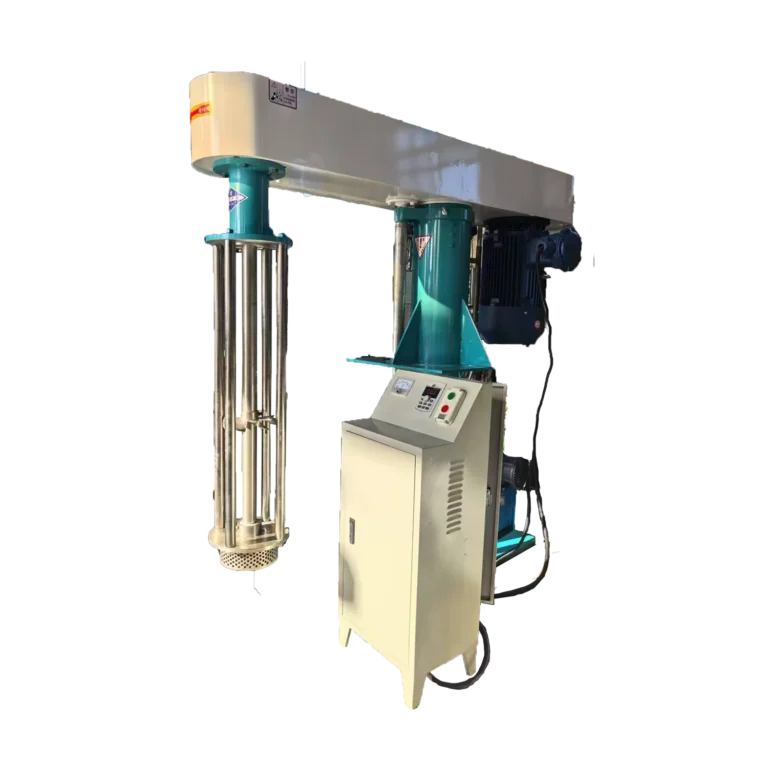
A 7.5kW hydraulic high-speed disperser is therefore a legitimate paint-processing candidate, not a lower-grade version of a homogenizer. The choice depends on what the product trial shows.
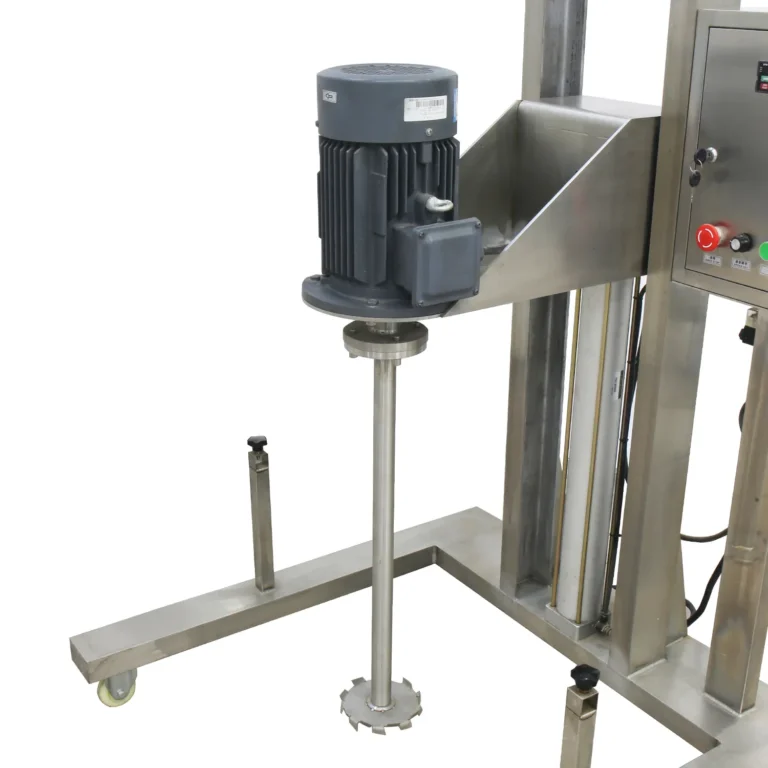
Electric and pneumatic lift arrangements also exist. Compare the intended load, travel, positioning, services and maintenance. A mobile electric-lift disperser demonstrates why lifting and mobility should be compared separately from the disc or rotor-stator design.
How a Rotor-Stator Workhead Processes the Batch
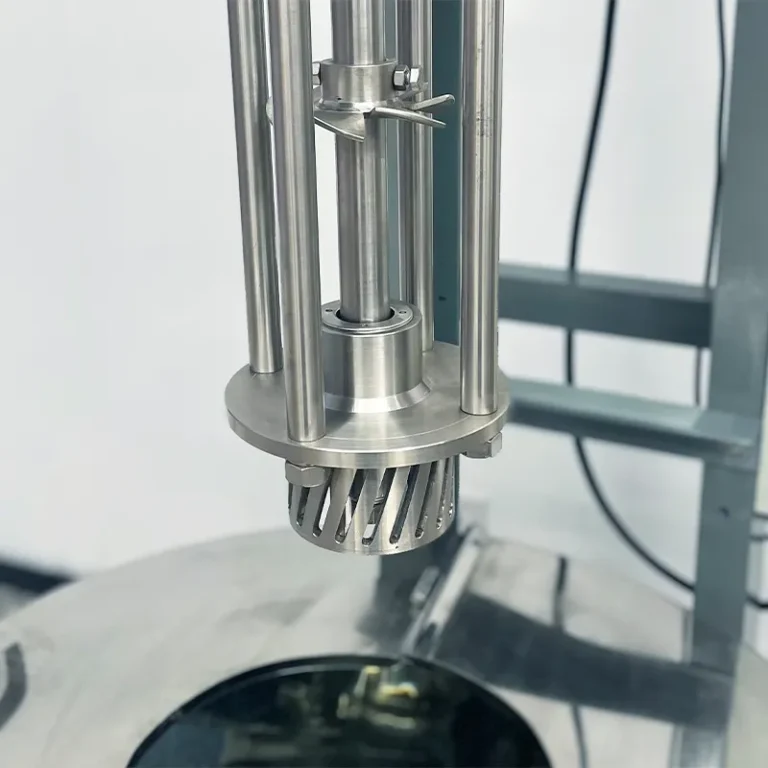
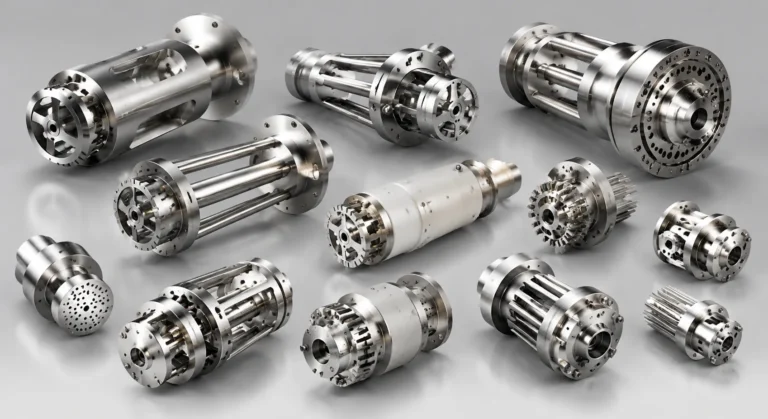
The rotating element creates flow through a close-fitting stationary workhead. Velocity differences and local stresses act on the material as it passes through the head and its openings. The discharge then has to exchange with the rest of the batch.
Recommended Equipment

Mobile Electric Lift High Speed Disperser Mixer for Paint, Resin, Ink, Coating, Adhesive & Chemical Industry
View Details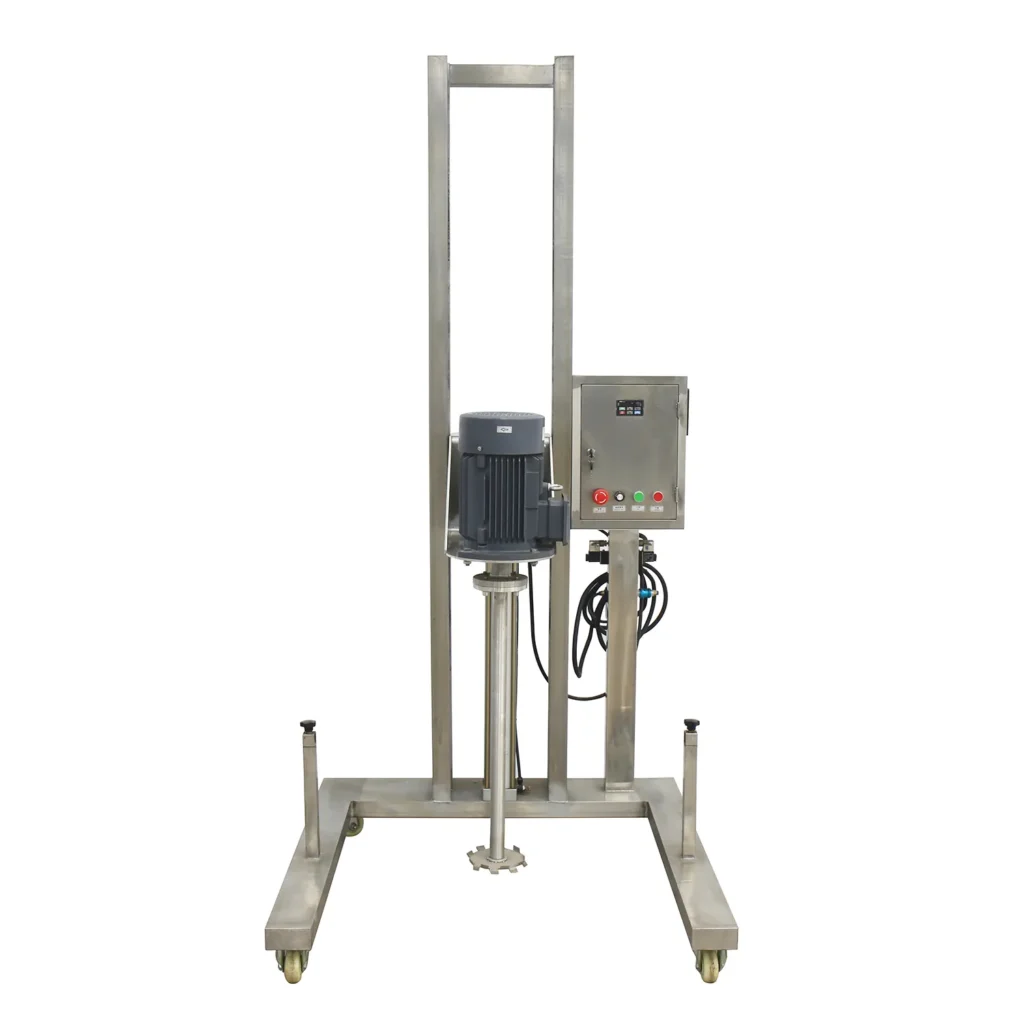
Pneumatic Lifting High Speed Disperser Mixer with Stainless Steel Frame for Paint, Ink, Coating & Pigment
View Details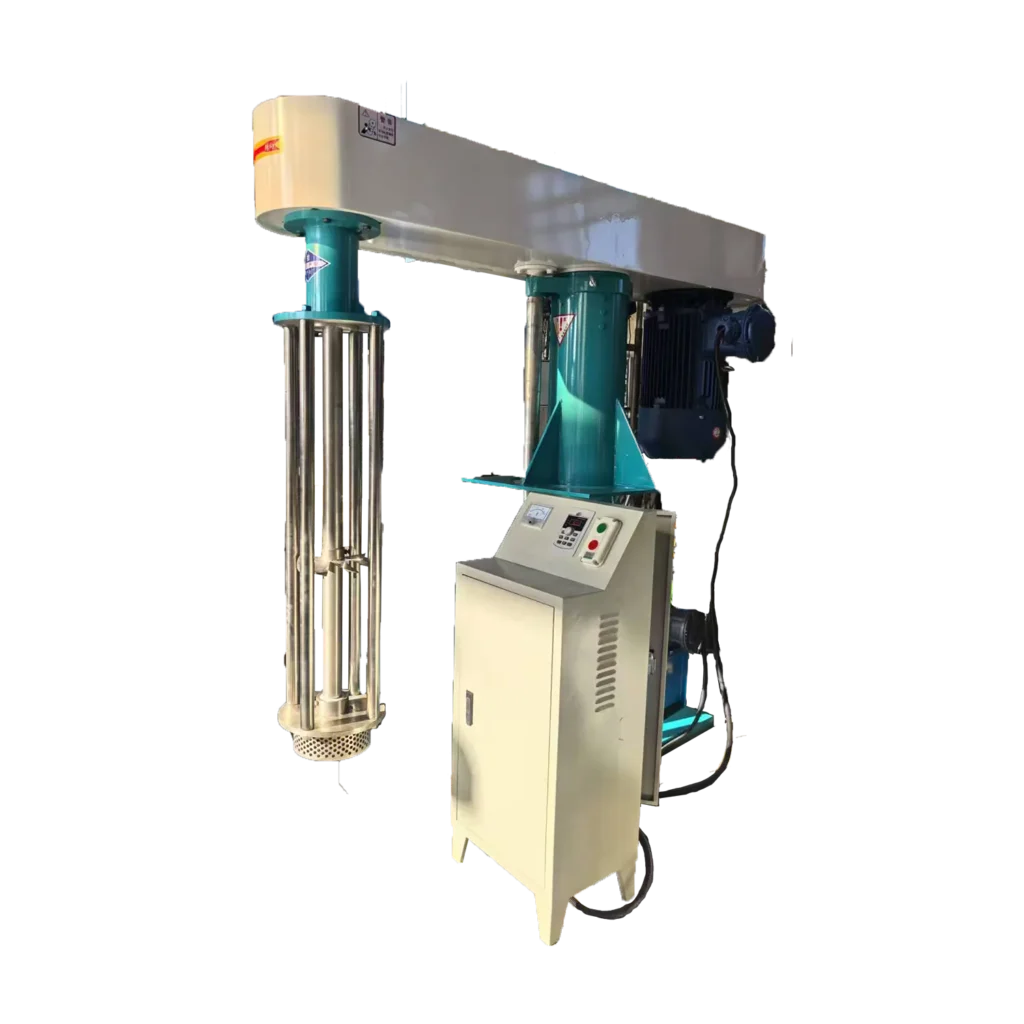

A strong local working zone is useful only when fresh material reaches it. If the product becomes too viscous to circulate or the head is poorly positioned, part of the batch can receive much more processing than another part.
Describe the actual head, not just “high shear.” Ask about the flow path, opening geometry, wear surfaces, allowable duty and how the head is cleaned. The electric-lift high shear mixer provides another mounting arrangement to compare against a hydraulic lift.
Do not assume that a single-, double- or three-stage label creates a universal fineness ranking. Some stages belong to particular inline constructions rather than every lifting batch head. Compare the supplied geometry and its test result.
Cavitation should not be a blanket performance promise. Its occurrence and effect depend on design and operating conditions. Select the machine on demonstrated processing, temperature, flow and wear behavior rather than claiming every rotor-stator needs cavitation to work.
Where This Equipment Fits in Paint Production
Titanium Dioxide and Other Inorganic Pigments
For titanium dioxide, evaluate wetting, agglomerates, color development and hiding performance at defined film conditions. A rotor-stator can be a candidate, but the pigment grade and formulation still matter.
For iron oxides and fillers, check the actual grade and loading rather than ranking all inorganic pigments as easy or difficult. Abrasiveness, density and the amount of liquid available during premixing affect equipment selection.
Carbon Black and Organic Pigments
Carbon black can be demanding because of its structure, surface area and wetting behavior. Test the required color strength or jetness and stability; a machine name or stage count does not establish the result.
Organic pigment behavior also varies by grade and formulation. Agree acceptable temperature and processing conditions. If performance stops improving, adding speed or time without checking the measurement and formulation can waste energy or harm the product.
Resin Emulsification and Letdown
Making an emulsion and blending an existing polymer dispersion into a mill base are different jobs. A rotor-stator can be useful for a defined emulsifying duty. It should not automatically run at high speed during every resin addition.
Follow the formulation supplier’s handling requirements for finished emulsions and sensitive additives. During letdown, the aim is often uniform blending with controlled temperature and air, rather than repeating the most intensive dispersion conditions.
Two-Component and Functional Coatings
For epoxy or polyurethane systems, distinguish preparing a pigmented component from mixing components before application. Required mixing, heat generation, air incorporation and usable working time need separate consideration.
Functional fillers may also need protection from excessive processing. Do not infer fire, corrosion or marine performance from visual dispersion alone. The finished coating needs the tests appropriate to its claimed function.
Water-Based and Solvent-Based Paint
Water-based does not automatically mean low viscosity, and solvent-based does not automatically mean high viscosity. Measure the formulation at the relevant temperature and processing stage.
For fire and explosion risks, review the actual ingredients, release points, powders, operating conditions and hazardous-area assessment. A water-based label does not replace that review. Where a hazardous atmosphere is possible, select the complete equipment arrangement for the required protection and market.
Motor and enclosure options are only part of that work. Include mechanical ignition risks, static control, bonding, ventilation, transfer and controls. State any actual certification and its scope accurately; do not present an available Ex component as proof that the whole installation is suitable.
The open-versus-closed tank comparison helps separate access from containment. If inert gas protection is part of the design, the nitrogen-system review should cover the actual process and safe gas handling rather than treating blanketing as a universal solution.
A Practical Paint Manufacturing Sequence
A useful planning sequence is: prepare the vehicle and additives, incorporate and wet the pigment, disperse, mill where required, complete letdown, adjust the batch, verify quality, and transfer to filling.
Those stages can overlap or change with the recipe. Do not force every paint through the same sequence. Identify where the supplier expects the rotor-stator to add value and what result is required before the next stage.
Transfer also matters. A pump or restriction can affect air, temperature, flow and sensitive components. Use the pump-selection principles to review material handling, then confirm compatibility for the actual coating and cleaning liquid.
Selection Guide: What to Put in the Specification
Product and Batch Range
Provide representative formulations, pigment grades, solids loading, density, temperature stages and viscosity with its measurement method. Include the difficult condition: the initial mill base, a high-solids addition or a cooled batch may place different demands on the equipment.
Give the minimum and maximum working volumes and each vessel’s dimensions. Check head immersion, clearance and circulation at both limits. The scale-up principles apply here: the production process must be checked in its actual geometry, not copied from laboratory rpm alone.
Power, Speed and Head Geometry
Request the permitted speed and load range, workhead dimensions and motor-duty basis. More power can support the specified work, but it does not fix a head that the material cannot flow through.
Illustrative tip-speed calculation: tip speed equals π × diameter × rpm ÷ 60. At 3,000rpm, a 100mm diameter gives about 15.7m/s; a 50mm diameter gives about 7.85m/s. Equal rpm therefore does not mean equal tip speed.
Related Solutions


This example is a calculation, not a recommended operating setting or proof of equal processing at equal tip speed. Geometry, flow, residence and material properties still differ. The drive-arrangement comparison can help identify transmission and maintenance requirements alongside the motor.
Lift, Support and Vessel Handling
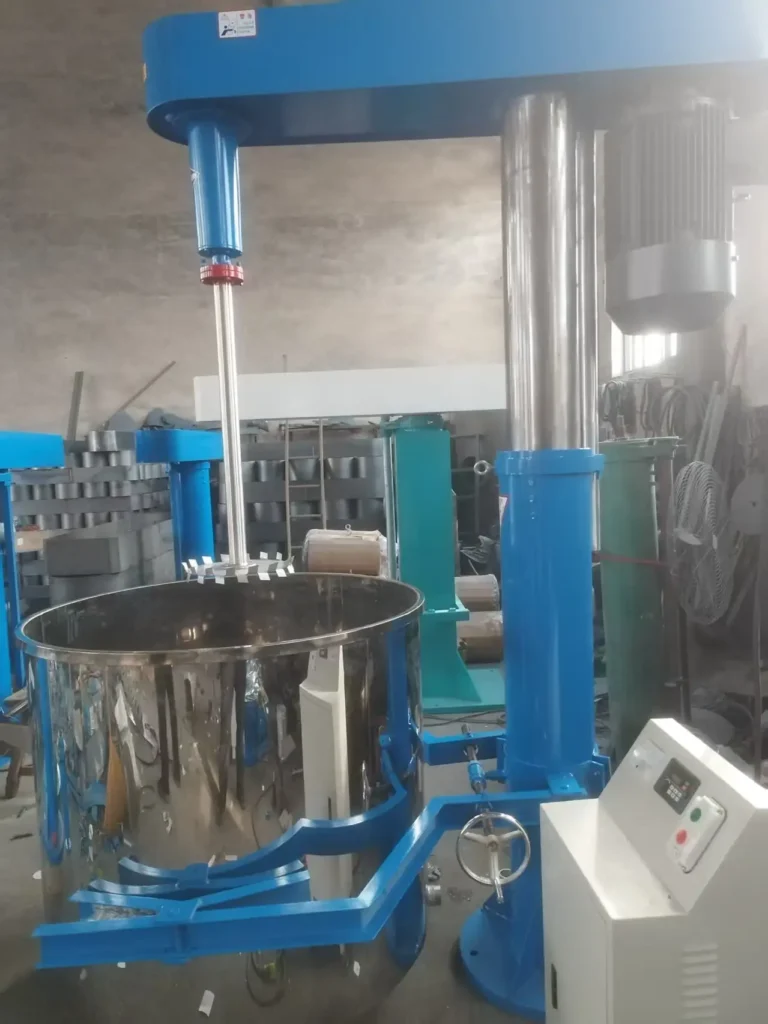
Mark the working height, raised clearance, tank location and route for changing vessels. Confirm how the tank is restrained and which positions permit operation. A proposed one-machine/multiple-tank layout should be demonstrated with all intended vessels.
A pneumatic-lift saw-tooth disperser offers a different handling option. Choose the lifting arrangement for its actual load and workflow, not a general claim that hydraulic movement always produces better dispersion.
Materials, Wear and Cleaning
Review the vehicle, pigments, solvents and cleaning agents against the wetted materials and seals. The 304 versus 316L comparison is a starting point for questions, not a coating-specific compatibility approval.
Identify abrasive-duty parts, inspection access and replacement criteria. Check the connection arrangement and residue-retaining joints as part of the cleaning review.
Color change can be the limiting operation in a shared machine. Compare the actual dismantling, washing, inspection and restart tasks. Use the cleaning-method comparison to distinguish a useful washing aid from a complete verified cleaning process.
What to Measure in a Product Trial
Give the trial a decision to answer: can this configuration meet the product requirement at a useful cycle time, without unacceptable temperature, air, wear or cleaning work?
Record the formulation and raw-material lots, addition sequence, vessel, batch mass and volume, working head, speed profile, time and temperature. Use comparable feed conditions when judging alternative machines.
Use the Right Quality Measurements
A grind gauge is useful for assessing fineness of dispersion and the presence of coarse particles or agglomerates. It does not provide a complete particle-size distribution or demonstrate a sub-micron result.
Choose additional measurements for the question: color strength, rub-out behavior, gloss at defined film conditions, viscosity or rheology, storage stability and, where needed, a suitable particle-sizing method. A good grind reading alone cannot establish every coating property.
Compare Time and Energy at the Same Endpoint
Illustrative energy comparison: one route uses an average 8kW for 30 minutes, or 4.0kWh. Another uses 12kW for 15 minutes, or 3.0kWh. If both produce an accepted 100kg batch, their process energy is 0.040 and 0.030kWh/kg respectively.
The figures are simulated and exclude feeding, cooling, cleaning and downstream milling. They show why motor nameplate power alone does not answer the efficiency question. If product quality differs, the energy figures are not a like-for-like comparison.
Include changeover, handling and maintenance in the total cost of ownership. Check the installation and operating costs before presenting a shorter dispersion cycle as a complete payback calculation.
Common Production Problems and Better First Checks
| Symptom | Useful first checks | Avoid this shortcut |
|---|---|---|
| Specks or coarse particles | Sample identity, contamination or skinning, wetting, agglomerates, feed sequence and achieved fineness | Assuming every speck needs a larger motor |
| Settling or hard sediment | Dispersion, flocculation, low-shear rheology, density differences and storage conditions | Adding shear without checking suspension stability |
| Floating color or shade differences | Pigment stabilization, compatibility, raw-material lots and controlled film tests | Assuming PLC speed control alone fixes the formulation |
| Excessive foam | Feed route, surface drawdown, head position, temperature and formulation air-release behavior | Raising speed to force foam through the workhead |
| Rising viscosity or temperature | Comparable measurement conditions, addition history, solvent or water loss, structure development and heat removal | Increasing power before understanding the change |
| Long cycle with little improvement | Working-zone flow, loading, fineness trend, head condition and whether milling is required | Extending time indefinitely |
Investigate mechanical faults with the machine safely isolated. Operational measurements and hands-on inspection are different tasks. Do not measure rotor-stator clearance or work around an exposed shaft while the machine runs.
Decision Guide
Maintenance and Best Practices
Inspect the lift, vessel restraint, guards, connections and required services before use. During operation, watch for changes from the verified baseline: temperature, load, noise, vibration, flow and product result.
A change in equipment noise is a clue, not a diagnosis. Stop and investigate abnormal behavior under the equipment procedure rather than compensating with new speed settings.
For the working head, use the specified wear limits and inspection method. Abrasive duty can change clearances and surfaces. Confirm which seals or bearings are actually fitted instead of assigning every batch mixer the same mechanical-seal maintenance plan.
Check hydraulic oil, hoses, lifting components and any position controls to the equipment schedule. Repair leaks and erratic movement before relying on the lift for routine handling.
For cleaning, identify dried films, trapped residue and color carryover. The inspection of retention areas can help structure that review, while solvent compatibility and waste handling need their own process-specific decisions.
Use the installation readiness checks before startup or a major relocation. A shared mixer needs a safe arrangement for every approved tank position, not only the first vessel used during commissioning.
Related Industries: Check the Duty Before Extending the Claim
Rotor-stator equipment can be evaluated for inks, suitable adhesives, slurries and other liquid-solid or liquid-liquid duties. Similar processing words do not establish that one machine can make every product.
For high-viscosity sealants or filled silicones, material movement may require a different mixer concept. Battery and ceramic slurries can bring additional requirements for contamination, structure, wear and material handling. Treat those as separate application reviews rather than evidence that a paint configuration is universally suitable.
Our Recommendation for Paint and Coating Buyers
Begin with the specification you need to meet and the current process limitation. Keep an effective disperser, test a rotor-stator where its working action adds value, and retain milling where the product needs it. Then choose the lift and tank-handling arrangement that makes the selected process practical.
StriversMachinery manufactures core mixing equipment in-house and coordinates complementary equipment with long-term partner factories. We can review a disperser, rotor-stator or combined arrangement around your product and project scope. The manufacturing and integration model explains how responsibility should be identified across that scope.
Send the formulation type, pigments and loading, batch range, viscosity conditions, tank drawings and acceptance measurements to [email protected]. Include the problem with the present process. That gives us a useful basis for proposing equipment and a trial, rather than simply quoting a larger motor.
Technical References
- BYK: The Dispersion Process — wetting, agglomerate breakup and stabilization
- BYK: General Industrial Coatings — Technical Questions — pigment stabilization, compatibility and floating or flooding
- ROSS: Recommended Mixing Equipment for Pigment Dispersions — dispersers, rotor-stator processing and milling routes
- ROSS: Saw-Tooth Dispersers vs. Rotor-Stator Mixers — equipment roles and selection differences
- BYK-Gardner: Product Catalog — Fineness of Grind Gages — measurement purpose and limitations; consult current documentation for the selected instrument
- HSE: Formula for Health and Safety — chemical mixing and blending risk controls