300L Perfume Making Machine with Chilling Freezing Filtration & Pneumatic Agitator for Eau de Toilette, Cologne & Essential Oil Processing
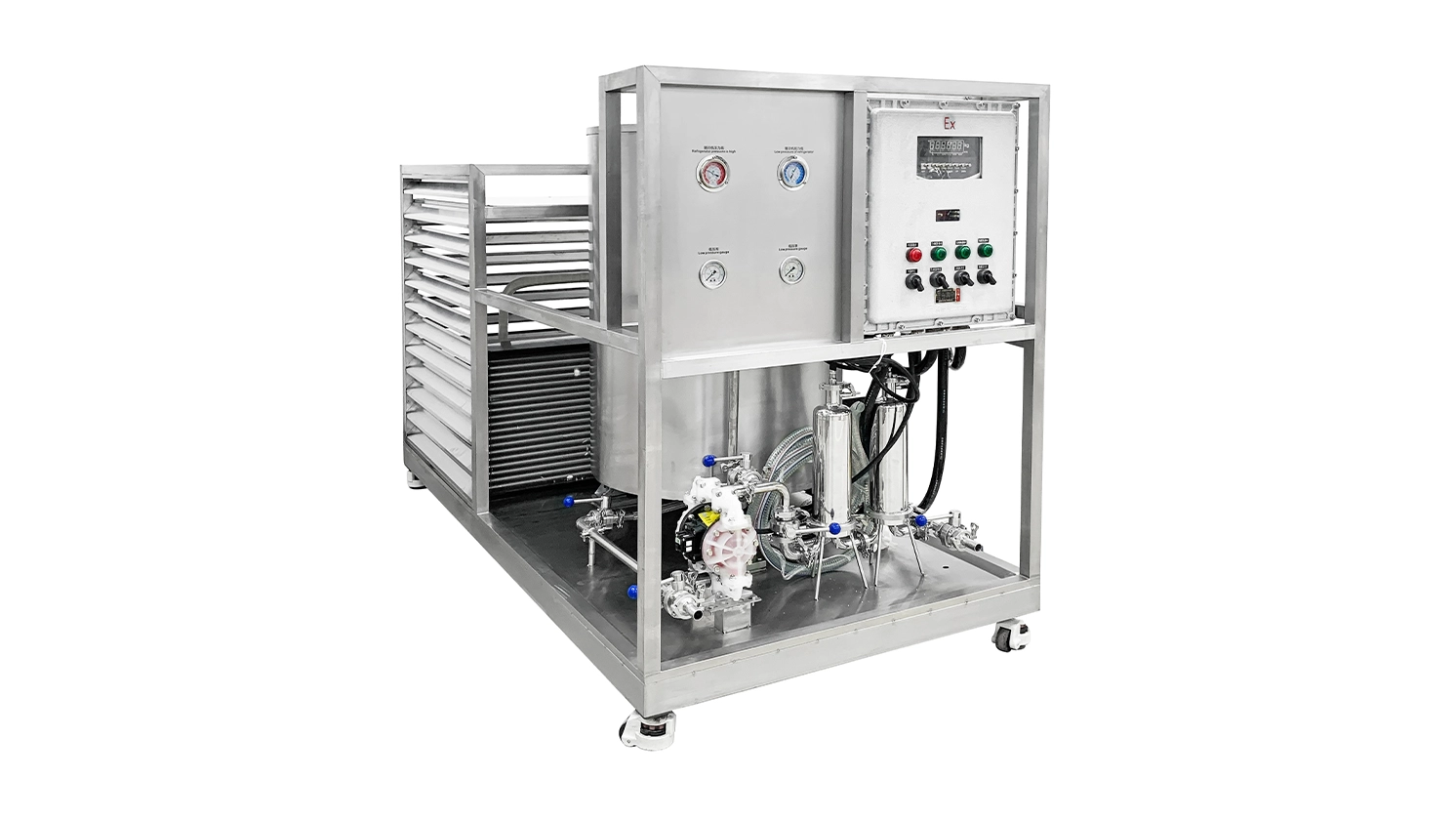
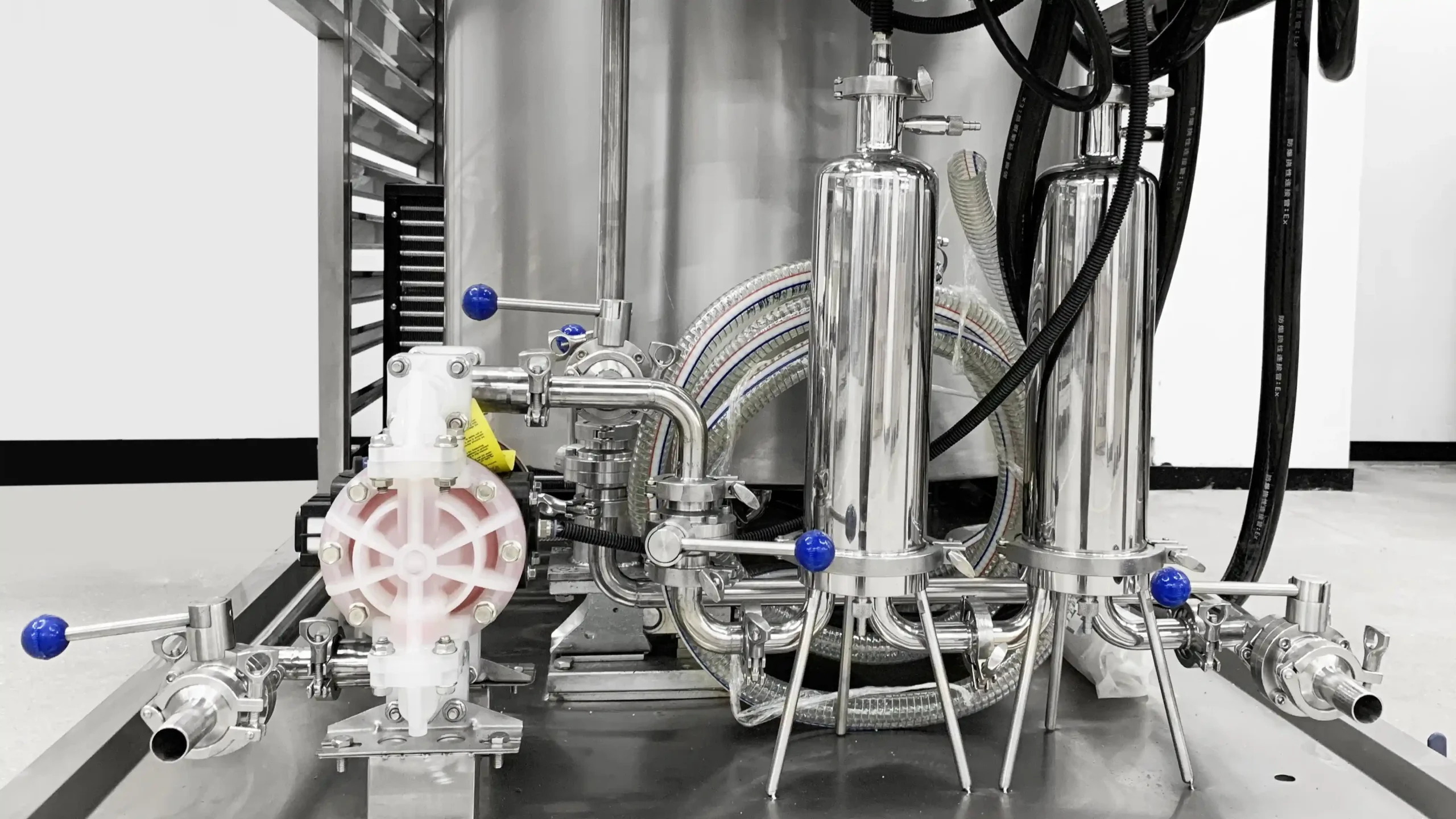
The 300L Perfume Making Machine is a batch chilling and filtration system for compatible eau de toilette, cologne and fragrance formulations. It combines pneumatic propeller agitation, titanium-coil refrigeration and two-stage filtration before downstream filling. Within the perfume production equipment range, this model provides a low-temperature clarification stage rather than a complete fragrance-development or automatic bottling line.
| Equipment Type | Perfume Chilling & Filtration Machine (Perfume Making Machine) | Agitator Type | Propeller / High Shear Disperser (Equipped with Explosion-Proof Electric Motor for High-Velocity Fluid Uniformity) |
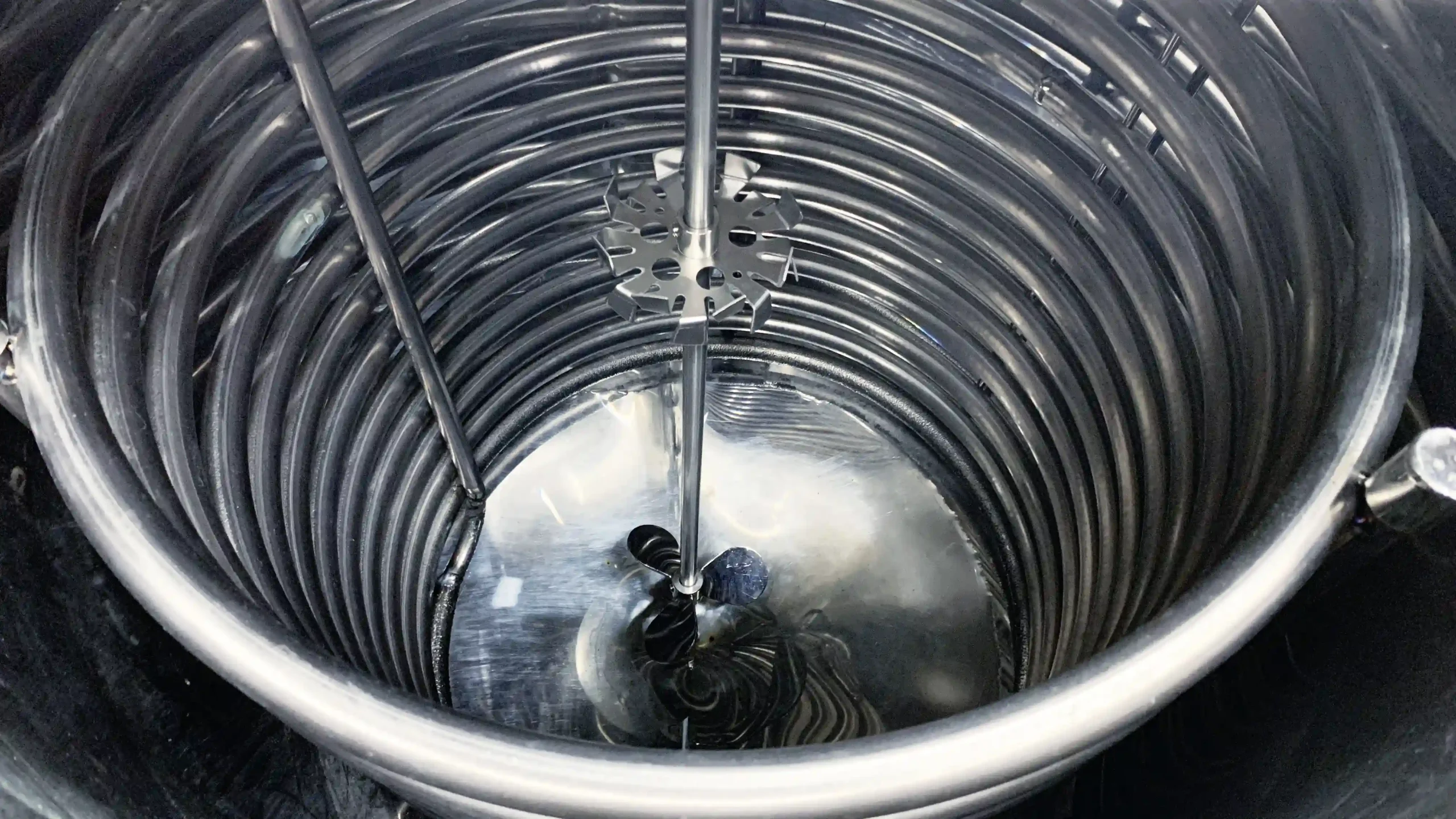
| Contact Material | Premium SUS316L stainless steel for all fluid contact zones | Cooling Method | Titanium Coil Evaporator Cooling |
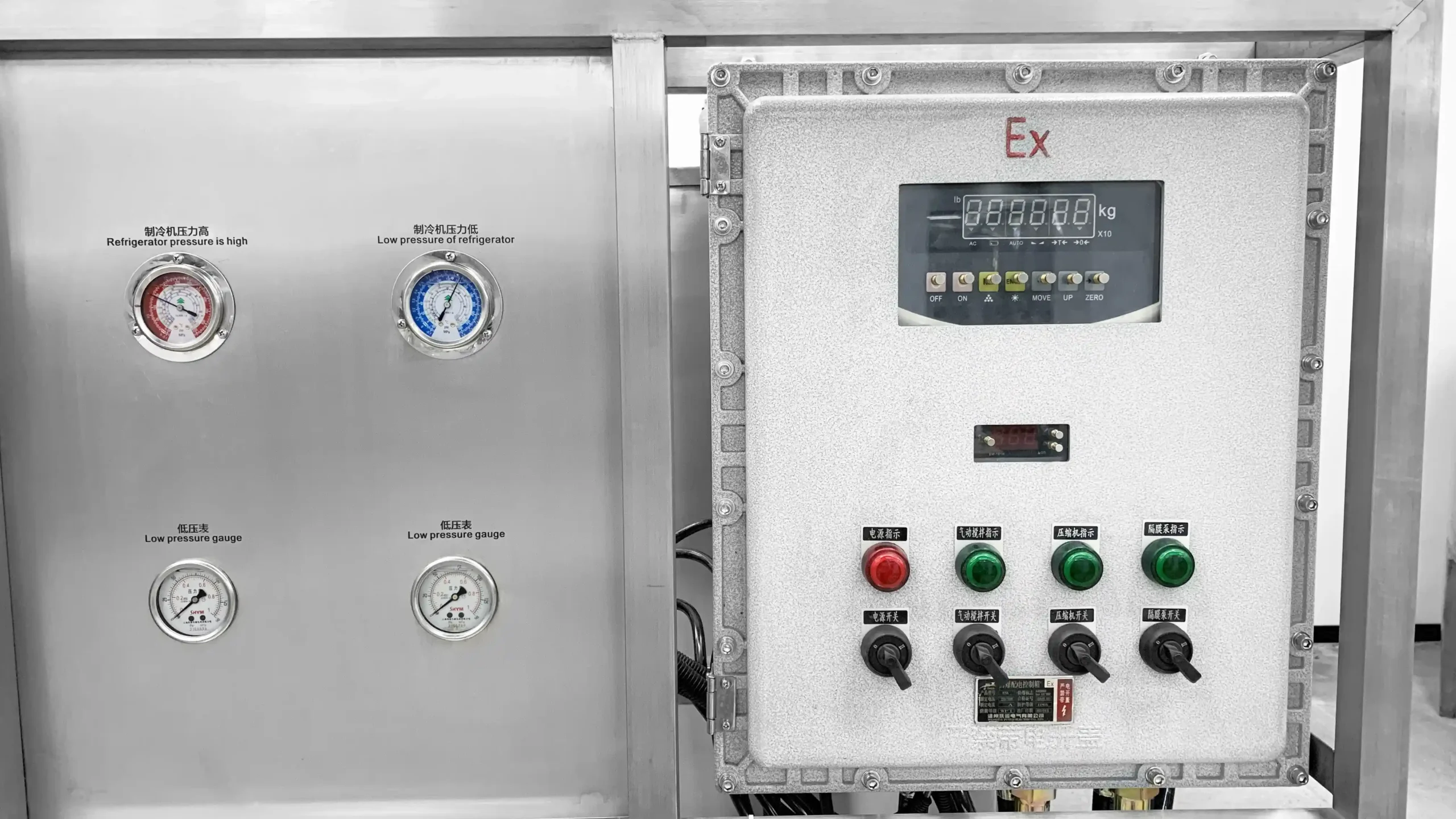
| Explosion Proof | Explosion-Proof Configuration | Voltage | Configurable to local grid (110V–480V, 50/60Hz, Single or 3-Phase) |
| Production Capacity (L/Batch) | 300 | Total Power (kW) | 3.75 |
| Tank Volume (L) | 360 | Air Pressure | 0.4–0.8 MPa |
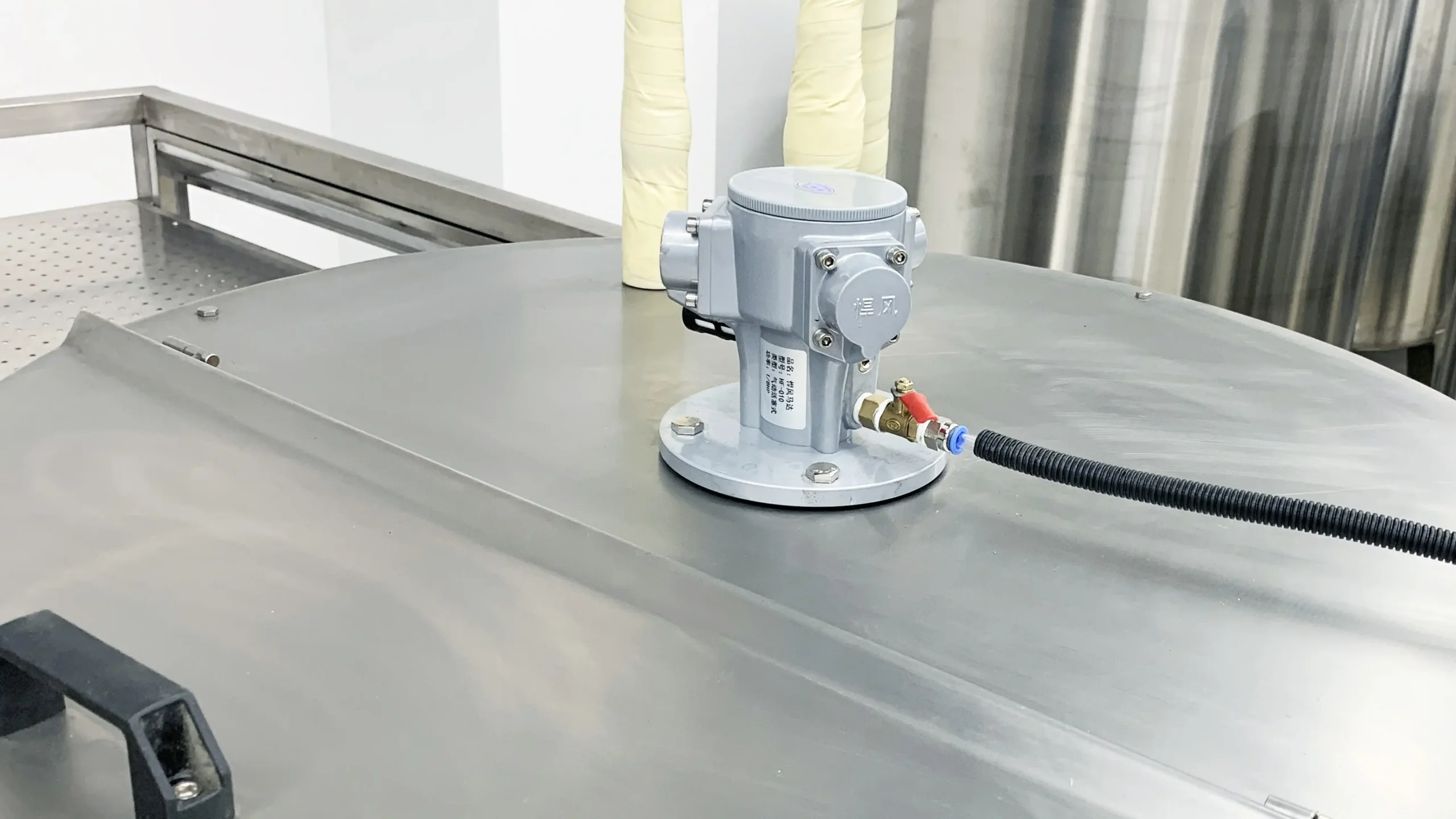
| Mixing Speed (rpm) | 0–1400 rpm | Drive Type | Pneumatic |
| Cooling Temperature | Sub-Zero (-5°C to -10°C) Perfume Clarification System | Installation Type | Floor-Standing |
| Aging Time | 24–48 Hours | Automation Level | Semi-Automatic |
| Filtration Precision | Multi-Stage Custom Precision System (1.0 μm Pre-filter → 0.45 μm / 0.22 μm Final Polish: Achieves Diamond Clarity without Flow Bottlenecks) | Control System | Push Button Control |
| Filtration Stages | Double Stage Filtration | Machine Dimensions(L*W*H)mm | 1600*1100*1900 |
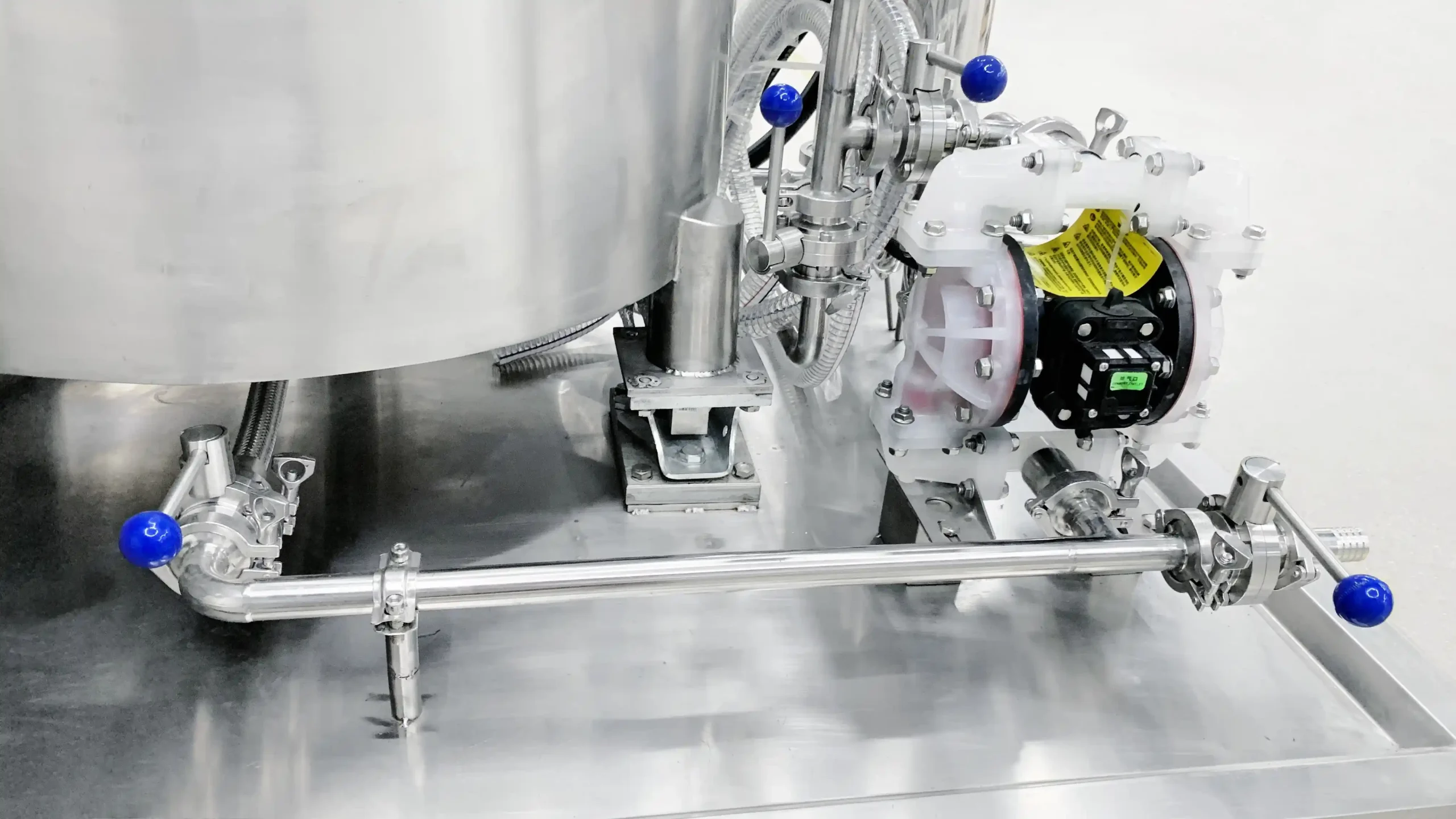
| Pump Type | ARO Pneumatic Diaphragm Pump / Air Operated Diaphragm Pump | Machine Weight (kg) | 500 |
Product Gallery
Product Video
Product Overview
This machine prepares compatible fragrance batches for filtration by combining low-temperature treatment with pneumatic mixing. Its propeller agitator distributes the liquid during the approved processing sequence, while the refrigeration arrangement uses a titanium coil evaporator.
For perfume and fragrance production, chilling can form part of a process intended to separate cold-sensitive insoluble material before filling. The required conditions depend on the formula, alcohol and water proportions, fragrance ingredients and intended finished-product checks.
The supplied cooling range is −5°C to −10°C. This is not a guarantee of a particular cool-down time under every batch and ambient condition. “Freezing” refers here to the low-temperature clarification process, not a requirement to freeze the complete batch into a solid.
Filtration uses a 1.0 μm first stage followed by a selected 0.45 μm or 0.22 μm final stage. An air-operated diaphragm pump transfers product through the filter arrangement. Filter media, seals and the actual pump model require compatibility selection.
The system is semi-automatic with push-button control. Pneumatic agitation does not eliminate the electrical supply needed by the refrigeration and control equipment. Essential-oil applications require a separate assessment rather than assuming that every neat oil should receive the same chilling treatment.
Machine Configuration
The assembly combines a batch vessel, titanium-coil refrigeration arrangement, pneumatic propeller agitator and two-stage filtration circuit. The vessel and refrigeration system establish the approved low-temperature condition before or during the defined clarification process.
The agitator uses an air motor, without an electric high-speed disperser. Its actual speed range must follow the delivered assembly specification. A separate air-operated diaphragm pump moves product through the selected filter stages.
The first filter is specified at 1.0 μm. The second stage uses either 0.45 μm or 0.22 μm media according to the agreed product requirement. Cartridge construction, retention rating and sealing materials require final selection.
Push-button controls support operator-led processing. The stated explosion-proof configuration must be documented for the supplied components and installation. Vessel product-contact material is specified as SUS316L, while titanium is separately identified for the cooling coil. Confirm the complete wetted-material schedule before purchase.
Key Features
- Pneumatic propeller agitation provides liquid mixing without an electric high-speed disperser.
- Titanium-coil refrigeration supports the specified low-temperature perfume clarification duty.
- A dedicated prefilter precedes the selected final filtration stage.
- Final-filter selection accommodates different verified product and clarification requirements.
- Air-operated diaphragm pumping provides the specified transfer mechanism through the filtration circuit.
- Push-button operation keeps process-stage decisions under direct operator control.
- A defined batch vessel supports coordination of chilling, filtration and downstream handling.
- The supplied explosion-proof configuration can be reviewed against the actual application and site.
Applications
- Cosmetic Cream & Lotion, and Skin Care
- Perfume & Fragrance Products
Recommended Machines
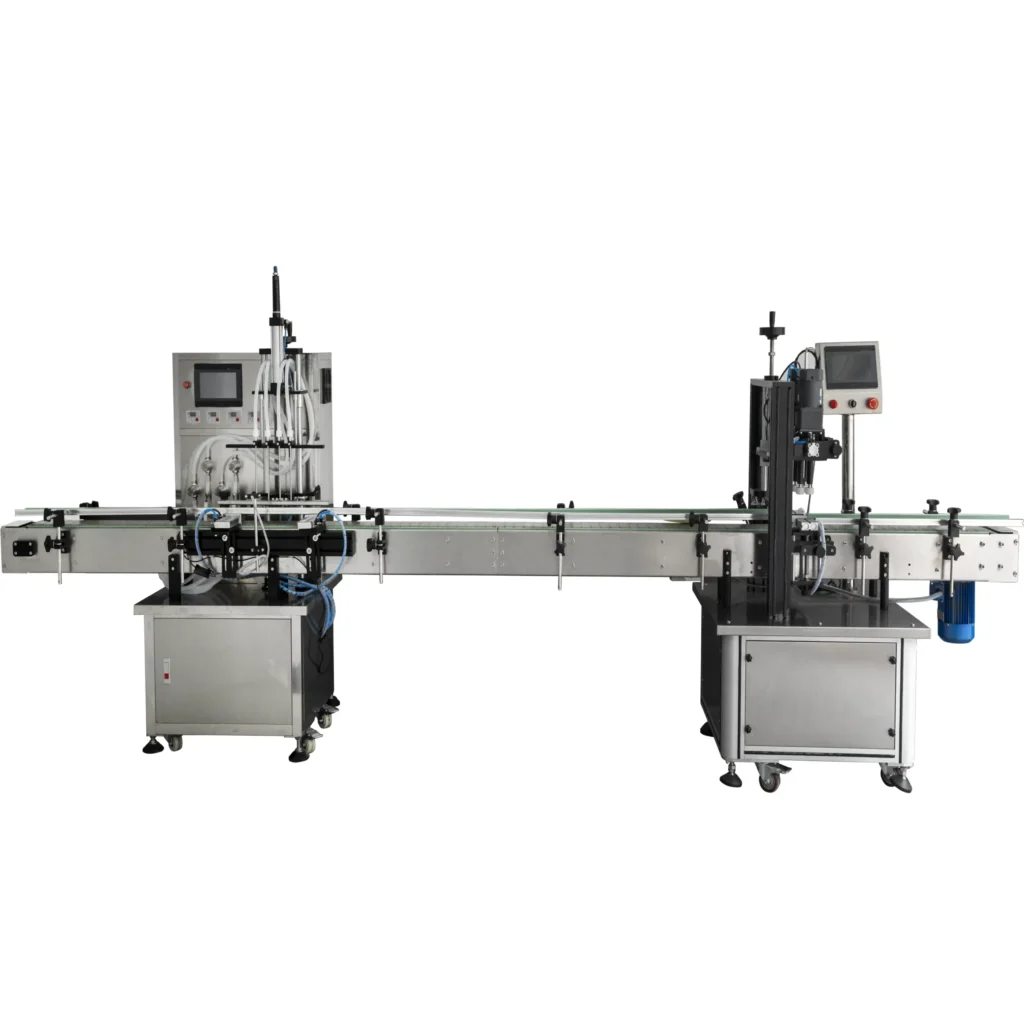
Automatic Four-Head Magnetic Pump Liquid Filling and Bottle Capping Machine for Perfume, Essential Oil, Toner, E-Liquid, Reagent and Alcohol
View Details
Semi-Automatic Perfume Bottle Collar Pressing Machine for Perfume, Cologne, Body Mist and Essential Oil Bottles
View Details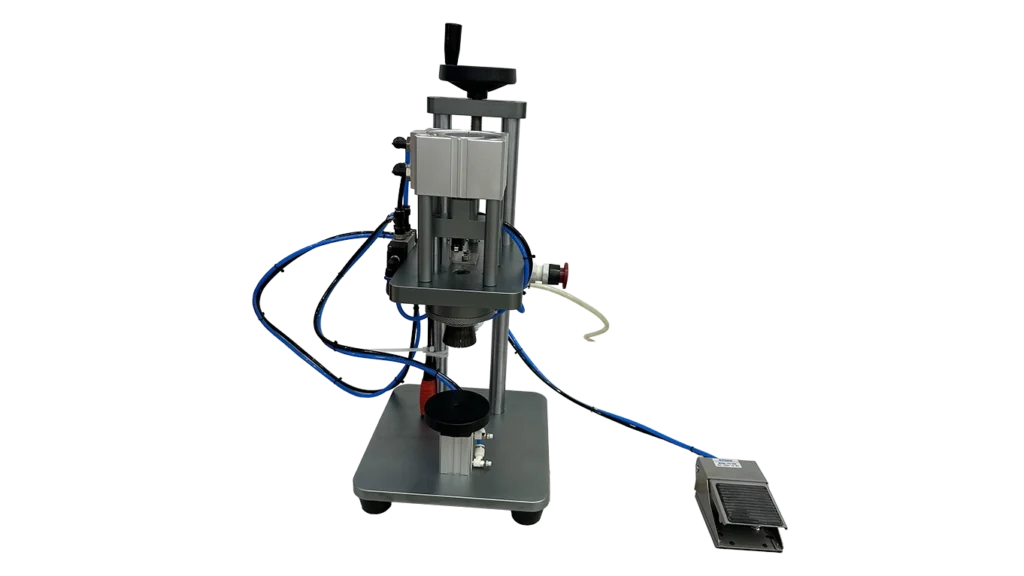
Working Principle
Production begins with charging a compatible, prepared fragrance blend into the vessel according to the approved process. Ingredient blending and any required maturation should be defined separately from the chilling and filtration stage.
The air motor drives the propeller agitator to distribute the liquid. Operators use the permitted agitation settings for the batch, avoiding unnecessary surface disturbance or air incorporation. No electric high-speed dispersion stage is included.
The refrigeration arrangement removes heat through the titanium coil evaporator. The batch is brought toward its approved low-temperature condition. Depending on the formulation, chilling may encourage certain insoluble materials to separate so they can be addressed by filtration.
The necessary holding period and mixing sequence must be established with the actual formula. The listed temperature range and suggested aging period do not provide one universal procedure for all perfumes.
The air-operated diaphragm pump then transfers product through the two-stage filter arrangement: first through the 1.0 μm prefilter, then through the selected 0.45 μm or 0.22 μm final filter. The operating method should control flow and pressure within the limits of the pump, housings and filter elements.
The filtered batch proceeds to an approved receiving vessel or filling stage. Finished-product checks should address the required clarity and other relevant quality properties. A filter pore-size label alone does not establish sterile processing, unchanged fragrance character or long-term clarity under every storage condition.
Optional Upgrades & Configurations
Suitable Products
| Warranty | 24 Months | Payment Terms | 40% T/T Deposit, 60% Balance Before Shipment (Alibaba Trade Assurance Available) |
| Lead Time | 15–20 Working Days | Packaging | Standard Export Fumigation-Free Wooden Case |
After-Sales & Technical Support
🔧 Common Problems
Possible observable symptoms include slow cooling, differences between temperature readings, persistent haze after filtration, reduced filter flow, increasing pressure indications, intermittent pump delivery, excessive surface disturbance or air bubbles in the receiving product. Operators may also observe changes in filtered-product appearance or fragrance character, leakage around a filter housing, pump connection or seal, irregular agitator response, refrigeration alarms or residue remaining after changeover. A product may appear clear immediately after filtration but show a different condition during later observation. These are potential observations rather than confirmed defects. Record the formulation, batch quantity, cooling conditions, filter specification and operating stage when investigating a symptom.
🛠 Troubleshooting
Problem: The batch cools more slowly than expected. Possible Cause: Starting temperature, batch quantity, ambient conditions or refrigeration operation differ from the approved test. Recommended Solution: Review the recorded conditions and temperature measurement. Have qualified personnel inspect the refrigeration system before changing its settings.Problem: Haze remains after filtration. Possible Cause: The chilling or holding conditions are unsuitable; the filter specification or installation does not address the material present. Recommended Solution: Review representative samples, filter seating and the agreed clarification procedure. Do not assume a finer cartridge will resolve every formulation issue.Problem: Filter flow decreases during processing. Possible Cause: Filter loading, restricted pipework or an unsuitable operating condition. Recommended Solution: Check available pressure indications and the approved flow route. Stop before exceeding component limits and inspect the filters under the safe-change procedure.Problem: The diaphragm pump delivers intermittently. Possible Cause: An interrupted air supply, restricted inlet or worn pump components. Recommended Solution: Review accessible air and product-path conditions. Arrange model-specific inspection before replacing parts.Problem: The agitator responds irregularly. Possible Cause: Air supply or regulation differs from the required conditions; the air motor needs inspection. Recommended Solution: Check the approved air-service conditions and obtain qualified service support.Problem: Product leaks around a filter housing. Possible Cause: Incorrect assembly, a damaged seal or incompatible sealing material. Recommended Solution: Stop transfer and depressurize the circuit through the approved procedure before inspection.
🧼 Cleaning Method
1. Recover the remaining product through the approved transfer route. 2. Stop refrigeration according to the equipment shutdown instructions. 3. Stop the pneumatic agitator and transfer pump. 4. Isolate electrical and compressed-air supplies under the site's lockout procedure. 5. Depressurize the product and filter circuits through the approved method. 6. Remove the filter elements according to their safe-handling instructions. 7. Dispose of single-use elements through the approved waste procedure. 8. Drain retained product from the housings and accessible pipework. 9. Apply an approved cleaning medium compatible with the residue and installed materials. 10. Clean accessible vessel and agitator surfaces through the approved access method. 11. Clean the filter housings according to their component instructions. 12. Clean the diaphragm-pump product pathway using its approved procedure. 13. Rinse or otherwise remove cleaning-agent residue to the required acceptance standard. 14. Inspect accessible product-contact surfaces for residue before reassembly. 15. Install the approved filter elements in the correct stage positions. 16. Release the system after the required changeover checks are complete.
📋 Maintenance
1. Isolate electrical and compressed-air supplies before preventive maintenance. 2. Depressurize the product circuit before opening service connections. 3. Inspect the propeller and accessible shaft surfaces for damage or deposits. 4. Service the air motor according to its manufacturer's maintenance instructions. 5. Inspect accessible air hoses and connections for deterioration. 6. Examine diaphragm-pump wetted components during approved service access. 7. Inspect filter-housing seals for damage or chemical deterioration. 8. Review filter-loading records against the approved replacement criteria. 9. Arrange qualified servicing of the refrigeration circuit. 10. Inspect refrigeration ventilation paths according to the equipment instructions. 11. Verify temperature instruments under the site's approved checking procedure. 12. Inspect product hoses and connections for leakage or deterioration. 13. Arrange qualified inspection of the supplied explosion-protection provisions. 14. Check required bonding and grounding connections under the approved electrical procedure. 15. Verify installed stop functions through the approved functional-check method. 16. Record maintenance findings against the machine and component identification.
⚙️ Installation
1. Review the final installation and hazardous-area documentation before preparing the site. 2. Verify the delivery route against the transport envelope and handling requirements. 3. Obtain approval of the floor for the complete operating loads. 4. Inspect the delivered assembly for visible transport damage. 5. Position the machine using the manufacturer's designated handling arrangement. 6. Establish refrigeration ventilation and service clearances according to the supplied instructions. 7. Connect any external refrigeration utility specified for the delivered package. 8. Connect the regulated compressed-air supply according to the pneumatic schedule. 9. Connect product pipework with suitable independent support. 10. Arrange electrical connection by qualified personnel using the final documentation. 11. Verify the required protective earthing and bonding arrangements. 12. Install the 1.0 μm first-stage filter. 13. Install the selected 0.45 μm or 0.22 μm second-stage filter. 14. Confirm the approved receiving and liquid-waste arrangements. 15. Commission the pneumatic agitator and pump according to their component instructions. 16. Commission the refrigeration system through qualified personnel. 17. Perform the approved compatible-liquid test of the assembled circuit. 18. Document the representative-product trial against the agreed acceptance criteria before routine production.
🔩 Spare Parts
Why Choose This Machine
- Combined clarification workflow: Chilling and staged filtration can be planned together around a defined fragrance batch, rather than treated as unrelated operations.
- Pneumatic liquid handling: Air-driven agitation and diaphragm pumping provide the confirmed mixing and transfer arrangement, with compressed-air requirements assessed for the complete duty.
- Selectable final filtration: The second-stage choice allows the filter specification to follow product trials instead of assuming the finest available option is always preferable.
- Controlled batch assessment: The 300L production reference provides a basis for evaluating chilling, holding, filtration and recovery under agreed conditions.
- Operator-led flexibility: Semi-automatic operation suits documented processing instructions where operators manage charging, stage changes and quality checks.
- Downstream integration: The filtered batch can feed a separately selected holding or filling arrangement, with the receiving pathway included in the cleanliness and material-compatibility assessment.
Frequently Asked Questions
Installation Requirements
The listed machine weight is 500 kg. Assess floor support using the complete operating load, including the actual product mass. Use formulation density rather than assuming every liter weighs one kilogram.
Confirm the electrical supply against the refrigeration and control-panel schedule. The listed total power is 3.75 kW. Qualified personnel should determine protection, cable sizing and earthing for the delivered configuration.
Provide compressed air within the specified 0.4–0.8 MPa supply range. Confirm simultaneous agitator and pump demand, required air quality, regulation and exhaust arrangements. Supply pressure is not the permitted filter-housing or product-circuit pressure.
Review the stated explosion-proof configuration against the actual alcohol content, site classification and supplied component documentation. Define any required bonding, grounding and ventilation provisions through the installation design.
Confirm whether the refrigeration package requires any external water service. Provide suitable cleaning access and approved liquid-waste handling. The receiving vessel and downstream product connections should be included in the installation and compatibility review.
Related Articles


Technical Buyer's Handbook & Deep Insight
Ready to Get a Quote?
Contact our team directly for pricing, customization options, and delivery timelines.
💬 WhatsApp Us NowGet Your Download Link
Please fill in your details and we'll send the download link to your email.